


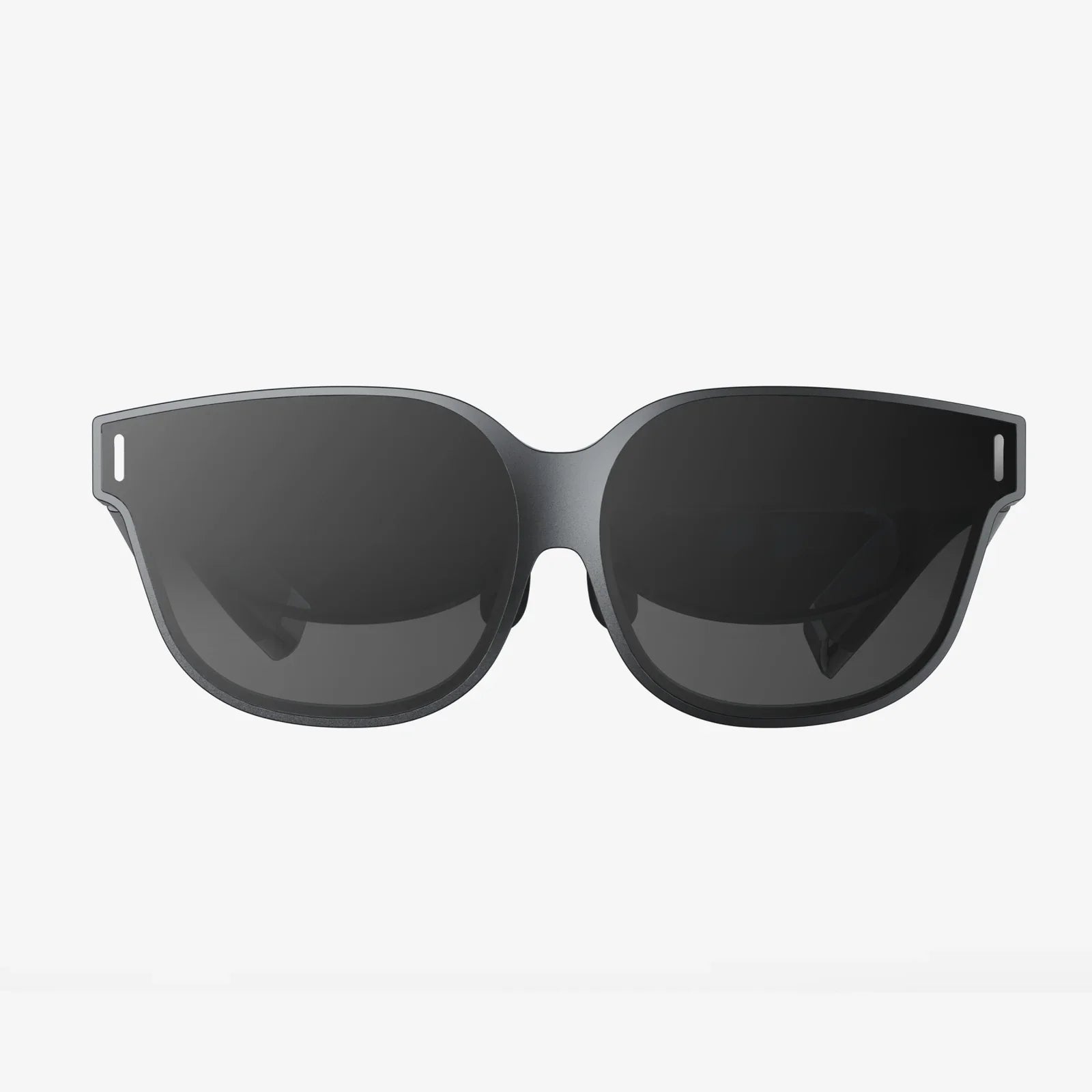
Imagine a world where the digital and physical seamlessly intertwine, where information dances before your eyes, and fantastical experiences are just a glance away. This isn't the distant future; it's the horizon being shaped by a breathtaking wave of upcoming AR and VR technologies. The devices we know today are merely the primitive precursors to a revolution that will redefine human-computer interaction, social connection, and our very perception of reality. The next generation of immersive tech is poised to break through the barriers of novelty and enter the realm of indispensable utility, and the journey there is more exciting than ever before.
The Quest for Visual Fidelity: Beyond Pixels and Screens
The most immediate and noticeable advancements in upcoming AR and VR technologies are in the realm of visual display. The goal is simple yet astronomically complex: to perfectly mimic the way light behaves in the real world, eliminating the uncanny valley and screen-door effect that remind users they are looking at a display.
Varifocal displays represent a monumental leap forward. Current headsets present a fixed focal plane, forcing our eyes to converge (cross or uncross) and accommodate (focus) on a single distance, regardless of the virtual object's apparent proximity. This vergence-accommodation conflict is a primary source of eye strain and visual fatigue. Upcoming systems use eye-tracking to precisely measure where a user is looking and then mechanically or electronically adjust the focal length of the lenses in real-time. This means if you look at a virtual object six inches from your face, the lenses adjust to make you focus at six inches; if you then gaze at a mountain on the horizon, the focus shifts to infinity. The result is a profound increase in visual comfort, realism, and the ability to use these devices for extended periods.
Furthermore, we are moving towards micro-OLED and eventually Laser Beam Scanning (LBS) displays. Micro-OLEDs offer incredibly high resolutions, exceptional contrast ratios with true blacks, and faster response times, all packed into minuscule panels perfect for sleek headset designs. LBS technology, on the other hand, uses tiny lasers to paint images directly onto the retina. This approach promises unprecedented brightness, efficiency, and the potential for headsets that are little more than a pair of lightweight glasses.
For AR, the holy grail is photonic crystal waveguides and holographic optics. These advanced optical systems can pipe light into the eye with incredible efficiency, allowing for bright, vibrant digital overlays on the real world without the dim, limited field-of-view of current generation devices. The aim is to create AR glasses that look no different from standard prescription eyewear but can project a cinema-sized screen or contextual data across the entire field of vision.
The Haptic Horizon: Feeling the Digital World
Visuals are only half the story of immersion. The upcoming AR and VR technologies are investing heavily in haptics—the science of touch. The next generation moves beyond simple controller rumble to full-body, nuanced tactile feedback.
Ultrasonic and aerodynamic haptic systems are being developed to create the sensation of touch without physical contact. Arrays of tiny speakers can focus ultrasonic waves to create pressure points on the skin, allowing users to feel the texture of a virtual object or the weight of a digital tool in their hand. Similarly, targeted puffs of air can simulate the feeling of wind, movement, or a light brush against the arm.
For deeper immersion, we are seeing advancements in exoskeleton gloves and suits. These wearable devices use a combination of actuators, force feedback mechanisms, and tensioning systems to simulate weight, resistance, and the physical shape of virtual objects. Imagine feeling the rough bark of a tree in a virtual forest, the recoil of a virtual weapon, or the firm handshake of a colleague attending a meeting from across the globe. This technology is critical for professional applications like remote surgery and industrial design, where tactile precision is paramount.
The Rise of the Authentic Self: Hyper-Realistic Avatars and Eye-Tracking
Social interaction is a cornerstone of the human experience, and upcoming AR and VR technologies are focused on making digital socialization as rich and nuanced as its real-world counterpart. The key lies in moving beyond cartoonish avatars to hyper-realistic digital representations of ourselves.
Advanced face and eye-tracking, powered by inward-facing headset cameras and machine learning algorithms, will capture and translate our subtle expressions in real-time. This means your avatar will not just smile or frown; it will convey a knowing smirk, a worried brow furrow, or a look of skeptical curiosity. This fidelity in non-verbal communication is essential for building trust and empathy in virtual spaces.
These systems will also enable foveated rendering, a technique that uses eye-tracking to render the area you are directly looking at in high resolution while subtly reducing the detail in your peripheral vision. This mimics the natural functioning of the human eye and dramatically reduces the computational power required, allowing for more complex and visually stunning virtual worlds without needing impossibly powerful hardware.
Blurring the Lines: Neural Interfaces and Contextual Awareness
Looking further into the future, the most transformative of the upcoming AR and VR technologies may be those that interface directly with the human nervous system. Non-invasive Brain-Computer Interfaces (BCIs), often using EEG sensors built into headbands or headset straps, are already in development.
Initially, these will be used for simple command input—thinking "open" to open a menu, for instance. This represents a shift towards a more intuitive, hands-free form of interaction. The long-term potential, however, is staggering. It could lead to experiences where information or emotions are shared directly between users, or where virtual environments can adapt dynamically to a user's cognitive state, becoming more calming if stress is detected or more stimulating if boredom is sensed.
Furthermore, AR devices will evolve to become profoundly context-aware. By combining always-on cameras, microphones, and on-device AI, your AR glasses will understand the world around you. They will recognize faces and provide name reminders, translate foreign language signs instantly, highlight the specific wrench you need from a cluttered toolbox, or guide you through assembling furniture by projecting instructions onto the very pieces you're holding. The device transitions from a passive display to an active, intelligent assistant that augments your cognition and perception.
The Invisible Engine: Edge Computing and 5G/6G Connectivity
None of these advanced experiences are possible without a parallel revolution in connectivity and processing. The immense data processing required for photorealistic graphics, complex AI, and real-time world understanding cannot be handled by a mobile chipset alone. This is where edge computing and high-speed, low-latency networks like 5G and the future 6G come in.
These technologies will allow headsets to offload the heavy computational lifting to powerful remote servers. The processed data is then streamed back to the device almost instantaneously. This means a lightweight, comfortable headset can deliver experiences that would otherwise require a supercomputer strapped to your face. It enables persistent, shared virtual worlds that exist continuously, independent of any single user's connection, and allows for incredibly complex simulations for training, design, and entertainment.
The Spatial Web: A New Layer of Reality
The culmination of these upcoming AR and VR technologies is the creation of the spatial web—a pervasive layer of information and experience draped over our physical reality. The internet will evolve from something we look at on a screen to something we exist inside.
Websites will become interactive 3D spaces you can walk around. Digital art will be permanently anchored to specific GPS coordinates for anyone with AR glasses to appreciate. Social media will evolve into a series of shared, immersive gatherings. The implications for commerce, education, and urban planning are profound. A mechanic could see the diagnostic history of a vehicle simply by looking at it. A student could dissect a virtual frog on their classroom desk. A city planner could visualize a new building's shadow and traffic impact before the first brick is laid.
The line between the digital and the physical is not just blurring; it is being deliberately and expertly woven together. The upcoming AR and VR technologies are the shuttles and looms crafting this new fabric of reality. This is more than an upgrade to a gaming peripheral; it is the foundation for the next major computing platform, one that promises to enhance our abilities, expand our horizons, and fundamentally change how we work, learn, play, and connect. The gateway to this blended existence is opening, and what lies on the other side will redefine our world.
Share:
Advantages and Disadvantages of Telecommuting and Having a Virtual Office: A Comprehensive Guide for the Modern Professional
AR Technology Advancements 2025: The Year Reality Gets an Upgrade