


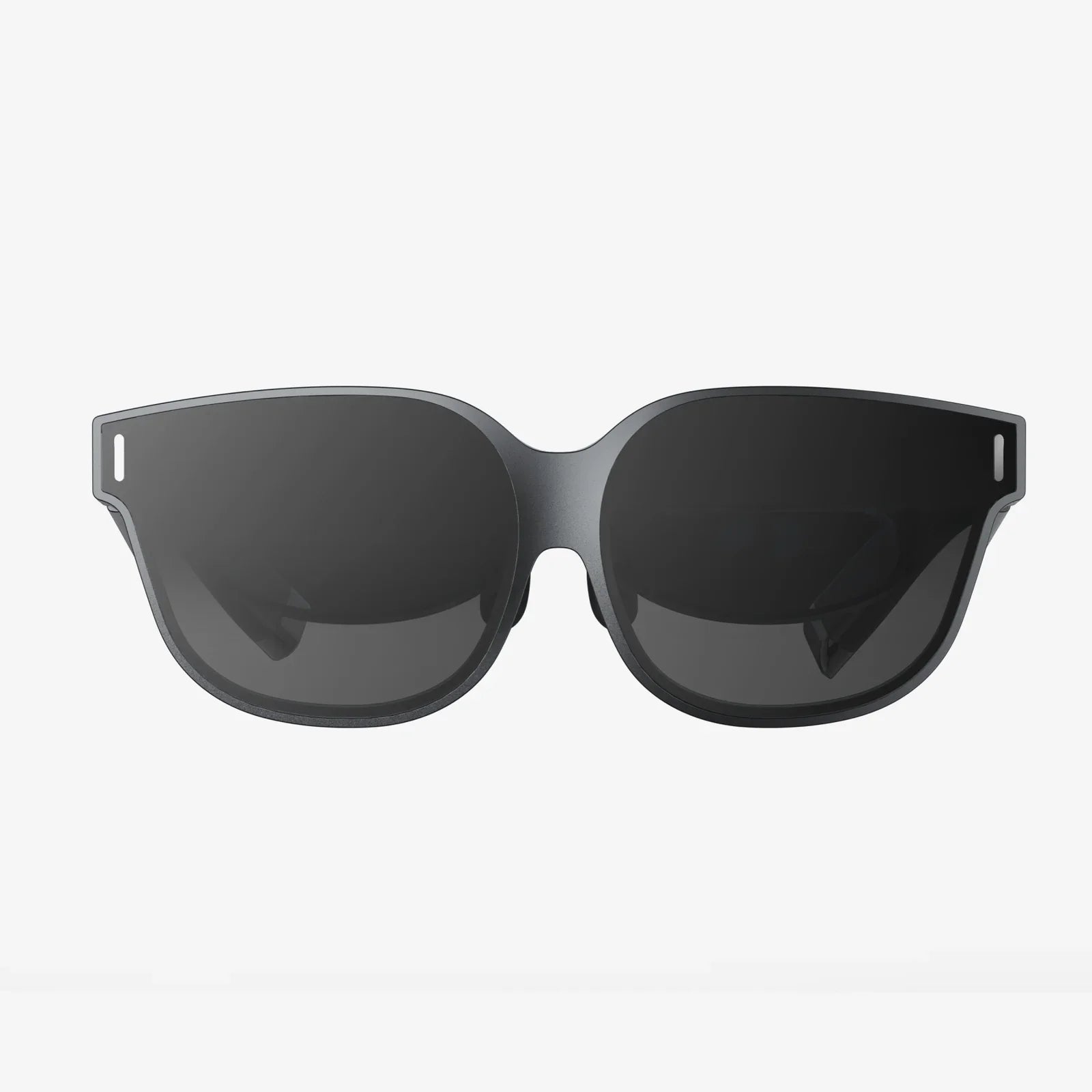
Imagine a world where digital information doesn’t live on a screen in your hand or on your desk, but is seamlessly woven into the very fabric of your reality. Directions float effortlessly on the road ahead, a recipe’s instructions hover beside your mixing bowl, and a colleague’s 3D model appears on your empty conference room table as if it were physically there. This is the promise of Augmented Reality (AR), a promise that has simmered for years but is now, finally, on the cusp of mainstream delivery. The next wave of AR headsets, poised to enter the market, represents not just an incremental step forward, but a potential paradigm shift in personal computing. The devices coming down the pipeline are lighter, smarter, more powerful, and more intuitive than anything we’ve seen before, aiming not to isolate us from our environment, but to enhance our perception of it. The age of truly useful, wearable AR is almost here, and it’s going to change everything.
The Architectural Leap: From Prototype to Product
The journey from the clunky, tethered prototypes of yesteryear to the sleek, standalone devices of tomorrow has been arduous. Early AR was hampered by a fundamental trinity of constraints: size, power, and capability. You could have a wide field of view, but it required bulky optics. You could have high processing power, but it demanded a wired connection to a nearby computer. You could have long battery life, but only by severely limiting functionality. The upcoming generation of AR headsets is breaking this deadlock through a series of simultaneous technological revolutions.
At the heart of this transformation is a move towards a more integrated and efficient system-on-a-chip (SoC) architecture, specifically designed for spatial computing. These aren’t just repurposed smartphone processors; they are bespoke silicon engineered to handle the immense, parallel workloads of AR: simultaneous localization and mapping (SLAM), real-world scene understanding, complex rendering, and high-fidelity passthrough video, all with minimal latency. This dedicated processing is what enables the shift from tethered to untethered, granting users true freedom of movement without a significant sacrifice in performance.
Seeing the World Anew: Display and Optical Breakthroughs
If the processor is the brain of the headset, the display and optics are its eyes. This is where some of the most critical and visible advancements are occurring. The goal is simple yet profoundly difficult: to superimpose bright, vibrant, and convincing digital imagery onto the real world without obstructing the user’s natural view.
The battle of optical architectures is heating up. Waveguide optics, which use microscopic gratings to bend light into the eye, have been a popular choice for their slim form factor. Upcoming iterations are achieving much larger fields of view and better clarity, moving past the distracting "binoculars" or "postage stamp" effect of earlier models. Meanwhile, alternative approaches like holographic optics and novel folded optics are pushing the boundaries even further, promising unprecedented levels of immersion by filling more of the user’s peripheral vision with digital content.
On the display side, the industry is moving beyond conventional LCDs and OLEDs. MicroLED technology is the holy grail for many manufacturers. These self-emissive diodes are incredibly small, incredibly bright, and incredibly efficient. Their high brightness is crucial for overcoming ambient light and making virtual objects appear solid in a sunlit room, while their efficiency directly contributes to longer battery life. While manufacturing challenges remain, integration of microLEDs into consumer-ready devices is a clear marker of a next-generation headset.
The Magic of Perception: Sensors and Tracking
For digital objects to feel locked in place in the real world, the headset must understand its environment with incredible precision. This is the domain of sensors and computer vision. The sensor suites on upcoming headsets are becoming more comprehensive and sophisticated, often including a combination of high-resolution RGB cameras, depth sensors (like LiDAR or structured light), and inertial measurement units (IMUs).
This sensor fusion feeds into incredibly advanced algorithms for SLAM. Modern SLAM doesn’t just map the geometry of a room; it understands it. It can identify surfaces (floor, wall, ceiling, table), recognize objects (a screen, a couch, a cup), and even segment the environment semantically. This allows for persistent digital content that remembers its place—a virtual clock on your real wall that stays there even when you leave and return—and for more natural interactions. Your hand can become the primary controller, with the headset tracking your fingers to allow for precise gestures, from simple pinches to complex manipulations of 3D models. Eye-tracking, another becoming-standard feature, enables foveated rendering (drastically reducing GPU load by rendering only where you are looking in high detail) and creates a new dimension of intuitive UI navigation.
The Bridge to Reality: Video Passthrough vs. Optical See-Through
A major philosophical and technical divide in AR headset design is how the user views the real world. The two primary methods are Optical See-Through (OST) and Video Passthrough (VST).
OST, used in many existing smart glasses, allows users to look directly at their surroundings through semi-transparent combiners or waveguides. The advantage is a direct, lag-free view of reality. The disadvantage has historically been that virtual objects can appear ghostly or dim, as they must compete with the full brightness of the real world.
VST, on the other hand, uses outward-facing cameras to capture the real world and then displays it, along with the digital overlay, on internal screens. This approach, often associated with Mixed Reality (MR), offers incredible control. Developers can dim, color-grade, or even completely replace the real world, enabling breathtaking blended experiences. The challenge has been delivering high-resolution, high-frame-rate, low-latency video to avoid nausea or a sense of disconnection. Upcoming headsets are conquering this challenge with powerful new processors and specialized co-processors dedicated to the passthrough pipeline, making the video feed so fast and clear that it becomes indistinguishable from natural sight for many tasks. This technological triumph is blurring the line between AR and VR, creating a new category of device capable of spanning the entire spectrum of realities.
Beyond Novelty: The Software and Ecosystem Imperative
The most powerful hardware is useless without compelling software. The success of upcoming AR headsets hinges on the development of a robust ecosystem. This includes the operating system—a spatial OS that moves beyond the flat app grids of today into a 3D, context-aware interface where applications exist in space around you.
Developers are being armed with more powerful and accessible tools. Game engines have deeply integrated AR development frameworks, making it easier to build experiences that understand physics, occlusion, and lighting in the real world. The emergence of WebXR is also critical, allowing developers to create AR experiences that run in a web browser, making them instantly accessible without the friction of app store downloads. The killer app for AR may not be a single application, but rather a pervasive layer of utility—a spatial web of information and interaction that enhances productivity, communication, and entertainment in subtle yet profound ways.
The Inevitable Hurdles: Challenges on the Road to Adoption
Despite the breathtaking progress, significant challenges remain before AR headsets become as ubiquitous as smartphones. Form factor is perhaps the most obvious. While much slimmer than their predecessors, most high-end upcoming headsets are still more akin to wraparound sunglasses or slim ski goggles than to regular eyeglasses. Further miniaturization of components, particularly batteries and optics, is needed to achieve true all-day, socially acceptable wearability.
Battery life is a constant battle. The immense processing and display requirements are power-hungry. Innovations in chip efficiency are helping, but users will have to manage expectations or adopt habits like carrying a small external battery pack, at least in the short term.
Finally, there are the critical questions of privacy and social etiquette. A device that is always looking at the world through cameras and microphones raises legitimate concerns. Manufacturers will need to be transparent about data collection, implement clear physical indicators like recording lights, and build trust through robust privacy controls. The social norm of wearing a computer on your face in every situation is also something that will take time for society to adapt to and define.
A Glimpse into the Future: What to Expect
The initial wave of high-end devices will likely target developers, enterprise users, and affluent early adopters. Use cases will be focused on vertical markets: complex assembly and repair guided by digital overlays, remote expert assistance where a specialist can see what a field technician sees and annotate their reality, and advanced design and prototyping in architecture and engineering. In the consumer space, immersive gaming and novel social experiences will be the initial drivers.
As the technology matures, costs come down, and the form factor shrinks, we will see a gradual expansion into the mainstream. The ultimate goal is a pair of stylish glasses that offer all-day functionality, connecting seamlessly with your other devices to provide a constant, context-aware stream of information. This will redefine personal computing, moving us from a model of pulling a device out of our pocket to one of simply glancing up at the world to see what we need to know.
The upcoming AR headsets are more than just new gadgets; they are the foundational hardware for the next computing platform. They represent a convergence of advancements in materials science, semiconductor design, optics, and artificial intelligence. They promise to break down the final barriers between our digital and physical lives, not by replacing the world we live in, but by enriching it with a limitless layer of potential. The revolution won’t happen overnight, but the pieces are now in place. The doorway to an augmented age is opening, and the next generation of devices is the key.
We stand at the precipice of a new way of seeing, working, and connecting. The sleek, powerful AR headsets arriving soon are not merely incremental upgrades; they are the vanguard of a fundamental shift, promising to dissolve the line between our digital and physical existences and unlock a future limited only by our imagination. The world is about to get a major software update.
Share:
Glasses with Speakers Built In: The Next Frontier in Personal Audio Technology
Price of VR: An In-Depth Look at the Cost of Immersive Technology