


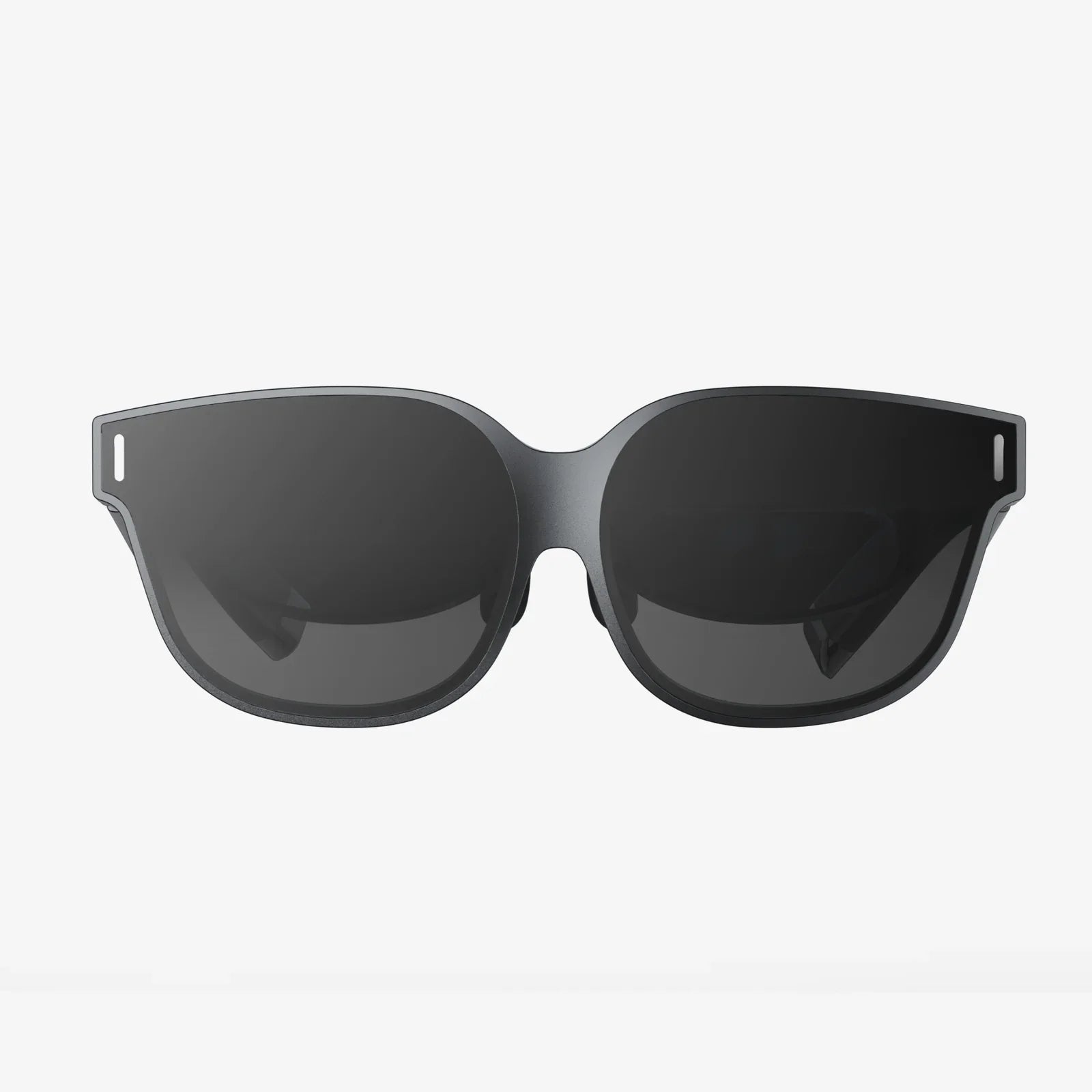
Imagine a world where the digital and the physical are no longer separate realms but a seamless, interactive tapestry—a world where information is not just on your screen but layered onto everything you see. This is no longer the stuff of science fiction; it is the rapidly evolving present and future being built by the widespread and innovative use of augmented reality. From the moment you wake up to the way you work, learn, and play, AR is poised to become as fundamental as the smartphone, fundamentally altering our perception of reality itself and inviting you to see your world through a new, digitally-enhanced lens.
The Foundation: What Exactly is Augmented Reality?
Before delving into its multifaceted applications, it is crucial to define augmented reality. Unlike Virtual Reality (VR), which creates a completely immersive, computer-generated environment that replaces the user's real world, Augmented Reality (AR) superimposes digital information—be it images, sounds, text, or 3D models—onto the user's view of their physical surroundings in real-time. The key differentiator is that AR enhances reality rather than replacing it. This is achieved through a combination of hardware and sophisticated software, including cameras, sensors, algorithms for simultaneous localization and mapping (SLAM), and display technologies that can range from smartphones and tablets to specialized smart glasses and heads-up displays.
The core principle is contextuality. AR systems understand the environment they are in and provide relevant digital overlays that are contextually aware. For instance, pointing your smartphone's camera at a historical monument might overlay information about its construction, or looking at a machine part through smart glasses might display assembly instructions. This symbiotic relationship between the user, the digital content, and the physical environment is what makes the use of augmented reality so powerful and transformative.
Revolutionizing Retail and Consumer Engagement
One of the most visible and rapidly adopted uses of augmented reality is within the retail sector. It has effectively solved the 'try before you buy' dilemma for online shopping, dramatically reducing return rates and increasing consumer confidence. Shoppers can now use their smartphones to see how a piece of furniture would look in their living room, accurately scaled to their space. They can virtually try on watches, glasses, makeup, and even clothing, seeing how an item fits and moves before making a purchase decision.
Beyond try-ons, AR is creating immersive in-store experiences. Scanning a product on a shelf might trigger an interactive demonstration, nutritional information, or reviews. It allows for the creation of virtual showrooms, where a physical store can showcase an exponentially larger inventory. This use of augmented reality is not merely a gimmick; it is a powerful tool that bridges the gap between the convenience of e-commerce and the tangibility of physical retail, creating a new, hybrid shopping journey that is engaging, informative, and personalized.
Transforming Education and Training
The use of augmented reality in education is dismantling traditional learning paradigms, moving from abstract, two-dimensional textbook learning to immersive, interactive, and experiential education. Complex subjects become tangible and engaging. Imagine a history lesson where students can walk around a 3D hologram of an ancient Roman fort, a biology class where they can dissect a virtual frog with no physical materials, or a geometry lesson where 3D shapes can be manipulated in mid-air. AR brings static information to life, fostering deeper understanding and retention.
In corporate and industrial training, the impact is even more profound. The use of augmented reality for training in fields like surgery, aircraft repair, and complex machinery operation is revolutionizing skill acquisition. Trainee surgeons can practice procedures on virtual patients overlaid onto medical mannequins. Mechanics can see step-by-step repair instructions and part names superimposed directly onto the engine they are working on, with the ability to access manuals hands-free. This not only accelerates the learning curve but also significantly enhances safety and reduces costly errors during the training process, creating a more competent and confident workforce.
Enhancing Industrial Design and Manufacturing
In the realms of industrial design, architecture, and manufacturing, the use of augmented reality is accelerating prototyping, streamlining collaboration, and minimizing errors. Designers and engineers can project full-scale 3D models of their prototypes into the real world, allowing them to assess form, function, and ergonomics in a real context long before physical resources are committed. This digital prototyping saves immense amounts of time and money.
On the factory floor, assembly line workers can use AR glasses to see digital work instructions overlaid on their tasks, highlighting the exact location for a part or displaying torque settings for a bolt. This reduces cognitive load, minimizes mistakes, and speeds up production. Furthermore, remote experts can see what a field technician sees and provide guidance by annotating the technician's real-world view with arrows, circles, and notes, effectively enabling knowledge transfer across vast distances. This use of augmented reality for remote assistance is invaluable for maintaining complex equipment with limited specialist availability.
Advancing Healthcare and Medicine
The healthcare industry is witnessing some of the most life-changing applications of augmented reality. For medical professionals, AR is becoming an indispensable tool for visualization and surgical planning. By overlaying CT or MRI scans—such as the precise location of a tumor or the path of a critical blood vessel—onto a patient's body during surgery, surgeons gain an unprecedented level of insight, improving accuracy and patient outcomes. This is like giving surgeons X-ray vision, allowing for more precise and less invasive procedures.
Beyond the operating room, AR is aiding in patient education, helping doctors explain complex conditions and procedures to patients using interactive 3D models. It is also revolutionizing physical therapy and rehabilitation by creating engaging AR exercises that guide patients through movements and provide real-time feedback on their form. For medical students, AR provides an invaluable resource for learning human anatomy in a dynamic, three-dimensional way that textbooks simply cannot match, allowing them to explore systems of the body in intricate detail from every angle.
Reshaping Navigation and Urban Planning
The use of augmented reality is set to fundamentally change how we navigate our world, both indoors and outdoors. Instead of looking down at a map on a phone, AR navigation apps can overlay directional arrows, street names, and points of interest directly onto the live view of the street through your device. This creates a more intuitive and safer way to navigate, as users can keep their heads up and remain aware of their surroundings.
This technology extends to large indoor spaces like airports, shopping malls, and museums, providing turn-by-step guidance to your gate, a specific store, or a particular exhibit. For urban planners and architects, AR is a powerful visualization tool. They can project proposed new buildings, parks, or infrastructure projects into an existing cityscape, allowing stakeholders and the public to experience the scale, design, and impact of a development before a single foundation is poured. This facilitates better decision-making and more collaborative community engagement.
The Future Horizon and Ethical Considerations
The trajectory of augmented reality points towards a future where AR wearables become as ubiquitous and socially accepted as eyeglasses. The eventual goal is a comfortable, all-day wearable that seamlessly integrates digital information into our peripheral vision, moving beyond the current hand-held model. This will unlock even more profound uses, from real-time language translation overlaid on street signs to instant facial recognition with contextual social information (raising significant privacy concerns that must be addressed).
This exciting future, however, is not without its challenges and ethical dilemmas. The widespread use of augmented reality raises critical questions about data privacy, as these devices continuously capture and analyze our environments. There are concerns about digital addiction, the potential for reality blurring, and the creation of an information divide between those who can access AR technology and those who cannot. Furthermore, the issue of advertising and digital spam in our physical field of view is a looming threat. For AR to reach its full positive potential, its development must be guided by robust ethical frameworks, transparent data policies, and a focus on human-centered design that prioritizes user well-being over commercial intrusion.
The screen that separates us from digital information is dissolving, giving way to a world where data and imagination are woven directly into the fabric of our physical existence. The transformative power of augmented reality lies not in its ability to distract us from the real world, but in its profound potential to enhance it, making us more knowledgeable, efficient, and connected to the environment and people around us. This is just the beginning of a new chapter in human-computer interaction, and the next page is waiting for you to turn it.
Share:
Mobile Web Augmented Reality: The Invisible Revolution Reshaping Our Digital Interactions
Augmented Reality News: The Next Frontier in Media Consumption and Information Delivery