


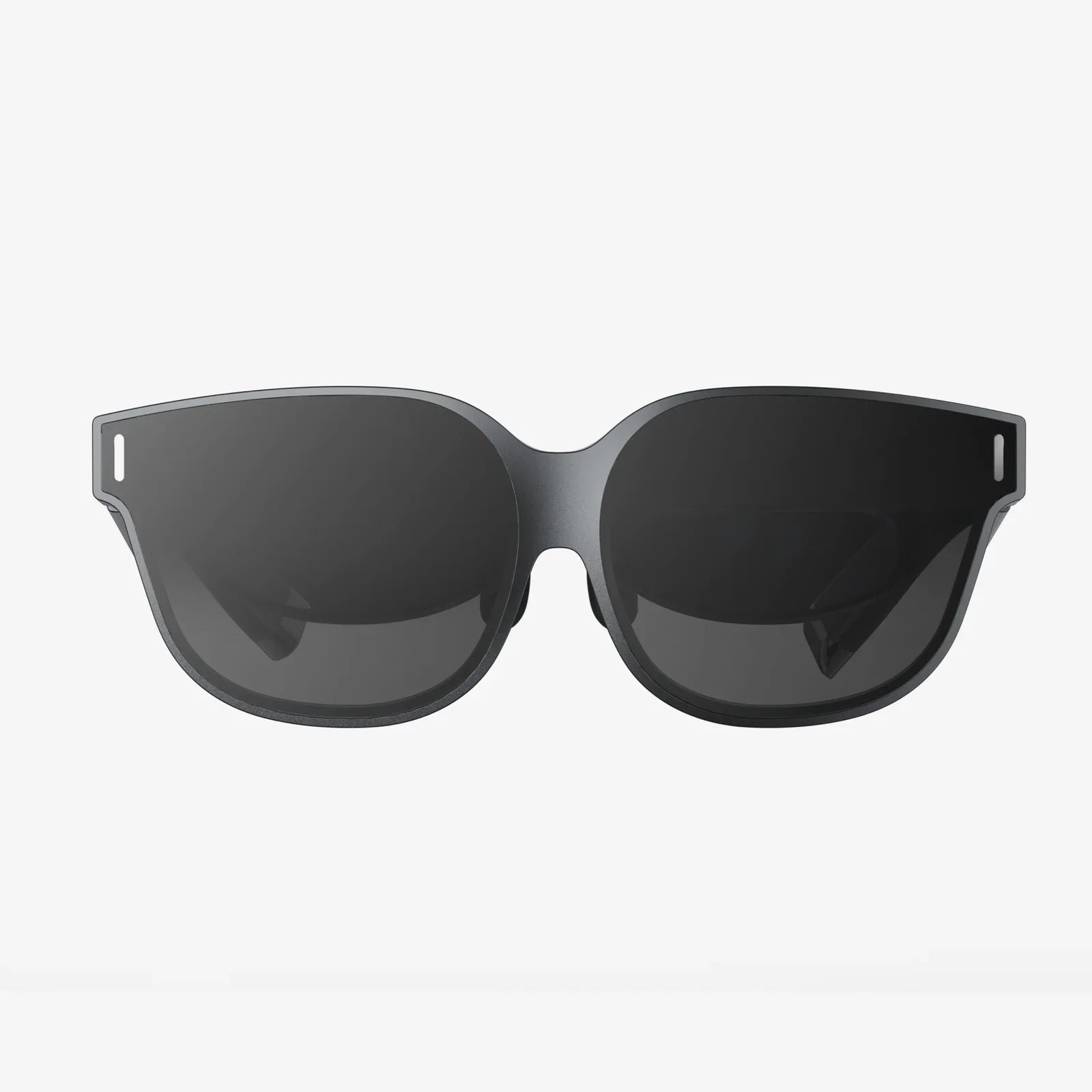
Imagine stepping through your screen, not as a passive observer, but as an active participant in a world that feels as tangible as your own. This is no longer the stuff of science fiction; it is the palpable promise held within the powerful convergence of video, 3D, and realidad virtual. We are standing at the precipice of a new digital epoch, one where the lines between the physical and the virtual are not just blurred but are being completely redefined. This technological trinity is crafting experiences so profound, so sensorially rich, that they challenge our very perception of reality itself, beckoning us into a future limited only by our imagination.
The Foundational Trinity: Deconstructing the Core Technologies
To fully appreciate the magic of this fusion, one must first understand the distinct roles played by each component. They are not interchangeable terms but rather three pillars supporting an entirely new structure of experience.
The Legacy of Video: Capturing Reality
At its heart, traditional video is a two-dimensional medium. It is a linear sequence of flat images, a window into a moment captured in time. For over a century, it has been our primary tool for documentation and storytelling. However, its inherent limitation is perspective—the viewer is forever locked into the camera’s single, fixed point of view. We witness events but cannot interact with or explore them. The advent of 360-degree video was the first major leap, allowing us to pan and look around within a spherical recording, yet we remain visitors in a pre-rendered environment, unable to move freely or affect the narrative.
The Dimension of Depth: The Power of 3D
3D technology, or stereoscopy, introduces the crucial element of depth perception to imagery. By presenting slightly offset images to each eye, it tricks the brain into perceiving a three-dimensional space on a two-dimensional screen. This creates a powerful illusion of objects having volume and space between them, making them appear to pop out of the screen or recede into the distance. While often associated with cinematic blockbusters, 3D is the essential bridge that adds a layer of realism, making on-screen content feel more present and immediate.
The Ultimate Illusion: The Realm of Realidad Virtual
Realidad virtual (VR) is the encompassing paradigm shift. It is not a recording or an enhancement of reality but the creation of a completely synthetic, computer-generated environment. Using a head-mounted display (HMD), VR completely replaces your field of vision with this digital world. Crucially, it incorporates head-tracking technology, so when you turn your head, the world turns with you, perfectly maintaining the illusion. This is combined with motion controllers that translate your real-world hand and arm movements into the virtual space, granting you agency. You are no longer watching a world; you are inhabiting it.
The Alchemy of Fusion: When Video, 3D, and VR Collide
The true revolution begins when these three forces are combined. This is not a simple sum of parts but a multiplicative effect that creates something entirely new and profoundly immersive.
Volumetric Video: Capturing People in 3D Space
Perhaps the most significant advancement is the development of volumetric video. This technique uses an array of cameras to capture a person or object from every possible angle simultaneously. Advanced algorithms then process this data to create a dynamic, three-dimensional model of the subject—a hologram, essentially. When viewed within a VR headset, this hologram can be walked around and examined from any angle, just like a real object. This allows for the capture of real human performance with unparalleled authenticity, enabling a viewer to stand inches away from a performer, seeing every nuance of their expression and movement in perfect 3D. It is the ultimate merger of filmed reality and interactive 3D space.
Photorealistic CGI and Real-Time Rendering
On the fully synthetic side, advancements in computer-generated imagery (CGI) and game engine technology have reached a point of near photorealism. Environments and characters are built in 3D with incredible detail. When experienced in VR, these worlds are not pre-rendered movies but are generated in real-time. This means the world reacts to you. You can open doors, pick up objects, and interact with characters. The combination of high-fidelity 3D assets and the immersive frame of VR creates a sense of "presence"—the undeniable, gut-level feeling that you are actually in that place.
Transforming Industries: The Practical Applications
The impact of this technology extends far beyond entertainment, seeding transformation across numerous sectors.
Education and Training: Learning by Doing
Imagine a medical student not just reading about human anatomy but performing a dissection on a hyper-realistic 3D model in VR, or practicing a complex surgical procedure countless times without risk. An engineering student could walk through the intricate machinery of a jet engine, taking it apart and reassembling it virtually. Historical events can be experienced rather than read about, allowing students to walk through ancient Rome or witness pivotal moments firsthand through reconstructed volumetric footage. This experiential learning paradigm drastically improves retention and understanding.
Enterprise and Design: Prototyping the Future
Architects and interior designers are using VR to place clients inside unbuilt homes, allowing them to experience the scale, lighting, and flow of a space long before ground is broken. Automotive designers can review full-scale 3D models of new car designs, examining every curve and interior detail collaboratively with teams across the globe. This saves immense amounts of time and resources by identifying design flaws early in the process and streamlining client approvals.
Social Connection and Telepresence
Video conferencing brought us together, but 3D VR social platforms promise true telepresence. Instead of seeing faces on a grid, you occupy avatars in a shared virtual space—a conference room, a lecture hall, or a casual lounge. Using soon-to-be ubiquitous technology, these avatars can be driven by volumetric capture, replicating your exact body language and facial expressions. The sense of sharing a space with someone, of making eye contact and reading non-verbal cues, fosters a depth of connection that flat video calls simply cannot achieve, making remote collaboration and personal interaction feel genuinely human.
Navigating the Challenges: The Path to Ubiquity
Despite its immense potential, the path forward for video, 3D, and realidad virtual is not without significant hurdles that must be overcome.
The Technical Hurdles: Power and Friction
Creating and experiencing high-fidelity immersive content is incredibly computationally intensive. Rendering photorealistic 3D environments at a stable 90 frames per second or higher (necessary to prevent motion sickness) requires powerful processors and graphics cards. Volumetric video files are monstrously large, posing immense challenges for storage and streaming bandwidth. Furthermore, the form factor of hardware, while improving, still needs to become lighter, wireless, and more comfortable for long-term use to achieve mass adoption.
The Human Factor: Accessibility and Ethics
There remains a portion of the population that experiences cybersickness in VR, a problem researchers are tirelessly working to solve through better hardware and software techniques. Ethically, the creation of hyper-realistic virtual experiences raises profound questions. How do we prevent the creation of convincing deepfakes for malicious purposes? How do we protect privacy in environments that can track our movements, gaze, and even biometric responses? Establishing a framework for the ethical development and use of this powerful technology is paramount.
The Horizon: What Lies Beyond the Headset
The future of this fusion is moving beyond the screen on our face and into our environment. Augmented Reality (AR) and Mixed Reality (MR) will overlay 3D virtual objects and information onto our physical world through transparent glasses. The lessons learned from VR will directly fuel this next wave. We will watch volumetric concerts on our coffee tables, bring 3D instructional diagrams onto our actual workbenches, and share interactive holograms of loved ones as if they were in the room. The convergence is pushing towards a spatial computing future where the digital and physical coexist seamlessly.
The journey into the synthetic realm is just beginning, and the destination is a world where our digital and physical selves intertwine in ways we are only starting to conceive. This is not about escaping reality, but about expanding it, offering new canvases for creation, new arenas for connection, and new lenses through which to understand our universe and our place within it. The screen is dissolving, and we are stepping through.
Share:
How Would You Describe Your Experience Using AR? A Journey Through the Digital Looking Glass
3D Printing AR: The Convergence of Digital and Physical Realities