


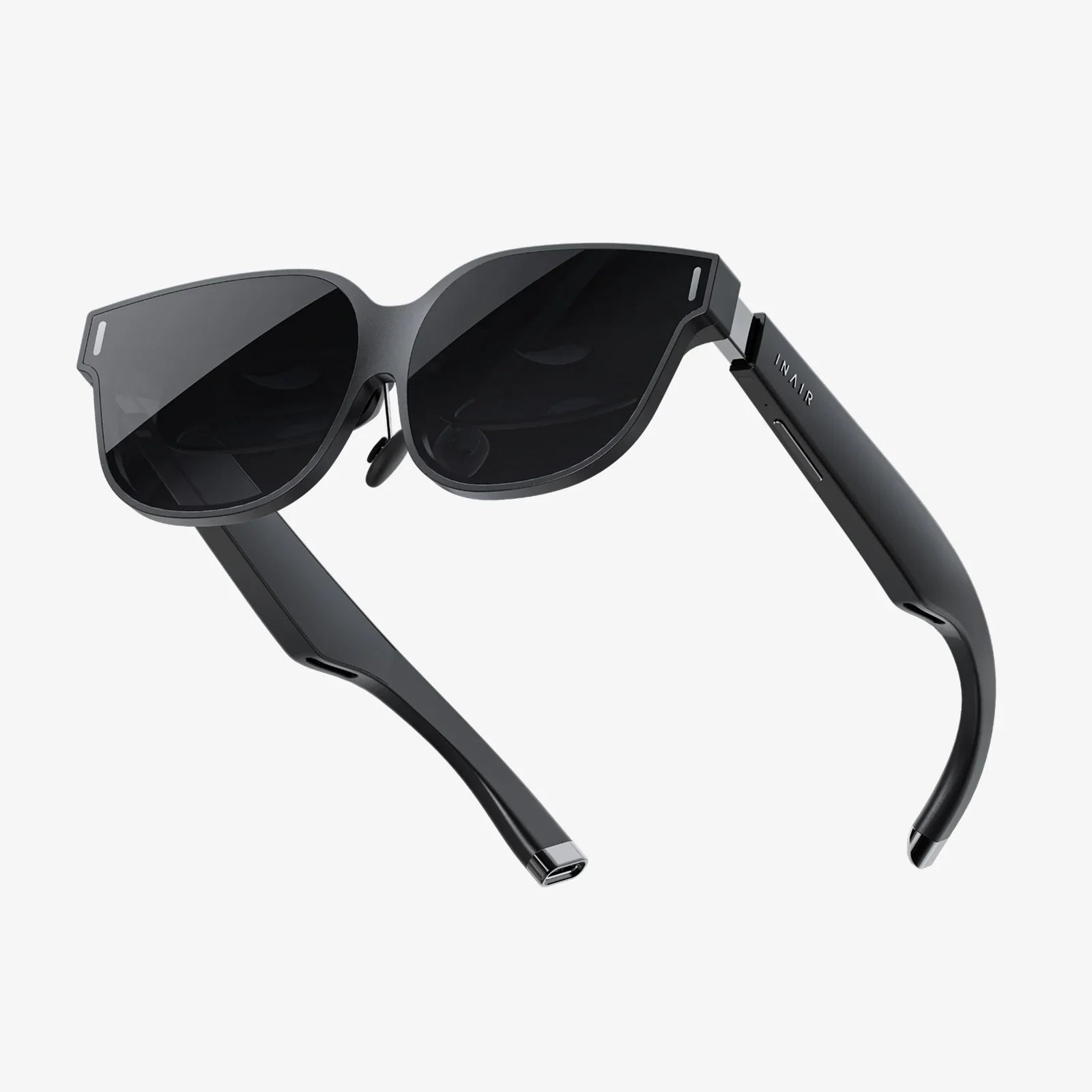
- by wangfred
Video Goggles: The Ultimate Immersive Experience and What You Need to Know
- by wangfred
Imagine a world where your living room transforms into a front-row concert seat, your office into a collaborative 3D workspace, and your classroom into a journey through the human bloodstream. This is not a distant sci-fi fantasy; it is the tangible, exhilarating reality offered by the rapid evolution of video goggles. These sleek, powerful devices are more than just a piece of technology; they are a passport to new dimensions of experience, promising to fundamentally reshape how we work, learn, play, and connect. The journey into this immersive frontier is just beginning, and it is one you will not want to miss.
At their essence, video goggles are a sophisticated feat of optical and computational engineering designed to trick the human brain into perceiving a digital environment as real. This illusion is crafted through a harmonious interplay of several key components.
The foundation of the experience lies in the micro-displays positioned mere centimeters from the user's eyes. Early iterations suffered from the "screen door effect," where users could discern the gaps between pixels, shattering immersion. Modern video goggles have all but eliminated this through incredibly high-resolution displays, often exceeding 4K per eye. These crystal-clear screens are paired with complex lens systems that focus and reshape the image, creating a wide field of view (FOV) that fills the user's peripheral vision. The goal is to achieve a state of "presence"—the undeniable sensation of being somewhere else—and it starts with convincing your eyes.
For the virtual world to feel responsive and real, it must move in perfect sync with the user. This is achieved through a combination of internal and external tracking systems. Inside-out tracking uses integrated cameras and sensors on the goggles themselves to map the physical environment and track the user's head movements in six degrees of freedom (6DoF): forward/back, up/down, left/right, pitch, yaw, and roll. This allows a user to lean in to examine a virtual object or peek around a corner. This precise, low-latency tracking is critical; any lag or jitter between physical movement and the visual response can lead to disorientation or motion sickness, breaking the fragile spell of immersion.
Sound is half the experience. Spatial audio technology uses head-related transfer functions (HRTF) to simulate 3D soundscapes, making a whisper seem to come from behind your left ear or an explosion roar from directly overhead. This auditory layer is indispensable for complete immersion. Furthermore, the physical design of the goggles is a constant battle between performance and comfort. Engineers strive to make devices lighter, better balanced, and with improved ventilation to allow for longer, more comfortable use periods, all while packing in more powerful processors and larger batteries.
The applications for video goggles extend far beyond the gaming world, permeating nearly every facet of modern life.
While gaming was the initial catalyst, it remains a powerhouse application. Video goggles transport players from spectators to active participants within the game world. Instead of pressing a button to swing a sword, you physically perform the motion. This genre of experiential gaming fosters a level of engagement and physicality that traditional screens cannot match. Beyond gaming, the entertainment industry is exploring immersive films and live events. Imagine attending a championship game or a music festival from the best seat in the house, all from your home, sharing the experience with friends represented as digital avatars.
In the enterprise sector, video goggles are proving to be powerful tools for productivity and innovation. Architects and engineers use them to walk through full-scale 3D models of buildings before ground is ever broken, identifying design flaws and making changes in real-time. Remote assistance is another transformative use case; a field technician wearing goggles can stream their point-of-view to a senior expert thousands of miles away, who can then annotate the technician's real-world view with arrows and instructions, dramatically improving efficiency and reducing travel costs.
The educational potential is staggering. Video goggles can turn abstract concepts into tangible experiences. Medical students can practice complex surgical procedures on virtual patients, historians can walk through ancient Rome, and mechanics can learn to repair a jet engine—all without risk, cost, or logistical hurdles. This form of experiential learning enhances retention and understanding in ways textbooks never could.
Perhaps the most profound application is in social connection. Video goggles have the potential to evolve video calls into shared experiences. Rather than seeing faces in grid-like boxes, users could feel as if they are sitting across a virtual table from each other, sharing a virtual space, watching a movie together, or simply chatting as if they were in the same room. This sense of "telepresence" could help bridge vast geographical distances, making remote work more collaborative and personal relationships feel more immediate.
Despite the incredible promise, the path forward for video goggles is not without its obstacles and important considerations.
Prolonged use can lead to eye strain, headaches, and, for some, cybersickness—a form of motion sickness caused by a disconnect between visual motion and the inner ear's sense of movement. Developers are continuously refining display technology and refresh rates to mitigate these effects. Furthermore, psychologists are studying the long-term psychological impacts of frequent immersion in virtual worlds, particularly on developing brains. Establishing healthy usage habits and taking regular breaks is universally recommended.
Video goggles, especially those with outward-facing cameras, raise significant privacy concerns. They can record, and in some cases, live-stream, everything in their field of view, often capturing bystanders who have not consented to being recorded. This creates a new frontier for data ethics and legislation. The immense amount of biometric data they can collect—eye-tracking, movement patterns, even emotional responses—is incredibly valuable and must be handled with stringent security and clear user consent to prevent misuse.
There is a tangible risk of a "digital divide" emerging between those who can afford this advanced technology and those who cannot. As key aspects of work, education, and social interaction potentially migrate into these immersive spaces, lack of access could lead to increased inequality. Furthermore, over-reliance on virtual interaction could potentially erode real-world community bonds and physical social skills, a challenge society will need to navigate consciously.
The technology behind video goggles is advancing at a breathtaking pace, pointing toward a future that feels like magic.
We are moving toward increasingly lightweight, wireless devices with all-day battery life. The holy grail is a form factor resembling ordinary eyeglasses, achieved through advancements in holographic optics and micro-LED displays. The integration of artificial intelligence will be transformative, enabling real-time language translation overlays, intelligent object recognition, and dynamic, responsive virtual environments. Furthermore, the lines between virtual and augmented reality are blurring into a spectrum of mixed reality (MR), where digital objects are seamlessly anchored and interact with the real world.
Video goggles are the primary hardware gateway to the much-discussed "metaverse"—a persistent network of interconnected virtual spaces. While its full realization is still years away, video goggles provide the immersive interface necessary to make these digital worlds feel authentic and navigable. This evolution could redefine the internet from something we look at on a screen to something we are inside of.
Looking further ahead, the impact will deepen across all industries. In healthcare, they could be used for advanced phobia treatment through controlled exposure or for remote surgery. In urban planning, entire cities could be designed and tested in virtual simulations. The potential uses are limited only by our imagination, promising a future where digital information enhances our perception of and interaction with the physical world in profound and helpful ways.
The door to these boundless virtual worlds is now open, inviting us to step through and explore what lies beyond. The next era of human-computer interaction is being written not on our desks, but on our faces, offering a glimpse into a future where our reality is only the beginning. The journey into the immersive age is the most compelling adventure of our digital lives, and it is just getting started.
Share:
Best Setup for VR: The Ultimate Guide to an Immersive Virtual Reality Experience
Is Android XR Headset the Future of Immersive Computing?