


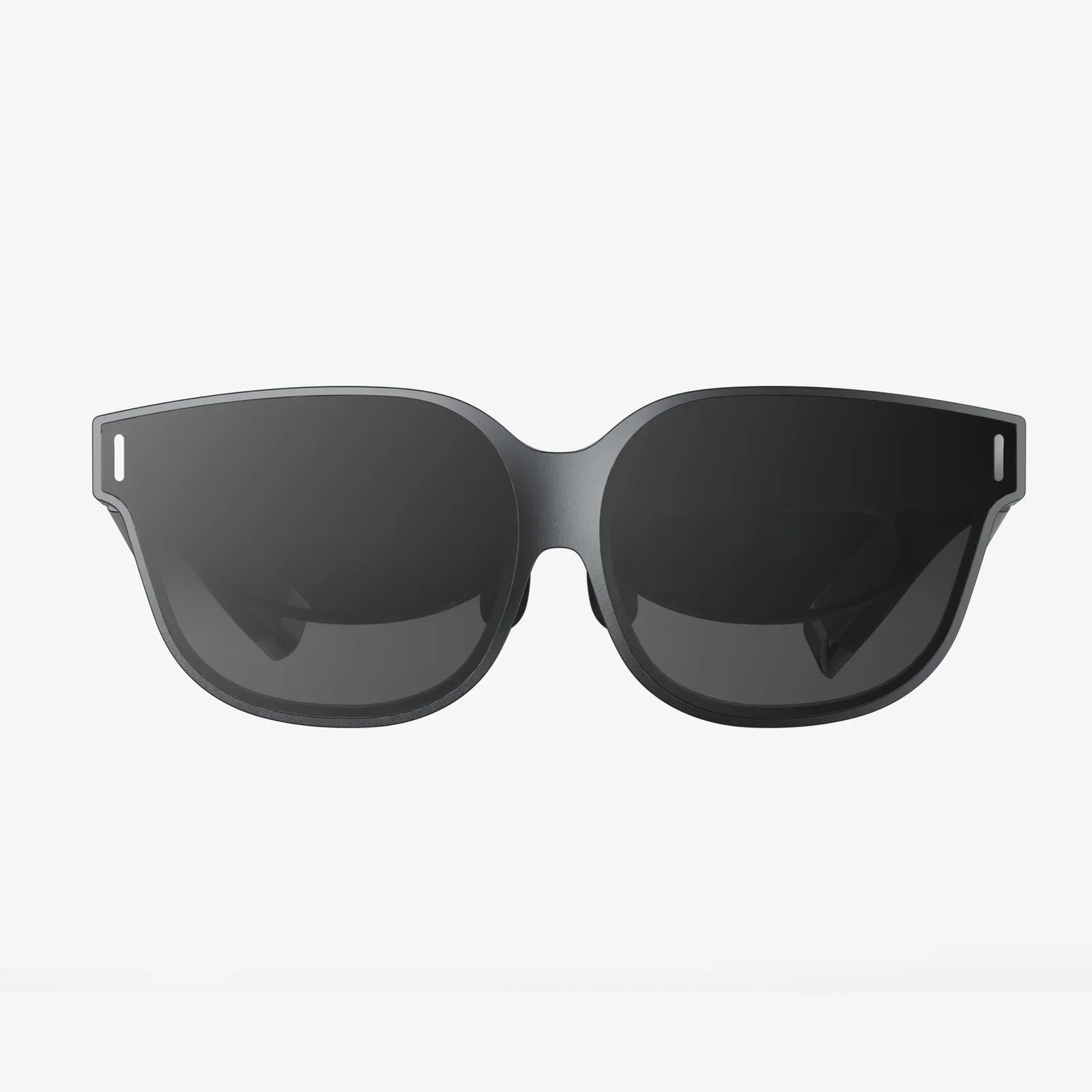
Imagine slipping on a headset and instantly teleporting to the surface of Mars, or pointing your device at a static museum exhibit to watch a historical battle erupt before your eyes. This is no longer the stuff of science fiction; it’s the burgeoning reality shaped by two of the most transformative technologies of our time: Virtual Reality and Augmented Reality. To truly grasp their potential to revolutionize every facet of our lives, from how we work and learn to how we connect and play, we must first start with a clear and comprehensive virtual and augmented reality definition.
Demystifying the Core Concepts
At its most fundamental level, the virtual and augmented reality definition describes a spectrum of technologies designed to alter our perception of the real world, either by replacing it entirely with a digital environment or by supplementing it with digital information.
The Virtual World: A Complete Digital Escape
Virtual Reality (VR) is the technology of complete immersion. A comprehensive virtual and augmented reality definition for VR would be: a computer-generated simulation of a three-dimensional environment that can be interacted with in a seemingly real or physical way by a person using special electronic equipment, such as a headset with a screen inside or gloves fitted with sensors.
The primary goal of VR is to isolate the user from their physical surroundings and convince their senses that they are present in a different world. This is achieved through a combination of sophisticated hardware and software:
- Headsets: These devices contain high-resolution displays for each eye, creating a stereoscopic 3D effect. They are equipped with a variety of sensors, including accelerometers, gyroscopes, and magnetometers, to track head orientation (rotation) and, in more advanced systems, positional tracking (movement in physical space).
- Immersion: The experience is deepened with spatial audio, which makes sounds appear to come from specific locations in the virtual space, and intuitive controllers that allow users to reach out, grab, and manipulate virtual objects.
- Presence: The ultimate success metric for VR is achieving "presence"—the undeniable, visceral feeling of actually being in the virtual environment, a psychological state where the user's brain suspends disbelief and accepts the digital world as real.
The Enhanced World: Blending Digital with Physical
Augmented Reality (AR), on the other hand, does not seek to replace the real world but to enhance it. A precise virtual and augmented reality definition for AR is: an interactive experience where digital information and objects are overlaid and anchored onto the user's real-world environment in real-time.
Unlike VR, which requires a dedicated headset, AR can be experienced through a variety of devices, making it more accessible in its current state:
- Smartphones and Tablets: The most common gateway to AR, using the device's camera to display the real world on the screen while superimposing digital content onto it.
- Smart Glasses and Lenses: These wearable devices project holographic images directly into the user's field of vision, allowing for a hands-free experience where digital information appears to coexist with physical objects.
- Heads-Up Displays (HUDs): Long used in fighter jet cockpits and now in some automotive windshields, these systems project critical data like speed or navigation directions into the user's line of sight.
The magic of AR lies in its ability to contextualize information. By understanding the environment through cameras and sensors, the technology can place a digital instruction manual right on top of the machinery you're trying to fix or animate a children's book character to dance on the page.
The Technological Pillars: How VR and AR Work
While their objectives differ, VR and AR share a common foundation of complex technologies that make their magic possible. Understanding these pillars is crucial to a complete virtual and augmented reality definition.
Tracking and Sensing the World
Both technologies rely heavily on understanding the user's position and the geometry of the surrounding space.
- Inside-Out vs. Outside-In Tracking: VR systems use either external sensors placed in a room (outside-in) to track the headset's movement or have cameras on the headset itself that map the room (inside-out) to determine its position. AR primarily uses inside-out tracking via a device's camera to understand surfaces and place objects persistently.
- Simultaneous Localization and Mapping (SLAM): This is the critical software algorithm for AR and modern VR. SLAM allows a device to scan its environment, create a 3D map of the space, and simultaneously track its own location within that map. This is what allows a virtual dinosaur to hide behind your real sofa and stay there as you walk around it.
Display Technology: Building the Image
Creating convincing visuals is paramount. VR headsets use OLED or LCD screens placed very close to the eyes, with lenses focusing the image to fill the field of view. AR employs more diverse methods, from projecting light onto transparent lenses (optical see-through) to using cameras to capture the real world and blend it with digital elements on a screen (video see-through).
Computational Power and Latency
Generating complex, high-fidelity 3D graphics in real-time requires immense processing power. Any lag between the user's movement and the update of the display—a phenomenon known as latency—can break immersion and cause discomfort or motion sickness. This is why powerful processors and optimized software are non-negotiable.
VR vs. AR: A Spectrum of Experiences
A thorough virtual and augmented reality definition must highlight their key differences. They are not competitors but complementary technologies serving different purposes on a spectrum often referred to as Mixed Reality (MR).
| Feature | Virtual Reality (VR) | Augmented Reality (AR) |
|---|---|---|
| Environment | Fully digital, computer-generated. | Real-world environment enhanced with digital overlays. |
| Immersion | Fully immersive, blocks out the physical world. | Partially immersive, user remains aware of their physical surroundings. |
| User Control | Environment is entirely controlled by the system. | Digital content is responsive to and dependent on the real-world environment. |
| Primary Device | Head-Mounted Display (HMD) with controllers. | Smartphones, tablets, smart glasses. |
| Ideal Use Case | Training simulations, deep gaming, virtual tours. | Navigation, information overlay, interactive marketing, maintenance. |
Mixed Reality sits between them, representing experiences where real and virtual worlds are blended to produce new environments and visualizations where physical and digital objects co-exist and interact in real-time. An example would be a virtual tennis match where the ball bounces off your real-world table.
Transforming Industries: The Practical Application
The power of a clear virtual and augmented reality definition is realized in its practical application. These technologies are moving beyond entertainment and into the core operations of major industries.
Revolutionizing Education and Training
VR allows for experiential learning that is otherwise too dangerous, expensive, or impossible. Medical students can practice complex surgery on virtual patients without risk. History students can walk through ancient Rome. Mechanics can train on the digital twin of a jet engine. AR, meanwhile, can provide just-in-time information and instructions overlaid on equipment, drastically reducing errors and improving efficiency for field technicians.
Redefining Healthcare and Therapy
Surgeons use AR to project patient data, like CT scans, directly onto their body during procedures for unparalleled precision. VR is proving highly effective in exposure therapy for treating phobias and PTSD, allowing patients to confront triggers in a safe, controlled environment. It is also used for physical rehabilitation, turning painful exercises into engaging games.
Empowering Design and Manufacturing
Architects and engineers use VR to walk clients through unbuilt designs at human scale, identifying issues long before construction begins. AR enables factory workers to see assembly instructions and wiring diagrams overlaid directly on the product they are building, streamlining complex manufacturing processes.
Shaping the Future of Retail and Commerce
AR has become a powerful tool for commerce. Customers can use their smartphones to see how a piece of furniture would look in their living room or how a pair of glasses fits their face before making a purchase, reducing uncertainty and returns. This "try before you buy" paradigm is reshaping online shopping.
The Road Ahead: Challenges and the Future
Despite rapid advancement, the journey towards ubiquitous VR and AR is not without hurdles. A complete virtual and augmented reality definition must acknowledge these challenges.
- Hardware Limitations: VR headsets are becoming lighter and wireless, but achieving the visual fidelity of the real world (e.g., resolution, field of view) remains a challenge. For AR, the goal is creating stylish, all-day glasses with long battery life and powerful computing.
- User Experience and Comfort: Issues like motion sickness in VR and digital eye strain in AR are still areas of active research. Improving comfort is essential for mass adoption.
- Social and Ethical Considerations: As these technologies become more integrated into daily life, questions about data privacy (they are incredible data collection devices), societal impact, and the potential for deeper digital divides must be addressed.
The future, however, is incredibly bright. We are moving towards the concept of the "metaverse"—a persistent network of shared, interconnected virtual spaces. In this future, the lines between VR and AR will blur into a seamless continuum of mixed reality experiences. We will interact with digital information as naturally as we interact with physical objects, using context-aware assistants and holographic displays that are woven into the fabric of our reality.
The next time you see someone interacting with the air around them or fully engrossed in a headset, remember you are witnessing more than a gadget; you are seeing a new layer of human-computer interaction being constructed. This digital layer, built upon the foundational principles of virtual and augmented reality, promises to enhance our abilities, deepen our understanding, and connect us in ways we are only beginning to imagine, forever changing our relationship with the world and with each other.
Share:
Virtual Augmented Reality Applications Are Reshaping Our World
Immersive Virtual Reality System: A Portal to New Realities and Its Transformative Potential