


Imagine a world where the boundaries between the digital and the physical dissolve, where you can walk with dinosaurs, perform intricate heart surgery from your living room, or test-drive a car that doesn't physically exist. This is no longer the realm of fantasy; it is the burgeoning reality being built today through the power of virtual and augmented reality experiences. These technologies are not just new ways to play games; they are foundational shifts in how we compute, connect, and comprehend the world around us, promising to revolutionize everything from education and enterprise to art and human connection.
The Spectrum of Immersion: Defining the Realities
While often grouped together, virtual reality (VR) and augmented reality (AR) offer distinct experiences on a spectrum of immersion.
Virtual Reality (VR) is the art of complete immersion. By donning a head-mounted display, users are transported into a fully digital, computer-generated environment. This world can be a photorealistic simulation of a real place or a completely fantastical realm. The goal of VR is to create a sense of presence—the undeniable feeling of "being there." This is achieved through stereoscopic 3D visuals, precise head-tracking, and immersive spatial audio that reacts to your movements. Advanced systems incorporate hand-tracking controllers and haptic feedback devices, allowing you to not just see and hear this new world but to touch and manipulate it, further cementing the illusion of reality.
Augmented Reality (AR), by contrast, does not seek to replace the real world but to augment it. AR overlays digital information—images, text, data, 3D models—onto the user's view of their physical surroundings. This can be experienced through transparent glasses, smartphone screens, or specialized heads-up displays. The magic of AR lies in its contextuality; the digital content is anchored to and interacts with the real world. Think of navigation arrows painted onto the road through your windshield, a virtual dinosaur stomping through your living room, or a digital instruction manual superimposed directly onto a malfunctioning engine part. It is a layer of interactive intelligence placed atop our reality.
There exists a middle ground, often referred to as Mixed Reality (MR), where the line is even blurrier. In MR, digital objects do not just overlay the real world; they can be occluded by physical objects, respond to real-world lighting and physics, and interact with the environment in a believable way. A virtual character might jump onto your real sofa, and its shadow would cast correctly based on the sun coming through your window.
The Hardware Ecosystem: From Smartphones to Standalone Headsets
The evolution of the hardware powering these experiences has been the single greatest driver of their recent accessibility and popularity.
The journey began with cumbersome, expensive systems tethered to powerful computers, limiting their use to research labs and large enterprises. The first major leap towards the mainstream was the ingenious use of the smartphone as an AR platform. By leveraging the high-resolution displays, powerful processors, cameras, and motion sensors already in everyone's pocket, developers could create compelling AR experiences with a very low barrier to entry. This democratized AR, allowing millions to experience it for the first time.
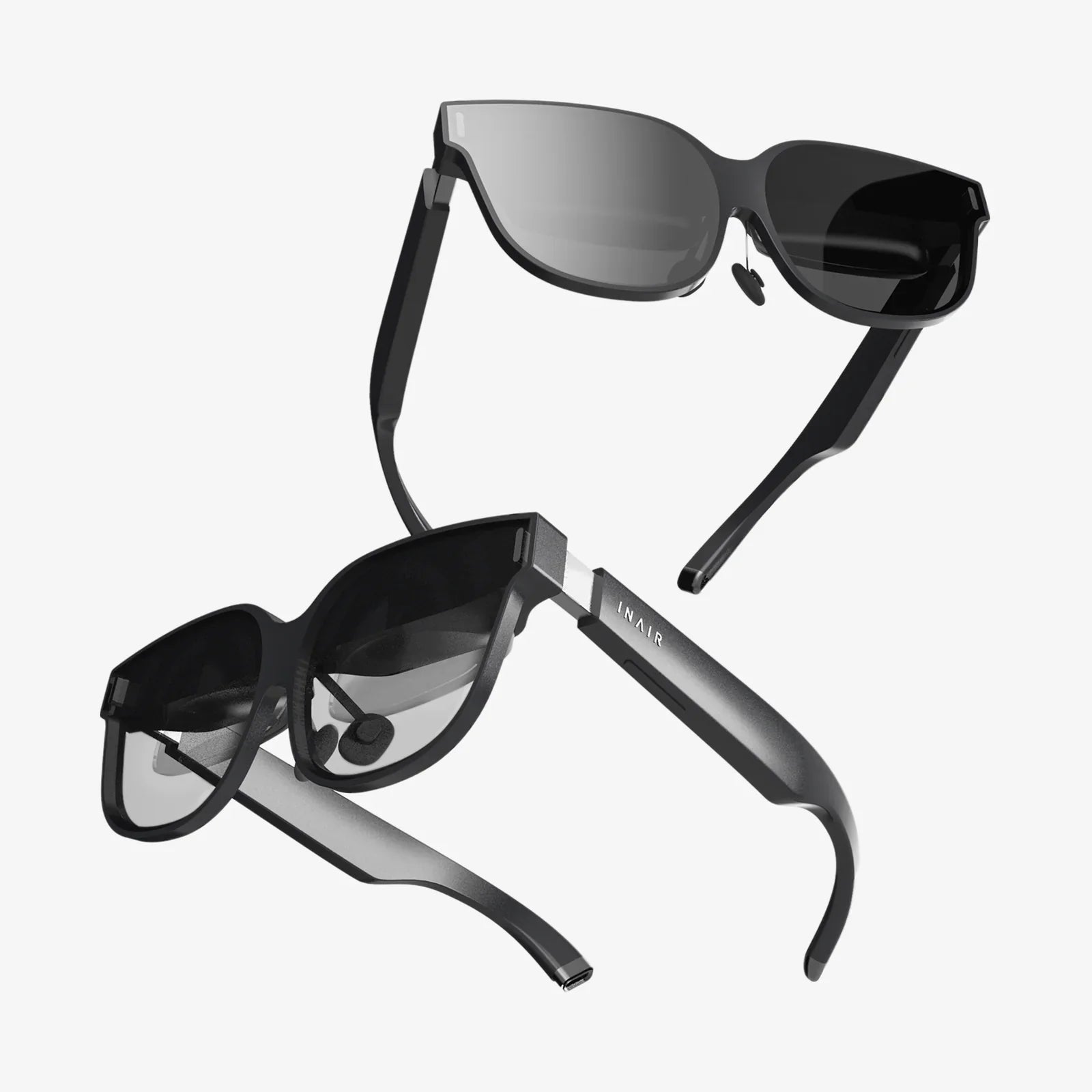
The next evolutionary step was the development of standalone VR and AR headsets. These untethered devices contain all the necessary computing power, sensors, and batteries within the headset itself, granting users unprecedented freedom of movement. This eliminated the need for an expensive gaming PC and the tripping hazard of a cable, making immersive VR truly consumer-friendly. For AR, this has manifested in increasingly sophisticated smart glasses. While current consumer-grade AR glasses often focus on displaying notifications and simple data, enterprise-focused models are powerful tools, overlaying complex schematics and instructions for field technicians, surgeons, and engineers.
Meanwhile, the high-end of VR is still served by PC-tethered headsets, which offer the highest fidelity visuals, the most advanced tracking, and the most immersive experiences for enthusiasts and professionals who require the utmost performance.
Transforming Industries: The Enterprise Revolution
While entertainment captures headlines, the most profound and immediate impact of VR and AR is happening within enterprise and professional fields.
Education and Training: This is perhaps the most transformative application. VR creates perfect, repeatable, and safe simulations for training scenarios that would be dangerous, expensive, or impossible to replicate in the real world. Surgeons can practice complex procedures on virtual patients without risk. Astronauts can simulate spacewalks. Mechanics can learn to repair the latest engine models before they even roll off the production line. This experiential learning dramatically improves knowledge retention and skill acquisition. AR, on the other hand, acts as an in-situ expert, providing real-time guidance. A technician repairing a wind turbine can see animated instructions overlaid directly on the machinery, highlighting which bolt to turn and with what tool.
Design and Prototyping: The automotive, aerospace, and architecture industries have embraced VR and AR as essential parts of their design workflow. Instead of building multi-million dollar physical prototypes, designers and engineers can create and inhabit full-scale 3D models of cars, buildings, and aircraft interiors. They can walk around, through, and inside their designs to evaluate ergonomics, aesthetics, and functionality long before any physical materials are used. This saves immense amounts of time and resources, fostering more iterative and creative design processes. Clients can take a virtual tour of their new home before the foundation is even poured.
Remote Collaboration and Assistance: AR and VR are dismantling geographical barriers for work. Using avatars, teams distributed across the globe can meet in a shared virtual boardroom to review 3D models of a new product as if they were in the same physical room. Even more powerful is AR-assisted remote support. An expert engineer in one country can see through the eyes of a field technician wearing AR glasses on another continent. The expert can then draw arrows and annotations directly into the technician's field of view, guiding them through a repair step-by-step. This "see-what-I-see" capability drastically reduces downtime and travel costs.
Healthcare and Therapy: Beyond surgical training, VR is proving to be a powerful therapeutic tool. It is used for exposure therapy to help patients with phobias (like fear of heights or flying) confront their fears in a controlled, safe environment. It's used for physical rehabilitation, turning repetitive exercises into engaging games to improve patient motivation and outcomes. For patients suffering from chronic pain, immersive VR experiences can act as a powerful non-pharmaceutical distractor, effectively reducing their perceived pain levels.
The Social and Creative Frontier: New Worlds to Explore and Create
The potential for human connection and artistic expression within these mediums is vast and only beginning to be explored.
Social VR Platforms are emerging as the next iteration of social media. Instead of scrolling through a feed, users embody digital avatars and gather in virtual spaces—concert halls, campfires, comedy clubs—to talk, play, and share experiences. The sense of shared presence, of making eye contact and reading body language in a 3D space, fosters a depth of connection that flat video calls cannot match. These platforms are becoming venues for live music events, film festivals, and lectures, making global culture more accessible.
For creators, VR and AR are entirely new canvases. Immersive storytelling allows filmmakers to place the audience inside the narrative, making them an active participant rather than a passive observer. Artists are creating breathtaking 3D sculptures in virtual space, unbound by the laws of physics. Musicians are developing new ways to perform and visualize their music in immersive environments. These tools are democratizing 3D creation, allowing anyone to model, animate, and build in ways that were previously reserved for experts with expensive software.
Navigating the Challenges: The Ethical and Practical Hurdles
For all their promise, the path forward for VR and AR is not without significant obstacles.
Technological Limitations: Despite rapid progress, hardware is not yet perfect. Achieving true visual fidelity equivalent to human eyesight, known as "retinal resolution," remains a challenge. Similarly, delivering truly convincing haptic feedback that replicates the sensation of touch is an area of intense research. For AR, a major hurdle is creating glasses that are socially acceptable—lightweight, fashionable, and with all-day battery life. Furthermore, the immense computational power required for complex simulations and realistic graphics often conflicts with the desire for wireless, untethered freedom.
The Social and Psychological Impact: As we spend more time in synthetic worlds, questions about mental health and social behavior arise. Could overuse lead to increased isolation or a dissociation from the physical world? The concept of the "metaverse"—a persistent network of shared virtual spaces—brings with it profound questions about identity, ownership, and economics. Establishing norms, laws, and ethical frameworks for these digital societies is a challenge we are only beginning to confront.
Privacy and Data Security: This is arguably the most critical challenge. VR and AR headsets are unparalleled data collection devices. They are, in essence, a biometric surveillance platform. They can track your eye gaze, your pupil dilation, your hand movements, your precise location in a room, and even your emotional responses. This data is incredibly valuable but also deeply personal. Protecting this information from misuse, securing it from breaches, and establishing clear, transparent rules about user ownership and consent is paramount to the ethical development of these technologies.
The Future is Already Here: What's Next on the Horizon
The trajectory of VR and AR points towards a future where they are as integrated into our daily lives as smartphones are today. We are moving towards more seamless, intuitive, and powerful interfaces. Brain-computer interfaces, though in early stages, promise a future where we could control digital environments with our thoughts. 5G and edge computing will offload heavy processing to the cloud, enabling incredibly complex and photorealistic experiences on lightweight, wireless devices.
We will see the rise of the spatial web, where the internet evolves from pages on a screen to a layer of information and experience mapped onto our physical world. Your AR glasses will recognize a restaurant and instantly display its menu and reviews. A historical monument will come alive with a virtual reenactment of its past. Your home will be filled with persistent digital artifacts—photos, clocks, art—that only you and your family can see. The fusion of AI with these immersive technologies will create responsive, intelligent environments that can anticipate our needs and adapt to our behavior in real-time.
The line between the virtual and the real will continue to blur, not to replace our physical existence, but to enhance it, to make us more capable, more connected, and more creative. The journey into this new reality has just begun, and its ultimate destination is a world limited only by our collective imagination.
We stand at the precipice of a new dimension of human experience, one where our digital and physical selves will intertwine in ways we are only starting to imagine. The tools to build, explore, and connect within this blended reality are now in our hands, inviting us to become active architects of the future, not just passive consumers of a new technology. The next great adventure isn't waiting to be discovered on a map; it's being coded, designed, and rendered into existence, and it promises to redefine what it means to be present in the world.
Share:
Best VR Headset for iPhone 13: Your Ultimate Guide to Mobile Immersion
New High Tech Glasses Are Redefining Vision and How We Interact With The World