


Imagine sitting in a first-class seat at a blockbuster premiere, feeling the rumble of the soundtrack in your chest as a dragon swoops across a seemingly infinite screen, all while curled up on your own couch or riding a train. This is no longer a fantasy reserved for science fiction; it’s the breathtaking reality offered by the latest generation of virtual cinema glasses, a technological marvel that is quietly revolutionizing how we consume visual media. This isn't just another gadget; it's a passport to a private theater that fits in your pocket, promising an escape from the ordinary and an immersion into the extraordinary, anytime and anywhere.
The Architectural Marvel: How Virtual Cinema Glasses Create a Cinema From Nothing
At their core, virtual cinema glasses are a sophisticated fusion of optics, display technology, and ergonomic design, engineered to trick your brain into perceiving a vast, distant screen. Unlike their bulkier virtual reality predecessors, these devices prioritize a lightweight, comfortable form factor for extended viewing sessions.
The magic begins with two high-resolution micro-OLED or micro-LED displays, one for each eye. These panels are incredibly dense, boasting pixel-per-inch counts that rival or exceed high-end smartphones, ensuring that the virtual screen appears sharp and free of the "screen-door effect" that plagued earlier devices. These tiny displays project the image directly in front of your eyes.
The true genius lies in the optical system. Between the displays and your eyes are complex arrays of precision lenses, including pancake lenses. These advanced optics refract and channel the light from the tiny displays, effectively projecting a virtual image that appears to be many feet away and dozens of feet wide. This creates the sensation of looking at a massive cinema screen rather than a small screen held close to your face, drastically reducing eye strain and selling the illusion completely.
Finally, spatial audio is a critical component. High-fidelity headphones or built-in directional speakers employ advanced algorithms to create a convincing 3D soundscape. When a character speaks off-screen to your left, the sound appears to come from that precise direction within your virtual theater, completing the sensory immersion and making the experience profoundly realistic.
A World of Entertainment: Beyond Just Movies
While the name "cinema glasses" suggests a singular purpose, their application extends far beyond feature films. This versatility is a key part of their appeal, transforming them from a niche movie-watching tool into a broad entertainment and productivity platform.
- The Ultimate Personal Cinema: This is the flagship experience. Streaming services and local media players can be mirrored to the glasses, allowing you to watch your favorite shows and movies on a virtual screen that can feel over 100 inches in size. The privacy is absolute, and the quality is untethered from the limitations of your physical environment's lighting or ambient noise.
- Next-Level Gaming: For gamers, these glasses are a revelation. Connecting to a console, PC, or even a cloud gaming service provides an incredibly immersive experience. The massive field of view fills your periphery, pulling you deeper into the game world. It’s a portable, high-quality alternative to a gaming monitor that offers a level of focus and immersion that is hard to achieve with a traditional TV.
- A Portable Office and Workspace: The productivity applications are surprisingly potent. Imagine having multiple large virtual monitors arrayed around you while you work from a laptop in a coffee shop or on an airplane. You can have a word processor, a web browser, and a communication app all open on vast, clear virtual screens, effectively creating a multi-monitor workstation without the physical bulk.
- Social and Shared Viewing: The experience, while personal, need not be isolating. New software features allow for shared virtual spaces where friends and family can don their own glasses and join you in a virtual theater to watch the same movie simultaneously. You can see avatars of your companions, hear their reactions, and even chat as if you were sitting side-by-side, bridging physical distances.
Weighing the Experience: The Advantages and Current Considerations
Adopting any new technology requires a clear-eyed view of its benefits and its current limitations. Virtual cinema glasses offer a compelling set of advantages but are not yet a perfect replacement for all scenarios.
The Compelling Advantages
The benefits are transformative for many users. The most obvious is portability and space-saving. They eliminate the need for a large physical television and a dedicated, darkened viewing room. Your high-quality entertainment setup is always with you, usable in a small apartment, a hotel room, or even during a commute (as a passenger).
This leads directly to the benefit of unparalleled immersion. By blocking out the external world and presenting a colossal screen, these glasses minimize distractions and allow you to become fully absorbed in the content. The visual and auditory experience is consistently optimized, regardless of your surroundings.
Furthermore, they offer complete privacy. You can watch, game, or work on sensitive projects without worrying about prying eyes looking over your shoulder. This is invaluable in public spaces or shared living environments.
Present Considerations
Despite the wow factor, there are hurdles. For some, potential isolation is a factor. Unlike a TV that a group can gather around, the experience is inherently solo, though shared virtual features are rapidly evolving to address this.
Battery life can be a constraint for marathon viewing sessions, often lasting between 2 to 6 hours on a single charge depending on brightness and content. This necessitates planning for longer movies or having a power bank handy.
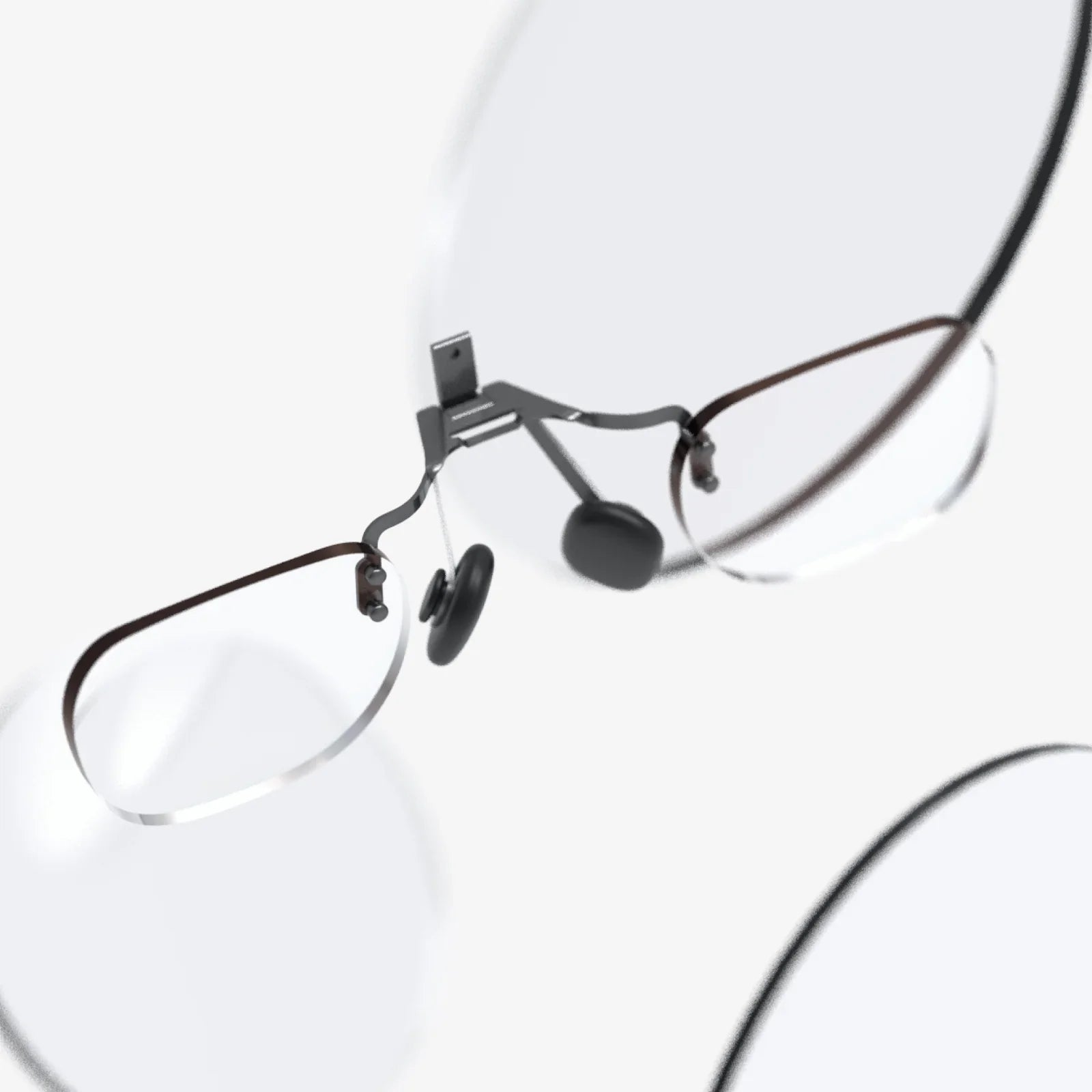
Finally, there is the matter of visual comfort and fit. While much improved, some users may need time to adapt to having a screen so close to their eyes. Furthermore, those who wear prescription glasses must use custom inserts or opt for models with a diopter adjustment to ensure a clear image, adding a layer of complexity and cost.
The Horizon of Viewing: What the Future Holds
The technology behind virtual cinema glasses is advancing at a breakneck pace. The future promises even thinner, lighter designs with higher resolution displays that push ever closer to retinal clarity. We can expect wider fields of view, more intuitive gesture and eye-tracking controls, and deeper integration with our digital ecosystems.
Perhaps the most exciting frontier is the integration with spatial computing and augmented reality (AR). Future iterations will likely allow digital screens to be pinned persistently to your real-world environment, enabling you to place a virtual television on your real wall or have multiple floating windows for productivity that remain in place as you move. This will blur the line between our physical and digital worlds, making the glasses an all-day wearable device for both work and play.
As the technology matures and becomes more accessible, it has the potential to fundamentally reshape our living spaces and entertainment habits. The need for a physical television in every home may diminish, replaced by a single, powerful personal device that can project any screen you desire, anywhere you are.
The era of being tethered to a couch and a fixed screen is ending. Virtual cinema glasses are not merely an accessory; they are the vanguard of a more personal, flexible, and immersive age of digital experience. They represent the culmination of decades of display technology, miniaturization, and software innovation, all focused on one goal: freeing our entertainment and work from the constraints of the physical world and placing a universe of possibilities directly before our eyes.
Share:
Augmented Reality Industrie: The Invisible Revolution Reshaping Our World
Augmented Reality Maintenance: Revolutionizing How We Repair and Maintain Complex Systems