


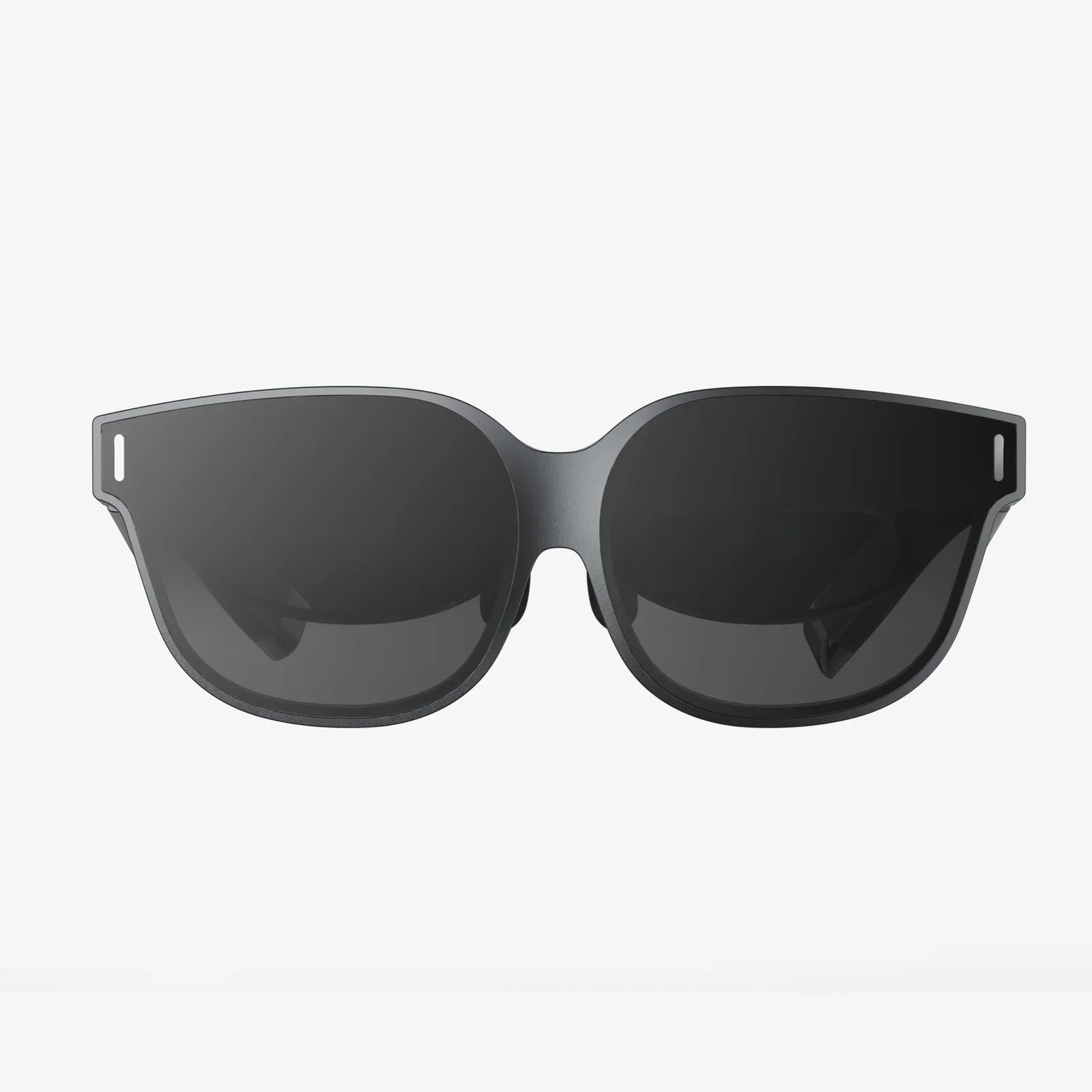
Imagine a workspace unshackled from the physical world, where your screen real estate is limited only by your ambition. This is no longer the stuff of science fiction. The convergence of powerful virtual reality hardware and sophisticated software is birthing a new paradigm in personal computing, one where the concept of a 'desktop' is being radically redefined. For professionals, creators, and power users drowning in a sea of open applications and cramped displays, the promise of Virtual Desktop VR, particularly its implementation of dual monitors, offers a tantalizing glimpse into the future of how we interact with our digital lives. It’s a leap from merely managing windows to inhabiting your workspace.
The Tyranny of the Physical Monitor and the Promise of Escape
For decades, the quest for productivity has been tied to the physical. We've stacked monitors on our desks, investing in elaborate stands and graphics cards powerful enough to drive them. Yet, even with two, three, or even four screens, we hit a wall. There's only so much space on a physical desk, and only so many pixels a graphics card can push before demanding a significant financial investment. The constraints are tangible: weight, cost, cables, and the sheer real estate these devices consume.
Virtual reality, however, operates on an entirely different set of rules. It deals in virtual space, which is inherently infinite and infinitely malleable. The concept of a Virtual Desktop application is simple yet profound: it projects your actual computer's operating system into a virtual environment. You wear a headset and suddenly, your familiar desktop is all around you. But the true magic, the real game-changer for workflow, is the ability to not just replicate a single screen, but to spawn multiple, high-resolution virtual monitors—true VR dual monitors that behave exactly like their physical counterparts.
How Virtual Desktop VR Dual Monitors Actually Work
At its core, the technology functions through a elegant combination of software running on your computer and a companion application on the VR headset. The computer software captures the display output and encodes it into a video stream. This stream is then sent, typically via a high-speed Wi-Fi connection or a cable, to the headset. The VR application decodes this stream and renders it within the virtual environment on the geometry of a virtual screen.
When it comes to dual monitors, the software is capable of capturing two distinct display outputs from your computer. These are then positioned in virtual space as separate entities. The sophistication of modern systems allows you to:
- Customize Size and Curvature: Do you want two massive, flat screens or a gently curved wraparound display that fills your peripheral vision? The choice is yours. You can adjust the size of each virtual monitor to be far larger than any affordable physical panel.
- Control Depth and Position: Float your screens close for focused work or push them back to create a more cinematic, less imposing view. This control over depth is something impossible with physical setups.
- Set the Environment: The backdrop of your virtual workspace is not a wall. It can be a serene mountaintop, a quiet beach, a space station, or a minimalist void. This reduces visual clutter and can significantly enhance focus.
The key point is that from your computer's perspective, these are real monitors. You can drag and drop windows between them, play full-screen video, and even run applications that require dedicated full-screen exclusive mode. The headset's motion controllers, and increasingly, hand-tracking technology, allow you to interact with these screens as if you were using a laser pointer in the air, clicking and dragging with intuitive gestures.
The Tangible Benefits: Why Make the Switch?
The advantages of a VR dual monitor setup extend far beyond the simple novelty of having big screens. The benefits are practical and impactful.
Unparalleled Screen Real Estate on a Budget
Consider the cost of two high-quality, large-format physical monitors, plus the desk space to accommodate them and the GPU to drive them at high resolution. A single VR headset, which provides a canvas for multiple virtual screens of immense scale, often represents a significantly lower financial and spatial investment. It's the ultimate space-saving productivity hack.
Deep Focus and Immersive Work
By donning a headset, you effectively shut out the distractions of your physical environment. The outside world fades away, leaving you and your work. This enforced immersion can lead to states of deep focus, dramatically increasing productivity on complex tasks like coding, writing, or designing. There are no colleagues walking by, no phone notifications lighting up—just you and your infinite digital canvas.
A Truly Portable Multi-Monitor Powerhouse
For digital nomads and frequent travelers, this is a killer feature. Instead of trying to fit a portable monitor into a backpack, you carry your entire multi-screen setup on your head. In any hotel room or coffee shop, you can instantaneously create a perfect, personalized workspace. All you need is your laptop and your headset.
Ergonomic Flexibility
With physical monitors, your neck is a prisoner to their fixed positions. In VR, the screens are locked relative to your head or your controller, meaning you can work comfortably lying on your back, reclined in a chair, or in any position you find comfortable, without straining your neck. You can look at a screen straight ahead simply by turning your head, not your entire body.
Navigating the Current Challenges
While the future is bright, the present technology is not without its hurdles. It's crucial to have realistic expectations.
- Visual Fidelity: Despite rapid improvements, the resolution-per-degree of current-generation VR headsets still doesn't match the crisp, pixel-dense clarity of a modern 4K physical monitor. Text can sometimes appear slightly softer, requiring supersampling and careful adjustment of virtual screen distance for optimal clarity for long-term work.
- Comfort and Form Factor: Wearing a headset for an entire eight-hour workday is a challenge. While headsets are getting lighter and more balanced, fatigue can set in. This is an area where hardware manufacturers are intensely focused, with improvements in weight distribution and facial interfaces making steady progress.
- The Social Isolation Factor: Being completely immersed in a headset cuts you off from your immediate physical environment. This makes it difficult to be aware of colleagues approaching your desk or to take a quick note from someone in the room. Passthrough cameras, which allow you to see the real world through your headset, are a developing solution to this problem.
- GPU Overhead: Running a VR environment and encoding multiple high-resolution video streams is computationally expensive. You need a reasonably powerful graphics card to ensure a smooth, low-latency experience without stuttering or compression artifacts.
The Future is Virtual, and It's Multi-Screen
The trajectory of this technology is unmistakable. As VR headsets evolve into lighter, more comfortable glasses with resolutions that meet or exceed retinal acuity, the visual fidelity barrier will vanish. The integration of high-quality color video passthrough will seamlessly blend the real and virtual worlds, allowing digital screens to sit alongside physical keyboards and coffee cups. Advancements in eye-tracking and gesture control will make interacting with these vast virtual spaces more intuitive than using a physical mouse.
We are moving towards a world where your computing environment is no longer a device on your desk, but a context-aware digital layer over your reality. The virtual desktop with dual monitors is merely the first, foundational step in this revolution. It proves the concept that our digital workspace can be dynamic, personalized, and boundless.
For anyone feeling constrained by their current setup, the message is clear: the walls of your digital prison are virtual, and they are already beginning to crumble. The tools to step into a workspace of impossible dimensions are here today, waiting to transform your clutter of windows into a horizon of limitless potential. The question is no longer if you'll make the leap, but when you'll decide to leave the confines of your physical desk behind for good.
Share:
Where to Buy Prescription Smart Glasses Online: Your Ultimate Guide to Navigating the Digital Eyewear Revolution
What to Look for Smart Glasses Features: A Comprehensive Guide to the Future on Your Face