


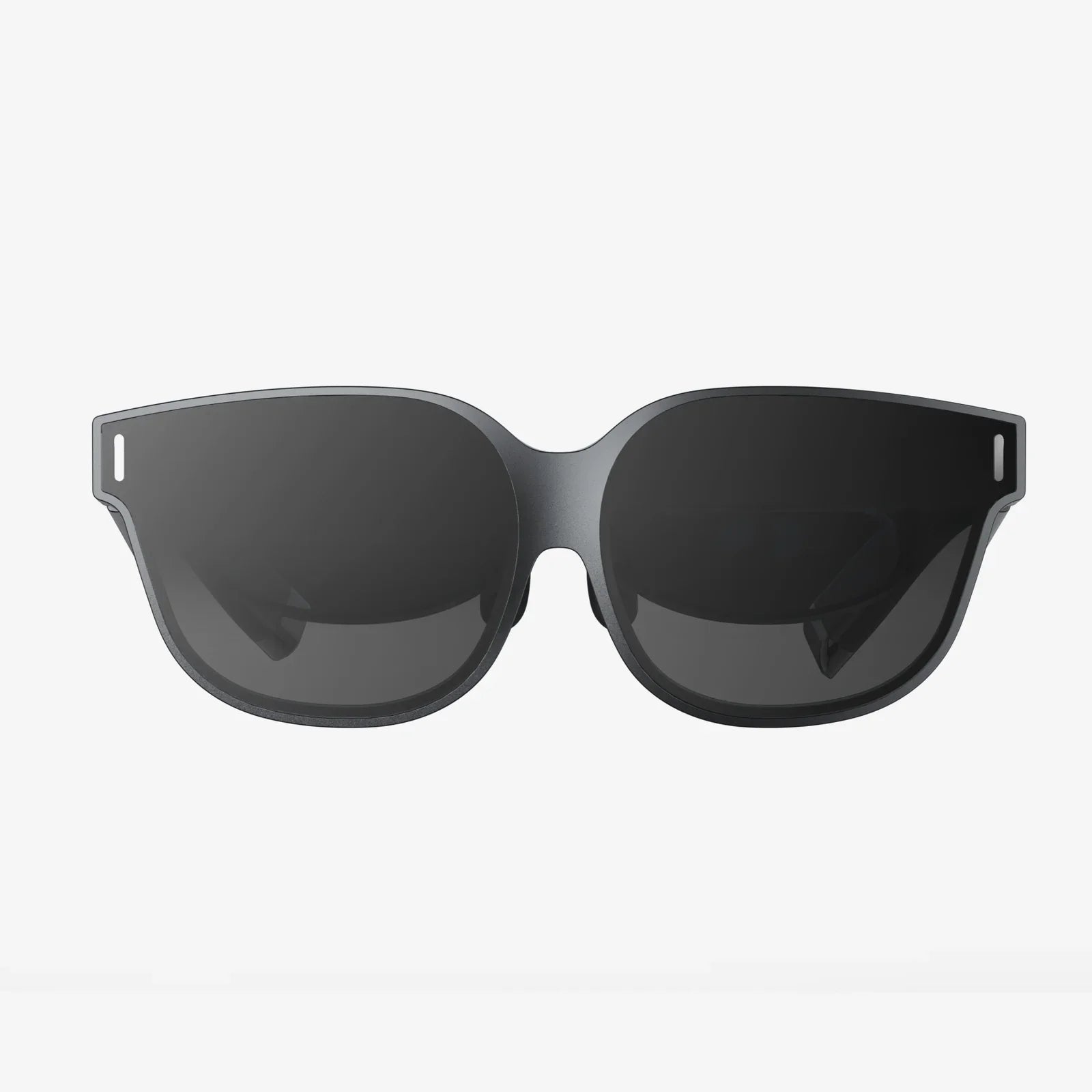
- by wangfred
Virtual Desktop VR Multiple Monitors: The Ultimate Workspace Revolution
- by wangfred
Imagine your desk, but unshackled. The monitors aren't heavy, expensive slabs of glass and metal bolted to your furniture; they are dynamic, weightless windows into your digital world, arrayed around you in a perfect arc, limited only by your ambition. This isn't a scene from a science fiction film; it's the tangible, available-now reality of using a Virtual Desktop VR multiple monitors setup. This technological leap is poised to fundamentally redefine our relationship with work, creativity, and digital space, moving us from a constrained, physical paradigm into an expansive, limitless virtual one. For professionals, creatives, and power users drowning in the constant context-switching of a single screen or even a traditional multi-monitor rig, this represents nothing less than the ultimate productivity and immersion upgrade.
For decades, the trajectory of personal computing has been one of expansion. We moved from command-line interfaces to graphical ones, from single-tasking operating systems to multi-tasking powerhouses. The monitor followed a similar path. One screen became two; two became three, and for some, three became a wall of displays. This was a logical progression: more screen real estate directly correlates to less time spent minimizing, maximizing, and alt-tabbing between applications. However, this physical expansion has always hit a hard wall—the walls of the room itself. Desk space, cost, cable management, power consumption, and the sheer physical footprint create a natural ceiling. Virtual reality, specifically through the lens of a Virtual Desktop application, smashes through that ceiling.
At its core, a Virtual Desktop VR system is a software application that projects your computer's operating system—be it Windows, macOS, or Linux—into a virtual, three-dimensional space. Using a VR headset, you are placed inside a customizable environment, like a serene virtual office, a calm space station, or even a theater. Your physical monitors are replicated here, but that's just the beginning. The true power lies in the ability to spawn additional, virtual-only screens that exist solely within the VR world. These virtual monitors behave exactly like their physical counterparts. You can drag windows to them, play video full-screen, code, design, or write on them. They are fully interactive portals to your computer's resources.
Setting up this futuristic workstation is surprisingly straightforward. The required components are a powerful desktop or laptop computer, a capable VR headset, and the Virtual Desktop software. The software acts as a bridge, using efficient streaming technology to encode the video output from your computer and transmit it wirelessly or via a cable to the headset with high fidelity and low latency. Inside the headset, sophisticated algorithms track your head and hand movements, allowing you to naturally look around your virtual office and use motion controllers or a tracked keyboard as laser pointers to interact with your screens.
The advantages of transitioning to a VR multiple monitor setup extend far beyond mere novelty. They offer tangible, transformative benefits for a wide range of users.
This is the most obvious and powerful benefit. You are no longer limited by the number of display ports on your GPU or the size of your desk. Need five screens for your development environment? A sprawling timeline for video editing? A dedicated monitor for communications and another for reference materials? It's as simple as spawning them into your virtual space. You can arrange them in a curved arc, stack them vertically, or place them anywhere in your 360-degree field of view. The workspace conforms to your needs, not the other way around.
When you put on a VR headset, you effectively create a sensory deprivation chamber for productivity. The outside world—the distracting clutter of your real desk, a noisy office, a busy household—fades away. Your entire visual field is consumed by your work. This deep immersion can lead to states of intense focus and flow that are incredibly difficult to achieve in a traditional setting, potentially doubling or tripling productive output on complex tasks.
Traditional desks lock you into a single, often unhealthy, posture. With a virtual workspace, your monitors are fixed in virtual space, not relative to your physical desk. This allows you to work in positions that are far more ergonomic. You can lie back in a comfortable chair and have your screens positioned perfectly on the ceiling. You can stand up and have them rise with you. You can even take a break and watch a movie on a virtual IMAX-sized screen from the comfort of your couch, all within the same session.
For those who travel or work from multiple locations, the dream of a perfect multi-monitor setup has always been just that—a dream. No more. With a VR headset and laptop in your bag, you carry your entire, personalized workspace with you. Anywhere you can set down your laptop, you can instantly be surrounded by your ideal digital environment, turning a coffee shop table or a hotel room into a command center.
While the technology is revolutionary, it is not without its current challenges. The weight and comfort of headsets, while improving, can still be a barrier to wearing them for entire eight-hour workdays. Battery life for wireless headsets also imposes a time limit, though this can be mitigated with external battery packs or a wired connection. There is also an adaptation period required to get used to interacting with a keyboard you can't see, though software solutions like passthrough cameras that overlay your real keyboard into the virtual world are becoming standard and highly effective.
Furthermore, this represents a new paradigm of human-computer interaction. It requires a shift in mindset from a 2D plane to a 3D sphere of information. The learning curve is shallow but present. However, the industry is acutely aware of these hurdles. Every generation of hardware brings lighter, more comfortable, higher-resolution headsets with better battery life. Software is becoming more intuitive and powerful by the month.
While anyone can benefit, certain professions are particularly well-suited to this revolution:
The technology of Virtual Desktop VR multiple monitors is not merely an incremental improvement; it is a foundational shift. It moves us from interacting with computers on their terms—confined to a rectangular box on a desk—to interacting on our terms, in a space we design and control. It promises a future where our digital workspace is as flexible, dynamic, and boundless as our thoughts. The barriers of the physical world are dissolving, and the first pioneers to step through this virtual looking glass are already experiencing a level of productivity and creative freedom that was, until very recently, the stuff of dreams. The question is no longer if this will become the standard for high-end computing, but when. And for those willing to embrace it today, the future of work is already here.