


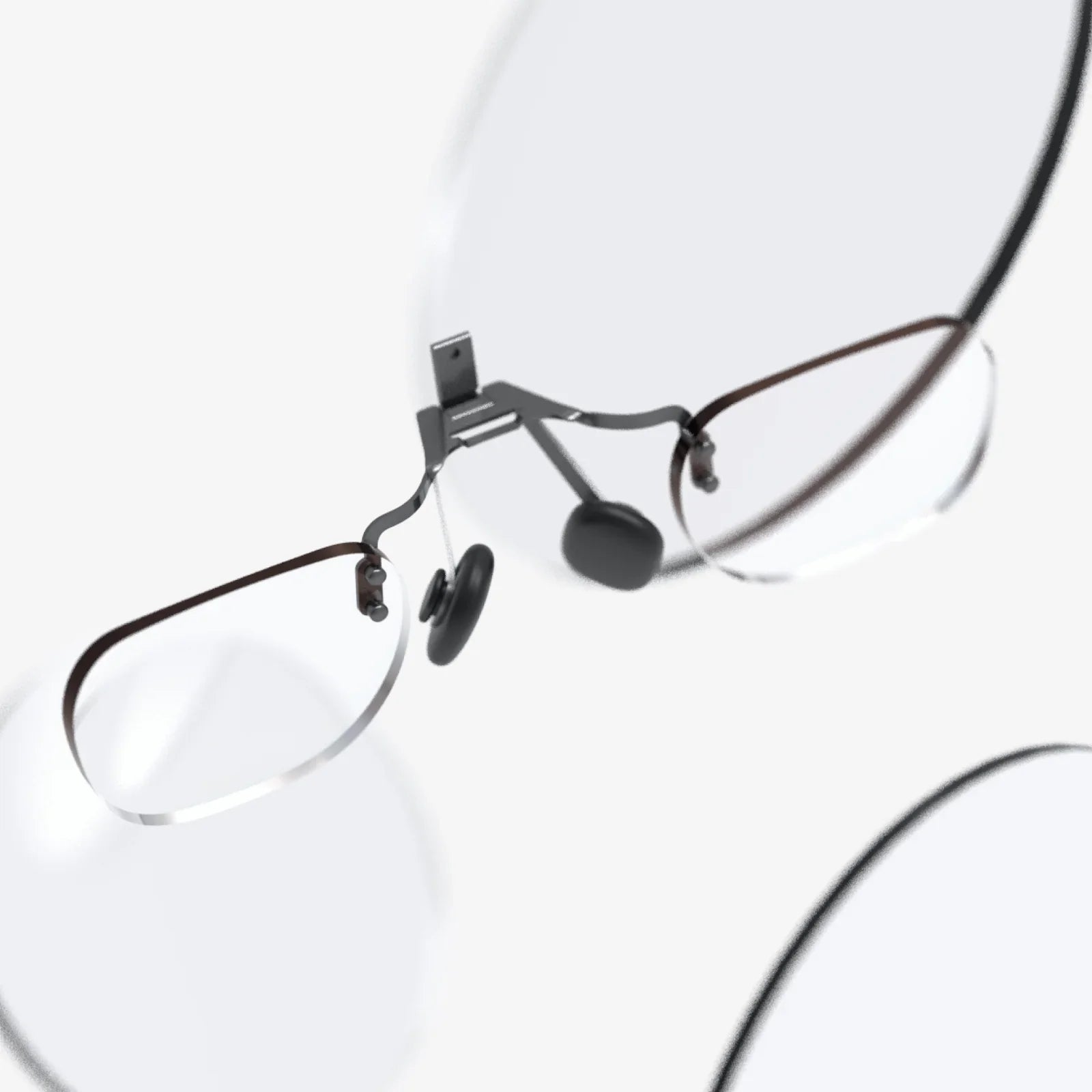
Imagine a world where your digital workspace is limited only by your imagination, not by the physical screens on your desk. This is no longer the realm of science fiction; it's the tangible reality being forged by advanced virtual display technology. This revolutionary approach to visual computing is poised to dismantle the traditional constraints of monitors, projectors, and even physical space itself, offering a glimpse into a future where information and immersion coexist seamlessly in our perceptual field.
The Architectural Core: How Virtual Display Technology Functions
At its essence, a virtual display system is a sophisticated software and hardware solution designed to generate and manage digital visual spaces that are not directly tethered to a physical display component. Unlike simply mirroring a screen or extending a desktop, this technology creates high-fidelity, interactive visual environments that can be manipulated in three dimensions.
The magic happens through a combination of powerful rendering engines, precise tracking systems, and innovative display methods. Advanced algorithms work in real-time to project a stable, crisp image that behaves as if it were on a physical surface, regardless of the user's perspective or movement. This requires immense computational power to handle the low-latency rendering necessary to prevent disorientation and ensure a seamless experience. The technology often leverages techniques like foveated rendering, which prioritizes high resolution only where the user's eye is looking, optimizing performance and creating a incredibly lifelike result.
Beyond the Screen: Unlocking Expansive Digital Workspaces
The most immediate and impactful application for this technology is in the complete redefinition of the computer workspace. Professionals are constantly battling screen real estate limitations, often resorting to complex arrays of multiple monitors that are expensive, cumbersome, and inefficient.
Virtual display solutions shatter these constraints. A user can summon multiple large-format, high-resolution windows and arrange them in a 360-degree arc around their field of view. A financial analyst could have live market data streams on their left, modeling software directly in front, and communication tools on their right—all without turning their head or switching tabs on a single, cramped monitor. This isn't just about having more windows open; it's about organizing complex workflows in a spatially intuitive way that mirrors human thought processes. The cognitive load of managing applications is dramatically reduced, leading to unprecedented levels of focus and productivity. The physical desk is cleared of clutter, replaced by a clean, customizable, and infinitely large digital canvas.
A New Dimension of Visualization for Creatives and Engineers
For designers, architects, engineers, and medical professionals, this technology is nothing short of transformative. The ability to project and interact with 3D models at life-size scale changes the entire design and review process. An automotive engineer can walk around a full-scale virtual prototype of a new vehicle, inspecting components from every angle without a single physical part being manufactured. Surgeons can practice complex procedures on detailed, virtual anatomical models that hover in the operating theater, improving planning and outcomes.
This immersive visualization allows for a deeper understanding of scale, spatial relationships, and design intent that is simply impossible to achieve on a flat screen. Collaborative design sessions are revolutionized, as teams in different locations can all stand within the same virtual model, pointing, annotating, and modifying the design in real-time as if it were a physical object in the room with them. This erases the barriers of distance and creates a truly shared understanding, accelerating innovation and reducing errors.
Revolutionizing Training, Simulation, and Remote Assistance
The implications for training and simulation are profound. From flight simulators for pilots to emergency response drills for first responders, virtual displays create hyper-realistic training environments that are both safe and incredibly effective. Trainees can practice dangerous procedures repeatedly without risk, building muscle memory and decision-making skills in a controlled setting. The fidelity of these simulations enhances the transfer of learning, ensuring that skills developed virtually are directly applicable in the real world.
Furthermore, the technology is a powerful tool for remote assistance and collaboration. A field technician wearing compatible equipment can receive live guidance from an expert thousands of miles away. The expert can see the technician's view and virtually annotate the real world, circling components, displaying instructions, or drawing wiring diagrams directly onto the technician's field of vision. This overlays crucial knowledge onto the physical task at hand, dramatically reducing resolution time, minimizing errors, and making expert knowledge instantly accessible anywhere on the globe.
The Seamless Merging of Physical and Digital Realms
Perhaps the most exciting frontier for virtual display technology is its role in the development of the spatial computing and the metaverse. It acts as a fundamental bridge, allowing digital information and objects to coexist and interact with our physical environment in a coherent and believable way. Instead of looking at a digital world through a window (a screen), users can step into it or have it spill into their living room.
This enables experiences that were previously unimaginable. A virtual pet could play on your actual carpet, responding to your real-world movements. Historical educational content could involve a virtual Roman senator giving a speech in your local park. Furniture buyers could place true-to-scale virtual couches and tables in their actual living room to see how they fit and look before purchasing. This seamless blend of real and virtual, powered by precise spatial mapping and convincing display technology, will redefine entertainment, social connection, education, and commerce.
Navigating the Challenges: Hardware, Comfort, and the Human Factor
Despite its immense potential, the path forward is not without obstacles. Current hardware, while advancing rapidly, still faces hurdles related to resolution, field of view, and form factor. For the technology to become ubiquitous, the devices need to be as comfortable and socially acceptable as a pair of eyeglasses, offering all-day battery life and stunning visual clarity.
User comfort is also paramount. Issues like vergence-accommodation conflict—where the eyes struggle to focus on virtual objects at different depths—can cause strain and fatigue for some users. Solving these human-factor challenges through both software innovation and hardware design is critical. Furthermore, the creation of intuitive user interfaces for navigating these vast virtual spaces is an ongoing area of development. How does one effortlessly manage dozens of floating windows? The solutions must be elegant, simple, and powerful to avoid creating a new form of digital clutter.
The Horizon: What the Future Holds for Immersive Computing
Looking ahead, the evolution of this technology points towards even deeper integration with our lives and biology. The eventual move towards direct retinal projection or even more advanced neural interfaces could make dedicated hardware obsolete, instead projecting visuals directly into our perception. The line between the digital and the physical will continue to blur until it becomes imperceptible.
We are moving towards a future where context-aware information is effortlessly presented within our environment. Your virtual display could show a recipe next to the ingredients you're holding, translate a foreign street sign in real-time as you look at it, or display a colleague's avatar in the empty chair next to you during a meeting. This ambient computing paradigm, powered by virtual display tech, will make technology less something we use and more something we experience—a seamless layer of intelligence integrated into our reality.
The potential is staggering, promising a fundamental shift not just in how we compute, but in how we connect with information, with each other, and with the very fabric of reality around us. The screen, as we know it, is fading away, and in its place is rising a dynamic, interactive, and boundless digital horizon waiting to be explored.
Share:
3D Video Processing: The Complete Guide to the Technology Reshaping Our Visual World
AR Glasses Accessibility News: How Augmented Reality is Shattering Barriers for People with Disabilities