


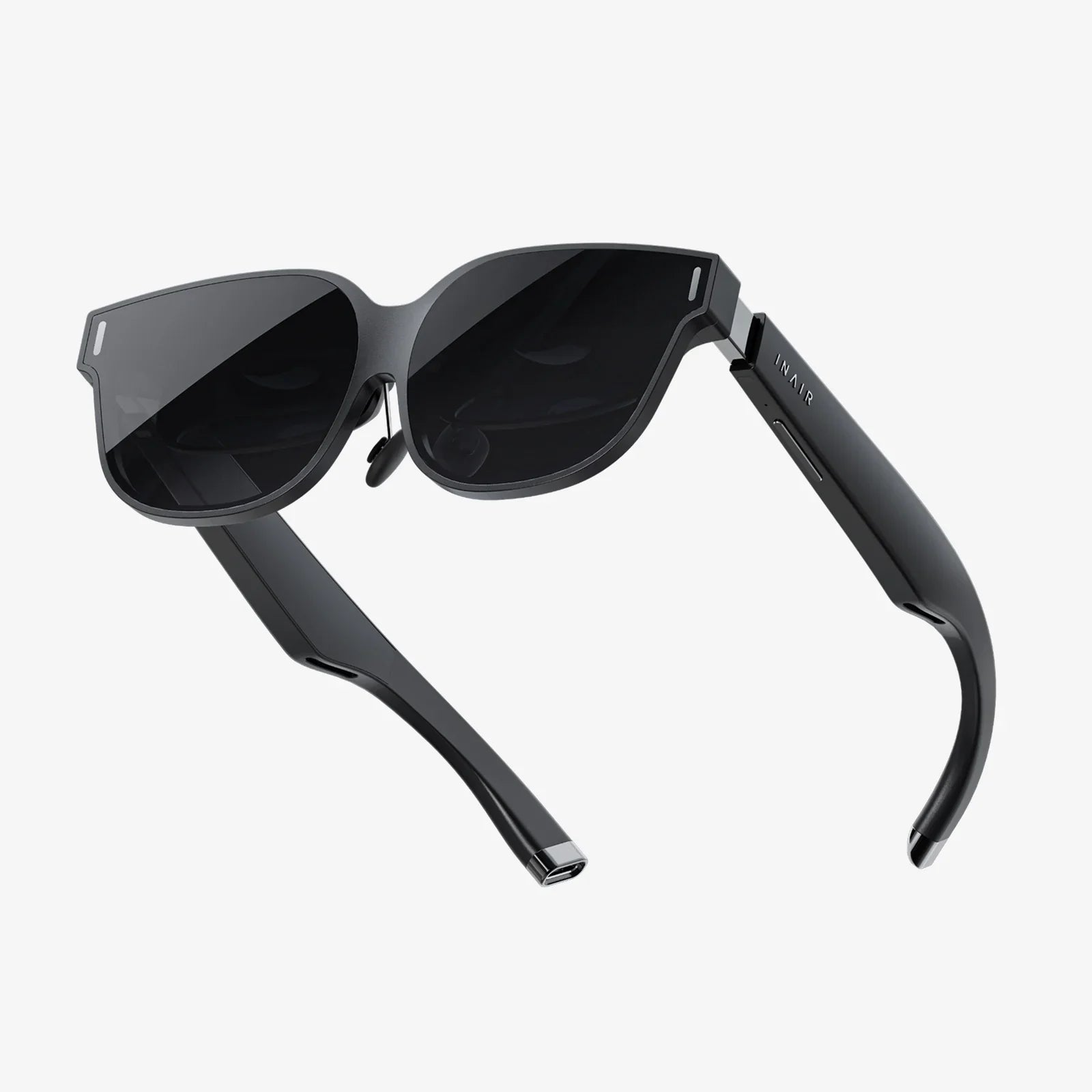
Imagine a world where information floats before your eyes, digital creatures play on your living room floor, and expert guidance is available with a glance. This is no longer the realm of science fiction; it is the burgeoning reality being unlocked by virtual eyewear. This transformative technology, perched on the bridge of our noses, is poised to become the next great computing platform, dissolving the barriers between the digital and the physical and fundamentally altering our perception of reality itself. The journey from clunky prototype to sleek, powerful interface is accelerating, and its implications are nothing short of revolutionary.
Beyond the Screen: Defining the Virtual Eyewear Spectrum
Virtual eyewear is an umbrella term encompassing a range of head-worn devices that overlay computer-generated information onto the user's field of view. It's crucial to understand the distinctions within this spectrum, as each type serves a different purpose and offers a unique experience.
Augmented Reality (AR) Glasses
AR glasses are designed to enhance the real world. They use transparent lenses or cameras to show you your physical environment and then project digital imagery, text, or data onto it. This allows you to see both worlds simultaneously. Think of navigation arrows painted onto the street in front of you, recipe instructions hovering over your mixing bowl, or a colleague's 3D model appearing on an empty chair during a video call. The goal of AR is to supplement reality, not replace it.
Virtual Reality (VR) Headsets
VR headsets are fully immersive. They block out the physical world entirely and replace it with a completely digital, computer-generated environment. Users are transported to a virtual space, whether it's a game world, a simulated training ground, or a virtual meeting room. These devices typically employ high-resolution displays for each eye and advanced tracking systems to monitor head and, often, hand movements, making the user feel present within the virtual space.
Mixed Reality (MR) Headsets
Mixed Reality sits at the intersection of AR and VR. MR devices, often more advanced, can understand and interact with the real world. They don't just overlay digital objects; they anchor them to physical surfaces. A virtual character in an MR experience can hide behind your real sofa, and a virtual TV can be placed on your real wall. This blending requires sophisticated sensors and cameras to constantly map and understand the geometry of the user's surroundings, creating a seamless fusion where digital and physical objects coexist and interact.
The Engine Behind the Experience: Core Technologies
The magic of virtual eyewear is powered by a sophisticated fusion of hardware and software, all miniaturized to fit into a wearable form factor.
Display Systems: Painting Light onto Reality
How these devices present images is a feat of engineering. Many AR glasses use waveguides—thin, transparent pieces of glass or plastic that use diffraction gratings to channel light from a micro-projector on the temple into the user's eye. Others use micro-LED displays, offering incredible brightness and efficiency. VR headsets typically use fast-switching LCD or OLED displays positioned very close to the eyes, with lenses in between to focus the image and create a wide field of view.
Spatial Mapping and Tracking: Knowing Where You Are
For digital content to feel like it's part of our world, the device must understand the world itself. This is achieved through a combination of technologies:
- Cameras: Multiple cameras track the environment and, often, the user's hands.
- Inertial Measurement Units (IMUs): These sensors, including accelerometers and gyroscopes, track the precise rotation and movement of the head.
- LiDAR (Light Detection and Ranging): Some advanced devices use LiDAR scanners to fire out lasers and measure their return time, creating a precise depth map of the room in real-time. This allows for accurate occlusion, where real objects can convincingly block virtual ones.
Processing Power and Connectivity
Processing all this sensor data and rendering complex 3D graphics requires immense computational power. Some devices are tethered to a powerful external computer or console. Others are "standalone," packing a smartphone-level system-on-a-chip (SoC) directly into the headset, granting freedom of movement at the cost of some raw power. Connectivity, especially 5G, is also becoming crucial for streaming high-fidelity experiences and enabling cloud-based processing to reduce the device's weight and energy demands.
Transforming Industries: The Professional Power of Virtual Eyewear
While consumer applications grab headlines, it is in enterprise and professional settings that virtual eyewear is already delivering profound value and a clear return on investment.
Revolutionizing Design and Manufacturing
Engineers and designers are using virtual eyewear to visualize and interact with 3D prototypes at full scale before any physical materials are used. A car designer can walk around a life-size hologram of a new vehicle model, examining curves and proportions from every angle. On the factory floor, assembly line workers can have step-by-step instructions and diagrams overlaid directly onto the machinery they are assembling, reducing errors and drastically cutting training time.
Enhancing Healthcare and Surgery
Surgeons are using AR to see critical information, such as a patient's vital signs or 3D reconstructions of tumors from MRI scans, directly in their field of view during procedures without looking away at a monitor. Medical students can practice complex surgeries on virtual patients, and physical therapists can use AR guides to help patients perform rehabilitation exercises with perfect form at home.
Supercharging Remote Assistance and Field Service
A field technician repairing a complex piece of equipment can share their live view with an expert located thousands of miles away. The expert can then draw arrows, highlight components, and display manuals directly into the technician's view, guiding them through the repair as if they were standing right there. This "see-what-I-see" capability resolves issues faster, reduces travel costs, and preserves invaluable institutional knowledge.
The Social and Consumer Frontier: Connection, Entertainment, and Expression
The potential for virtual eyewear to reshape our daily lives and social interactions is vast, though it presents unique challenges.
The Future of Social Media and Communication
Future communication may move beyond flat video calls into shared virtual spaces. Instead of talking to boxes on a screen, you could share a virtual campfire with friends from across the globe, feeling a sense of shared presence as your avatars—or even photorealistic holograms—interact naturally. Social media could evolve from a feed you scroll to an environment you inhabit, with digital art on your walls and shared experiences happening around you.
A New Paradigm for Entertainment
Entertainment will be utterly transformed. Imagine watching a film where the action unfolds all around you in your living room, or attending a live concert where your favorite band performs on your coffee table. Gaming will become a truly physical and immersive activity, blending your playground with the game world. Virtual eyewear offers a canvas for storytelling and play that is limited only by imagination.
Digital Identity and Fashion
As these devices become more common, they will become a new form of personal expression. Just as people choose their smartphone case or their frames for regular glasses, virtual eyewear will be a fashion statement. Furthermore, the digital overlays we choose—the filters, avatars, and assets we display—will become integral parts of our digital identity, a layer of expression we wear over the physical world.
Navigating the Uncharted: Challenges and Ethical Considerations
The path to an everyday augmented world is not without significant obstacles and serious questions that society must address.
The Hardware Hurdles: Form, Function, and Accessibility
For mass adoption, the devices must become smaller, lighter, more powerful, and have all-day battery life. They need to be as socially acceptable and comfortable as a pair of sunglasses. The visual experience must be flawless, with high resolution, wide field of view, and comfortable focus. Currently, there is often a trade-off between performance and practicality, a gap that engineers are racing to close.
The Privacy Paradox: A Device That Always Sees
Virtual eyewear, with its always-on cameras and microphones, represents a unprecedented privacy challenge. The potential for constant, passive data collection about everything and everyone the user sees is staggering. Robust regulations and clear, transparent user controls are essential to prevent a dystopian future of perpetual surveillance. Who owns the data of the world that these devices scan and map?
The Societal Impact: Digital Divides and Reality Blur
Will this technology create a new digital divide, separating those who can afford and understand it from those who cannot? There is also a risk of reality blur, where the lines between real and virtual become so thin that it impacts mental health and social cohesion. Furthermore, the potential for hyper-targeted advertising and informational filters could create even more polarized and manipulated experiences. Establishing digital etiquette for these devices in public spaces is another social hurdle that will need to be overcome.
Glimpsing the Horizon: The Future of Sight
The trajectory of virtual eyewear points toward a future where the technology becomes increasingly invisible and integrated into our lives.
The ultimate goal for many in the field is the development of true contact lenses or even neural interfaces that can project imagery directly onto the retina or the visual cortex, eliminating the need for a physical device altogether. This would represent the final step in making the interface to our digital lives completely seamless.
We are also moving toward a world of contextual computing, where your eyewear understands your situation and provides relevant information without you even asking. It could recognize a person you met once and discreetly display their name, translate a street sign in a foreign language in real-time, or warn you of a potential hazard you might not have seen. The device will shift from being a tool you actively use to an intelligent assistant that passively enhances your perception and cognition.
The journey of virtual eyewear is just beginning. It is a technology that holds the dual promise of immense utility and profound disruption. It challenges us to reimagine not just what is possible, but what is desirable. It asks us to define the boundaries of our digital and physical selves and to build a future where technology amplifies our humanity rather than replaces it. The next era of human-computer interaction is dawning, and it will be seen through a new lens.
We stand at the precipice of a sensory revolution, where the very way we perceive and interact with reality is on the cusp of a fundamental rewrite. The promise of virtual eyewear extends far beyond convenience; it's about augmenting human potential, unlocking new forms of creativity, and connecting in ways previously confined to our dreams. The question is no longer if this future will arrive, but how quickly we can adapt to its breathtaking possibilities and thoughtfully navigate the profound questions it raises about our world and our place within it.
Share:
Phone Glasses: The Invisible Bridge Between You and the Digital World
Catalog VR The Ultimate Immersive Shopping Experience