


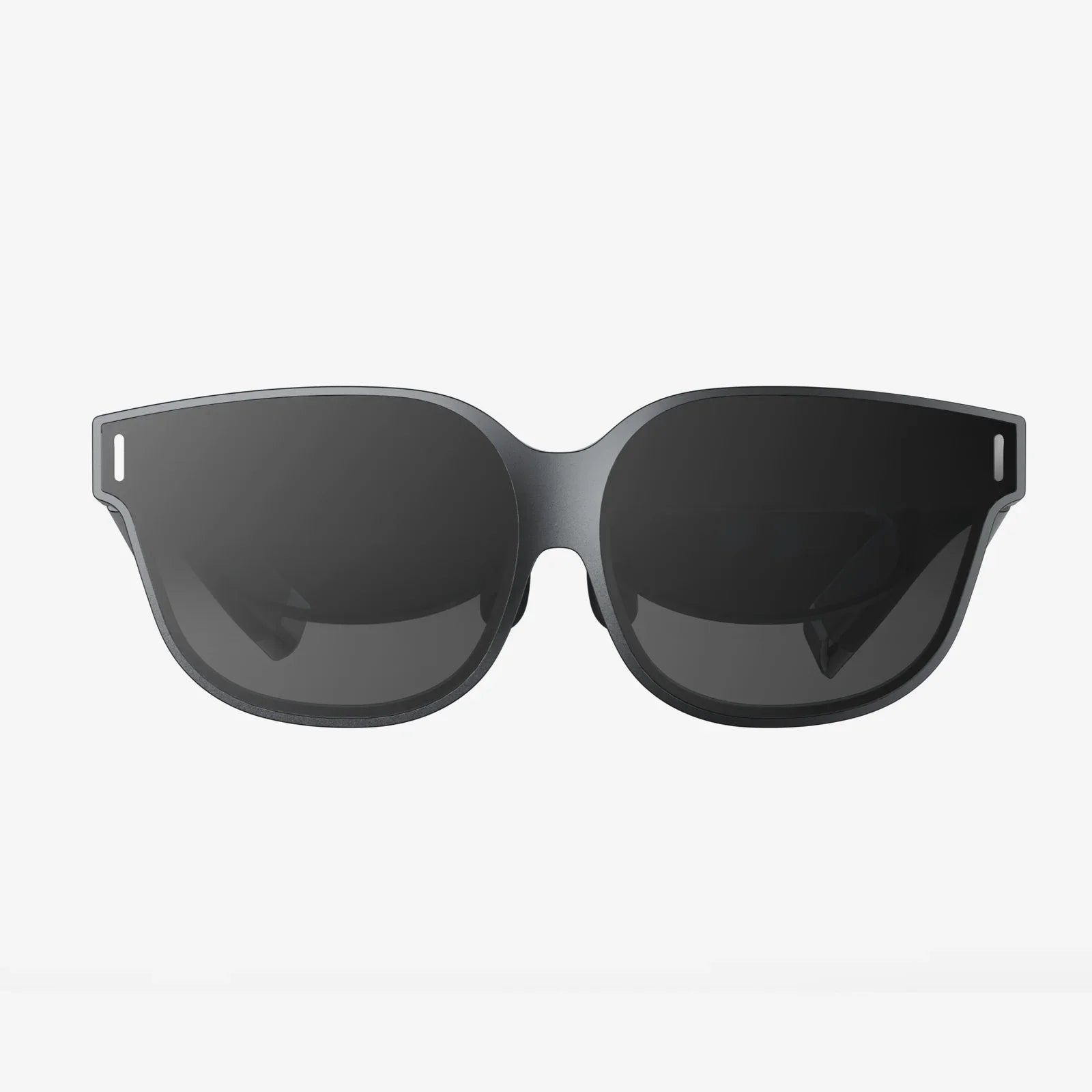
Imagine a world where the most powerful gaming rig isn't under your desk, but exists as a phantom in the cloud, accessible from the device already in your pocket. Envision slipping on a sleek headset and stepping directly into a living, breathing game world, leaving the physical confines of your room behind. This is not a distant sci-fi fantasy; it is the palpable, thrilling reality being forged by the rapid evolution of the virtual game device. This technological paradigm shift is moving the industry beyond physical hardware, promising a future where the very concept of a 'console' is redefined, and the barriers between player and game world dissolve into nothingness.
Deconstructing the Virtual: More Than Just a Box in the Cloud
At its core, a virtual game device is any platform that decouples the processing power required to run a game from the local hardware used to display and control it. It is the separation of the 'brain' from the 'body'. Traditionally, gaming has been a local affair: a physical console or computer (the brain) renders complex graphics and runs intricate code, outputting the result to a screen (the body) you interact with via a controller. The virtual game device shatters this model. The 'brain'—the immense computational heavy lifting—is offloaded to powerful, remote servers housed in data centers across the globe.
The local device—be it a smartphone, tablet, smart TV, thin client, or a VR/AR headset—transforms into a sophisticated window or portal. Its primary jobs are to:
- Display the streaming video feed of the game being rendered remotely.
- Capture your controller, voice, and motion inputs.
- Instantly transmit those inputs back to the remote server over the internet.
This creates a continuous, high-speed loop of data exchange. You press a button to jump; that command travels hundreds of miles to the server; the server renders the character jumping; a new video frame of that action is compressed and sent back to your screen—all in the blink of an eye. When this loop is tight and efficient, the illusion is seamless. You are not just playing a stream; you are interacting with a virtual game device that exists everywhere and nowhere simultaneously.
The Architectural Pillars: What Makes It All Possible
The mere concept of this technology has existed for years, but its recent viability rests on several critical technological pillars advancing in unison.
1. Ubiquitous High-Speed Connectivity
The most obvious foundation is the proliferation of high-bandwidth, low-latency internet connections, particularly fiber-optic and advanced 5G networks. Latency, the delay between sending a command and seeing the result, is the nemesis of cloud gaming. Early attempts faltered because lag made fast-paced games unplayable. Today, with sub-20-millisecond latencies becoming more common, the delay is often imperceptible to the human brain, creating a responsive experience that feels local. Bandwidth is equally crucial, as streaming high-fidelity video at 4K resolution and 60 frames per second (or higher) requires a stable, robust connection.
2. Advanced Data Center and Server Technology
On the other end of that connection lies the true muscle: massive data centers. These are not simple warehouses for servers; they are engineered ecosystems. The servers within are often equipped with custom hardware designed specifically for the parallel processing demands of gaming—simultaneously running thousands of game instances for thousands of users. Virtualization technology allows a single physical server to be partitioned into multiple powerful virtual game device instances, each isolated and dedicated to a single player. This efficient resource allocation is key to scalability and cost-effectiveness.
3. Sophisticated Video Compression and Codecs
Raw, uncompressed video game footage would choke even the fastest internet connection. The magic that makes streaming feasible is advanced video compression. Modern codecs like AV1 and H.265 are incredibly efficient, using complex algorithms to drastically reduce the size of the video data being transmitted without a perceptible loss in quality. They achieve this by only sending the pixels that change from frame to frame, rather than the entire screen. This constant innovation is what allows a 4K HDR gaming experience to be delivered over a home internet connection.
A Spectrum of Virtuality: Different Paths to the Same Goal
The term 'virtual game device' is not a monolith. It encompasses several distinct approaches, each with its own strengths and philosophies.
Cloud Gaming Services: The Phantom Console
This is the most direct interpretation: services that offer a catalog of games run entirely on their remote servers. The user subscribes and gains access to a library, with each game session spinning up a temporary, powerful virtual machine. There is no download, no installation, and no need for local hardware beyond a compatible screen and controller. This model is the ultimate expression of gaming-as-a-service, prioritizing convenience, instant access, and hardware democratization above all else.
Remote Play and Game Streaming: Your Console, Anywhere
This approach uses the same underlying technology but tethers the stream to a device you already own. It allows you to remotely access your personal physical console or gaming PC from another room or across the world. Here, the virtual game device is essentially a mirror of your own hardware, extending its reach rather than replacing it. It’s a hybrid model that offers flexibility while still being anchored to owned hardware.
VR and AR Headsets: The Ultimate Embodiment
While some VR headsets are powerful, self-contained computers, many modern systems are evolving towards a hybrid or fully virtualized model. Standalone headsets can leverage cloud streaming to access experiences far beyond their onboard processing power. More significantly, VR and AR represent the logical endpoint of the virtual game device concept: they virtualize not just the processing hardware, but the entire display and interactive environment. They don't just show you the game; they place you inside the machine itself, making the device an interface to a wholly synthetic world.
The Player's Paradise: Unlocking a World of Benefits
The shift to virtualized hardware is driven by profound benefits that address long-standing limitations in the gaming world.
- Democratization of Access: The highest financial barrier to entry for high-end gaming has always been the hardware. Virtualization obliterates this barrier. A student with a budget laptop, a professional with a MacBook, or a casual player with a smart TV can all experience graphically intensive, AAA games without a four-figure investment. This opens the hobby to a vastly larger global audience.
- Unprecedented Convenience and Instant Gratification: The friction of traditional gaming is eliminated. There are no multi-gigabyte downloads, no system updates to install before playing, and no storage management. Players can browse a library, click 'play', and be in the game within seconds. It enables effortless discovery and trial, allowing players to sample a wide variety of games they might never have risked purchasing.
- Seamless Ecosystem and Cross-Device Continuity: Your virtual console is not tied to a physical location. You can start a game on your living room TV, continue it on your tablet during a commute, and then play a few more minutes on your phone during a lunch break. The game state is saved in the cloud, and the virtual game device is simply waiting for you to connect, offering a level of flexibility that physical media could never provide.
- A Sustainable Future?: While data centers consume significant energy, this model has potential long-term sustainability benefits. It centralizes power consumption into highly optimized facilities, moving away from the need for millions of individual energy-hungry consoles and gaming PCs in homes. Furthermore, it promotes a model of resource sharing rather than perpetual manufacturing of new physical hardware for every user.
Navigating the Labyrinth: Challenges on the Road to Mainstream Adoption
For all its promise, the path of the virtual game device is fraught with significant hurdles that must be overcome.
- The Tyranny of Latency and the Network Divide: Despite improvements, latency remains the Achilles' heel. For highly competitive genres like fighting games or first-person shooters, even milliseconds matter. Furthermore, this technology is entirely dependent on internet infrastructure. It inherently excludes those in rural areas or regions with poor, unreliable, or metered internet connections, potentially creating a new digital divide within gaming.
- Preservation and Ownership Paradigms: Cloud gaming services operate on a subscription or rental model. If you stop paying, you lose access to your entire library. If a service shuts down, the games vanish forever. This raises critical questions about game preservation and the concept of ownership. Players do not 'own' anything in a traditional sense; they are purchasing a license to access a stream for as long as the provider supports it.
- Data Privacy and Security: Entrusting a company with your entire gaming footprint—your play habits, saved data, payment info, and even audio/video feeds—creates a massive repository of sensitive data. The security of these platforms against breaches is paramount, and the potential for data mining and privacy erosion is a valid concern for many users.
- Economic Model Viability: The economics of running cloud gaming services are incredibly challenging. The cost of building and maintaining massive server farms is astronomical. Providers must continuously balance subscription fees against these immense operational costs, a equation that has proven difficult to solve for long-term profitability.
Beyond the Horizon: The Next Frontiers of Virtual Play
The evolution of the virtual game device is far from complete. We are standing on the precipice of even more radical transformations.
- AI-Powered Personalization and Dynamic Worlds: Cloud-based AI could analyze player behavior in real-time to dynamically adjust game difficulty, generate personalized content, or create non-player characters (NPCs) with unprecedented intelligence and adaptability. The game itself could evolve based on the collective actions of its player base.
- The True Metaverse Foundation: The vision of a persistent, interconnected virtual world—a metaverse—is technologically impossible without cloud infrastructure. Only remote servers can handle the scale and complexity of a shared, persistent universe with thousands of simultaneous participants. The virtual game device is the necessary computational backbone for this ambition.
- Photorealistic Graphics and Beyond: By centralizing processing power, providers can continuously upgrade their server-side hardware without requiring consumers to buy new boxes. This could accelerate the path to photorealistic graphics, advanced physics, and complex simulations that would be impossible on any consumer-grade device.
- New Genres and Experiences: Just as the smartphone gave rise to touch-based games, the virtual game device will inevitably birth entirely new genres built around its unique strengths: always-available, context-aware, and seamlessly multi-device.
The rumbling you feel isn't just from a subwoofer; it's the sound of an entire industry's foundation being upended. The virtual game device is more than a new way to play; it's a reimagining of the relationship between player, software, and hardware. It promises a world where the joy of immersive, high-fidelity gaming is no longer gated by the plastic and silicon you can afford, but is instead as accessible as turning on a screen. The revolution will not be downloaded; it will be streamed, and it is already loading.
Share:
HCI Computing The Invisible Bridge Between Human and Machine
Headsets for Telephones: The Ultimate Guide to Clarity, Comfort, and Productivity