


- by wangfred
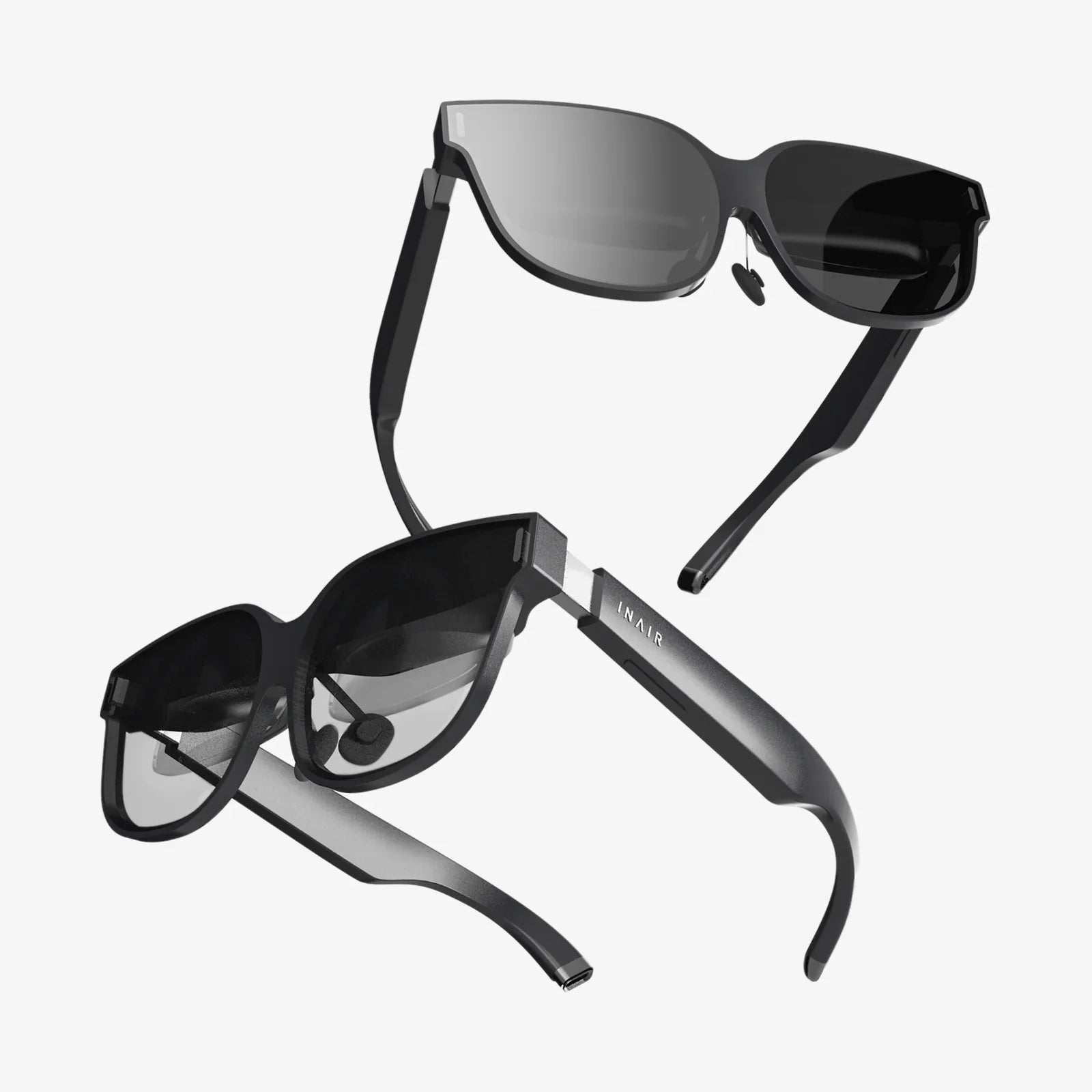
Virtual Gaming Glasses: The Next Frontier in Immersive Play
- by wangfred
Imagine a world where the boundary between the digital and the physical doesn't just blur—it vanishes. Where the sprawling landscapes of your favorite game aren't confined to a screen but are painted across your entire field of vision, and the thrum of a virtual engine isn't just heard but felt in your bones. This is the breathtaking promise held within a single, sleek piece of technology: virtual gaming glasses. This isn't merely an upgrade; it's a paradigm shift, a key unlocking a new dimension of play that beckons with the allure of absolute immersion. The future of gaming is not on your desk; it's on your face, and it's arriving faster than anyone anticipated.
At first glance, virtual gaming glasses might be mistaken for a simple wearable display. But beneath their minimalist exterior lies a symphony of advanced technology working in perfect harmony to craft convincing realities.
The heart of the experience is the visual display. Unlike their bulkier predecessors, modern glasses utilize micro-OLED or advanced LCD panels, each the size of a postage stamp but boasting resolutions that make the dreaded 'screen-door effect' a relic of the past. These miniature screens are paired with precision-engineered lenses that focus and reshape the light, creating a seamless, expansive image that can appear to be meters away. The result is a crisp, vibrant picture that fills your view without the weight and discomfort of traditional headsets, allowing for extended, comfortable play sessions.
Immersion is shattered the moment the virtual world fails to align with your movements. To prevent this, these glasses are outfitted with a suite of sensors. Inside-out tracking uses integrated cameras and inertial measurement units (IMUs) to meticulously map your physical environment and track the precise orientation and position of your head in real-time. This allows you to lean around a virtual corner to spot an enemy or peek over a digital dashboard with 1:1 accuracy.
Furthermore, the experience is moving beyond sight and sound. Advanced haptic systems embedded in the frame or paired accessories can translate in-game events into tangible sensations. Feel the subtle recoil of a virtual weapon, the rumble of a nearby explosion through your temples, or the distinct texture of a virtual surface—all adding a crucial layer of tactile feedback that deepens the connection to the game world.
Control schemes are evolving beyond traditional gamepads. Many glasses support advanced hand-tracking, allowing you to manipulate virtual objects with natural gestures. Voice command integration lets you issue commands to AI companions or navigate menus without lifting a finger. This fusion of control methods creates a more intuitive and embodied experience.
Complementing this is 3D spatial audio. By using head-related transfer functions (HRTF), the glasses can simulate sound coming from specific points in three-dimensional space. The whisper of an opponent creeping up behind you will sound exactly like it's coming from behind, providing critical gameplay cues and completing the auditory illusion of being somewhere else.
The advent of virtual gaming glasses doesn't just enhance existing games; it fundamentally rewrites the rules of game design, giving birth to entirely new genres and experiences.
Open-world RPGs, flight simulators, and horror games are transformed. Instead of looking into a world, you are in it. The scale of a dragon becomes terrifyingly real. The vastness of a galactic cruiser is something you can truly get lost in. The claustrophobic corridors of a space-horror title become palpably terrifying, as your only light source is the virtual beam emanating from your glasses. Gameplay mechanics can now be built around your physical presence—ducking behind real-world couches that become virtual cover, or physically turning your head to track a fast-moving dogfight in the sky above.
Perhaps the most revolutionary aspect is the potential for Mixed Reality (MR). By using passthrough cameras, the glasses can blend digital objects with your real-world environment. This enables a new class of game: a strategy game where your living room floor becomes a battlefield, with units marching between your furniture. A puzzle game where ancient ruins materialize on your coffee table, or a fitness game where alien invaders you must strike down appear in your own backyard. This seamless blend of realities turns any space into a potential playground, breaking gaming free from the monitor and integrating it into the fabric of daily life.
Gaming has always been a social activity, and glasses are set to amplify this. Imagine shared virtual spaces where you and your friends, all wearing glasses, can watch a movie on a virtual IMAX screen that appears to be hanging on your wall, attend a live virtual concert together, or collaborate on a virtual project. Your friend's avatar could appear sitting on your actual sofa. These devices promise to redefine 'hanging out,' making geographic distance irrelevant to shared experience and fostering a new era of digital togetherness.
For all their potential, the path to mainstream adoption of virtual gaming glasses is not without significant hurdles and serious questions that must be addressed.
While more comfortable than older systems, wearability remains a key challenge. Finding the right balance between powerful technology, battery life, weight, and ergonomics is a constant battle for engineers. Furthermore, the issue of accessibility is paramount. Developers must consider users with different physical abilities and visual impairments, ensuring that experiences are enjoyable for all and do not inadvertently create new barriers to entry.
Prolonged use of any near-eye display can lead to eye strain and fatigue, often referred to as 'VR fatigue.' Manufacturers are combatting this with features like adjustable interpupillary distance (IPD), blue light filters, and encouraging regular breaks. The phenomenon of cybersickness, a form of motion sickness caused by a disconnect between visual motion and physical stillness, also remains a concern that software and hardware solutions must continue to mitigate. Establishing healthy usage patterns will be crucial for long-term adoption.
The most profound challenges are ethical. As these devices become more immersive and integrated into our lives, the data they collect—your eye movements, your biometric responses, a detailed 3D map of your home—becomes incredibly sensitive. Robust, transparent data privacy and security policies are non-negotiable. There is also the risk of the 'hyperreal,' where the virtual becomes so compelling that it encourages dissociation from physical reality and real-world relationships. Establishing digital wellbeing features and fostering a culture of balanced use will be essential to ensure this technology enhances our lives rather than consumes them.
The current generation of virtual gaming glasses is just the beginning. The roadmap for this technology points toward even more astonishing possibilities. We are moving toward photorealistic graphics powered by cloud streaming and edge computing, eliminating the need for local processing power. Advancements in brain-computer interfaces (BCI) could eventually allow for control through thought alone. Haptics will evolve to simulate temperature and more complex textures. The line between player and character, between the game and life, will become increasingly fine.
This technology will also spill over from gaming, revolutionizing fields like remote work, education, and telemedicine. But it is in the realm of play that its most immediate and transformative impact will be felt. It represents not the end of traditional gaming, but the exciting birth of a new, parallel medium—one that offers a different, more intimate way to experience stories, competition, and connection.
The screen that has defined digital entertainment for decades is finally fading to black, making way for a new canvas limited only by the imagination. Virtual gaming glasses are not just a peripheral; they are a passport. They offer a visceral, heart-pounding escape into worlds of fantasy and adventure, a new way to connect and compete with friends across the globe, and a tool that will forever change our relationship with interactive stories. The door to these boundless realities is now open, waiting for you to take that first step through and see what wonders lie on the other side. The game is about to begin, and this time, you're not just playing—you're living it.