


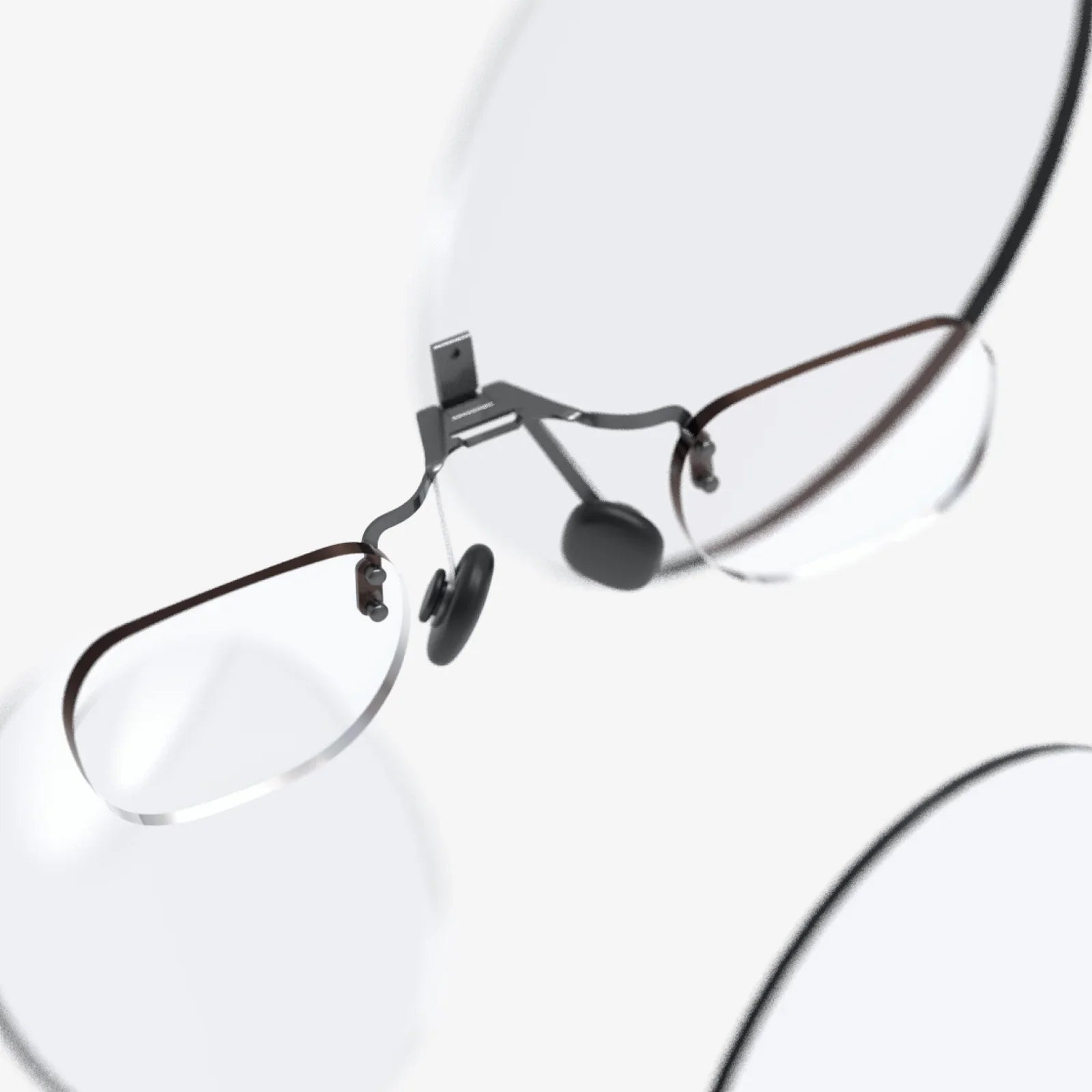
Imagine a world where the digital and physical realms don't just coexist but are seamlessly, intelligently, and intuitively interwoven, all through a sleek pair of frames on your face. This isn't a distant sci-fi fantasy; it's the imminent reality being unlocked by the latest groundbreaking virtual glasses update. This isn't merely a patch or a minor tweak; it's a fundamental reimagining of what's possible, catapulting augmented reality from a niche novelty into an indispensable layer of human experience. The gateway to this new reality is here, and it's waiting for you to take a look.
Beyond Bug Fixes: A Paradigm Shift in Perception
Traditionally, a software update brings to mind minor improvements, squashed bugs, and perhaps a new feature or two. The current virtual glasses update shatters this mundane conception. This is a comprehensive overhaul that touches every aspect of the system—from the core operating system to the perceptual algorithms that interpret the world around you. It represents a monumental leap in processing power efficiency, allowing for more complex computations to happen in real-time, right before your eyes, without draining the battery or requiring a tether to a bulky external computer.
The most significant advancement lies in the enhanced environmental understanding. Previous iterations could recognize flat surfaces like tables and floors. This update introduces a sophisticated spatial mesh capability. The glasses now generate a real-time, millimeter-accurate 3D map of your surroundings. They don't just see a wall; they understand its texture, its contours, and the empty space in front of it. This allows digital objects to interact with the physical world in believable ways. A virtual pet can hide behind your real sofa. A digital clock can sit firmly on your real bookshelf, casting a subtle shadow. This erasure of the uncanny valley between real and virtual is the update's crowning achievement.
The Interface Evolved: From Screens to Spatial Computing
With this newfound perceptual intelligence, the very concept of a user interface is transformed. We are moving from graphical user interfaces (GUIs) to spatial user interfaces (SUIs). The update introduces a fully three-dimensional operating system that exists in the space around you.
Gone are the floating 2D windows that obstructed your view. Instead, information is contextually anchored to objects and locations. Your email inbox might appear as a subtle, translucent stack of letters on the edge of your desk, only expanding when you glance at it. Your navigation instructions are painted as a glowing path on the sidewalk ahead of you, not confined to a small rectangle. This update makes the technology feel less like a tool you use and more like a natural extension of your own cognition and perception.
Revolutionizing Interaction: Your Hands, Your Voice, Your Eyes
Input methods have also undergone a radical transformation. The precision of the updated hand-tracking algorithms is nothing short of astonishing. Pinch-to-select gestures are now incredibly accurate, allowing you to manipulate complex 3D models as if they were physically in your hands. You can resize a virtual blueprint with a two-finger pull or rotate a celestial body with a gentle twist of your wrist. The latency—the delay between your movement and the system's response—has been reduced to near-imperceptible levels, creating a feeling of direct manipulation that is both empowering and intuitive.
Voice control has evolved into a true conversational partner. The update integrates a powerful, on-device AI that understands natural language commands and context. Instead of saying, "Glasses, open weather app," you can simply look out the window and mutter, "I wonder if I'll need a coat later?" The forecast will appear subtly overlayed on the windowpane. Furthermore, eye-tracking has been refined to a science. The system knows precisely where you are looking, allowing for gaze-based selection and enabling digital characters to make meaningful eye contact, deepening the sense of presence and connection.
A New Dawn for Accessibility and Inclusivity
The societal implications of this update are profound, particularly in the realm of accessibility. For individuals with visual impairments, the enhanced computer vision capabilities can describe scenes in immense detail, read signage aloud, and highlight obstacles on a path with high-contrast outlines. For those who are hard of hearing, real-time speech-to-text transcription can be displayed like subtitles on the world, making conversations in noisy environments accessible.
Language barriers begin to dissolve. The update's real-time translation feature can now overlay translated text onto real-world signs, menus, and documents, preserving their original layout and font. It can even provide subtle, real-time audio translation of a conversation, allowing for a more natural flow of dialogue between people speaking different languages. This technology has the potentia to create a more connected and understanding global community.
Transforming Industries: From the Virtual Workspace to the Operating Room
The professional world is poised for disruption. The concept of remote work is redefined. With this update, collaborative design sessions involve life-size, photorealistic 3D models that colleagues from around the world can walk around, inspect, and modify together as if they were in the same room. Architects can walk clients through a full-scale, virtual representation of an unbuilt home. Medical students can practice complex surgical procedures on detailed holographic anatomies, and seasoned surgeons can overlay patient scans directly onto the operating field for unparalleled precision.
Field technicians can have complex repair manuals and expert guidance visually superimposed onto the malfunctioning machinery they are fixing. The potential for enhancing efficiency, safety, and expertise across manufacturing, logistics, and healthcare is staggering. This update transitions virtual glasses from a consumer gadget to an essential enterprise-grade platform.
Navigating the New Frontier: Privacy, Security, and the Metaverse
Such powerful technology inevitably raises critical questions. The update includes a new suite of privacy-focused features. A physical hardware shutter can disable the cameras entirely, and a prominent LED indicator now clearly signals when recording is active. The on-device processing is a key privacy win; your intimate environmental data—a map of your home, your gestures, your eye movements—can be processed locally without ever needing to be sent to the cloud.
Security is paramount. The update implements robust biometric authentication, ensuring that only you can access your personal spatial environment. It also introduces new protocols for defining digital property rights in augmented space, a crucial step for the development of a shared "metaverse." This isn't about a single corporate-owned virtual world; it's about an open framework where your digital creations and experiences can persist across different physical locations and platforms, all enabled by this universal update.
The Future is Now, and It's Waiting to Be Worn
This virtual glasses update is far more than a list of new features. It is the catalyst. It's the moment the pieces finally click into place, transforming a promising technology into a pervasive platform. It moves us from demonstration to utility, from novelty to necessity. The barriers of clunkiness, poor battery life, and unconvincing digital overlays have been systematically dismantled. What remains is a sleek, powerful, and intuitive window into a blended reality that enhances our abilities, deepens our connections, and expands our understanding of the world. The line between science fiction and reality has not just been blurred; it has been comprehensively erased. The next era of human-computer interaction isn't on your desk or in your pocket; it's on your face, and it's finally seeing the world the same way you do.
Share:
Top Smart Sunglasses 2025: The Ultimate Fusion of Vision, Audio, and AI
How AI Glasses Work: A Deep Dive Into The Technology Shaping Our Visual Future