


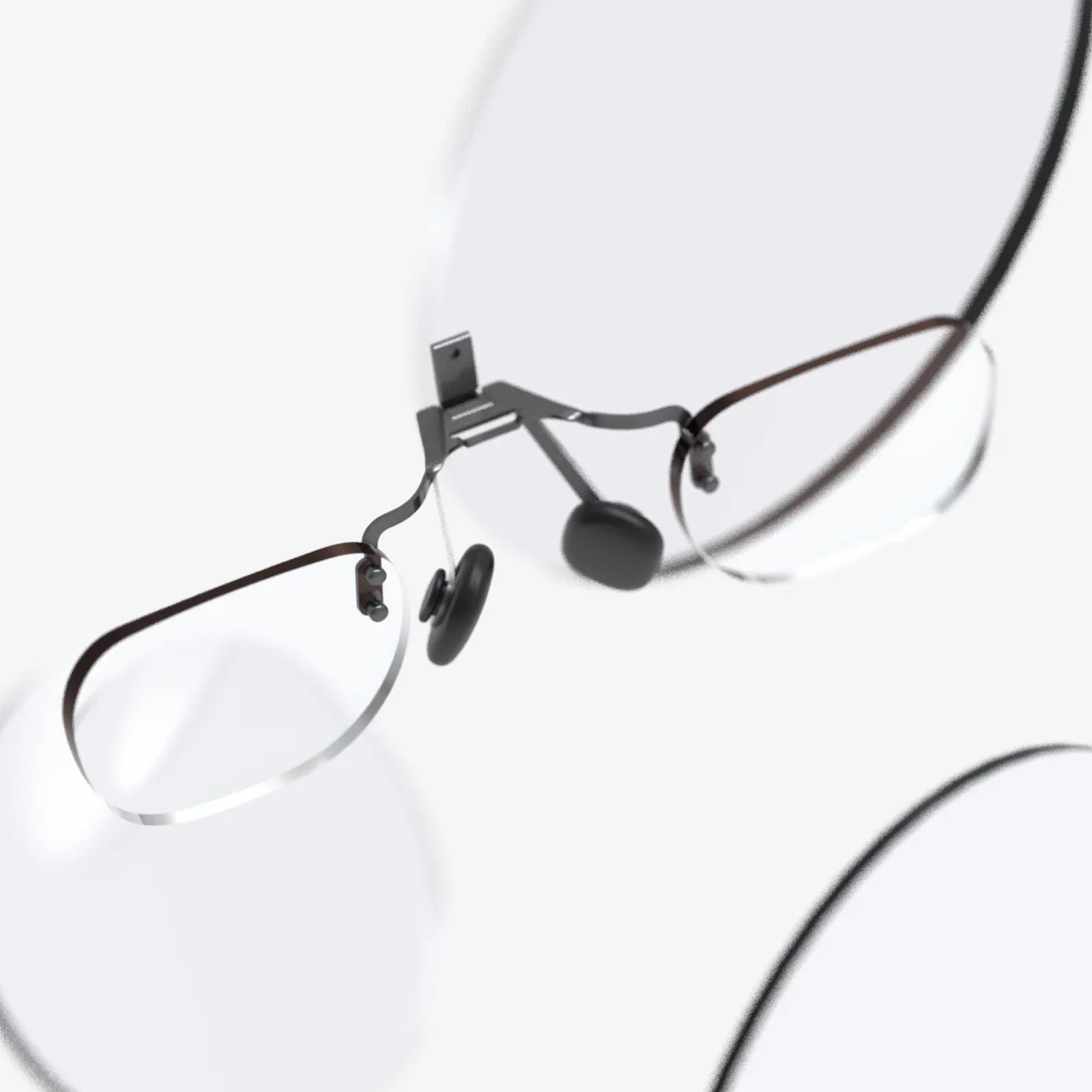
Imagine slipping on a device and instantly being transported to the front row of a concert on the other side of the world, walking on the surface of Mars, or sitting face-to-face with a holographic instructor. This is no longer the stuff of science fiction; it is the tangible, exhilarating reality offered by the modern virtual head set. This technology, once a clunky and niche novelty, has exploded into the mainstream, promising to redefine not just how we play games, but how we work, learn, connect, and perceive reality itself. The portal to these boundless experiences rests, quite literally, on our heads.
The Evolution of Immersion: From Stereoscopes to Cyberspace
The dream of artificial reality is far older than the silicon chip. The foundational principles can be traced back to the 19th century with the invention of the stereoscope, a device that presented slightly different images to each eye, creating a compelling illusion of depth. This simple yet powerful concept of binocular vision is the bedrock upon which all modern virtual head sets are built. The term "virtual reality" itself was popularized in the late 1980s, but the hardware of the era was monstrously expensive, low-resolution, and often caused significant latency-induced nausea, confining it to high-end research labs and a few arcades.
The true renaissance began in the early 2010s. A convergence of technologies—high-density smartphone displays, precise motion-tracking sensors, and incredibly powerful mobile processors—created a perfect storm. Pioneering developers realized they could harness this ubiquitous mobile technology to create affordable, effective virtual head sets. This democratization of the hardware ignited an explosion of innovation. The market rapidly bifurcated into two distinct paths: tethered systems, which connect to a powerful external computer to deliver breathtaking, high-fidelity experiences, and standalone systems, which integrate all necessary computing power into the headset itself, offering unparalleled freedom and accessibility.
Deconstructing the Magic: Core Components of a Virtual Head Set
To understand the magic, one must look at the sophisticated components working in harmony inside a modern virtual head set.
The Display and Lenses
At its heart, the experience is visual. Most headsets use two high-resolution LCD or OLED screens (one for each eye) placed very close to the face. The key challenge is to take these flat images and make them feel expansive and deep. This is the job of specialized lenses that sit between the screens and the user's eyes. These lenses warp the image, creating a wide field of view (often 90 degrees or more) and focusing the eyes at a distance, tricking the brain into perceiving a vast, three-dimensional world instead of two small, flat panels. Recent advancements are pushing towards even higher resolutions, faster refresh rates for smoother motion, and mini-LED backlighting for superior contrast, all in pursuit of the holy grail: the "retina" VR display where the human eye can no discern individual pixels.
Precision Tracking: Inside-Out and Outside-In
Immersion shatters the moment the virtual world doesn't move in perfect sync with your head. This is why tracking is paramount. Early systems used "outside-in" tracking, which relied on external sensors or cameras placed around the room to monitor the position of the headset. Modern systems overwhelmingly use "inside-out" tracking. This involves embedding multiple wide-angle cameras directly onto the headset itself. These cameras continuously scan the surrounding environment, tracking the position of walls, furniture, and other fixed objects to precisely anchor the user in space. This eliminates the need for external hardware, making setup instantaneous and allowing for use in almost any environment.
Controllers and Haptic Feedback
Our hands are our primary tools for interacting with the world, and virtual head sets replicate this through motion-tracked controllers. These handheld devices are packed with sensors that track their position and orientation, allowing users to reach out, grab, throw, and manipulate virtual objects. The illusion is sold through haptic feedback—small motors that create subtle vibrations, simulating the feel of touching a surface, the recoil of a tool, or the texture of an object. The next frontier is hand-tracking technology, which uses the headset's cameras to track the user's bare hands and fingers with high accuracy, enabling even more intuitive and natural interaction without any controllers at all.
Audio: The Forgotten Half of Presence
Visuals are only half the battle for true "presence"—the feeling of actually being in a virtual space. Spatial audio is critically important. Unlike standard stereo sound, spatial audio uses complex algorithms to simulate how sound waves interact with the human head and ears. In a virtual environment, sounds have a specific location. A voice can come from behind you, an explosion can rock your left side, and the chirping of a bird can be precisely located in a tree above and to your right. This 360-degree soundscape is essential for selling the illusion and is often delivered through integrated headphones or built-in directional speakers.
Beyond Gaming: The Expansive Universe of Virtual Applications
While gaming remains a massive driver of adoption, the potential of virtual head sets extends far beyond entertainment, permeating nearly every professional and educational field.
Revolutionizing Education and Training
Virtual head sets offer an unparalleled tool for experiential learning. Instead of reading about ancient Rome, history students can take a guided tour through a meticulously reconstructed digital Colosseum. Medical students can practice complex surgical procedures on virtual patients, making mistakes without consequence and honing their skills in a risk-free environment. Astronauts, pilots, and soldiers all use sophisticated VR simulators to train for scenarios that would be too dangerous, expensive, or impractical to replicate in the real world. This learning-by-doing approach dramatically improves knowledge retention and skill acquisition.
The Future of Remote Work and Collaboration
The concept of the "virtual office" is being redefined. With a virtual head set, remote work shifts from a grid of video calls on a flat screen to a shared, persistent digital space. Colleagues from across the globe can meet as lifelike avatars around a virtual conference table, brainstorm on a 3D whiteboard that exists in mid-air, or collaboratively design and examine 3D models of a new product as if they were physically in the same room. This sense of shared presence fosters a level of collaboration and connection that traditional video conferencing cannot match, potentially ending the era of tedious and impersonal video calls.
Healthcare and Therapeutic Breakthroughs
The therapeutic applications are profound. VR exposure therapy is successfully used to treat phobias (like fear of heights or flying) and PTSD by allowing patients to confront their triggers in a safe, controlled setting. It is also used for physical rehabilitation, turning repetitive exercises into engaging games that motivate patients to complete their therapy. Surgeons are beginning to use VR to plan complex operations, navigating a 3D model of a patient's specific anatomy before making a single incision. Furthermore, VR serves as a powerful distraction tool, helping to manage pain and anxiety for patients undergoing painful procedures.
Architecture, Design, and Retail
Architects and interior designers are using virtual head sets to conduct immersive walkthroughs of their designs long before the foundation is poured. Clients can experience the scale, lighting, and flow of a space, enabling them to provide feedback and make changes at the design stage, saving enormous costs down the line. In retail, imagine "trying on" clothes using a digital avatar with your exact measurements or visualizing how a new sofa would look and fit in your living room. This try-before-you-buy paradigm is set to revolutionize e-commerce.
Navigating the Challenges: The Road Ahead
Despite the incredible progress, significant hurdles remain before virtual head sets achieve true ubiquity.
The Comfort and Form Factor Conundrum
Many current headsets are still too heavy, too bulky, and can become uncomfortable during extended use. They can cause eye strain, and the discrepancy between visual motion and physical stillness can still induce simulator sickness in some users. The industry is aggressively pursuing solutions: lighter materials, better weight distribution, and advanced optics that allow for a much slimmer profile. The ultimate goal is a device that is as comfortable and socially acceptable to wear as a pair of sunglasses.
The Social and Ethical Dimension
As we spend more time in virtual spaces, profound questions emerge. How do we curate these digital worlds to be safe and inclusive? What new forms of harassment might arise, and how do we prevent them? There are also concerns about data privacy, as these devices can collect incredibly detailed information about our movements, behaviors, and even our biometric responses. Furthermore, the potential for addiction and the blurring of lines between reality and simulation present societal challenges we are only beginning to grapple with.
The Quest for the "Killer App"
While there are many compelling applications, the technology is still searching for a single, undeniable "killer app" beyond gaming that would drive every household to own one, similar to how spreadsheets drove the adoption of the personal computer. This could be a revolutionary social platform, a transformative fitness application, or a seamless virtual workspace. Until that application emerges, adoption may remain steady but not explosive.
The journey of the virtual head set is a story of relentless human ingenuity, a drive to build windows into worlds of our own creation. It is a technology that challenges our perceptions, expands our capabilities, and redefines the limits of human experience. From transforming classrooms and operating rooms to creating new frontiers for art and social connection, the headset on your face is becoming the most powerful key to unlocking realities once confined to our dreams. The next time you see someone standing in an empty room, gazing in wonder at something you cannot see, know that they are not just escaping our world—they are actively building a new one.
Share:
Which Smart Glasses Have The Best Design? A Deep Dive Into Aesthetics, Form, and Function
Which Smart Glasses Have The Best Design? A Deep Dive Into Aesthetics, Form, and Function