


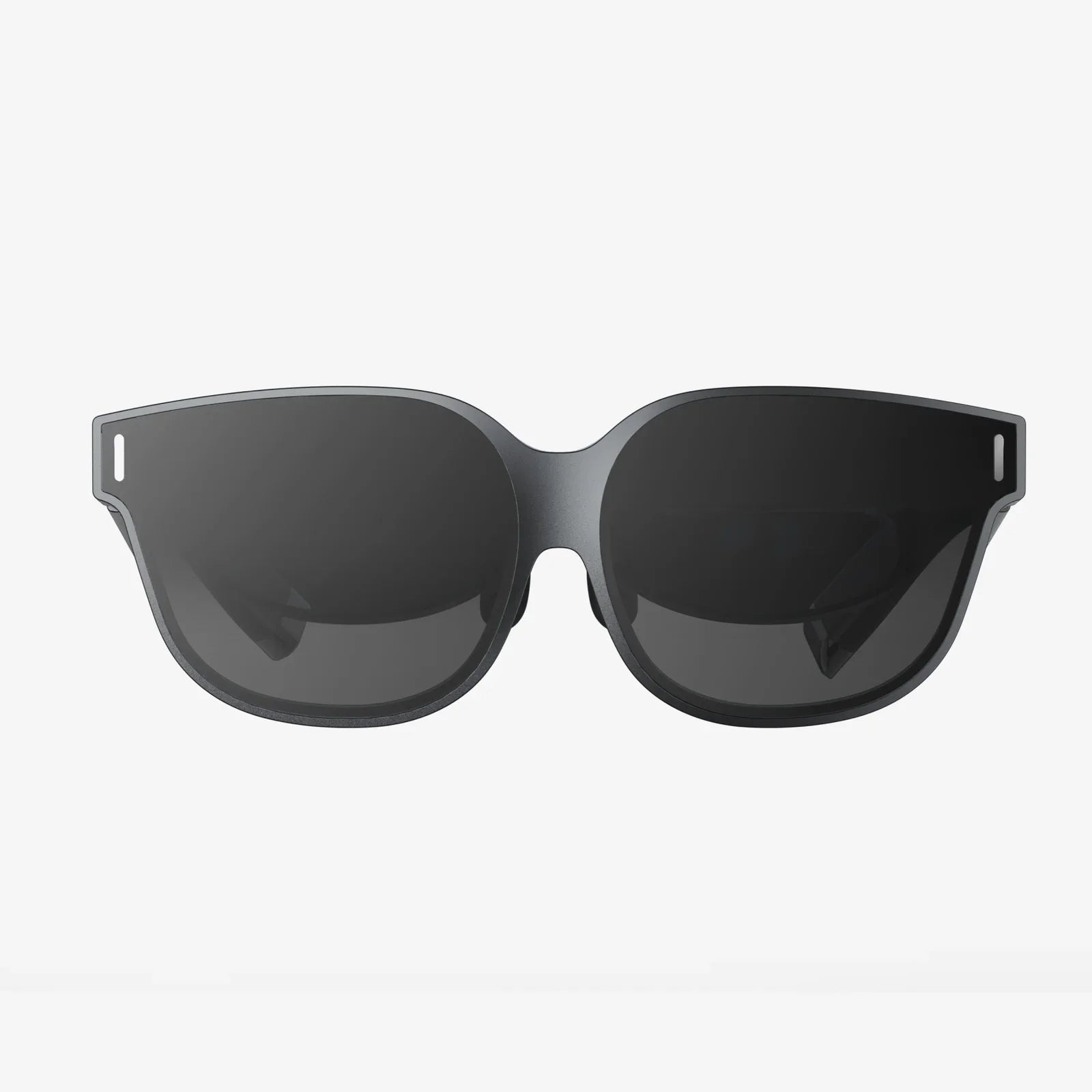
Imagine a world where the digital and the physical are no longer separate realms, but a single, intertwined experience. This is the promise held within the rapidly evolving fields of virtual, mixed, and augmented reality—technologies poised to fundamentally alter the fabric of our daily lives, from how we work and learn to how we connect and play. We stand at the precipice of a new computing revolution, one that will dissolve the screen and weave information and imagination directly into the world around us.
Demystifying the Spectrum: From Virtual to Augmented
While often used interchangeably, the terms Virtual Reality (VR), Augmented Reality (AR), and Mixed Reality (MR) represent distinct points on a spectrum of immersive technologies, often collectively referred to as Extended Reality (XR). Understanding their differences is key to appreciating their unique applications and potential.
Virtual Reality: The Complete Digital Escape
Virtual Reality is the most immersive end of the spectrum. It functions by completely replacing the user’s physical environment with a simulated, digital one. Through a head-mounted display that encompasses the entire field of vision, paired with spatial audio and motion tracking, the user is transported into a computer-generated world. This world can be a photorealistic simulation of a real place, a fantastical game environment, or an abstract data visualization. The primary goal of VR is to create a sense of presence—the undeniable feeling of "being there," tricking the brain into accepting the digital reality as genuine. This total immersion makes VR incredibly powerful for applications requiring complete focus and isolation from the physical world.
Augmented Reality: The Digital Overlay
On the opposite end of the spectrum lies Augmented Reality. Rather than replacing the real world, AR superimposes digital information—images, text, 3D models, animations—onto the user’s view of their actual surroundings. This is most commonly experienced today through smartphone and tablet cameras, which act as a viewport to see digital content placed in the real world. The magic of AR lies in its ability to enhance reality with contextual data. It adds a layer of useful, interactive knowledge onto what we already see, making it ideal for providing instructions, visualizing products in your home, or bringing educational content to life. It is, by design, a technology of augmentation rather than replacement.
Mixed Reality: The Seamless Blend
Occupying the crucial middle ground is Mixed Reality. MR is more advanced than simple AR; it doesn’t just overlay digital content but allows that content to interact intelligently with the physical environment in real-time. Using advanced sensors, cameras, and depth perception, MR devices understand the geometry of the space around them. This allows a digital character to hide behind your real sofa, a virtual touchscreen to be pinned to your real wall, or a holographic engine model to sit convincingly on your real desk. The digital and physical objects co-exist and interact, creating a truly blended reality. This makes MR the most complex and potentially transformative of the three, as it enables a persistent and interactive digital layer on top of our world.
The Engine Room: Core Technologies Powering Immersion
The seamless experience of XR is made possible by a sophisticated fusion of hardware and software technologies working in concert.
- Display and Optics: High-resolution screens placed mere centimeters from the eyes, combined with complex lens systems, are required to create a wide field of view and eliminate the screen-door effect. Advancements in micro-displays and pancake lenses are making headsets smaller, lighter, and more visually convincing.
- Tracking and Sensing: This is the heart of immersion. Inside-out tracking uses integrated cameras to map the environment and track the user’s position within it without external sensors. Eye-tracking monitors where the user is looking, enabling more intuitive interfaces and advanced rendering techniques. Hand-tracking allows users to manipulate digital objects with their bare hands, creating a natural and powerful sense of interaction.
- Spatial Audio: Sound is just as critical as vision for immersion. Spatial audio technology mimics how sound waves behave in the real world, making a noise appear to come from a specific point in 3D space. This allows users to locate objects or other users by sound alone, dramatically increasing the sense of realism.
- Computational Power and Connectivity: Rendering complex, interactive 3D worlds in real-time requires immense processing power. This is being addressed through powerful mobile processors and the emergence of cloud-based rendering, where heavy computation is offloaded to remote servers, with the visual stream being sent to the headset over high-speed connections.
Transforming Industries: The Practical Applications of XR
Beyond gaming and entertainment, virtual, mixed, and augmented reality are driving innovation and efficiency across a vast range of sectors.
Revolutionizing Enterprise and Manufacturing
In the industrial world, XR is a game-changer. Designers and engineers use VR to prototype and interact with full-scale 3D models of cars, buildings, or complex machinery long before a physical prototype is built, saving immense time and resources. On the factory floor, AR smart glasses can overlay assembly instructions, schematics, or safety information directly into a technician’s line of sight, guiding them through complex procedures hands-free. Remote experts can see what an on-site worker sees and annotate their field of view to provide real-time guidance, drastically reducing travel costs and downtime.
Advancing Healthcare and Medicine
The medical field is embracing XR for training, surgery, and therapy. Medical students can practice intricate surgical procedures in a risk-free VR simulation, gaining valuable muscle memory without endangering patients. Surgeons use AR to visualize patient anatomy, such as CT scans or MRI data, projected directly onto the patient during an operation, improving precision and outcomes. Furthermore, VR is proving highly effective in exposure therapy for treating phobias, PTSD, and anxiety disorders, allowing patients to confront and manage their fears in a controlled, safe environment.
Redefining Education and Training
XR has the power to move education from passive learning to active experience. Instead of reading about ancient Rome, students can take a VR field trip to walk its streets. AR can bring textbook diagrams to life, allowing a student to explore a beating heart or a DNA strand from every angle. This experiential learning leads to dramatically improved retention and engagement. From training firefighters in dangerous scenarios to teaching mechanics the intricacies of a new engine, XR provides a safe, scalable, and highly effective training platform.
Reshaping Retail and Remote Collaboration
The retail experience is being transformed by AR, allowing customers to visualize how furniture will look in their home, how clothes will fit, or how a new shade of paint will appear on their walls before making a purchase. For remote work, MR is creating the next evolution of video conferencing. Instead of flat faces on a screen, teams can meet in a shared virtual space as lifelike avatars or holograms, interacting with 3D data models as if they were in the same room, fostering a level of collaboration that was previously impossible.
Navigating the Challenges: The Path to Ubiquity
Despite its immense potential, the widespread adoption of virtual, mixed, and augmented reality faces significant hurdles that must be overcome.
- Hardware Limitations: For true ubiquity, headsets need to become as socially acceptable and comfortable as eyeglasses. This requires breakthroughs in miniaturization, battery life, processing power, and display technology. Issues like latency (the delay between user movement and visual update) must be eliminated to prevent motion sickness.
- Social and Ethical Considerations:
The concept of the "metaverse"—a persistent network of shared virtual spaces—raises profound questions about data privacy, identity, and digital ownership. As these technologies collect vast amounts of biometric and spatial data, robust ethical frameworks and regulations will be essential to protect users. Furthermore, the potential for deeper social isolation or a blurring of reality itself presents societal challenges that must be addressed proactively.
- Content and Interoperability: A technology is only as valuable as its content. There is a need for a rich and diverse ecosystem of applications and experiences that provide clear utility and entertainment. Furthermore, for a truly open metaverse to exist, different platforms and worlds must be able to interoperate, allowing users and their digital assets to move seamlessly between them, a challenge the industry is still grappling with.
The Future is Blended: What Lies Ahead
The trajectory of virtual, mixed, and augmented reality points toward a future where the technology becomes increasingly invisible and integrated into our lives. We are moving toward sleek, lightweight glasses that can switch between AR transparency and VR immersion. Haptic feedback technology will evolve to let us feel digital objects. Brain-computer interfaces may eventually allow us to control digital elements with our thoughts. This is not about living in a virtual world, but about enhancing our human experience in the physical one. It will empower us with superhuman abilities: x-ray vision to see infrastructure within walls, perfect memory recall with every conversation indexed, and the ability to summon any piece of information or any person as a hologram beside us.
The line between the world we are born into and the world we create is beginning to fade. Virtual, mixed, and augmented reality are the brushes and chisels with which we will paint and sculpt this new hybrid existence, offering a canvas limited only by our collective imagination and our wisdom to build a future that is not only more technologically advanced, but more human-centric, connected, and profoundly empowering.
Share:
Virtual Reality for Glasses Wearers: The Ultimate Guide to Immersive Clarity
What Are Some Real-World Applications of Spatial Computing: The Invisible Revolution Reshaping Our World