


- by wangfred
Virtual Phone Glasses: The Next Evolution in Personal Computing and Communication
- by wangfred
Imagine a world where your entire digital life—your calls, your messages, your entertainment, your navigation, and your work—floats seamlessly in front of your eyes, integrated perfectly with the physical world around you. This isn't a scene from a science fiction film; it's the imminent future being ushered in by virtual phone glasses, a technological convergence set to redefine our relationship with technology, information, and each other. This device category represents the most significant leap in personal computing since the smartphone itself, promising to untether us from our screens while making us more connected than ever before.
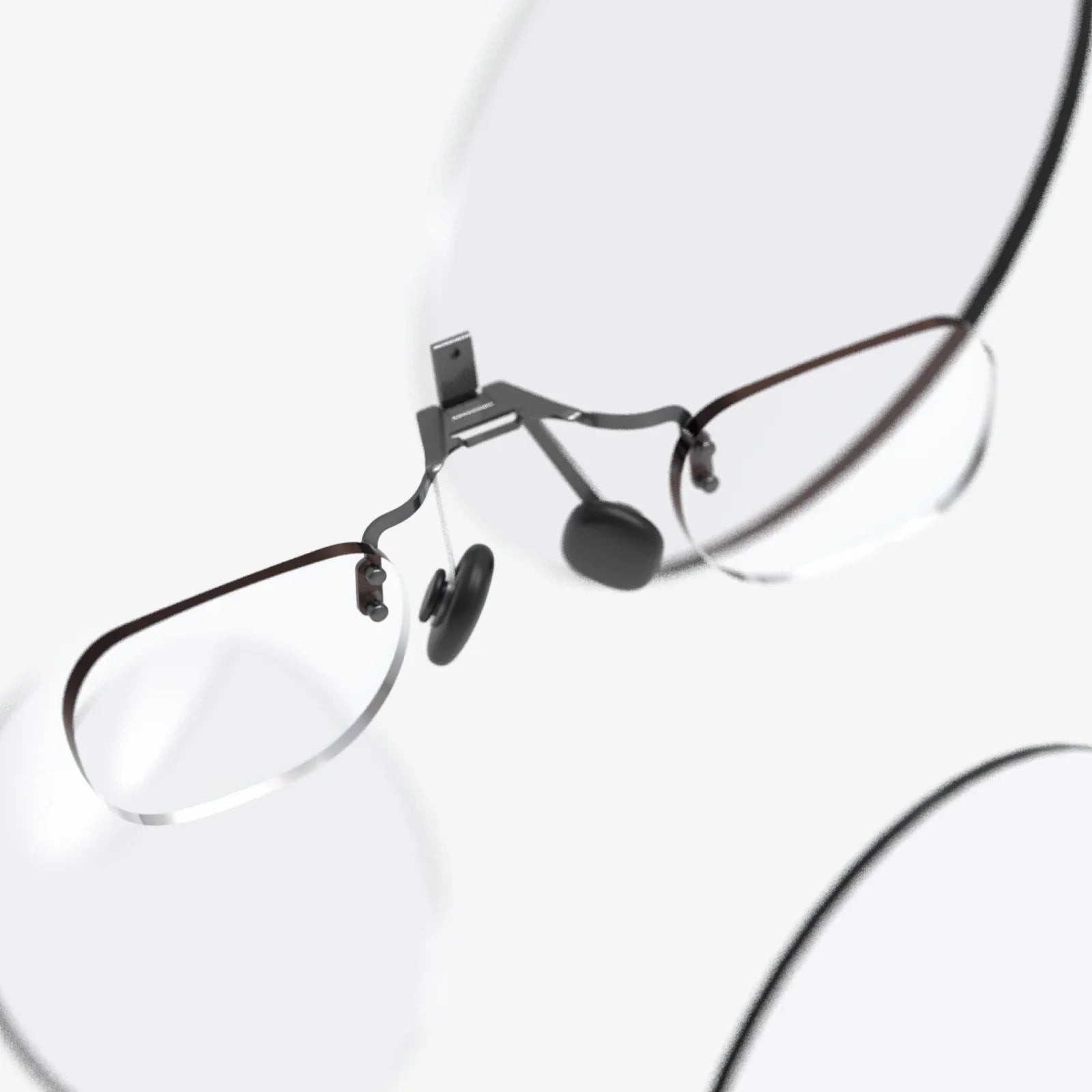
At their core, virtual phone glasses are a sophisticated fusion of optics, sensors, and connectivity, designed to project a digital overlay onto the user's field of view. Unlike fully immersive virtual reality headsets that create a contained digital universe, these glasses are built for augmented reality (AR), meaning they enhance your real-world environment rather than replacing it.
The magic begins with miniature displays, often using technologies like MicroLED or advanced waveguide systems. These displays are projected onto transparent lenses, allowing digital images to appear as holographic elements superimposed on the physical world. This is coupled with a suite of sensors—including high-resolution cameras, depth sensors, accelerometers, gyroscopes, and microphones—that constantly scan the environment. This sensor array enables the device to understand its position in space, track user gestures and eye movements, and recognize objects and surfaces.
Connectivity is the lifeblood of these glasses. They act as a companion to a user's primary computing device, typically a smartphone, via a low-energy, high-bandwidth wireless connection. This symbiosis allows the glasses to leverage the phone's processing power and cellular connection, keeping the form factor of the glasses light and wearable. Voice commands, handled by sophisticated natural language processing algorithms, become the primary input method, supplemented by touch-sensitive temple arms and intuitive gesture controls, like a pinch or a swipe in the air.
The true potential of virtual phone glasses lies not in the technology itself, but in the profound ways it can reshape everyday activities across numerous domains.
This technology promises to evolve communication from a flat, screen-based activity into a dynamic, spatially-aware experience. Video calls could transform into immersive experiences where the caller appears as a life-sized, three-dimensional hologram sitting across from you on your couch. Notifications for messages and calls could appear subtly in your periphery, allowing you to stay informed without the constant, disruptive need to check a device. Language barriers could crumble in real-time, with live translation subtitles appearing beneath a person speaking a foreign language.
The concept of a mobile office will take on a new meaning. Imagine having multiple large, virtual monitors available anywhere you go, allowing you to work on a spreadsheet while reviewing a document and attending a video conference, all while sitting in a park. Field technicians could see schematics and instructions overlaid directly onto the machinery they are repairing. Architects could walk clients through a full-scale, virtual model of a building before a single brick is laid. This spatial computing paradigm will untether knowledge workers from desks and provide contextual information exactly where and when it is needed.
Getting lost could become a thing of the past. Instead of looking down at a phone, digital directional arrows and markers can be painted onto the streets in front of you, guiding you turn-by-turn through a city. Points of interest, restaurant reviews, or historical facts could pop up as you look at different buildings, creating a rich, interactive layer of information over your urban exploration. For tourists, this offers an incredibly powerful tool for discovering new places with depth and context.
Entertainment will become an active, participatory experience. Instead of watching a movie on a rectangle, you could be surrounded by the action, with characters and effects appearing throughout your living room. Gaming will leap out of the television and into your environment, turning your home into a puzzle to solve or your local park into a fantastical battlefield. This blends physical movement with digital gameplay in a way that is both engaging and healthy.
With such transformative power comes a host of significant challenges that society must proactively address. The widespread adoption of virtual phone glasses will not be a simple, frictionless upgrade.
This is arguably the most pressing concern. Devices equipped with always-on cameras and microphones, constantly recording the environment, present a monumental privacy challenge. The potential for unauthorized surveillance, both by corporations and malicious actors, is immense. How do we prevent these devices from becoming the ultimate tool for data harvesting? Clear, transparent regulations and robust, user-controlled privacy frameworks will be non-negotiable. Features like a physical shutter or a very obvious recording indicator light will need to become standard to protect both the wearer and the unsuspecting public.
If we thought smartphone addiction was a problem, the always-available, immersive nature of AR glasses could exacerbate digital distraction to a new level. The line between being present in the real world and being absorbed in a digital one may blur dangerously. Will we be able to have uninterrupted conversations? Will we become isolated in personalized digital bubbles, filtering out the raw, un-augmented reality around us? Furthermore, the concept of the "digital divide" could widen into a "reality divide," creating haves and have-nots based on access to this enhanced layer of information.
Walking through a city with digital content overlaying your vision introduces new safety risks. A distracting notification could cause a user to step into traffic. Digital graffiti could deface public and private property in a way only visible to some. The potential for new forms of cyber-physical crime is real, from overlaying false information on road signs to creating virtual obstacles in dangerous locations. Establishing norms and laws for responsible use in public spaces will be a complex but necessary societal task.
The journey to perfecting and normalizing virtual phone glasses is still in its early stages. Current hurdles include improving battery life to last a full day, reducing the size and weight to resemble regular eyewear, and solving the complex computational challenges of real-time spatial mapping and rendering. However, rapid advancements in semiconductor technology, battery efficiency, and display miniaturization are accelerating progress at a breathtaking pace.
The eventual goal is a device that is socially acceptable, comfortable, and powerful enough to become a true replacement for the smartphone. This will not happen overnight. Adoption will likely be gradual, starting in specific professional and niche applications before reaching mainstream consumer markets. The success of this technology will hinge not just on its technical prowess, but on its ability to solve real human problems in an intuitive, ethical, and secure manner.
The era of staring down at a small, glowing rectangle is drawing to a close. Virtual phone glasses represent a fundamental shift towards a more natural, integrated, and spatial interaction with our digital world. They promise to unlock human potential, enhance our senses, and connect us to information in ways we've only dreamed of. While the path forward is paved with complex questions that we must answer together, the destination is a world where technology fades into the background, empowering us to better engage with the foreground—our lives, our work, and each other. The future is not in your pocket; it's right before your eyes.