


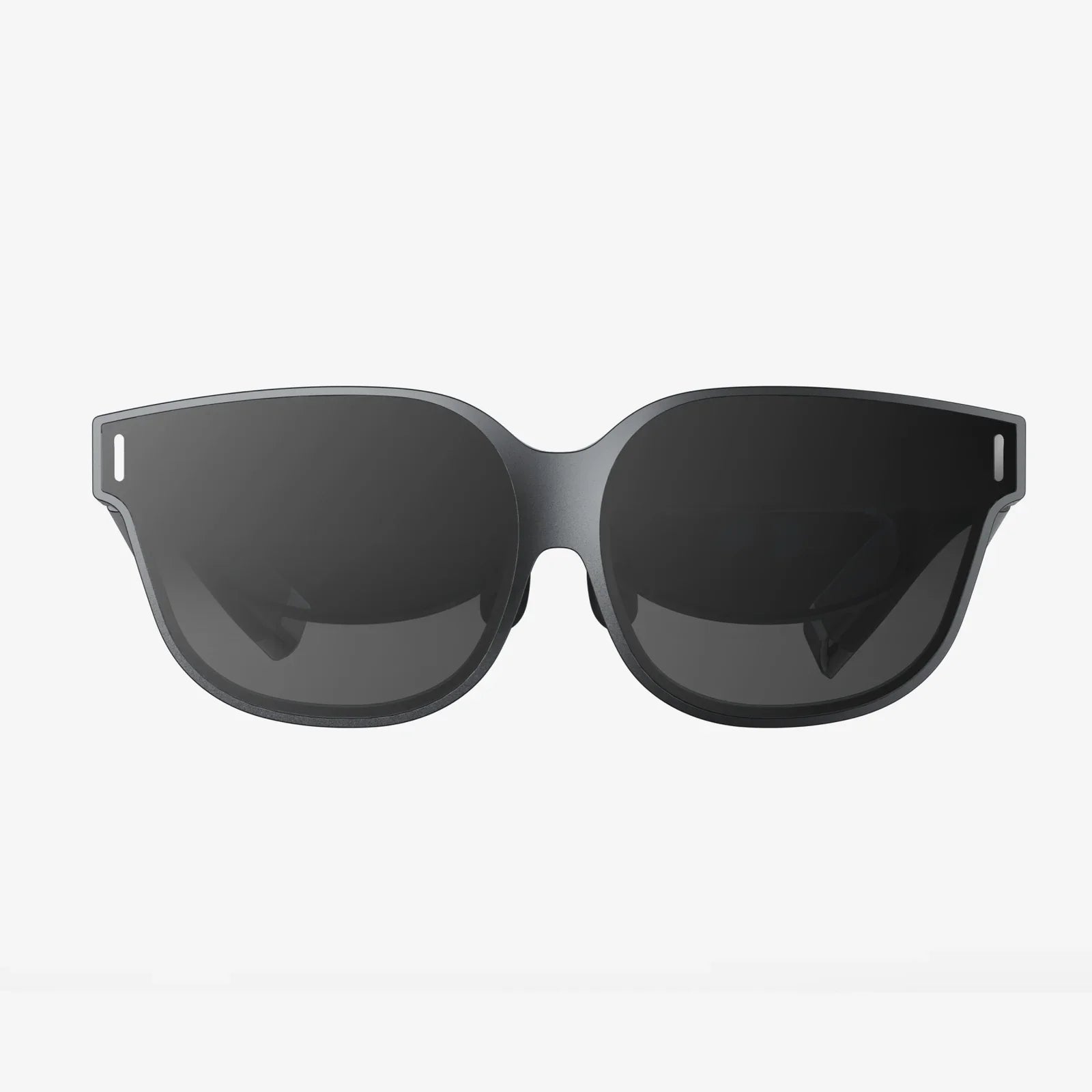
Imagine pointing your phone at your living room and watching a new sofa materialize in perfect detail, or trying on a pair of sunglasses without ever stepping into a store. This isn't a scene from a science fiction movie; it's the reality being unlocked today by Virtual Product Visualization with AR, a technological revolution that is fundamentally reshaping the bridge between imagination and ownership.
The Genesis of a Digital Revolution
The journey to this point is a story of converging technologies. Augmented Reality itself is not a new concept, with its roots tracing back to the 1960s. However, its marriage with advanced 3D modeling, powerful smartphone processors, and ubiquitous high-speed internet has created a perfect storm of accessibility and capability. Early implementations were clunky, requiring specific markers or delivering low-fidelity experiences. Today, the technology has matured to a point where it can understand complex environments through simultaneous localization and mapping (SLAM), anchor digital objects with astonishing stability, and render photorealistic models that respond to environmental lighting and perspective. This evolution has transformed a novel gimmick into a powerful commercial and experiential tool.
How It Works: The Magic Behind the Screen
At its core, Virtual Product Visualization with AR is a sophisticated dance between data and reality. The process begins long before a consumer ever opens an app. Highly detailed 3D models of products are created, often using photogrammetry or advanced CAD software. These models are not just shells; they contain information on materials, textures, reflectivity, and dimensions—a digital twin of the physical object.
When a user activates the experience, typically through a mobile application or a web browser, the device's camera and sensors spring into action. They scan the surrounding environment, creating a real-time depth map and identifying planes like floors, walls, and tables. The software then precisely places the 3D model into this captured space, calculating its position and orientation relative to the user's viewpoint. Advanced rendering engines take over, adjusting the model's appearance based on the ambient light in the room, casting accurate shadows, and ensuring it doesn't visually clip through real-world objects. The result is a seamless blend of the digital and the physical, creating a convincing and interactive illusion.
Transforming the Retail Landscape
The most immediate and profound impact of this technology has been felt in the world of commerce. It directly addresses one of the oldest limitations of online shopping: the inability to physically interact with a product.
Boosting Consumer Confidence and Reducing Uncertainty
The 'try-before-you-buy' paradigm, once exclusive to physical stores, has been digitally reborn. For furniture and home decor, shoppers can place true-to-scale items in their own space. They can walk around a virtual table, see if a lamp fits on their nightstand, and check if the color of a new armchair clashes with their rug. This drastically reduces the anxiety of online purchases, leading to significantly higher conversion rates and a dramatic reduction in product returns, which is a major cost center for retailers. The decision-making process moves from speculative to experiential.
The New Fitting Room
The fashion and apparel industry has embraced this technology with open arms. Virtual try-on for sunglasses, watches, makeup, and even clothing is becoming increasingly common. Using facial recognition and mapping algorithms, applications can overlay accessories onto a user's live video feed, allowing them to see how a new pair of glasses frames their face or how a shade of lipstick complements their skin tone from any angle. This not only provides utility but also adds an element of fun and engagement to the shopping journey.
Democratizing Design and Customization
Beyond simple visualization, AR empowers customization. Imagine configuring a car, changing its paint color, wheel design, and interior trim, and then walking around a life-size model of your creation parked in your driveway. Or designing a custom piece of jewelry and seeing it on your hand. This level of personalization fosters a deeper emotional connection to the product and transforms the customer from a passive buyer into an active co-creator.
Beyond Retail: Industrial and Educational Applications
While consumer retail offers the most visible examples, the value of Virtual Product Visualization with AR extends far deeper into industrial and educational sectors.
Revolutionizing Prototyping and Manufacturing
In manufacturing and engineering, AR visualization is used to project full-scale prototypes of machinery, engines, or complex assemblies into a physical space. Designers and engineers can walk around a 3D model, inspect components from every angle, and identify potential design flaws or spatial conflicts long before committing to expensive physical prototyping. This accelerates development cycles and reduces costs. Technicians in the field can use AR overlays to visualize the internal components of a machine they are repairing, with step-by-step instructions superimposed directly onto the equipment.
Enhancing Learning and Training
In education and training, this technology brings abstract concepts to life. Medical students can visualize and interact with detailed 3D models of the human anatomy, peeling back layers of muscle and bone. Architecture students can walk through their building designs at full scale. This immersive, hands-on learning experience improves comprehension and retention in a way that textbooks or 2D screens simply cannot match.
Overcoming the Hurdles
Despite its immense potential, the path to widespread adoption is not without challenges. Creating high-fidelity, optimized 3D assets can be resource-intensive, requiring specialized skills and software. There is also the challenge of technological fragmentation; ensuring a consistent and high-quality experience across the vast array of mobile devices with varying processing power and camera capabilities is a significant undertaking. Furthermore, as with any technology that uses cameras and data, privacy concerns must be addressed transparently, ensuring user data is handled responsibly.
The Future is Augmented
Looking ahead, the trajectory of Virtual Product Visualization with AR points toward even greater integration into our daily lives. The advent of lightweight AR glasses promises a future where digital overlays are a persistent, hands-free layer on our reality. The development of the spatial web—where digital information is mapped to physical locations—will allow us to leave virtual products and experiences in specific places for others to discover. As 5G connectivity reduces latency and cloud rendering becomes more powerful, the complexity and photorealism of visualized objects will reach levels that are indistinguishable from physical objects. Artificial intelligence will further enhance these experiences, enabling intuitive voice and gesture controls and allowing AR systems to make intelligent recommendations based on the environment it sees.
The barrier between the digital and the physical is dissolving. Virtual Product Visualization with AR is not just a new way to shop; it is a new way to see, understand, and interact with the world of objects around us. It empowers consumers, unlocks creativity, streamlines complex industries, and makes information tangibly accessible. We are moving from a world where we go online to a world where the online comes to us, seamlessly integrated into our physical reality, forever changing the way we decide what to bring into our lives.
Share:
Virtual Meeting Technology Requirements for a Seamless and Secure Digital Collaboration Experience
How to Create Augmented Reality Glasses: A Comprehensive Guide to Building Your Own AR Wearable