


- by wangfred
Virtual Reality Analysis: Decoding the Digital Frontier and Its Transformative Impact
- by wangfred
Imagine stepping inside your data, walking through a 3D model of a beating human heart to diagnose an ailment, or witnessing a catastrophic structural failure before the first brick is ever laid. This is no longer the stuff of science fiction; it is the powerful, emerging reality of virtual reality analysis, a paradigm shift that is transforming raw data into immersive, intuitive understanding. The ability to not just see, but to experience information is fundamentally altering how we solve problems, design products, and comprehend complex systems, pushing the boundaries of human cognition and decision-making.
At its essence, virtual reality analysis (VRA) is the practice of using immersive virtual environments to analyze and interpret complex datasets. It moves far beyond traditional data visualization on a 2D screen. While a graph on a monitor can show a trend, VRA allows a user to stand within that trend, to feel its scale and intuitively grasp the multidimensional relationships that would be invisible or cumbersome in a flat format. It is the difference between looking at a map of a city and actually walking its streets. This immersive quality taps into the human brain's innate strengths in spatial reasoning and memory, leading to faster insights and more profound discoveries.
The power of VRA is built upon a convergence of several advanced technologies.
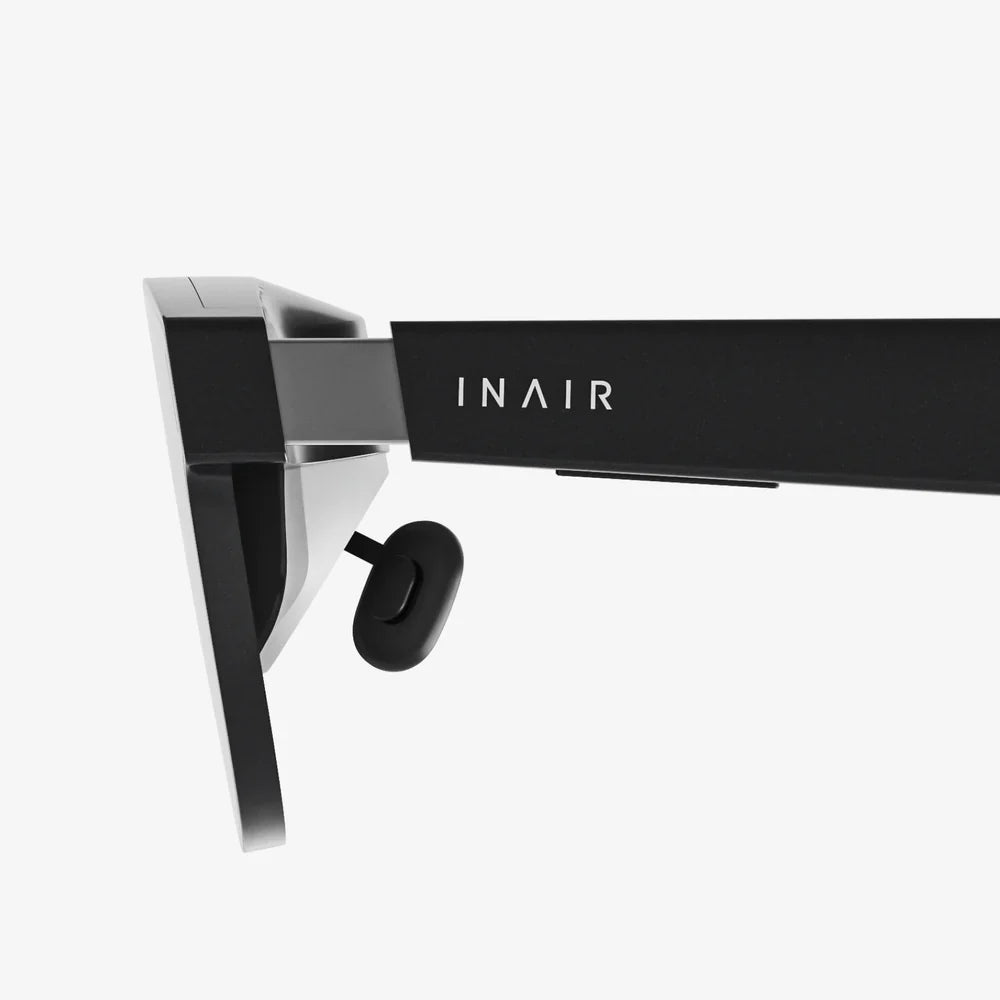
The foundation lies in modern head-mounted displays (HMDs) that offer high-resolution displays, wide fields of view, and precise inside-out tracking. This hardware eliminates the lag and low resolution that once caused discomfort, allowing for prolonged, detailed analysis sessions. Advanced haptic feedback systems further enhance the experience by providing tactile sensations, letting an analyst feel the virtual texture of a material or the resistance of a component.
VRA is computationally intensive. It requires powerful systems to render complex, data-rich environments in real-time at high frame rates. The analysis layer itself must be capable of ingesting data from diverse sources—CAD models, simulation data (like computational fluid dynamics or finite element analysis), real-time IoT sensor feeds, and large-scale databases—and seamlessly integrating them into a cohesive virtual world.
Analysis requires manipulation. VRA systems employ motion-tracked controllers, hand-tracking technology, and even eye-tracking to allow users to naturally interact with the data. An analyst can grab a 3D scatter plot to rotate it, select a specific data point for more information with a glance, or use virtual tools to slice through a model and examine its internal structure. This direct manipulation creates a powerful sense of agency and control over the information.
The theoretical benefits of VRA are being proven in practical, high-value applications across the global economy.
In medicine, VRA is a game-changer. Surgeons use it for pre-operative planning, immersing themselves in a patient-specific 3D model created from MRI or CT scans. They can practice complex procedures, navigate around critical structures, and anticipate challenges long before making an incision. Researchers use VRA to analyze complex protein structures or cellular processes, walking through microscopic environments to develop new pharmaceuticals. It also serves as a powerful tool for medical education, allowing students to dissect and explore anatomy in a limitless virtual lab.
The automotive, aerospace, and architecture industries have embraced VRA for design review and prototyping. Engineers can analyze a full-scale virtual prototype of a new vehicle, examining ergonomics, sightlines, and assembly processes. They can simulate and visually analyze stress points, airflow, and thermal dynamics, identifying flaws that might be missed on a computer screen. This "digital twin" concept allows for exhaustive analysis before physical resources are committed, saving millions in development costs and accelerating time-to-market.
For scientists dealing with enormous, multidimensional datasets—from astrophysicists mapping the cosmos to geologists modeling seismic activity—VRA offers a new lens. Instead of scrolling through endless columns of numbers, they can step inside a visualization of galaxy formation or watch the propagation of earthquake waves through the Earth's crust. This spatial context can reveal patterns, anomalies, and correlations that are otherwise statistically obscure, leading to groundbreaking hypotheses and discoveries.
High-risk industries use VRA for safety analysis and training. Emergency responders can train within hyper-realistic simulations of disasters, analyzing their response and decision-making in a safe environment. Oil rig workers can practice analyzing and responding to dangerous equipment failures. The immersive nature of the training creates strong muscle memory and situational awareness that directly translates to improved performance and safety in the real world.
Why is this shift so significant? VRA offers a suite of unique advantages.
Humans understand size, distance, and spatial relationships intuitively. VRA leverages this by presenting data in its true scale, whether it's a nanometer or a light-year. This context is invaluable for understanding the physical implications of data.
Networked multi-user VRA platforms allow teams distributed across the globe to meet inside the same virtual data environment. They can collaboratively analyze a model, point out features with virtual laser pointers, and discuss findings as if they were standing in the same room, breaking down geographical silos and unifying expert perspectives.
The human brain is exceptionally good at spotting visual patterns. By transforming abstract numerical data into a spatial, visual format, VRA allows our innate cognitive abilities to identify trends, outliers, and correlations much more rapidly than by studying spreadsheets or even 2D charts.
Despite its promise, the path forward for VRA is not without obstacles.
The cost of high-end hardware and the computing power required remains significant, potentially limiting access for smaller organizations. Furthermore, creating software that is both powerful and user-friendly for domain experts who may not be VR specialists is an ongoing challenge.
For VRA to become mainstream, it must integrate smoothly into existing data analysis workflows. This requires robust standards for data formatting and interoperability between different software platforms and VR systems, an area still in development.
The power of immersion raises new ethical questions. The persuasive nature of experiencing data could potentially be used to manipulate opinions or present biased conclusions more effectively. Furthermore, the collection of biometric data within VR—such as eye-tracking and movement patterns—during analysis sessions raises serious questions about privacy and the ownership of this behavioral analytics.
The evolution of VRA is tied to advancements in adjacent fields. The integration of artificial intelligence will be pivotal. AI can act as a virtual assistant within the analysis environment, highlighting areas of interest, running background calculations on demand, and even suggesting hypotheses based on the user's focus and actions. The concept of the "metaverse" or persistent virtual worlds could lead to permanent, evolving analytical environments where data updates in real-time and findings are continuously documented. As haptic technology evolves to simulate a wider range of textures and forces, the line between virtual analysis and physical reality will continue to blur.
The next time you are faced with an insurmountable mountain of data, remember that the future of analysis isn't about finding a better way to look at a screen—it's about stepping through it. Virtual reality analysis is unlocking a deeper, more human-centric form of understanding, turning abstract numbers into tangible worlds of insight and empowering us to solve tomorrow's most complex challenges today by truly surrounding ourselves with the information we need to master.
Share:
When Was Virtual Reality Released? The Surprising History of an Immersive Dream
One Touch Controls: The Invisible Revolution Simplifying Our Daily Lives