


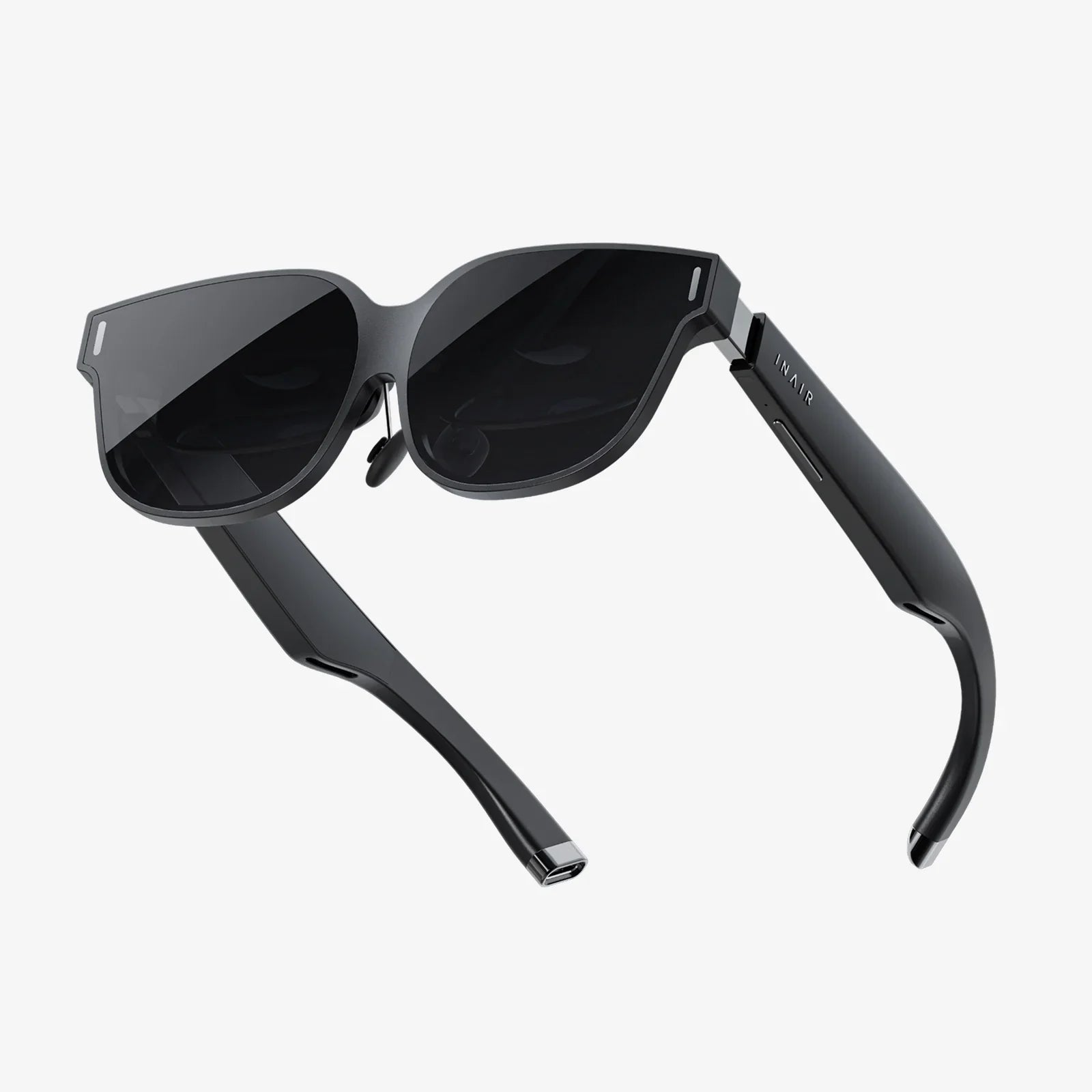
Imagine a world where the digital and the physical are no longer separate realms but a single, intertwined experience, where learning, working, and playing are transformed by immersive layers of information and entirely new environments. This is no longer the stuff of science fiction; it is the burgeoning reality being built today through the rapid evolution of virtual reality (VR) and augmented reality (AR). These two technologies, often grouped under the umbrella of extended reality (XR), are poised to redefine human-computer interaction in the most profound way since the invention of the smartphone. They promise not just to change how we see screens, but to change how we see the world itself. This comprehensive summary delves into the core of these technologies, unraveling their complexities, celebrating their applications, and forecasting the immersive future they are creating.
Defining the Realms: VR vs. AR
While often mentioned in the same breath, Virtual Reality and Augmented Reality offer fundamentally different experiences. Understanding this distinction is the first step toward grasping their individual potentials and challenges.
Virtual Reality: The Complete Digital Escape
Virtual Reality is the technology of complete immersion. It operates on a simple yet powerful premise: block out the physical world and replace it with a digital one. By wearing a head-mounted display (HMD) that covers the user's entire field of vision, VR transports the individual into a computer-generated simulation. This simulated environment can be a photorealistic recreation of a real place, a fantastical game world, a abstract data visualization, or a virtual meeting space.
The key to a compelling VR experience is the sensation of presence—the convincing feeling of actually being in the virtual space. This is achieved through a combination of technologies:
- Visual Fidelity: High-resolution displays for each eye create a stereoscopic 3D effect.
- Head Tracking: Sensors (gyroscopes, accelerometers, and external lasers) precisely track the rotation and movement of the user's head, updating the visual display in real-time to match their perspective.
- Motion Tracking: Hand-held controllers or advanced glove-based systems track the user's hand and arm movements, allowing them to interact with the virtual world—to push, pull, throw, and manipulate digital objects.
- Spatial Audio: 3D audio technology makes sounds appear to come from specific points in the virtual space, enhancing the realism.
VR is inherently a closed-loop experience. The user's environment is entirely synthetic, and their interaction is limited to the boundaries of that simulation.
Augmented Reality: Enhancing the World Around You
If VR is about escape, Augmented Reality is about enhancement. Rather than replacing the real world, AR overlays digital information and objects onto the user's view of their physical surroundings. The goal is to supplement reality, not substitute it. A user wearing AR glasses or looking through the camera on their smartphone sees their real-world environment, but with a digital layer added on top—be it navigation arrows on the street, a virtual dinosaur walking through their living room, or repair instructions superimposed on a malfunctioning engine.
The magic of AR lies in its ability to understand and interact with the real world in real-time. This requires a different set of technological feats:
- See-Through Display: AR devices use either optical see-through (semi-transparent lenses that project light into the user's eyes) or video see-through (cameras that capture the real world and display it on a screen with digital overlays).
- World Sensing: Cameras and sensors scan the environment to understand surfaces, depth, and lighting. This is often done via Simultaneous Localization and Mapping (SLAM) technology, which builds a map of the space while tracking the device's location within it.
- Object Recognition: Advanced computer vision algorithms can identify specific objects, faces, or images (like QR codes) to trigger relevant AR content.
- Persistent Anchoring: Digital objects can be "anchored" to a specific point in the real world, allowing users to walk around them and interact with them as if they were physically present.
AR is an open-loop experience, constantly blending the digital and the physical. Its most accessible form today is through smartphone cameras, but its future lies in wearable, unobtrusive glasses.
The Technological Engine Room
The seamless magic of VR and AR is powered by a complex symphony of hardware and software, each component pushing the boundaries of modern computing.
Core Hardware Components
The physical devices that enable these experiences are marvels of miniaturization and engineering.
- Displays: Modern VR headsets use fast-switching LCD or OLED micro-displays with high refresh rates (90Hz and above) to prevent motion sickness and provide smooth visuals. AR devices face the greater challenge of projecting bright, clear images that are visible in various lighting conditions, often using waveguides or microLED technology.
- Processors (SoCs): These devices are essentially wearable computers. They require immense processing power for rendering complex graphics, running tracking algorithms, and handling AI tasks. This has driven innovation in mobile Systems on a Chip (SoCs), with a major focus on GPU performance and AI accelerators.
- Sensors: A typical headset is packed with a suite of sensors: inertial measurement units (IMUs) for tracking orientation, outward-facing cameras for positional tracking and passthrough vision, depth sensors for mapping environments, and eye-tracking cameras for foveated rendering (which renders the center of the user's gaze in high detail to save processing power).
- Haptics: The sense of touch is critical for immersion. Advanced controllers provide rudimentary haptic feedback through vibrations. The future lies in full-hand haptic gloves and even full-body suits that can simulate the feeling of texture, impact, and resistance.
The Software and Connectivity Backbone
Hardware is useless without the software to bring it to life.
- Game Engines: The vast majority of VR and AR content is built on powerful 3D development platforms like Unity and Unreal Engine. These tools provide the rendering pipelines, physics engines, and asset management systems needed to create believable worlds.
- Development Kits (SDKs): Software Development Kits provided by hardware manufacturers give developers the tools and APIs needed to access the unique features of each headset, from controller input to spatial mapping.
- Cloud Computing & 5G: The computational demands of XR are staggering. Cloud computing offers a solution by offloading heavy rendering tasks to remote servers, streaming the results back to the device. This "wireless tether" to immense power is being enabled by the high bandwidth and low latency of 5G networks, promising a future of lightweight, ultra-powerful headsets.
- Artificial Intelligence: AI is the silent powerhouse. It drives the computer vision that understands the world for AR, enables natural voice commands and gesture recognition, creates intelligent virtual characters, and optimizes performance through techniques like AI-powered super-resolution.
Transforming Industries: From Fiction to Function
The applications of VR and AR extend far beyond entertainment, infiltrating and revolutionizing core sectors of the global economy.
Healthcare: Practicing and Healing in New Dimensions
The stakes in healthcare are high, and XR is proving its worth.
- Medical Training: Medical students can practice complex surgical procedures on virtual patients in a risk-free environment. They can peel back anatomical layers, explore detailed 3D models of organs, and rehearse rare emergency scenarios repeatedly.
- Surgical Assistance: Surgeons can use AR headsets to view critical patient data, such as MRI scans or vital signs, directly in their field of view without looking away from the operating table. Virtual guides can be projected onto the patient's body to improve precision.
- Therapy and Rehabilitation: VR is a powerful tool for exposure therapy, helping patients with phobias or PTSD confront their triggers in a controlled, safe setting. It also makes physical rehabilitation more engaging by turning exercises into interactive games.
- Patient Education: Doctors can use AR and VR to visually explain a diagnosis or surgical procedure to a patient, leading to better understanding and informed consent.
Manufacturing, Engineering, and Design
In industrial settings, XR is streamlining processes, reducing errors, and saving millions.
- Prototyping and Design: Automotive and aerospace engineers can collaborate on life-size, virtual 3D models of vehicles or aircraft long before a physical prototype is built. This allows for rapid iteration and identifies design flaws early.
- Assembly and Maintenance: AR is a digital manual for the real world. Technicians can see step-by-step instructions overlaid directly on the machinery they are assembling or repairing. Remote experts can see what a field technician sees and annotate their view with arrows and notes to guide them through a fix.
- Logistics and Warehousing: AR smart glasses can display picking lists and optimal routes through a warehouse, directly in a worker's vision, dramatically improving efficiency and accuracy in order fulfillment.
Education and Corporate Training
XR is turning learning from a passive activity into an active experience.
- Immersive Learning: Instead of reading about ancient Rome, history students can take a virtual walking tour of it. Biology students can step inside a human cell. This experiential learning boosts engagement and retention.
- Soft Skills Training: Corporations use VR to train employees in public speaking, leadership, and difficult conversations by placing them in realistic virtual scenarios with AI-driven avatars.
- Remote Collaboration: Virtual meeting spaces allow distributed teams to meet as if they were in the same room, collaborating on 3D models and whiteboards in a way that flat video calls cannot replicate.
Challenges and the Road Ahead
Despite the incredible progress, the path to mainstream adoption for VR and AR is still paved with significant hurdles.
- Hardware Limitations: For VR, headsets are still often bulky, expensive, and tethered to powerful computers. For AR, the dream of socially acceptable, all-day smart glasses is hampered by limitations in battery life, display technology, and computational power.
- User Experience (UX) Hurdles: Designing intuitive interfaces for 3D spaces is a new frontier. Issues like "VR fatigue," motion sickness (cybersickness), and awkward input methods remain barriers to long-term use.
- Content Gap: The "killer app" that drives everyone to adopt AR glasses has yet to emerge. For VR, while gaming is a strong driver, a broader range of compelling, non-gaming content is needed for mass appeal.
- Social and Ethical Concerns: These technologies raise profound questions about data privacy (they can collect incredibly intimate data about your environment, body, and gaze), digital addiction, the potential for new forms of misinformation, and the long-term psychological effects of blurring reality.
The Future: The Merging Path to Spatial Computing
The most exciting development is the gradual convergence of VR and AR. The line between them is blurring with the advent of passthrough VR—headsets that use cameras to show the real world and then augment it with digital objects, effectively functioning as high-fidelity AR devices. This points toward a future not of separate devices, but of a spectrum of experiences enabled by a unified technology: spatial computing.
Spatial computing describes systems that use the physical world as a canvas for digital interaction. It envisions a future where our digital lives are not confined to rectangles in our pockets or on our desks, but are seamlessly integrated into the space around us. Your virtual monitor will sit next to your physical coffee cup. Notifications will appear as subtle glows on the edge of your perception. The internet will not be a place you go, but a layer on the world you see.
This evolution will be underpinned by advancements in AI, neural interfaces, and ever-more powerful and miniaturized hardware. It promises a fundamental shift in our relationship with technology, making it more contextual, intuitive, and human-centric.
The journey of virtual and augmented reality is a journey from isolation to integration, from pure escapism to empowered reality. It's a story that began with clunky prototypes and science fiction dreams and is now accelerating toward a future where the digital and physical are inextricably linked. The devices on our faces and in our hands are the portals to this new layer of existence, offering a canvas limited only by our imagination. The revolution is not coming; it is already being built, one immersive experience at a time, and it promises to reshape everything from how we perform heart surgery to how we play a game of chess in our own living room.
Share:
AR Tech Contact Lenses: The Invisible Revolution Reshaping Human Perception and Interaction
Global Markets for Smart Glasses for Augmented Reality Technologies Are Reshaping Reality