


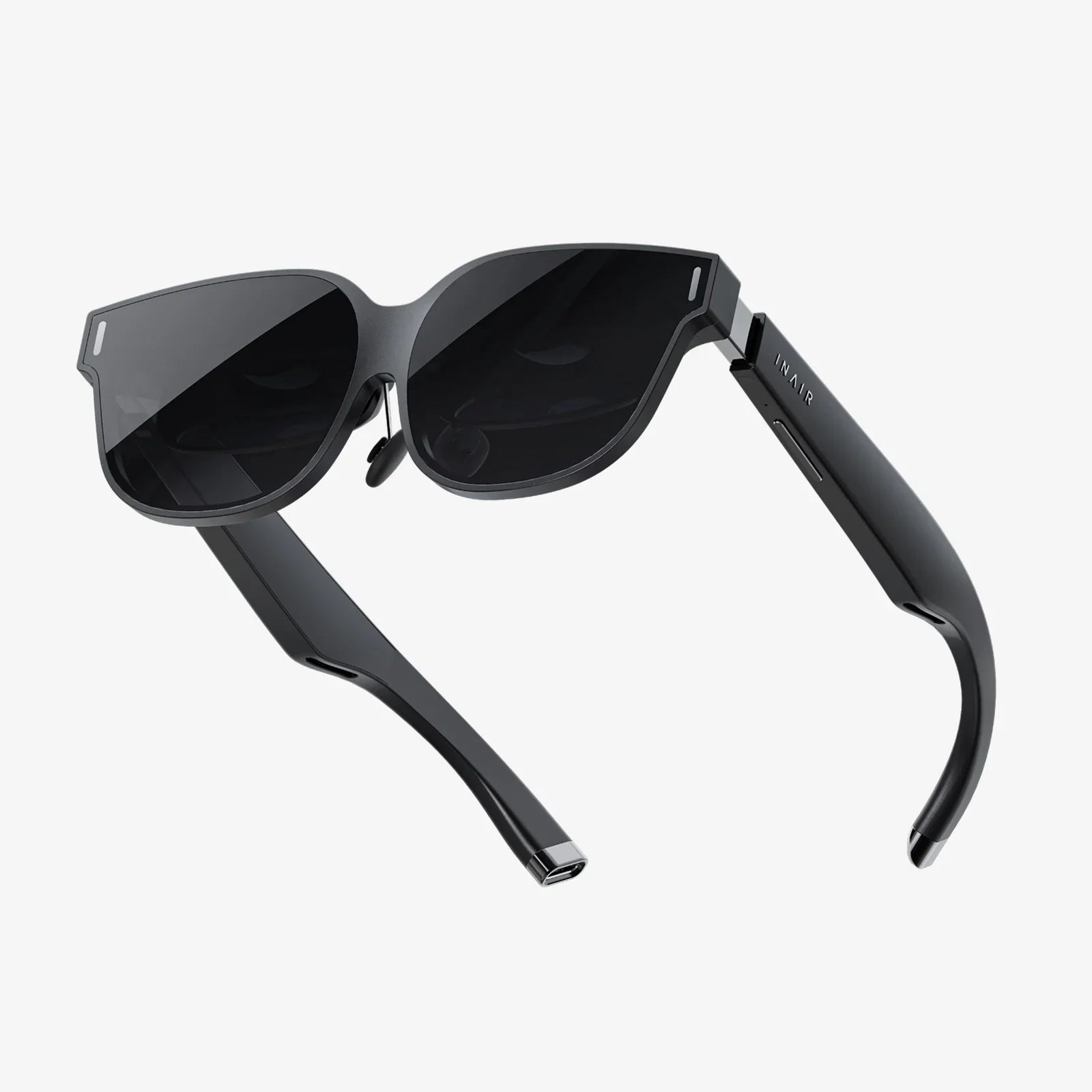
Imagine a world where the digital and the physical are no longer separate realms but a single, intertwined experience—a world where a surgeon in one country is guided through a complex procedure by a holographic expert, where a historian can walk through a perfectly reconstructed ancient city, and where your workspace is a boundless virtual landscape limited only by your imagination. This is not a distant sci-fi fantasy; it is the palpable future being constructed today by the brilliant and ambitious virtual reality and augmented reality companies operating at the bleeding edge of technology. These entities are not merely selling headsets; they are laying the foundational infrastructure for the next great computing platform, and their work is poised to redefine every facet of human existence, from how we work and learn to how we connect and create.
The Defining Divide: VR vs. AR
Before delving into the ecosystem of companies, it is crucial to understand the fundamental distinction between the two technologies they champion. While often grouped together under the umbrella term XR (Extended Reality), their philosophies and applications differ significantly.
Virtual Reality: The Total Escape
Virtual reality companies are in the business of transportation. Their primary goal is to create a fully immersive, digital environment that completely replaces the user's physical surroundings. By employing headsets that block out the real world and track head and hand movements, VR constructs a convincing simulation. The applications are vast:
- Gaming and Entertainment: This remains the most well-known application, offering unparalleled levels of immersion in interactive worlds.
- Training and Simulation: From training pilots and surgeons to preparing soldiers for combat scenarios, VR provides a safe, cost-effective, and repeatable training ground.
- Social Connection: Virtual meeting spaces and social platforms allow people to interact as avatars, fostering a sense of presence that video calls cannot match.
- Therapeutic Uses: VR is being used for exposure therapy, pain management, and treating phobias and PTSD.
Augmented Reality: The Enhanced World
Augmented reality companies, in contrast, seek to enhance the real world rather than replace it. AR overlays digital information—images, text, 3D models—onto the user's view of their physical environment. This is often achieved through glasses, smartphones, or tablets. Its power lies in contextual, just-in-time information:
- Industrial and Field Service: Technicians can see schematics overlaid on machinery, receive step-by-step repair instructions, and remotely collaborate with experts.
- Retail and Design: Customers can visualize furniture in their home before buying, or architects can project a full-scale building model onto an empty lot.
- Navigation: Arrow overlays can guide users through complex airports or city streets.
- Education: Textbooks can come alive with 3D models of the human heart or historical artifacts.
The Vanguard: Categories of XR Companies
The landscape of VR and AR companies is diverse and can be broadly categorized by their core focus and contribution to the ecosystem.
1. The Hardware Titans
These are the companies designing and manufacturing the physical gateways to these new realities—the headsets, glasses, and associated controllers. Their work is a complex ballet of engineering, balancing processing power, display resolution, field of view, weight, comfort, and battery life. The competition here is fierce, driving rapid innovation in display technology (like pancake lenses and micro-OLED), inside-out tracking, and haptic feedback systems. These companies face the monumental challenge of creating a device that is both technologically powerful and socially acceptable to wear for extended periods.
2. The Software and Platform Architects
If hardware is the body, software is the soul. This category includes companies that develop the operating systems, development engines, and social platforms that power the XR experience. Some create the crucial game engines and 3D creation tools that developers use to build immersive applications. Others build entire virtual worlds and social hubs—the nascent foundations of the metaverse. Their success hinges on creating robust, developer-friendly tools and fostering a vibrant ecosystem of creators.
3. The Enterprise Solution Specialists
While consumer VR is often in the spotlight, many of the most successful and impactful XR companies are those focused squarely on the enterprise market. These B2B players develop tailored software solutions for specific industries like manufacturing, healthcare, architecture, and retail. They don't just sell technology; they sell efficiency, safety, and cost savings. Their solutions might involve training simulations for complex equipment, remote assistance platforms for field engineers, or AR tools for warehouse logistics and inventory management. Their growth is often fueled by clear, demonstrable ROI for their clients.
4. The Content and Experience Creators
This vibrant sector comprises game studios, film production houses, and independent developers who are the artists and storytellers of the medium. They are experimenting with new forms of narrative, creating breathtaking games, producing immersive 360-degree documentaries, and developing interactive marketing experiences for brands. Their work is essential for driving consumer adoption and demonstrating the emotional and creative potential of VR and AR.
Strategic Imperatives and Market Dynamics
Navigating the XR market requires more than just advanced technology; it demands shrewd strategy in a space that is still defining itself.
The Ecosystem Lock-in Strategy
A dominant strategy, particularly among larger players, is to create a closed ecosystem. This involves tightly integrating hardware, software, and storefronts to create a seamless user experience. The goal is to lock users into a specific platform, ensuring recurring revenue from software sales, subscriptions, and services, much like modern gaming consoles or smartphones.
Open vs. Closed: The Philosophical Battle
A key strategic divide is between open and closed approaches. Some companies advocate for a walled garden, controlling the entire stack to ensure quality and security. Others champion an open model, believing that interoperability between different devices and platforms is essential for the healthy, widespread growth of the metaverse. This philosophical battle will significantly shape how we access and experience digital worlds in the future.
The Enterprise First Approach
Given the current higher willingness of businesses to invest in proven ROI, many companies have adopted an "enterprise-first" strategy. They develop and refine their technology with deep-pocketed corporate clients, using the revenue and real-world testing to fund further R&D. The eventual goal is to leverage this matured technology to create more affordable and powerful consumer devices down the line.
Overcoming the Hurdles: Challenges on the Path to Mass Adoption
Despite the exciting progress, significant challenges remain before VR and AR become as ubiquitous as the smartphone.
The Form Factor Conundrum
For AR to truly succeed, the hardware must evolve from bulky headsets or phone-dependent apps to a form factor that is as lightweight, stylish, and socially normal as a pair of everyday eyeglasses. This requires monumental advances in waveguide technology, battery efficiency, and thermal management. VR headsets also need to become lighter, wireless, and more comfortable for long-term use.
The Network and Compute Bottleneck
Rendering photorealistic graphics in real-time is incredibly computationally intensive. Offloading this processing to the cloud via 5G and edge computing is a promising solution, but it requires ultra-low latency and high bandwidth networks that are not yet universally available. This is a key area of investment for both tech companies and telecommunications providers.
The Quest for the "Killer App"
While there are many compelling use cases, the consumer market is still waiting for the definitive "killer app"—the application so compelling that it drives millions to adopt the technology. For VR, it could be a social platform or game that achieves cultural phenomenon status. For AR, it might be a deeply integrated productivity or lifestyle app that becomes indispensable.
Navigating the Ethical Minefield
XR companies are also grappling with profound ethical questions. How do we protect user privacy in a world where devices can constantly scan our environments? How do we prevent the creation of hyper-realistic deepfakes and misinformation in AR? What are the psychological effects of living increasingly in virtual worlds? Establishing ethical guidelines and building trust with users is paramount for long-term success.
The Future Forged in Code and Light
The trajectory is clear: VR and AR are on a path to convergence. The future headset will likely be a single device capable of seamlessly switching between fully immersive VR and contextually aware AR, a concept often referred to as Mixed Reality (MR). We are moving towards a world of "spatial computing," where digital information is mapped onto and interacts with the physical world as naturally as physical objects do. The companies that succeed will be those that perfect the hardware, create intuitive and powerful interfaces, and, most importantly, build applications that solve real human problems and unlock new forms of creativity and connection. They are not just building products; they are building the lens through which we will increasingly perceive and interact with reality itself.
The race to define this new reality is already underway in R&D labs and boardrooms across the globe. The decisions made by these pioneering virtual reality and augmented reality companies today will echo for decades, determining whether this powerful technology becomes a force for isolation or connection, for distraction or enlightenment. One thing is certain: the boundary between our world and the digital one is dissolving, and the architects of this merger are crafting an experience so compelling that soon, looking back at a flat, 2D screen will feel like a relic from a distant, unimaginable past. The next time you put on a headset or use your phone to see hidden digital layers, remember—you are not just using a device, you are stepping onto the foundation of a future being built one line of code, one optical breakthrough, at a time.
Share:
Augmented and Virtual Reality Solutions Are Reshaping Our World
Difference Between AR and Mixed Reality: The Ultimate Guide to Blending Worlds