


Imagine a world where a surgeon in one country can guide a life-saving procedure in another without ever boarding a plane; where a mechanic can see through the engine block of a malfunctioning machine to identify the faulty part with a glance; where a history student can walk through the bustling forums of ancient Rome, witnessing the architecture and daily life firsthand. This is not a distant science fiction fantasy. This is the world being built today through the powerful and practical applications of Virtual Reality (VR), Augmented Reality (AR), and Mixed Reality (MR). While often associated with immersive gaming and flashy filters, the true revolution lies in the profound use cases solving real-world challenges across every sector of society.
Demystifying the Reality Spectrum: VR, AR, and MR
Before diving into the applications, it's crucial to understand the distinctions between these interconnected technologies. They exist on a spectrum known as the "virtuality continuum," which ranges from the completely real environment to a fully virtual one.
Virtual Reality (VR): The Total Immersion
VR is the most immersive of the three technologies. It completely replaces the user's real-world environment with a simulated, digital one. By wearing a head-mounted display (HMD), users are visually and acoustically transported to a computer-generated world. This environment can be a photorealistic recreation of a real place, a fantastical game world, or a abstract data visualization. The key characteristic of VR is its isolation from the physical surroundings, allowing for complete control over the user's sensory experience. Primary use cases have historically been in entertainment, but as we will see, that is only the tip of the iceberg.
Augmented Reality (AR): The Digital Overlay
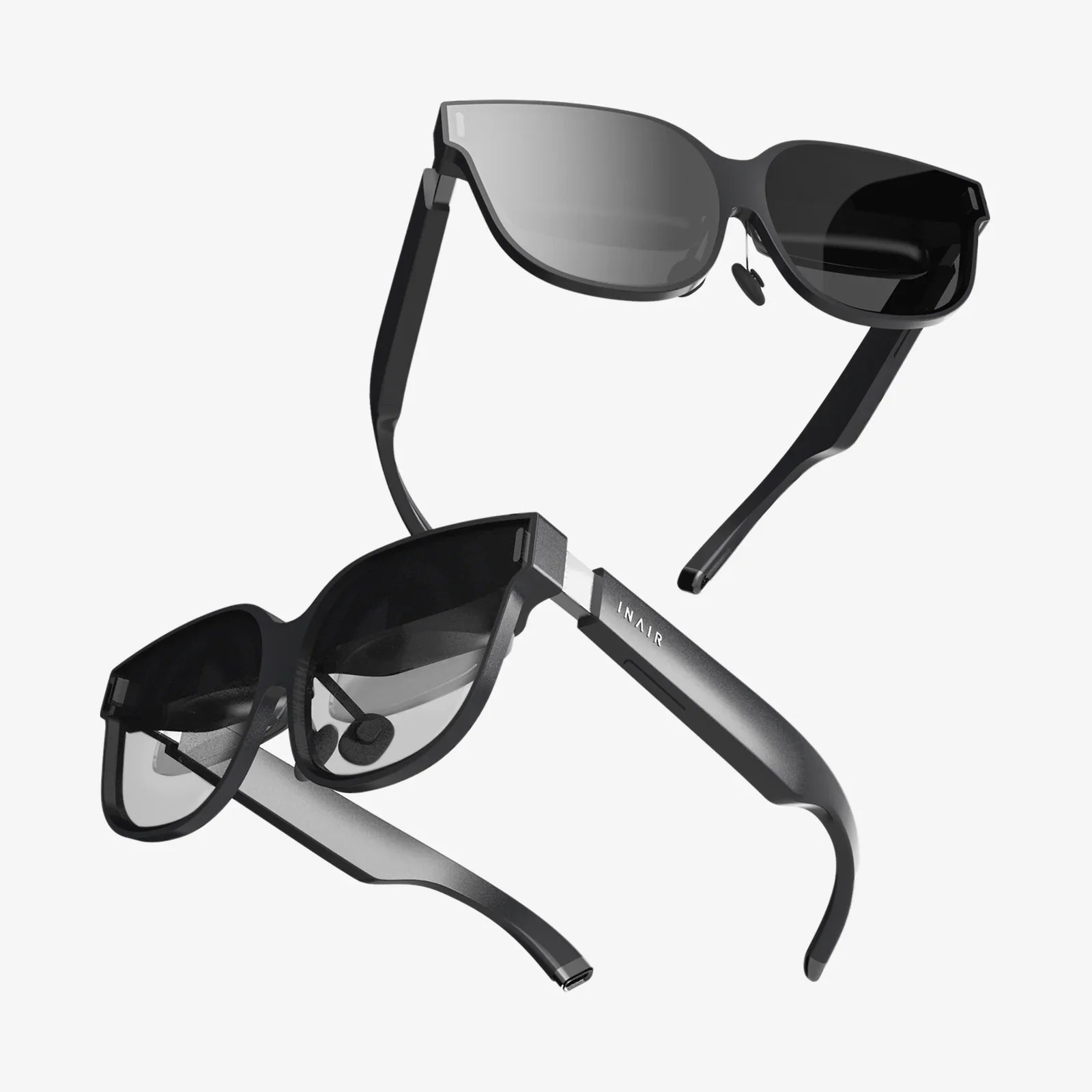
AR operates on the opposite end of the spectrum. Instead of replacing reality, it augments it by superimposing digital information—images, text, 3D models, animations—onto the user's view of the real world. This is most commonly experienced through smartphone screens (e.g., popular social media filters) or through specialized smart glasses. The digital content appears to coexist with the physical world, providing context-specific information exactly where it is needed. AR enhances our perception of reality by adding a layer of useful data.
Mixed Reality (MR): The Blended Frontier
MR is the most advanced and often misunderstood point on the spectrum. It represents a hybrid of VR and AR where physical and digital objects not only coexist but can interact in real-time. In a true MR experience, a digital ball could bounce off a real-world table, or a virtual character could sit on your actual sofa. This requires advanced sensors and cameras to deeply understand and map the physical environment, allowing digital content to be spatially aware and anchored to real objects. MR is the gateway to the much-hyped "metaverse," promising a persistent and interactive blended reality.
Transforming Industries: A Deep Dive into Practical Use Cases
The theoretical potential of these technologies is vast, but their real value is proven in their practical application. From the factory floor to the operating room, here are the use cases that are delivering tangible ROI and revolutionizing workflows.
Revolutionizing Healthcare and Medicine
The healthcare sector is perhaps the most compelling arena for immersive technologies, with applications that are already saving lives, reducing costs, and improving outcomes.
- Surgical Training and Planning: VR provides a risk-free environment for surgeons to practice complex procedures. Instead of cadavers or relying solely on observation, trainees can perform virtual surgeries hundreds of times, honing their skills and building muscle memory. Furthermore, surgeons can use patient-specific scans (CT, MRI) to create a precise 3D model of an organ or tumor. They can then step into this model in VR to plan the optimal surgical approach, rehearse the procedure, and anticipate complications before making a single incision.
- Medical Education and Anatomy: Medical students are using VR to explore human anatomy in ways textbooks could never allow. They can "walk through" a digitally reconstructed human heart, peel back layers of muscle and tissue, and understand spatial relationships between organs in stunning, immersive 3D. This deepens comprehension and retention of complex biological systems.
- Pain Management and Physical Rehabilitation: VR is a powerful tool for distraction therapy. For patients undergoing painful wound care or physical therapy, being immersed in a calming virtual environment (a beach, a forest) can significantly reduce their perceived pain and anxiety. In rehabilitation, AR games can motivate stroke patients to complete repetitive motor exercises by turning them into engaging tasks, such as virtually popping bubbles or stacking blocks, which accelerates recovery.
- Remote Assistance and Telemedicine: A specialist wearing AR smart glasses can be virtually "beamed" into an operating room or a rural clinic. The local doctor can see the specialist's annotations and instructions overlaid directly onto their field of view, guiding them through a procedure in real-time. This democratizes access to expert care regardless of geographical barriers.
Re-engineering Manufacturing and Industrial Design
In industrial settings, VR, AR, and MR are streamlining processes, enhancing safety, and driving efficiency from the design phase to the assembly line.
- Virtual Prototyping and Design Review: Automotive and aerospace engineers use VR to create and review full-scale, 1:1 digital prototypes of vehicles and aircraft long before physical models are built. Design teams from around the world can collaborate within the same virtual model, examining ergonomics, identifying design flaws, and testing aerodynamics in a simulated environment. This slashes development time and costs associated with physical prototyping.
- Assembly, Maintenance, and Repair: AR is a game-changer for complex assembly and maintenance tasks. Technicians wearing AR glasses can see digital work instructions, torque specifications, and animated guides overlaid directly onto the machinery they are working on. This eliminates constant referral to paper manuals or computer screens, reduces errors, and drastically shortens training times for new employees. A novice can perform like an expert with AR guidance.
- Remote Expert Guidance: When a complex piece of equipment on an offshore oil rig or a remote factory floor breaks down, flying in a specialist is time-consuming and expensive. With AR, an on-site worker can share their live point-of-view with an off-site expert. The expert can then draw arrows, highlight components, and display instructions directly into the worker's field of view, enabling them to fix the issue quickly without needing to travel.
- Warehouse Logistics and Picking: In massive distribution centers, AR smart glasses can visually guide warehouse workers to the exact shelf location for an item. The most efficient route is displayed, and the system can verify that the correct item is picked by scanning it, dramatically improving picking speed and accuracy.
Redefining Education and Corporate Training
Immersive technologies are moving learning from passive absorption to active experience, creating deeper engagement and better outcomes.
- Immersive Learning: History students can experience pivotal moments; biology students can travel inside a human cell; astronomy students can navigate the solar system. VR creates empathetic and unforgettable learning experiences that foster a much deeper understanding than reading alone. It caters to visual, auditory, and kinesthetic learners simultaneously.
- Skill-Based and Safety Training: Corporations use VR to train employees in high-stakes scenarios without any real-world risk. Retail employees can practice dealing with difficult customers in a simulated store. Oil rig workers can rehearse emergency evacuation procedures in a virtual storm. Pilots have used simulators for decades, and VR brings this same powerful training methodology to countless other professions at a fraction of the cost.
- Soft Skills Development: VR is increasingly used for training in public speaking, leadership, and sales. Users can practice presentations in front of a virtual audience that reacts in real-time, or engage in difficult conversation simulations with AI-powered avatars, receiving feedback on their tone, body language, and word choice.
Enhancing Retail and Real Estate
These industries are leveraging immersive tech to bridge the gap between imagination and reality, empowering customer decision-making.
- Virtual Try-On and Product Visualization: AR apps allow customers to see how furniture would look and fit in their living room, how a new shade of paint would transform their walls, or how a pair of glasses would look on their face—all from their smartphone. This reduces purchase hesitation and lowers return rates.
- Virtual Property Tours: Real estate agents and hotels use 360-degree VR tours to allow potential buyers or renters to explore properties remotely at any time. This is far more immersive than static photos and saves time for all parties involved. Architects can also walk clients through unbuilt homes or renovations in VR, ensuring the design meets their expectations before construction begins.
Overcoming Challenges and Looking to the Future
Despite the incredible progress, widespread adoption of VR, AR, and MR still faces hurdles. Hardware needs to become lighter, more comfortable, and more affordable. Network infrastructure, particularly for high-fidelity cloud streaming, requires further development (a challenge being addressed by 5G and beyond). User interface design is still evolving to create more intuitive and natural interactions beyond controllers. Finally, creating high-quality content remains time-consuming and expensive, though AI-powered tools are beginning to accelerate this process.
Yet, the trajectory is clear. The lines between our physical and digital lives will continue to blur. We are moving towards a future where spatial computing is seamless and ubiquitous. The use cases of today are the foundation for the transformative applications of tomorrow: persistent digital twins of cities for urban planning, always-available contextual information overlaying our entire worldview, and new forms of social connection and collaboration that feel as natural as being in the same room. The potential is limited only by our imagination.
The next time you hear about virtual, augmented, or mixed reality, look past the games and gimmicks. See the medical student mastering a complex procedure, the engineer perfecting a sustainable design, the worker performing a complex repair with confidence, and the student discovering a passion for learning. These are the real stories, the powerful use cases that are not just changing how we play, but how we work, learn, heal, and connect, building a more efficient, safe, and profoundly understanding world one immersive experience at a time.
Share:
What AR AI Technologies Are and How They're Merging Reality with Intelligence
Virtual Meeting Tools Comparison: A Guide to Choosing Your Platform