


Imagine stepping through a portal not into another place, but into another state of being. The familiar confines of your room dissolve, replaced by an infinite canvas of digital creation. You can walk with dinosaurs, stand on the surface of Mars, or sit across from a loved one who is physically an ocean away, feeling their presence as if they were real. This is the profound promise of virtual reality—a technology that doesn’t just show you a new screen but invites you to step inside it, fundamentally altering the very fabric of human experience, communication, and understanding. It’s a leap from observation to immersion, and it’s poised to change everything.
The Foundational Pillars: How We Bridge the Gap to the Digital
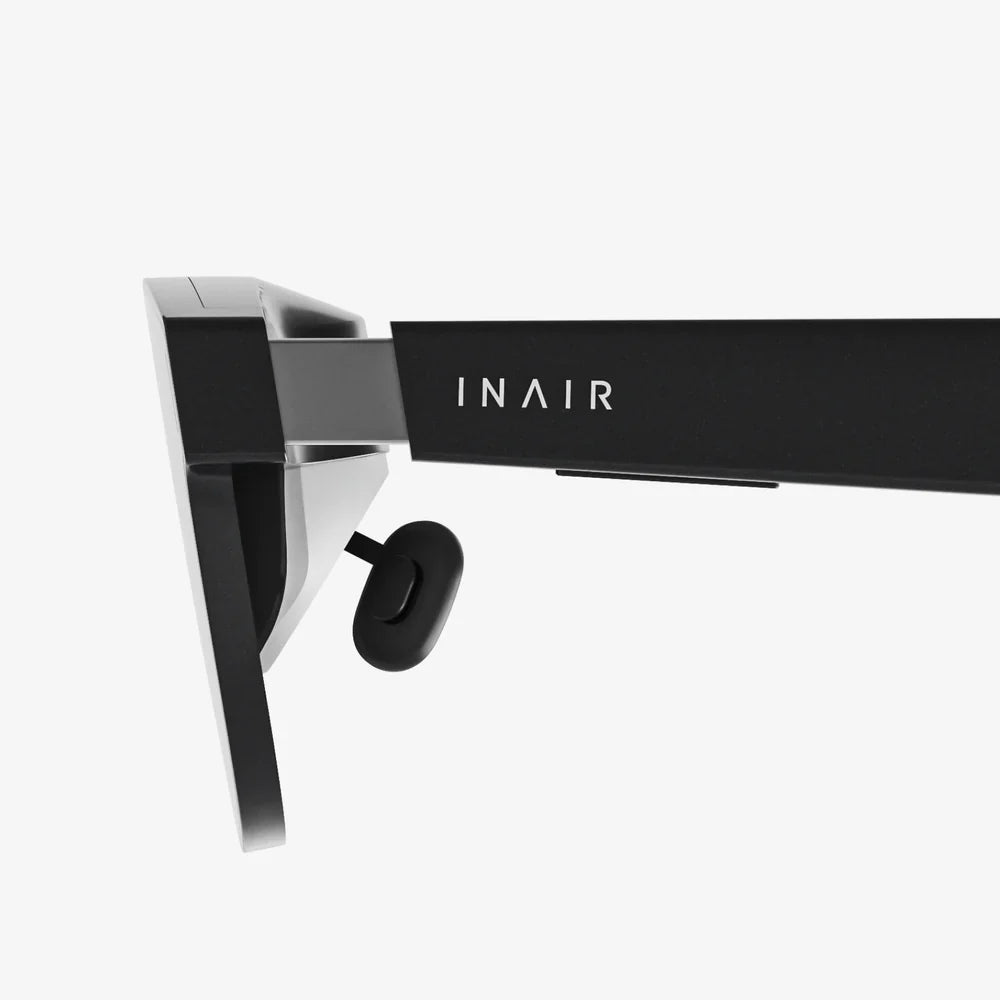
At its core, virtual reality is an empathy engine, a machine designed to induce a specific psychological state known as presence. Achieving this elusive feeling, the genuine sensation of being somewhere else, relies on a sophisticated interplay of hardware and software principles. It begins with a head-mounted display that encompasses the user's entire field of view. These displays are not merely high-resolution screens placed close to the eyes; they are intricate systems employing specialized lenses that warp and focus the image to create a stereoscopic 3D effect, providing the crucial depth perception that flat media lacks.
However, visual fidelity alone is insufficient. True immersion is shattered the moment a user turns their head and the digital world lags behind or fails to respond. This is where a suite of advanced tracking technologies comes into play. Modern systems utilize a combination of internal and external sensors—including gyroscopes, accelerometers, and laser-based lighthouse systems or sophisticated inside-out cameras—to track the precise position and orientation of the user’s head in real-time, with millimetre accuracy. This data is processed instantaneously to adjust the visual perspective, ensuring the virtual world remains stable and responsive to even the slightest movement.
The final, and perhaps most transformative, layer of immersion is input. Early virtual reality offered a passive experience, a window into a world you could not touch. Today, we have sophisticated controllers and, increasingly, hand-tracking technology that allows users to reach out and manipulate the digital environment with their own fingers. These input devices are themselves packed with sensors, tracking their position and the movement of individual buttons, triggers, and joysticks. This bidirectional interaction—seeing your virtual hands grip a object, feeling the haptic vibration in the physical controller as you pull a virtual trigger—completes the feedback loop, convincing the brain that the impossible is real.
More Than Games: The Silent Revolution Across Industries
While the gaming and entertainment sectors provide the most visible and consumer-friendly applications of virtual reality, the technology's most impactful and transformative uses are happening behind the scenes, revolutionizing fields far from the living room.
The Surgeon's New Scalpel
In medicine, virtual reality is becoming an indispensable tool. Surgeons now routinely use detailed, patient-specific 3D models derived from CT and MRI scans to plan complex procedures. They can practice a delicate operation countless times in a risk-free virtual space, exploring different approaches and anticipating complications before ever making an incision. This not only improves surgical outcomes but also drastically reduces operation times. Furthermore, virtual reality is a powerful medium for medical training, allowing students to dissect virtual cadavers or experience medical scenarios from a patient's perspective, fostering unprecedented levels of empathy and understanding.
The Classroom Without Walls
Education is undergoing a similar metamorphosis. Imagine a history lesson where students don't just read about Ancient Rome—they walk through a faithfully reconstructed Forum, hearing the sounds of the marketplace and witnessing speeches in the Senate. Biology students can journey through the human bloodstream, and astronomy classes can stand on the moon and watch the earth rise. This experiential learning moves education from abstract memorization to concrete, unforgettable experience, dramatically improving knowledge retention and engagement for learners of all ages and styles.
The Corporate Frontier
The corporate world is embracing virtual reality for collaboration and design. Global teams can meet in a shared virtual boardroom, interacting with 3D data models and prototypes as if they were physical objects in the room with them. Architects and engineers can walk clients through unbuilt structures, making changes to the design in real-time. Car designers can sit inside a virtual model of a new vehicle, assessing sightlines and ergonomics long before a single piece of metal is stamped. This application saves millions in prototyping costs, accelerates design cycles, and fosters a more intuitive and effective collaborative process.
The Human Connection: Redefining Social and Personal Frontiers
Perhaps the most profound implication of virtual reality lies in its potential to reshape human connection itself. Social virtual reality platforms are emerging as new digital public squares. Here, users represented by personalized avatars can gather to watch movies, attend concerts, play games, or simply converse. The sense of shared space and embodied presence—reading the body language of a friend's avatar, making eye contact, sharing a virtual high-five—creates a layer of emotional resonance and social cues that traditional video calls or text-based communication utterly lack.
This technology also holds incredible promise for breaking down physical and social barriers. Individuals with mobility constraints can experience the freedom of movement and visit places otherwise inaccessible to them. People separated by vast distances can share experiences and feel a sense of togetherness that mitigates the loneliness of isolation. Furthermore, virtual reality is being used as a powerful therapeutic tool for treating phobias, PTSD, and anxiety disorders through controlled, safe exposure therapy, allowing individuals to confront and manage their fears in a gradual and manageable way.
The Other Side of the Lens: Navigating the Ethical Abyss
For all its promise, the ascent of virtual reality is not without significant ethical dilemmas and potential perils. As we spend more time in persuasively real digital worlds, questions of reality itself come to the fore. How will prolonged immersion affect our perception of the physical world? The potential for addiction to idealized virtual existences is a serious concern, potentially leading to neglect of real-world responsibilities and relationships.
The data collected in these environments is another frontier of concern. Unlike a website that tracks clicks, virtual reality systems can potentially track everything: eye gaze, pupil dilation, physiological responses, biometric data, intimate social interactions, and precise movement patterns. This represents an unprecedented level of personal surveillance. Who owns this data? How is it used? The potential for manipulation—from hyper-targeted advertising to more sinister forms of behavioral conditioning—is staggering.
Furthermore, the concept of the self is challenged. In a space where you can be anyone or anything, issues of identity, harassment, and accountability arise. Establishing social norms, ensuring safety, and preventing virtual crimes that have real-world psychological impacts is a complex challenge that developers and society are only beginning to grapple with. The potential for a new digital divide is also real, where access to these transformative experiences becomes a marker of socio-economic privilege.
The Unwritten Future: What Lies on the Horizon?
The virtual reality we see today is merely the primordial spark. The technology is advancing at a breathtaking pace, heading towards a future of even greater fidelity and integration. The next evolutionary leap is the development of photorealistic graphics powered by real-time ray tracing, combined with haptic feedback suits and gloves that simulate touch, temperature, and resistance, engaging the sense of touch to complete the illusion.
Beyond that, research into brain-computer interfaces suggests a future where we may bypass external hardware entirely, transmitting and receiving signals directly from the brain. This could lead to experiences indistinguishable from physical reality, or even entirely new senses and perceptions impossible to achieve with our biological bodies. This ultimate form of virtual reality would truly be a new frontier of human existence, blurring the line between the born and the made, the real and the virtual, in ways we are only beginning to imagine.
The journey into the virtual is not about escaping our reality, but about expanding it. It offers a mirror to our world, a tool for our minds, and a bridge to each other. It holds the power to democratize experience, foster profound empathy, and solve some of our most complex problems. Yet, it demands from us a proportional measure of wisdom, foresight, and ethical rigor. The headset is not just a device; it is an invitation to actively participate in building the next chapter of our collective story, to consciously shape a dimension that will, in turn, inevitably reshape us. The portal is open; the question is no longer if we will step through, but how wisely we will choose to explore the infinite worlds on the other side.
Share:
How Do Smart Projectors Work: A Deep Dive Into Modern Entertainment Hubs
Smartphone Virtual Reality Games: The Pocket-Sized Portal to Another Dimension