Imagine slipping on a headset and instantly being transported to a bustling ancient marketplace, a surgeon’s operating theater, or the surface of Mars. This is the profound promise of virtual reality, a technology that has captivated our collective imagination for decades. But as VR matures from science fiction fantasy into a tangible, consumer-grade technology, a critical question emerges: how does it truly stack up? To understand its value and potential, we must place it in context. This requires a deep and nuanced comparison—not just against its direct competitors in the immersive tech space, but against the very fabric of the digital experiences it seeks to augment and replace. This exploration goes beyond mere specs; it’s a journey into the philosophy of presence, the economics of immersion, and the future of human-computer interaction.
The Philosophical and Technological Foundations of Immersion
At its core, virtual reality is an experience generator. Its primary goal is to induce a state known as presence—the undeniable, often subconscious, feeling of being in a place other than your physical location. This is achieved through a sophisticated combination of hardware and software designed to hijack the human sensory system. High-resolution displays placed mere centimeters from the eyes fill the field of view, while precise head-tracking technology ensures the digital world responds to every glance, nod, and turn with imperceptible latency. Spatial audio completes the illusion, convincing your brain that sounds are emanating from specific points in the virtual space, not just the headphones on your ears.
This technological orchestration is what fundamentally separates VR from all previous media. A book requires intellectual immersion; a movie evokes emotional immersion through a framed window. VR, however, demands physical immersion. Your body is the controller. You duck under virtual obstacles, lean over digital ledges, and use your hands to manipulate objects. This embodied interaction creates neural pathways and memories that are strikingly similar to those formed during real-world experiences. It’s the difference between watching a documentary about climbing Everest and feeling the visceral drop in your stomach as you look down from a virtual ice ledge, your palms sweating as you search for the next handhold.
Virtual Reality Compared to Augmented Reality
The most common comparison, and often the most confused, is between Virtual Reality (VR) and Augmented Reality (AR). While both fall under the broader umbrella of extended reality (XR), their purposes and implementations are distinct.
Virtual Reality is about replacement. It seeks to block out the physical world entirely and substitute it with a synthetic, digital environment. This makes it the ultimate tool for complete escapism, deep simulation, and training scenarios where real-world distractions could be dangerous or counterproductive. A pilot training in a VR flight simulator benefits from having no visual connection to the airport terminal around them; their entire reality is the cockpit.
Augmented Reality, in contrast, is about enhancement. It layers digital information—images, data, 3D models—atop our real-world view. Using transparent lenses or camera passthrough, AR allows you to see your physical surroundings while adding a helpful or entertaining digital layer. This technology excels in contextual applications: seeing navigation arrows on the road ahead, visualizing how a new sofa would look in your living room, or having a repair manual overlaid on a malfunctioning engine.
The choice between them is not about which is better, but which is the right tool for the job. VR offers a deeper, more controlled immersion, while AR offers utility within your existing environment. One transports you to a new world; the other brings digital magic into yours.
Virtual Reality Compared to Traditional Gaming and Entertainment
The gaming industry has been the primary driver of consumer VR adoption, making this a crucial comparison. Traditional console and PC gaming is a passive physical experience in a chair, with engagement mediated through a controller, mouse, or keyboard. The connection to the game world is intellectual and emotional, but it is always framed by a screen—a window into another world.
VR gaming shatters that window. It transforms the experience from a third-person observation to a first-person embodiment. Instead of pressing a button to make a character swing a sword, you physically swing your arm. Instead of using a thumbstick to peek around a corner, you actually lean your body. This physicality introduces a new layer of strategy, fatigue, and skill. It also unlocks new genres of gameplay centered around rhythm, fitness, and social interaction that are simply not possible with traditional inputs.
However, this comparison also reveals VR’s current limitations. The hardware is more cumbersome, requiring a clear play space and often being tethered to a powerful computer. Session lengths can be shorter due to physical exertion and the potential for motion sickness in some users. Furthermore, the complexity and cost of development have resulted in a library of games that, while incredibly innovative, often lacks the vast scale and narrative depth of traditional AAA blockbusters. VR provides unparalleled immersion for shorter, more intense experiences, while traditional gaming offers sprawling worlds you can get lost in for hundreds of hours from the comfort of your couch.
Virtual Reality Compared in Professional and Educational Applications
Beyond entertainment, the value proposition of VR becomes even more stark when compared to traditional learning and training methods. Consider medical training. The historical progression has been from textbooks (theory) to observing procedures (passive learning) to practicing on cadavers or synthetic models (limited, costly active learning).
VR introduces a paradigm shift. Medical students can now practice complex surgeries an unlimited number of times in a risk-free environment. They can make mistakes, learn from them, and build muscle memory without any consequence to a patient. This is compared to traditional simulation, which often relies on extremely expensive physical mannequins that can only simulate a limited number of scenarios.
This advantage extends across numerous fields:
-
Corporate Training: Compared to monotonous video modules or lecture-based onboarding, VR can place an employee in a hyper-realistic scenario, like a difficult conversation with a virtual client or practicing public speaking in front of a digital audience.
-
Architecture and Design: Instead of reviewing 2D blueprints or even 3D models on a screen, clients and architects can don a headset and walk through a building before a single brick is laid. This compared experience is transformative for spatial understanding and client approval.
-
Education: A history lesson compared to reading a chapter in a textbook becomes an unforgettable journey when students can virtually stand in the Roman Forum or witness a historical event unfold around them.
In each case, the comparison highlights VR’s unique ability to bridge the gap between theoretical knowledge and practical, experiential learning.
The Hardware Spectrum: A Comparison of Capabilities and Trade-Offs
The VR experience itself is not monolithic; it varies dramatically based on the hardware platform, and understanding this internal comparison is key for any potential user.
On one end of the spectrum are tethered VR headsets. These devices connect to a powerful external computer or games console, which acts as the engine rendering the complex virtual worlds. The comparison here is overwhelmingly in favor of tethered systems when it comes to visual fidelity, graphical complexity, and overall performance. They offer the most immersive and high-quality experiences available, making them the preferred choice for hardcore gamers and professional applications. The trade-off, of course, is a lack of freedom. Users are constrained by a cable and the physical proximity to a expensive, stationary computer.
On the other end are standalone VR headsets. These all-in-one devices have the computer built directly into the headset. The immediate and obvious advantage is complete wireless freedom. Users are untethered and can use the device in any room, or even different locations. This has been instrumental in making VR more accessible and social. However, the comparison of raw power is stark. The mobile-grade processors in standalone headsets cannot hope to match the graphical output of a high-end PC. Experiences are often less complex, with simpler visuals and smaller environments. The choice becomes one of quality versus convenience.
Emerging in the middle are standalone headsets with optional tethering, attempting to offer the best of both worlds, and wireless adapter kits for tethered headsets, aiming to cut the cord without sacrificing performance. This evolving hardware landscape shows a technology rapidly iterating to solve its own internal compromises.
Social Connection: Virtual Reality Compared to Traditional Social Media
Perhaps one of the most profound comparisons is how VR is beginning to reshape human connection, standing in stark contrast to the experience offered by traditional social media platforms. Platforms like those offered by major tech companies are largely 2D, text-based, and image-driven. Interaction is asynchronous, mediated through likes, comments, and shares. You see a curated version of someone’s life, but you are not with them.
Social VR platforms propose a different model: shared presence. Instead of sending a message to a friend, you can put on a headset and join them in a virtual space as a personalized avatar. The comparison is between watching a video of a concert and feeling like you are standing next to your friend at that concert. You can make eye contact, use natural gestures, and have spontaneous conversations. The communication is synchronous and embodied. It captures the nuance of body language and shared space that is completely lost in a video call or text chat. For combating loneliness and creating a genuine sense of togetherness across vast physical distances, social VR offers a compelling and humanizing alternative to the often isolating and comparison-driven nature of traditional social feeds.
The Road Ahead: Challenges and Future Evolution
For all its promise, an honest comparison of VR must acknowledge its significant hurdles. The technology is still relatively expensive for the average consumer, creating a barrier to widespread adoption. The form factor of headsets, while improving, is still bulky and can be uncomfortable for extended wear. Issues like simulator sickness, though mitigated by better technology, still affect a portion of the population.
Furthermore, the concept of the "metaverse"—a persistent, interconnected network of virtual spaces—remains more of a compelling vision than a present-day reality. Current VR experiences are often siloed, much like early video games before robust online multiplayer. The true potential of VR will be unlocked when jumping between different virtual worlds and experiences is as seamless as clicking a link on the web today.
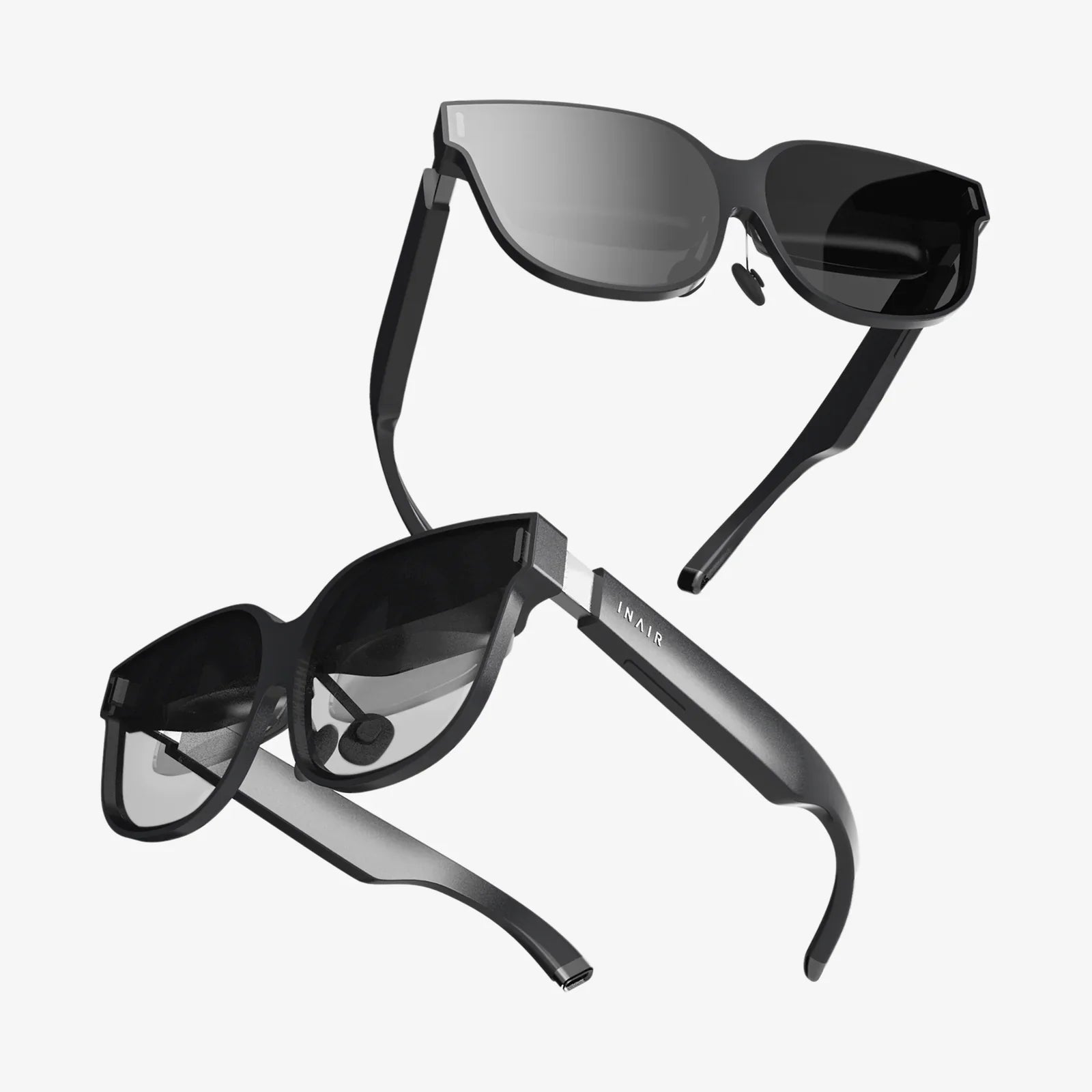
The future evolution points towards solving these challenges. Headsets will become smaller, lighter, and more powerful, eventually converging towards a glasses-like form factor. Advancements in haptic feedback, from sophisticated controllers to full-body suits, will deepen the sense of touch and physical interaction. Brain-computer interfaces are on the distant horizon, promising the ultimate comparison: controlling a digital world with thought alone. As these technologies mature, the line between the virtual and the real will continue to blur, redefining our comparison benchmarks entirely.
The ultimate verdict on virtual reality isn't found in a simple spec sheet or a declaration of victory over other mediums. Its power lies in its unique ability to sell presence, to make the digital feel tangible. It’s a paradigm shift from observing to inhabiting, from watching to doing. While other technologies may outperform it in specific metrics of resolution, convenience, or narrative scope, none can replicate the visceral, heart-pounding, and unforgettable feeling of truly being somewhere else. The journey into virtual worlds is just beginning, and the most compelling comparisons are yet to be written.


Share:
Augmented Reality Marketing: The Ultimate Guide to the Future of Consumer Engagement
Adoption of Virtual and Augmented Reality: Reshaping Industries and Redefining Human Experience