


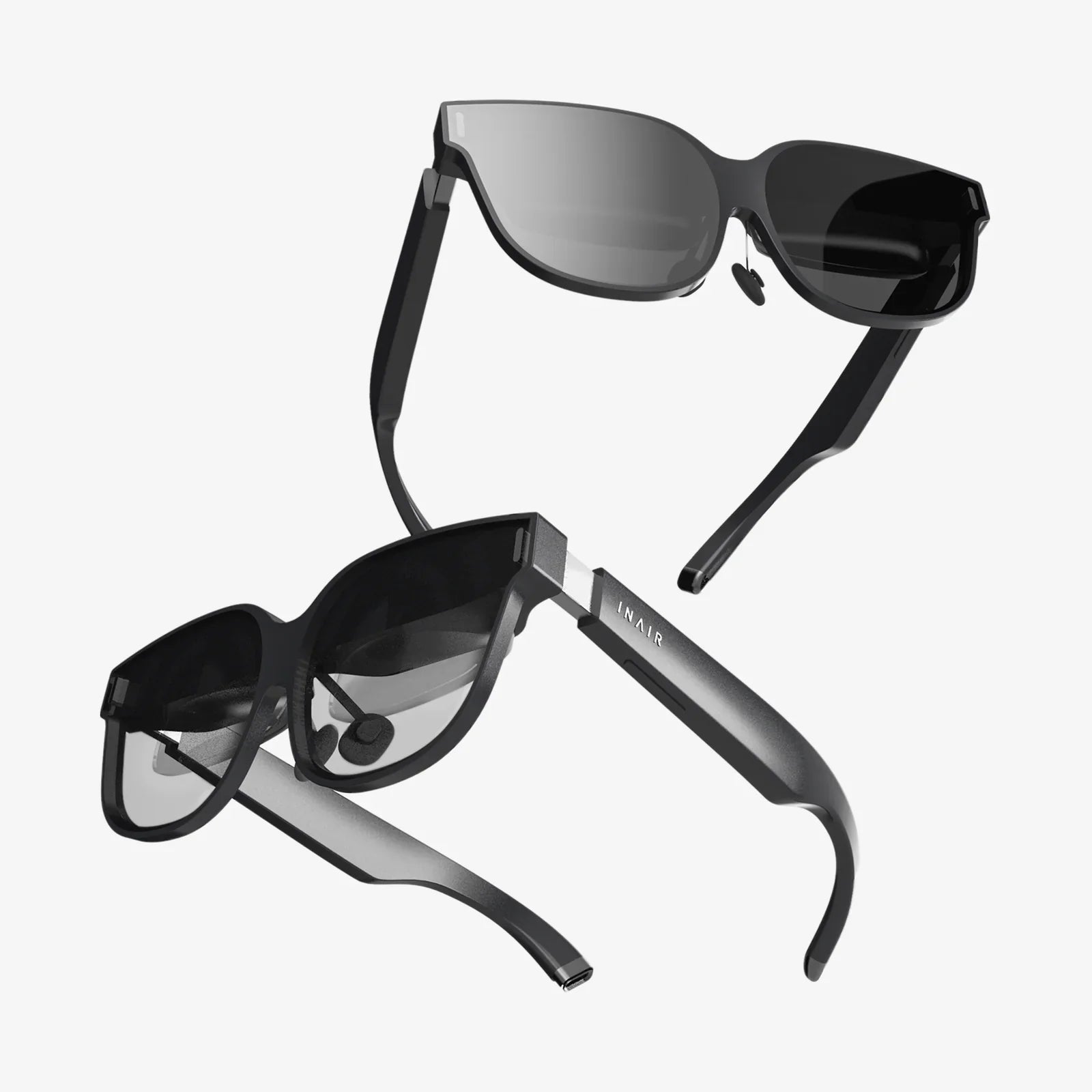
Imagine slipping on a headset and instantly being transported to a different world—walking on Mars, exploring the depths of the ocean, or standing center stage at a concert. This is the profound promise of virtual reality, a promise made possible not by magic, but by the relentless evolution of a suite of technologies working in perfect harmony. At the very heart of this experience, the critical bridge between the digital universe and human perception, lies the complex and fascinating domain of virtual reality display technologies. These are the engines of immersion, and understanding them is key to understanding the future of how we will interact with information and with each other.
The Pillars of Presence: Core Components of a VR Display
Creating a convincing virtual world is a monumental task for any computing system, but the final and most crucial step—projecting that world for our eyes to see—falls to the display subsystem. This is not a single technology but a sophisticated interplay of several key components, each with its own critical role to play in building the illusion of reality.
The Display Panel: The Digital Canvas
At the foundation is the display panel itself, the physical screen that generates the images. The choice of panel technology directly influences the most critical visual metrics. For years, OLED (Organic Light-Emitting Diode) panels were the gold standard. Their key advantage is per-pixel illumination, meaning each tiny light source can be turned on or off independently. This allows for perfect blacks, as a pixel displaying black is simply off, leading to an exceptionally high contrast ratio and more vibrant, lifelike images. This is crucial for creating depth and realism in virtual environments.
However, a challenger has emerged: Fast-Switch LCD (Liquid Crystal Display). While traditional LCDs are slower and suffer from backlight bleed (which ruins black levels), new variants using advanced liquid crystal materials and mini-LED backlighting with local dimming zones have closed the gap significantly. Their primary advantage is higher pixel density, allowing for sharper images and reduced screen-door effect (the visible grid between pixels) at a lower cost. The battle between the deep blacks of OLED and the razor-sharpness of high-resolution LCDs is a defining feature of the current market, with each offering a different path to visual fidelity.
Lenses: The Window to the Virtual World
If the panel creates the image, the lenses are what make it usable for the human eye. You cannot simply place a screen inches from a user's face and expect them to see a clear, focused image. This is where specialized optics come in. For most of VR's consumer history, Fresnel lenses have been the workhorse. These are thin, lightweight lenses with a series of concentric grooves that bend light, allowing them to have a large aperture and sweet spot while remaining relatively thin. Their main drawback is the artifacts they can produce, namely god rays—those faint, ghostly rays that emanate from high-contrast elements against a dark background.
The next generation is moving towards pancake lenses. This more complex design uses a folded optics path, bouncing light between polarization-dependent lens elements before it reaches the eye. This allows for a dramatically shorter distance between the display panel and the eye, making headsets significantly thinner and lighter. Pancake lenses also provide a much larger sweet spot and edge-to-edge clarity, virtually eliminating god rays. The trade-off is a loss of light efficiency, requiring brighter displays to compensate, but the gains in comfort and visual quality are immense.
Resolution and Pixel Density: The Quest for the Retinal Display
Two of the most talked-about specs are resolution and Pixels Per Degree (PPD). Raw resolution (e.g., 1920x2160 per eye) is less important than PPD, which measures how many pixels are packed into each degree of your field of view. The human eye is estimated to resolve around 60 PPD. Early headsets struggled with 10-15 PPD, making text blurry and distant objects a jagged mess. Modern high-end headsets are pushing 25-35 PPD, a massive leap that dramatically reduces the screen-door effect and increases clarity. The ultimate goal is a "retinal" display where the pixel density is so high that the human eye cannot distinguish individual pixels, making the digital image indistinguishable from reality.
Refresh Rate and Low Persistence: Banishing Motion Blur
A high-resolution image is worthless if it smears every time you turn your head. This is where refresh rate (measured in Hertz, or Hz) and a technique called low-persistence strobing become critical. Standard displays use sample-and-hold, where a pixel is lit for the entire duration of a frame. In VR, this causes severe motion blur during head movement, a primary contributor to simulator sickness.
Low-persistence display technology solves this by lighting the OLED or LCD pixel for only a very brief fraction of each frame (e.g., 1-2 milliseconds), then keeping it dark until the next frame is ready. This strobbing effect mimics the way our eyes naturally work, capturing a sharp, instantaneous snapshot of the virtual world with each frame instead of a smeared trail. This requires very high refresh rates (90Hz, 120Hz, and now up to 120Hz) to avoid flicker and ensure smoothness. The combination of high refresh rate and low persistence is non-negotiable for comfortable, immersive VR.
Beyond the Basics: Advanced Display Innovations
The core technologies provide the foundation, but the next leap in immersion comes from more advanced techniques that tackle the remaining challenges of visual comfort and realism.
Foveated Rendering: Eye-Tracked Efficiency
Rendering two high-resolution, high-frame-rate views of a complex 3D world is incredibly taxing on computing hardware. Foveated rendering is a paradigm-shifting solution inspired by human biology. Our eyes only see a small central area (the fovea) in high detail; our peripheral vision is much lower resolution. Advanced VR systems now integrate high-speed eye-tracking cameras to know precisely where you are looking. They can then render the foveal region at full resolution and detail, while drastically reducing the rendering quality and resolution in the periphery. The user perceives no difference, as their eye cannot detect the reduction outside its immediate focus, but the performance savings for the GPU can be enormous, enabling more complex and realistic worlds without requiring astronomically powerful hardware.
High Dynamic Range (HDR) and Local Dimming
Today's VR displays, while improved, still lack the luminance and contrast of real-world vision. A sunny day in VR doesn't feel truly bright, and a dark scene lacks the terrifying depth of true blackness. The next frontier is integrating High Dynamic Range. HDR displays support a much wider range between the brightest brights and the darkest darks, capturing the intense specular highlights and deep shadows that make imagery feel real. This is achieved through incredibly bright backlights (for LCDs) and perfect per-pixel black levels (for OLEDs), often enhanced by local dimming zones that can precisely control brightness in specific areas of the screen. An HDR-enabled VR headset will be a transformative step towards photorealism.
Varifocal and Light Field Displays: Solving the Vergence-Accommodation Conflict
This is perhaps the most complex challenge in VR visuals. In the real world, our eyes perform two actions to focus: they converge (cross or uncross) on an object, and they accommodate (the lenses in our eyes flex) to bring that object into focus. In current VR, the display is fixed at a single focal plane, typically 2 meters away. Your eyes must converge on a virtual object, but they must always accommodate to the fixed screen distance. This mismatch, known as the Vergence-Accommodation Conflict (VAC), is a major source of eye strain and prevents natural feeling focus.
Innovative solutions are on the horizon. Varifocal displays use eye-tracking to determine what you are looking at and then physically move the display panels or use liquid crystal lenses to dynamically change the focal distance, matching accommodation to convergence. Even more advanced are light field displays, which project the light rays replicating the way light emanates from a real object, allowing your eyes to focus naturally at different depths within the scene. Solving VAC is the final frontier for making long-duration VR use as comfortable as looking at the real world.
The Future is Bright, and High-Resolution
The trajectory of virtual reality display technologies is clear: higher resolution, higher refresh rates, wider fields of view, and smarter, more efficient rendering. We are moving from bulky, screen-door-ridden devices to sleek, visual fidelity. The research into microLED displays, which promise the perfect blacks of OLED with the high density and brightness of LCD, hints at a future of incredibly compact and powerful headsets. Furthermore, the integration of these display advancements with developments in haptics, audio, and neural interfaces will create multisensory experiences that are increasingly indistinguishable from physical reality. This progress isn't just about better games; it's about creating legitimate virtual offices, design studios, therapeutic environments, and social spaces where the technology itself fades into the background, leaving only the experience.
We stand on the precipice of a new era of computing, one where we are no longer external observers looking into a glowing rectangle but active inhabitants within the digital realm. The path forward is being lit pixel by pixel, frame by frame, by the silent, relentless innovation happening within the displays housed in every headset. The race to perfect this visual gateway is more than a technical spec war; it is a fundamental redefinition of the interface between humanity and information, and the final visual barriers to true immersion are beginning to shatter.
Share:
Does Virtual Reality Feel Real? The Unsettling Science of Simulated Presence
Virtual Reality Workplace Safety: The Ultimate Guide to Immersive Training and Risk Mitigation