


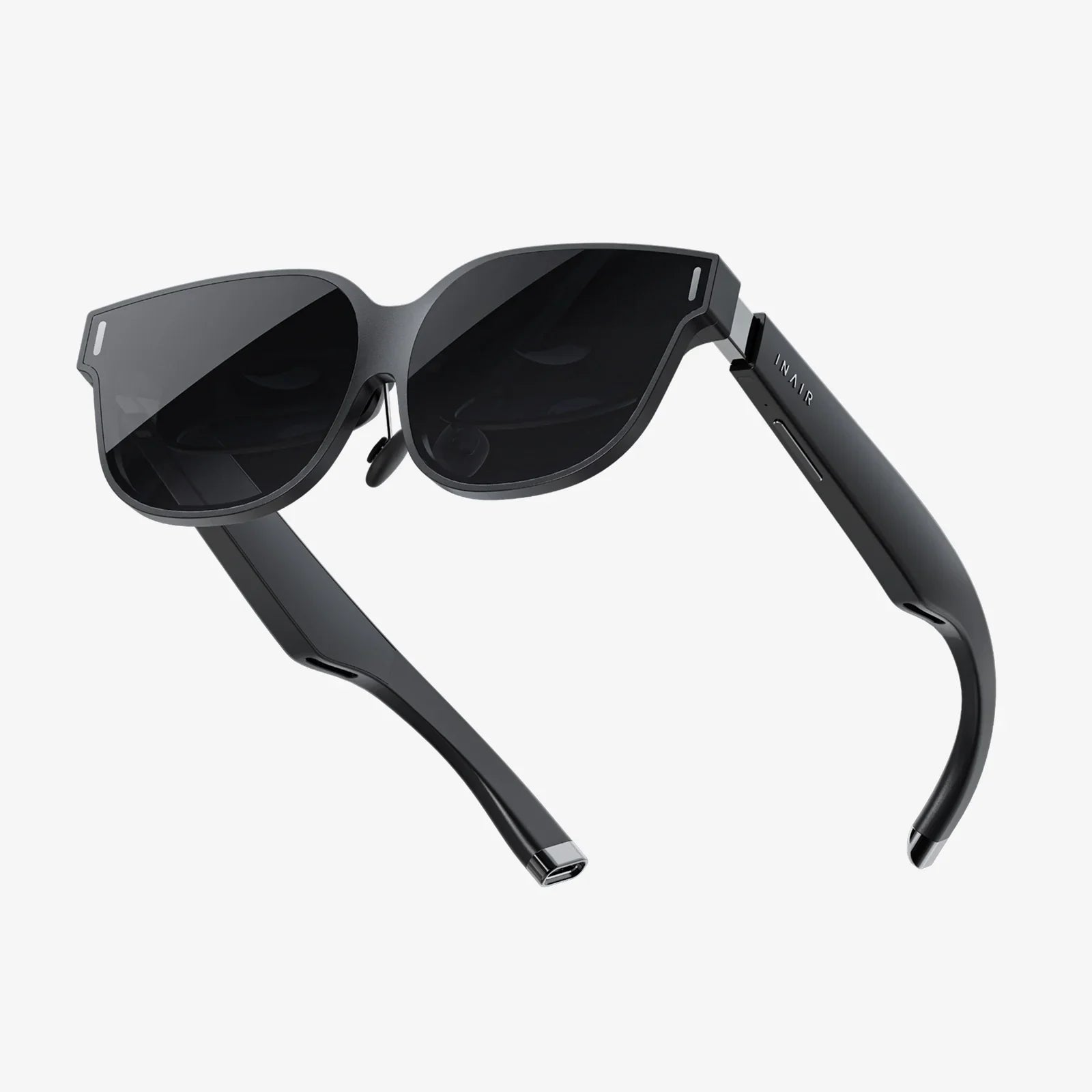
- by wangfred
Virtual Reality Effects on Learning: A Deep Dive into Immersive Education's Future
- by wangfred
Imagine a history class not from a textbook, but from the bustling streets of ancient Rome; a biology lesson not from a diagram, but from within the human bloodstream; a safety training session not from a manual, but on a virtual oil rig in a storm. This is no longer the stuff of science fiction. The integration of Virtual Reality (VR) into educational contexts is one of the most significant technological disruptions in modern pedagogy, promising to fundamentally alter how we acquire, process, and retain knowledge. The effects of this immersive technology on learning are profound, multifaceted, and extend far beyond simple novelty, potentially heralding a new era of experiential education that is more engaging, effective, and accessible than ever before.
Traditional learning often relies on abstract symbols—words on a page, numbers in a equation, or static images in a presentation. The brain must work to translate these symbols into mental models, a process that can be inefficient and prone to disengagement. VR shatters this paradigm by leveraging the brain's innate preference for experience. By creating a sense of presence—the undeniable feeling of "being there"—VR taps into the same neural mechanisms we use to learn from real-world experiences.
This is primarily achieved through embodied cognition. Instead of passively receiving information, learners in VR actively participate. They manipulate virtual objects, navigate 3D spaces, and interact with digital environments. This physical engagement, even if simulated, creates rich, multi-sensory memories. The hippocampus, a brain region critical for memory formation, is highly stimulated by spatial exploration and novel experiences—exactly what a well-designed VR lesson provides. This leads to stronger neural encoding and significantly improved recall compared to traditional 2D media.
Furthermore, VR is a powerful tool for fostering situated learning. This educational theory posits that knowledge is best acquired and understood within the context in which it is applied. It is difficult to truly grasp the scale of the solar system from a textbook or the complexities of a historical event from a lecture. VR can transport learners directly into these contexts, providing the necessary frame of reference for deep, conceptual understanding. A student can stand beside a virtual volcano as it erupts, gaining an intuitive sense of geological processes that paragraphs of text could never convey.
The practical effects of these cognitive benefits manifest across numerous dimensions of learning.
Multiple studies have demonstrated a significant boost in retention rates for information learned in VR. The combination of visual, auditory, and often haptic (touch-based) feedback creates a dense memory trace. For instance, medical students using VR to learn anatomy can "hold" and examine a beating heart from every angle, building a mental map that is far more durable than one built from memorizing 2D illustrations. This leads to test scores that are, on average, significantly higher than those of peers using traditional methods.
VR's greatest strength lies in its ability to facilitate learning by doing. This is invaluable for skills that are dangerous, expensive, or logistically impossible to practice in the real world.
The immersive and often game-like nature of VR has a transformative effect on student motivation. The phenomenon of flow state—a period of deep, effortless concentration—is more readily achieved in an engaging VR environment than in a traditional classroom. This intrinsic motivation reduces the need for external prompts and turns learning from a chore into an adventure. For learners who struggle with attention disorders or who have become disengaged from conventional education, VR can be a powerful tool for rekindling a love of learning.
Despite its immense potential, the integration of VR into learning is not without its challenges and pitfalls. A critical and clear-eyed assessment is necessary to avoid technological hype overshadowing pedagogical substance.
A significant portion of users experience cybersickness, a type of motion sickness characterized by dizziness, nausea, and eye strain. This is caused by a disconnect between the visual motion perceived in the headset and the lack of corresponding physical movement sensed by the vestibular system. While hardware and software improvements are mitigating this, it remains a barrier to universal adoption. Furthermore, intense immersion can sometimes lead to simulator adaptation syndrome, with users experiencing slight balance or coordination issues after a session. These effects necessitate careful session time management and a clear understanding of user limitations.
High-quality VR systems, the computers needed to run them, and the development of truly educational content represent a substantial financial investment. This creates a serious risk of a new digital divide, where only well-funded institutions can provide these cutting-edge experiences, exacerbating existing educational inequalities. While standalone headsets are becoming more affordable, the total cost of implementation for an entire school or university is still prohibitive for many.
Immersion alone is not a substitute for sound instructional design. The mantra "form follows function" is crucial. A visually stunning VR experience that lacks clear learning objectives, proper scaffolding, and assessment mechanisms is little more than an expensive field trip. There is a danger of prioritizing technological wizardry over educational outcomes. The content must be developed by interdisciplinary teams of skilled educators, instructional designers, and software developers to ensure it is both engaging and effective.
VR systems are data collection powerhouses. They can track incredibly intimate biometric and behavioral data: eye gaze, movement patterns, hesitation, physiological responses, and interaction choices. This data is invaluable for personalizing learning and assessing understanding in real-time, but it also raises serious privacy concerns. Who owns this data? How is it stored and used? Robust ethical frameworks and stringent data protection policies must be established and enforced before VR becomes ubiquitous in classrooms.
The future of VR in learning is not about replacing teachers or traditional methods outright. Instead, it is moving towards a blended learning model, where VR is used as a powerful tool within a broader educational ecosystem. The technology itself is rapidly evolving. The advent of higher-resolution displays, more natural haptic feedback suits, and advanced eye-tracking will deepen immersion and open new avenues for interaction and assessment.
Perhaps the most exciting frontier is the convergence of VR with Artificial Intelligence (AI). AI can power adaptive virtual environments that respond dynamically to a learner's actions, creating personalized learning pathways in real-time. An AI tutor within a VR simulation could identify a student's mistake in a chemistry experiment, gently guide them to understand the error, and then generate a new, customized challenge to reinforce the correct concept. This combination of immersive experience and personalized instruction could truly democratize high-quality education, making world-class tutoring and experiences available to anyone, anywhere, with a headset.
The journey into virtual learning is just beginning. As the technology matures, becomes more affordable, and is guided by rigorous educational research, its potential to unlock human understanding is limitless. It challenges us to rethink the very architecture of the classroom and reimagine the art of teaching itself.
The classroom walls are dissolving, replaced by infinite horizons of possibility. From the microscopic to the cosmic, from the past to the future, virtual reality offers a passport to knowledge that is felt, not just read. The question is no longer if this technology will reshape education, but how quickly we can harness its power to foster a generation of learners who don't just know about the world—but have experienced it.