


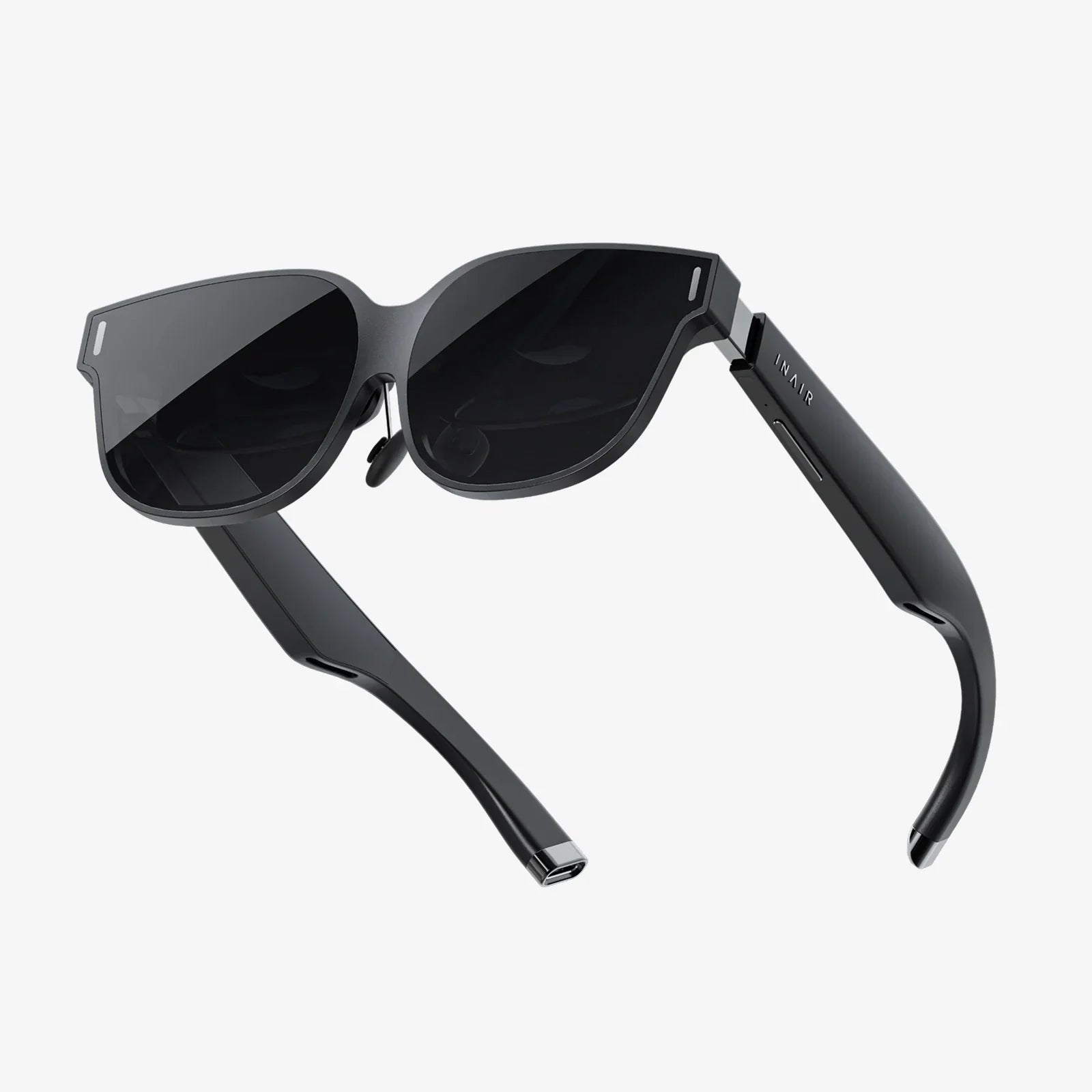
The digital frontier of business is no longer a flat screen on a desk; it’s a boundless, immersive dimension where architects walk through unbuilt skyscrapers, surgeons practice on beating digital hearts, and global teams collaborate around a virtual prototype as if they were in the same room. This is not a glimpse into a distant future; this is the reality of the enterprise landscape today, driven by a surge of innovation and adoption in virtual reality. The headlines are buzzing, not with consumer gaming hype, but with serious, ROI-driven applications that are solving real-world business problems, boosting efficiency, and creating entirely new paradigms for work. Keeping pace with virtual reality enterprise news today is no longer a niche interest for tech enthusiasts—it is a critical necessity for any executive, strategist, or forward-thinking professional aiming to maintain a competitive edge in an increasingly three-dimensional commercial world.
The Strategic Shift: From Novelty to Necessity
The most significant trend dominating virtual reality enterprise news today is the profound shift in perception. VR has decisively moved out of the experimental lab and into the core operational strategy of major corporations across diverse sectors. The conversation has evolved from "What can this technology do?" to "How can we scale this to improve our bottom line?" This maturation is fueled by several converging factors: more robust and comfortable hardware, a significant drop in the total cost of ownership, and a wealth of case studies demonstrating clear and measurable returns on investment.
Enterprises are no longer just testing the waters; they are building comprehensive VR strategies. This involves moving beyond one-off training modules to integrated platforms that connect with existing enterprise software like product lifecycle management (PLM) systems, customer relationship management (CRM) tools, and learning management systems (LMS). The focus is on creating a seamless workflow where data from the physical world informs the virtual one, and insights gained in VR are fed back into business intelligence systems. This strategic integration is a recurring theme in analyst reports and industry news, highlighting a move towards holistic digital transformation where VR is a key enabling technology, not a standalone gadget.
Transforming the Frontlines: Immersive Training and Simulation
Perhaps the most widely adopted and publicized application of enterprise VR is in the realm of training and simulation. The ability to create risk-free, highly realistic environments for practicing complex or dangerous tasks is delivering unprecedented value.
High-Stakes Skill Development
In industries like manufacturing, energy, and aviation, mistakes can be catastrophic and incredibly costly. VR training allows employees to master intricate procedures—from operating heavy machinery to responding to emergency shutdowns on an oil rig—without any real-world risk. Trainees can repeat procedures countless times, building muscle memory and confidence. The latest advancements in this space, frequently featured in virtual reality enterprise news today, include the use of biometric feedback. Headsets and controllers can now track user movement precision, heart rate, and gaze direction, providing objective data on performance and stress levels. This allows for hyper-personalized training regimens and identifies knowledge gaps with pinpoint accuracy.
Soft Skills and Empathy Training
Beyond technical skills, VR is revolutionizing soft skills training. Major retail and hospitality chains are using VR to simulate difficult customer interactions, allowing staff to practice de-escalation techniques and improve customer service. In the healthcare sector, medical professionals use VR to step into the shoes of patients suffering from conditions like macular degeneration or Parkinson's disease, fostering a deeper sense of empathy and understanding. These applications demonstrate VR's unique power to create perspective-shifting experiences that are simply impossible to replicate through traditional video or role-playing exercises.
Reimagining Design and Collaboration
The concept of the collaborative meeting is being completely redefined by immersive technology. The traditional video conference, with its flat faces in boxes and shared slides, is giving way to the virtual workspace.
Virtual Prototyping and Design Review
In automotive, aerospace, and architecture, engineering and design teams are using VR for virtual prototyping. Instead of viewing a new car model or building design on a screen, stakeholders from across the globe can don headsets and inhabit a full-scale, photorealistic rendering of the product. They can walk around it, sit inside it, and inspect every detail from every angle. This process, often called collaborative design review, identifies design flaws and ergonomic issues early in the development cycle, saving millions of dollars that would have been spent on physical prototypes and late-stage modifications. News from leading engineering firms consistently highlights how VR has slashed prototyping costs and dramatically accelerated time-to-market.
The Persistent Virtual Workspace
The future of work, especially for distributed teams, points towards persistent virtual offices. These are always-on digital spaces that employees can log into from anywhere. Instead of scheduling a video call, a team can simply meet by a virtual whiteboard in a custom-designed meeting room, pull 3D models from a cloud server, and collaborate on them in real-time with natural gestures and spatial audio. This erases the barriers of geography and creates a sense of shared presence that fosters creativity and rapid iteration. Developments in this area are a hot topic in virtual reality enterprise news today, with many platforms focusing on interoperability to ensure these virtual spaces can integrate with tools like Microsoft Teams, Slack, and Zoom.
Data Visualization and Enterprise Intelligence
We are generating more data than ever before, but traditional 2D charts and graphs often fail to convey the complex relationships within that data. VR offers a revolutionary solution: immersive data visualization. Imagine a financial analyst not just looking at a spreadsheet of market trends but walking through a 3D landscape where different stock performances are represented by towers of varying heights, colors, and connections. Or a logistics manager standing in the center of a fully interactive model of their global supply chain, watching parts move in real-time and identifying bottlenecks visually.
This application of VR allows executives to literally step inside their data, gaining intuitive insights that would be difficult to discern from rows and columns. It transforms abstract numbers into a tangible, navigable environment, enabling faster and more informed decision-making. This cutting-edge use case is increasingly prominent in news coverage, signaling its potential to become a standard tool in the business intelligence arsenal.
Navigating the Challenges and Future Horizons
Despite the exciting progress, the enterprise VR journey is not without its hurdles. Widespread adoption still faces challenges related to hardware comfort for extended use (often called "headset fatigue"), the initial cost of content development, and the need for robust IT infrastructure to support high-fidelity experiences. Furthermore, establishing universal standards for security, data privacy, and asset interoperability across different VR platforms remains a work in progress for the industry.
However, the trajectory is unmistakably upward. The future, as forecasted by the most forward-looking virtual reality enterprise news today, lies in the convergence of VR with other transformative technologies. The integration of Artificial Intelligence will create dynamic, responsive training simulations that adapt to the user's actions in real-time. The rise of the digital twin—a perfect virtual replica of a physical asset, process, or system—will make VR an essential interface for monitoring, maintaining, and optimizing real-world operations. And as hardware becomes lighter, wireless, and more affordable, the barrier to entry will continue to fall, paving the way for ubiquitous adoption.
The stream of virtual reality enterprise news today tells a compelling story of a technology coming of age. It’s a story not of speculative potential, but of tangible transformation. From the factory floor to the corporate boardroom, VR is demonstrably enhancing how we learn, how we create, and how we connect. The businesses that are actively exploring, investing in, and integrating these immersive tools are not just preparing for the future; they are actively building it, one virtual breakthrough at a time. The immersive revolution is here, and it’s open for business.
Share:
Best 360 Virtual Reality Videos - An Immersive Journey into Digital Realms
Windows Adjust Microphone Volume: The Ultimate Guide to Crystal Clear Audio