The sleek, futuristic headset descends, and with a soft click, the physical world vanishes. You’re transported—soaring over mountain ranges, performing intricate surgery, or battling intergalactic foes. This is the mesmerizing promise of virtual reality, a technology rapidly moving from niche novelty to mainstream utility. But as our eyes become the primary gateway to these expansive digital realms, a critical question emerges from the pixels: what is the true impact of this immersive technology on our most precious sensory organ? The conversation around virtual reality eye health is complex, fraught with both legitimate concerns and exciting potential, demanding a clear-eyed view beyond the hype and the fear.
The Human Eye: A Masterpiece Not Designed for Pixels
To understand the interaction between VR and our eyes, we must first appreciate the biological marvel we are dealing with. Human vision is a product of millennia of evolution, exquisitely tuned for navigating a three-dimensional world of variable depths, textures, and distances. Two processes are fundamental to comfortable vision: accommodation and vergence.
Accommodation is the process where the eye's lens changes shape to focus on objects at different distances. Look at a distant tree, and your lens flattens; shift your gaze to a book in your hands, and it rounds out. Vergence is the coordinated movement of both eyes, turning inward (converging) to focus on nearby objects and outward (diverging) for distant ones. In the natural world, these two processes are perfectly linked—your eyes converge and accommodate in unison based on an object's distance.
The VR Conundrum: The Vergence-Accommodation Conflict
This is where traditional virtual reality technology introduces a unique challenge, known as the Vergence-Accommodation Conflict (VAC). It is the central issue in the virtual reality eye health debate. A VR headset presents a 3D world on two 2D screens placed very close to your eyes, typically a few centimeters away. These screens are fixed at a single focal plane.
Your eyes must accommodate to this fixed, close distance to keep the screens themselves sharp. However, the stereoscopic imagery tricks your brain into perceiving depth. If a virtual object appears to be far away, your eyes will attempt to verge (turn outward) as if looking at a distant horizon, while still being forced to accommodate for the close-up screen. This decoupling of two deeply linked physiological processes is unnatural and can be a significant source of visual strain, fatigue, headaches, and even nausea for some users, especially during prolonged sessions. It's like forcing your brain to perform a constant, uncomfortable visual gymnastics routine.
Beyond the Conflict: Other Common Visual Complaints
While VAC is the headline concern, other technological factors contribute to the virtual reality eye health experience:
-
Screen Door Effect and Resolution: Earlier headsets suffered from a visible grid of lines between pixels, making it seem like one was viewing the world through a fine mesh screen. While modern high-resolution displays have vastly reduced this, the quest for pixel-perfect clarity continues. Lower resolution can force the eyes to strain to resolve details.
-
Refresh Rate and Latency: A low refresh rate (how often the image on the screen updates) and high latency (the delay between your head movement and the screen updating) can cause judder and lag. This mismatch between your physical movement and visual feedback is a primary trigger for simulator sickness, a form of nausea closely tied to visual discomfort.
-
Improper Fit and Incorrect IPD: The Inter-Pupillary Distance (IPD)—the distance between the centers of your pupils—is unique to each individual. Most headsets offer mechanical or software adjustment for this. An incorrectly set IPD means the stereoscopic images are not aligned with your eyes' natural viewing position, leading to immediate strain, blurriness, and double vision.
-
Blue Light Emission: Like all digital screens, VR displays emit blue light. While the evidence is still evolving, prolonged exposure to high-energy visible (HEV) blue light, particularly before bedtime, is suspected to disrupt circadian rhythms and potentially contribute to digital eye strain.
The Brighter Side: VR's Potential for Vision Therapy and Rehabilitation
Remarkably, the very characteristics that pose challenges also open doors for therapeutic applications. The field of virtual reality eye health isn't just about mitigating risks; it's actively exploring profound benefits. VR's controlled environment makes it a powerful tool for vision therapy and rehabilitation.
-
Amblyopia (Lazy Eye) Treatment: Traditional patching therapy for amblyopia is often poorly adhered to by children. VR offers engaging games that can display different images to each eye, forcing the brain to use the weaker eye and strengthen neural pathways in a fun, immersive way, significantly improving compliance and outcomes.
-
Strabismus Management: VR can be used to train eye alignment and coordination in individuals with strabismus (crossed eyes), providing visual feedback and exercises that are impossible to replicate in the real world.
-
Visual Field Rehabilitation: For patients who have suffered a stroke or brain injury resulting in a loss of parts of their visual field (hemianopia), VR can be used to create targeted stimuli to encourage neuroplasticity and help them develop compensatory scanning strategies.
-
Improving Depth Perception and Coordination: Specific VR applications are designed to challenge and improve depth judgment, hand-eye coordination, and tracking skills, beneficial for everyone from athletes to older adults looking to maintain visual acuity.
A Glimpse into the Future: Solving the Core Challenges
The future of virtual reality eye health is being shaped by groundbreaking technological advancements aimed directly at solving problems like VAC.
-
Varifocal and Light Field Displays: This is the holy grail. Unlike current fixed-focus displays, varifocal systems use eye-tracking to measure precisely where you are looking in the virtual scene and then mechanically or electronically adjust the focus of the lenses to match the simulated distance. Light field displays, an even more advanced concept, project bundles of light rays that mimic how light works in the real world, allowing your eyes to naturally accommodate at different depths, effectively eliminating VAC.
-
Advanced Eye-Tracking: Beyond enabling varifocal displays, integrated eye-tracking allows for Foveated Rendering. This technique renders the area of the screen you are directly looking at in high resolution, while peripherally rendering the rest in lower detail. This drastically reduces the computational load, enabling higher overall fidelity and smoother performance without taxing the hardware, which indirectly contributes to a more comfortable visual experience.
-
Holographic Optics and Waveguides: Borrowing from augmented reality technology, these new optical systems aim to create more natural, comfortable, and high-resolution images with a wider field of view, reducing peripheral distortion and strain.
Your Action Plan: A User's Guide to Protecting Eye Health in VR
While we wait for these future technologies to become mainstream, users today can take proactive and highly effective steps to safeguard their virtual reality eye health. Responsible use is the single biggest factor in ensuring a comfortable experience.
-
The 20-20-20 Rule is Your Best Friend: This golden rule of screen use is paramount in VR. Every 20 minutes, take off the headset and focus on an object at least 20 feet away for at least 20 seconds. This gives your ciliary muscles (which control accommodation) a crucial break from the fixed focal distance.
-
Calibrate Meticulously: Never skip the setup process. Take the time to adjust the headset's physical IPD slider until the image is clear and singular. Adjust the headstrap for a secure, comfortable fit where the headset does not wobble or press heavily on your face.
-
Prioritize Frame Rate Over Graphical Fidelity: If given a choice in settings, opt for a smoother, higher frame rate experience over ultra-high-resolution textures. A consistent 90Hz or higher refresh rate is far more important for comfort than marginally better shadows.
-
Listen to Your Body: Eye strain, headache, dizziness, or nausea are not signs of weakness; they are clear signals from your body to stop. Do not "push through" discomfort. End your session immediately and take a substantial break. Duration should be built up gradually as you acclimatize.
-
Ensure Adequate Lighting: Use VR in a well-lit room. This helps reduce the intensity contrast when removing the headset and can reduce strain.
-
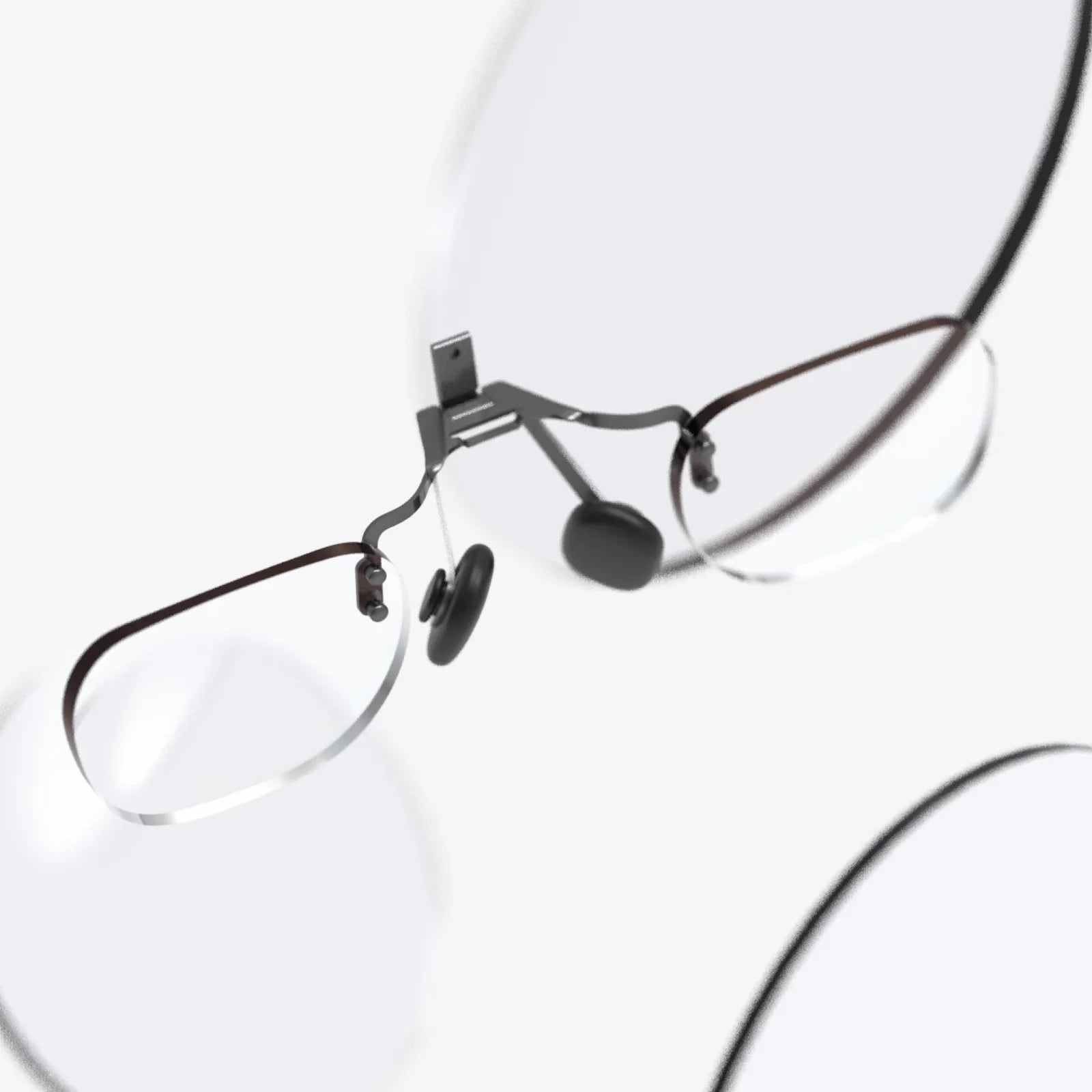
Consult an Expert: If you have a known vision condition like amblyopia, strabismus, or a strong prescription, talk to your eye care professional before extensive use. They can provide personalized advice. Some companies are even developing custom prescription lens inserts for headsets, which are far superior to wearing glasses inside the headset.
The journey into virtual worlds is one of the most exciting technological developments of our time, offering unparalleled opportunities for connection, creativity, and exploration. This journey, however, must be undertaken with mindfulness. The relationship between virtual reality and eye health is not a simple tale of harm but a nuanced narrative of adaptation, innovation, and responsibility. By understanding the science behind the strain, embracing the emerging therapeutic benefits, adhering to practical safety guidelines, and eagerly awaiting the next wave of eye-friendly technology, we can ensure that our vision remains sharp and healthy, allowing us to clearly see and shape the incredible digital futures to come.


Share:
Virtual Reality Definition Technology Explained: A Deep Dive Into The Digital Frontier
Purpose and Function of Virtual Reality: Bridging Realities to Redefine Human Experience