


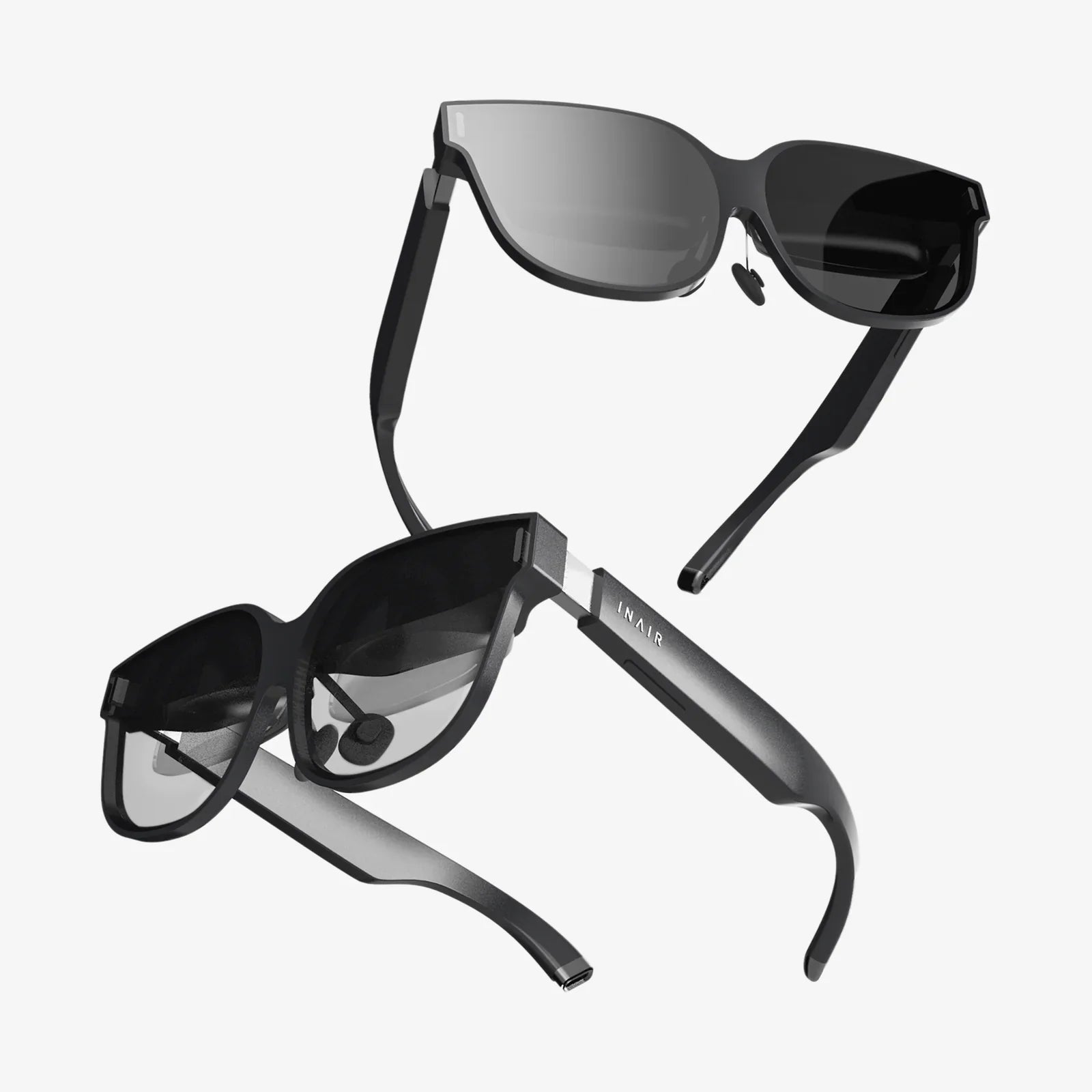
Imagine slipping on a pair of sleek, sophisticated glasses and instantly being transported. One moment you're in your living room; the next, you're standing on the surface of Mars, the red dust crunching beneath your boots, the immense, silent horizon stretching out before you. Or perhaps you're sitting in the front row of a concert happening halfway across the globe, the music thrumming through you as if you were truly there. This is the profound promise and rapidly evolving reality of virtual reality glasses, a technology that is not merely a new gadget but a fundamental shift in how we perceive, interact with, and experience reality itself. They are the most direct portal we have ever built to digital worlds, and their impact is only just beginning to be felt.
The Architectural Blueprint: How Do They Actually Work?
At first glance, a modern headset might seem like a simple screen strapped to your face, but the technology inside is a marvel of modern engineering, a symphony of components working in perfect harmony to craft a believable illusion. The core principle is known as stereoscopy, which mimics how human vision creates depth perception. Each of our eyes sees the world from a slightly different angle, and our brain merg these two images to create a three-dimensional picture. Virtual reality glasses replicate this process with stunning precision.
The journey begins with two high-resolution displays, typically OLED or LCD, positioned mere centimeters from the user's eyes. These displays show slightly offset images, one for the left eye and one for the right. Between the displays and the eyes are a series of specialized lenses. These are not simple magnifying glasses; they are precision-ground to warp the flat images from the screens, correcting the focal plane and creating a wide field of view that feels natural and immersive. This optical system is crucial for preventing eye strain and selling the illusion of depth and scale.
However, a static 3D image is not enough. For the brain to be fully convinced, the virtual world must respond to the user's movements in real-time. This is where a suite of advanced sensors comes into play. An array of accelerometers, gyroscopes, and magnetometers—collectively known as an Inertial Measurement Unit (IMU)—tracks the rotation of the user's head: looking up, down, left, and right. For more advanced experiences that involve walking around or using hand controllers, outside-in or inside-out positional tracking is used. Outside-in tracking relies on external sensors placed in the room to monitor the position of the headset, while inside-out tracking uses cameras mounted on the headset itself to map the physical environment and track its own movement within it. This allows users to lean, crouch, dodge, and physically walk through virtual spaces.
The final, often underestimated, piece of the puzzle is spatial audio. Truly immersive sound is three-dimensional. By using advanced audio algorithms, sounds in a virtual environment can appear to come from specific points around the user—behind, above, or to the side. The subtle cue of hearing a spaceship whiz past your right ear or a colleague's voice emanate from across a virtual conference table is incredibly powerful for suspending disbelief and creating a potent sense of presence, the feeling of actually "being there."
From Science Fiction to Shelves: A Brief Evolutionary Journey
The dream of virtual reality is decades old, but the path to the comfortable, powerful devices we see today has been long and winding. The concept was popularized in the 1960s with the invention of the first head-mounted display system, nicknamed the "Sword of Damocles" due to its intimidating size and weight. It was a crude prototype, but it established the foundational ideas. The 1990s saw a wave of consumer interest, fueled by sci-fi films and arcade experiments, but the technology of the era—bulky hardware, low-resolution graphics, and significant latency that caused motion sickness—was simply not ready for a mainstream audience. It was a classic case of ambition outpacing capability.
The modern renaissance began in the early 2010s. A pivotal moment was the development of a prototype that demonstrated how a smartphone's high-resolution screen and sensors could be repurposed to create an affordable, effective viewer. This democratized access and sparked a new wave of innovation. Shortly after, a major leap forward occurred with the development of a dedicated, all-in-one headset designed from the ground up for high-fidelity VR. It featured precise tracking, dedicated motion controllers, and a curated software platform, finally delivering the seamless, high-quality experience that earlier attempts had promised. This proved there was a viable market for high-end VR and set a new standard for the industry.
Today, the market has bifurcated into two powerful streams. On one side are tethered headsets, which connect to a powerful external computer or console to deliver the absolute highest fidelity graphics and most complex experiences. On the other are standalone headsets, which have all the necessary computing power built directly into the device. These untethered units offer unparalleled freedom and accessibility, making VR a truly wireless and convenient living room activity. The relentless march of processor and display technology continues to blur the line between these two categories, with standalone devices growing more powerful by the year.
Beyond the Game: The Expansive Universe of Applications
While gaming and immersive entertainment remain the most visible and popular applications, the true transformative potential of virtual reality glasses lies far beyond. They are becoming powerful tools in professional, educational, and therapeutic fields.
Revolutionizing Education and Training
Virtual reality offers the ultimate "learning by doing" platform. Medical students can practice complex surgical procedures on virtual patients, making mistakes and learning nuances without any risk to a living person. Mechanics can train on the intricate systems of a jet engine, taking it apart and reassembling it virtually before ever touching a multi-million-dollar piece of equipment. History students can don their headsets and take a guided tour of ancient Rome, walking through the Forum and witnessing a gladiator battle in the Colosseum, transforming abstract dates and names into a tangible, memorable experience. This experiential learning dramatically improves knowledge retention and comprehension.
Transforming Enterprise and Remote Work
The concept of the office is being redefined. With virtual reality glasses, remote collaboration is no longer limited to a grid of faces on a video call. Teams from across the globe can meet in a persistent virtual boardroom, interact with 3D models of products they are designing, and brainstorm on virtual whiteboards as if they were standing side-by-side. Architects can walk clients through a full-scale model of a building before a single brick is laid. This "virtual presence" can foster a stronger sense of team cohesion and enable a level of collaborative work that was previously impossible for distributed teams.
Advancing Healthcare and Therapy
The therapeutic applications are vast and deeply impactful. VR exposure therapy is being used to treat PTSD, phobias, and anxiety disorders by allowing patients to confront and process their triggers in a safe, controlled, and gradual environment. Physical therapists are using immersive games to make rehabilitation exercises for stroke victims or injury recovery more engaging and measurable. Furthermore, VR is providing powerful escapism and relief for bedridden patients, allowing them to visit serene beaches, explore museums, or simply experience a change of scenery, which can have a significant positive effect on mental well-being and pain management.
The Flip Side of the Coin: Navigating Challenges and Ethical Considerations
As with any powerful technology, the rise of virtual reality glasses is not without its challenges and serious ethical questions that society must grapple with.
The issue of data privacy is paramount. These devices are arguably the most intimate data-collection devices ever made. They can track not only your location and movement but also your gaze, pupil dilation, vocal inflections, and even your emotional responses within certain applications. The potential for this biometric data to be harvested, analyzed, and used for targeted advertising or more nefarious purposes is a serious concern that requires robust ethical frameworks and transparent privacy policies.
There are also significant social and psychological considerations. Will widespread adoption lead to further isolation, as people retreat into idealized digital worlds instead of engaging with the complexities of the physical one? The concept of "presence" is powerful, but it could potentially be exploited to create addictive experiences or be used for sophisticated propaganda and manipulation, creating "deepfake" environments that are indistinguishable from reality. Furthermore, the physical effects, such as eye strain, simulator sickness for some users, and the long-term neurological impact of regularly tricking our senses, are still areas of active research.
Finally, the digital divide is a critical issue. This technology currently requires a significant financial investment for high-quality hardware and the computing power to run it. There is a very real risk that the transformative benefits of VR—in education, professional networking, and access to experiences—could become available only to a privileged few, thereby exacerbating existing social and economic inequalities. Ensuring equitable access will be a major hurdle.
The Horizon Ahead: What Does the Future Hold?
The current state of the technology is impressive, but it is merely a stepping stone. The next decade will see advancements that feel like magic. Display technology is moving towards varifocal and light-field displays that will solve the vergence-accommodation conflict, a key source of eye strain, making long-term use more comfortable. Haptic feedback will evolve from simple controller vibrations to full-body suits and gloves that allow users to feel the texture of a virtual object or the impact of a virtual punch.
The most exciting frontier is the convergence of virtual and augmented reality. The ultimate goal for many is a single, lightweight pair of glasses that can function as both an immersive VR headset and a practical AR device, overlaying digital information onto the real world. This would truly blend our digital and physical lives seamlessly. Furthermore, brain-computer interfaces are being explored, moving beyond handheld controllers to allow users to navigate and interact with virtual environments using only their neural signals.
We are moving towards a future where the line between the physical and the digital will become increasingly blurred. Virtual reality glasses are the key that unlocks this door. They will enable new forms of art, create entirely new economies and job markets, and redefine fundamental human experiences like socializing, learning, and travel. They won't replace reality, but they will expand its definition infinitely, offering us infinite spaces to explore, create, and connect in ways we are only beginning to imagine.
The journey into the virtual is just beginning. This is not about escaping our world, but about augmenting our human experience with limitless possibilities, from mastering a new skill in a perfectly simulated environment to sharing a moment of awe with a friend on a digital mountaintop. The headset is becoming a gateway, and on the other side lies not just entertainment, but a new layer of human existence waiting to be explored.
Share:
Augmented Reality VR Developments 2025: The Year the Digital and Physical Worlds Truly Merge
Augmented Reality Production: Reshaping Industries and Redefining Creativity