


- by wangfred
Virtual Reality Glasses Meaning: A Deep Dive Into The Portal To Digital Worlds
- by wangfred
Imagine slipping on a pair of sleek, futuristic glasses and instantly being transported. The dull hum of your surroundings fades, replaced by the roaring crowd of a Roman coliseum, the serene silence of a spacewalk, or the intricate blueprint of a building not yet constructed. This is the promise, the power, and the profound meaning behind virtual reality glasses. They are not merely a piece of technology; they are a passport, a key, and a canvas for human experience, redefining the very boundaries of perception, interaction, and reality itself. The journey to understand their true significance is a journey into the future of human connection, creativity, and consciousness.
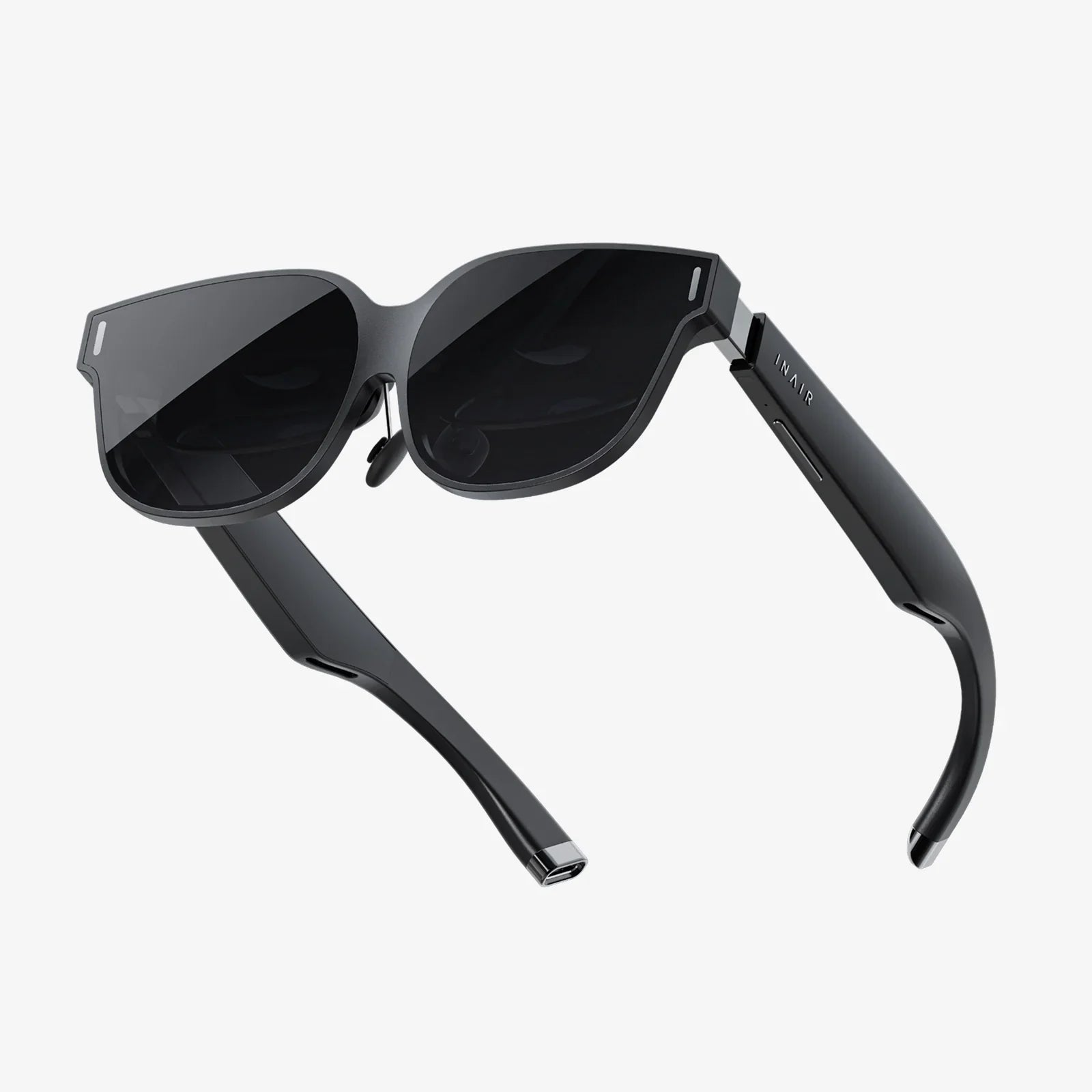
At its most fundamental level, the meaning of virtual reality glasses lies in their function as a sensory gateway. They are a head-mounted display (HMD) designed to create a convincing, immersive digital environment that replaces the user's real-world surroundings. This is achieved through a sophisticated orchestration of hardware and software components, each playing a critical role in selling the illusion of presence.
The primary components that give VR glasses their meaning include:
Together, these components create a closed-loop system of sensory input, effectively hijacking the user's perceptual system. The brain, receiving coherent visual, auditory, and sometimes even tactile data that aligns with its expectations of reality, accepts the virtual world as genuine. This phenomenon, known as presence, is the ultimate goal and the true meaning of the hardware—to make the user feel truly there.
While gaming and entertainment are the most visible applications, the deeper meaning of VR glasses is revealed in their capacity as a transformative tool across diverse and critical sectors. They are moving from a novelty to a necessity, solving real-world problems and creating new paradigms for work, learning, and health.
VR glasses have shattered the limitations of the traditional classroom and training manual. Their meaning here is one of experiential learning and risk-free practice.
In healthcare, the meaning of VR glasses shifts to one of healing and rehabilitation. They are being used as powerful therapeutic tools.
The global shift to remote work revealed a key limitation: the flat, impersonal nature of video calls. VR glasses infuse collaboration with a new meaning: shared presence.
The meaning of VR glasses cannot be discussed without addressing their profound and complex implications for society and the human experience. This technology is a double-edged sword, offering incredible potential while raising significant ethical and philosophical questions.
The power of presence is the core of VR's appeal but also a source of its psychological weight. When the brain is convinced it is in another place, the experiences within that place can feel real and have real emotional consequences. This can be used for good, like fostering empathy by allowing someone to experience a day in the life of another person. However, it also raises concerns about psychological manipulation, desensitization, and the blurring of lines between virtual acts and real-world morality.
Furthermore, VR introduces new questions about agency and identity. In a virtual world, users can embody avatars that look nothing like their real selves—different genders, species, or entirely fantastical forms. This can be a liberating exploration of identity but also lead to phenomena like the Proteus Effect, where an individual's behavior in the real world begins to align with the traits of their virtual avatar.
VR promises to connect people across vast distances with a feeling of genuine togetherness. For those who are isolated due to geography, illness, or social anxiety, this can be a lifeline. Yet, there is a palpable risk that these compelling digital worlds could become a retreat from the messy, complicated, and often frustrating real world. If a perfect, curated virtual life is always available, what incentive is there to engage with imperfect reality? The meaning of VR glasses thus becomes deeply paradoxical: they are a tool for ultimate connection that could potentially fuel a new era of physical isolation.
The data collected by VR glasses is unprecedented. It's not just what you click or watch; it's biometric data—where you look (gaze tracking), how you move, your physiological responses (pupil dilation, heartbeat via future sensors). This data is a goldmine for understanding human behavior but also a privacy nightmare. Who owns this data? How is it used? Could it be used to manipulate a user's emotions or actions?
Moreover, as the technology advances towards photorealistic graphics and full haptic suits, we approach a philosophical precipice: if a virtual experience is indistinguishable from a real one, does it hold the same value? What is the nature of "real" experience? VR glasses force us to confront these ancient questions in a new, tangible way.
The current state of VR is merely the foundation. The future meaning of these devices will be shaped by several key advancements on the horizon.
These advancements will further dissolve the barrier between the digital and the physical, making the meaning of VR glasses even more central to how we work, learn, communicate, and play.
The true meaning of virtual reality glasses is still being written. They are a mirror reflecting our deepest desires for exploration and connection, and a canvas upon which we are projecting our future. They hold the potential to democratize experience, revolutionize industries, and deepen our understanding of the human mind. Yet, they also challenge us to navigate a new digital frontier with wisdom, establishing ethical guardrails to ensure this powerful technology enhances our humanity rather than diminishes it. The headset may be a piece of hardware, but the world it unlocks is fundamentally, undeniably, human.
Share:
Virtual Reality and Augmented Reality: The Digital Frontier Reshaping Our World
New Virtual Reality Glasses: A Portal to Uncharted Digital Realms