


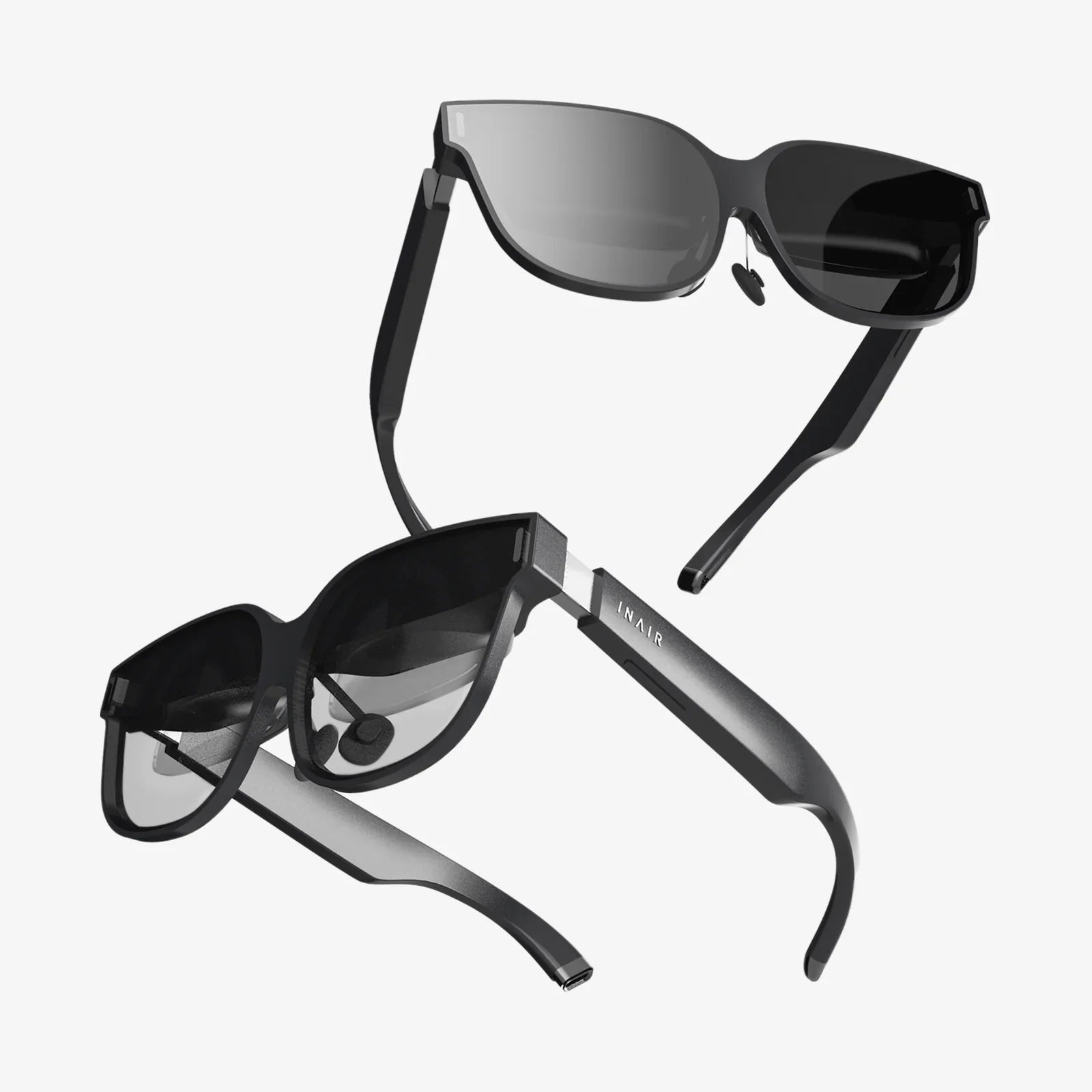
Imagine slipping on a pair of sleek, futuristic glasses and instantly being transported to the summit of Mount Everest, the front row of a concert happening across the globe, or the cockpit of a fighter jet. This is no longer the stuff of science fiction; it is the tangible, awe-inspiring reality offered by modern virtual reality glasses. The use of this transformative technology is exploding, moving from a niche novelty to a powerful tool poised to redefine how we work, learn, heal, and connect. The journey beyond the screen starts here, and it promises to be nothing short of revolutionary.
The Core Technology: How VR Glasses Create New Worlds
At its heart, the use of virtual reality glasses is an exercise in sensory deception, a sophisticated trick played on the human brain to convince it that it is somewhere it is not. This illusion is achieved through a combination of advanced hardware and software working in perfect harmony.
The primary components include:
- High-Resolution Displays: Each lens in a VR headset is paired with a high-density display, often with a resolution exceeding 4K. These screens are positioned mere centimeters from the user's eyes, requiring extreme sharpness and minimal latency to prevent a disjointed and nauseating experience.
- Precise Head Tracking: A critical element of immersion is the ability to look around the virtual environment naturally. This is accomplished through a combination of sensors like gyroscopes, accelerometers, and magnetometers. More advanced systems use external lasers or inward-facing cameras to map the room and track the headset's position within it, a technology known as inside-out or outside-in tracking.
- Advanced Optics: Lenses are placed between the eyes and the screens to focus and reshape the image, creating a wide field of view (typically 90 to 120 degrees) that fills the user's peripheral vision, enhancing the feeling of presence—the convincing sensation of being inside the virtual world.
- Immersive Audio: Spatial or 3D audio is essential for completing the illusion. By simulating how sound waves interact with the human head and ears, VR systems can make a sound appear to come from directly behind, above, or at a specific distance from the user, even with standard headphones.
- Controllers and Haptic Feedback: To interact with the virtual world, users typically hold motion-tracked controllers. These devices not only track hand and arm movement but also provide haptic feedback—small, precise vibrations—to simulate the feel of touching virtual objects. Emerging technology is bringing haptic gloves and full-body suits into the fold for even deeper immersion.
Beyond the Game: The Expansive Applications of VR
While gaming and entertainment were the initial driving forces behind consumer VR, the most profound use of virtual reality glasses is now found in professional and practical applications that are solving real-world problems.
Revolutionizing Education and Training
Virtual reality offers an unparalleled medium for experiential learning. Instead of reading about ancient Rome, students can take a guided tour through a meticulously reconstructed digital Colosseum. Medical students can practice complex surgical procedures on virtual patients, making mistakes without consequence and honing their skills in a risk-free environment. Similarly, VR is transforming vocational training, allowing mechanics to disassemble virtual engines, welders to practice their technique, and pilots to train for emergency scenarios in hyper-realistic flight simulators that were once prohibitively expensive.
Transforming Healthcare and Therapy
The healthcare industry has embraced VR as a powerful therapeutic and diagnostic tool. It is now widely used for exposure therapy, helping patients with phobias (like fear of heights or flying) or PTSD to confront and manage their triggers in a safe, controlled setting. Surgeons use VR to plan complex operations by first navigating a 3D model of a patient's anatomy. Furthermore, VR is proving effective in pain management, distracting burn victims during painful wound care procedures by immersing them in a calming, snowy landscape, a technique known as virtual analgesia.
Redefining Remote Work and Collaboration
The concept of the metaverse—a persistent, shared virtual space—is fundamentally changing remote collaboration. Virtual reality glasses use enables the creation of digital workspaces where colleagues from around the world can meet as lifelike avatars. They can interact with 3D models of products they are designing, brainstorm on virtual whiteboards, and share body language and spatial cues that are lost on a traditional video call. This fosters a much stronger sense of teamwork and presence than a grid of faces on a screen.
Unlocking New Frontiers in Design and Retail
Architects and interior designers are using VR to walk clients through unbuilt homes and spaces, allowing for changes long before construction begins. Automotive designers can evaluate the ergonomics and aesthetics of a car's interior in full scale. In retail, customers can use VR to try on clothes, see how furniture would look in their living room, or explore a hotel resort before booking a trip, drastically enhancing consumer confidence and reducing return rates.
The Human Factor: Psychological and Social Considerations
As with any powerful technology, the widespread use of virtual reality glasses brings forth important questions about its psychological and social impact.
The intense immersion of VR can lead to a phenomenon known as virtual reality dissociation, where users can feel detached from their physical body or their immediate real-world surroundings after a prolonged session. While usually temporary, it highlights the potency of the experience. There are also concerns about data privacy, as VR systems can collect vast amounts of biometric data, including eye-tracking, movement patterns, and even emotional responses.
Socially, critics worry that increasingly compelling virtual worlds could lead to greater physical isolation and a retreat from reality. However, proponents argue that VR can combat loneliness by enabling rich social interactions for those who are geographically isolated or physically unable to travel, offering new avenues for connection rather than replacing old ones.
Gazing into the Crystal Ball: The Future of VR Glasses Use
The current generation of VR glasses, while impressive, is still a stepping stone. The future points towards devices that are smaller, lighter, wireless, and more socially acceptable—think advanced sunglasses rather than bulky helmets. Key developments on the horizon include:
- Varifocal Displays and Eye-Tracking: Future headsets will automatically adjust focus based on where the user is looking, creating a more natural and comfortable visual experience that reduces eye strain and more accurately mimics how we see the real world.
- Photorealistic Graphics: Advances in real-time rendering and foveated rendering (which focuses processing power only where the user is looking) will enable truly photorealistic virtual environments, blurring the line between the digital and the physical.
- Brain-Computer Interfaces (BCI): Further out, we may see the integration of non-invasive BCIs, allowing users to navigate and interact with virtual worlds through thought alone, making the technology more intuitive and accessible.
- The Blending of Realities: The ultimate evolution may not be a purely virtual world but a seamless blend with our own through augmented reality (AR) and mixed reality (MR), where digital information and objects are anchored convincingly within our physical environment.
The true potential of virtual reality glasses use lies not in escaping our world, but in enhancing it. It is a gateway to empathy, allowing us to walk in another person's shoes. It is a canvas for creativity, enabling us to build and experience the impossible. It is a tool for progress, solving complex problems and pushing the boundaries of human knowledge and ability. We are standing at the precipice of a new dimension of human experience, and the view from here is absolutely breathtaking.
Share:
High Performance Computing AI: The Engine Powering a New Era of Intelligence
High Performance Computing AI: The Engine Powering a New Era of Intelligence