


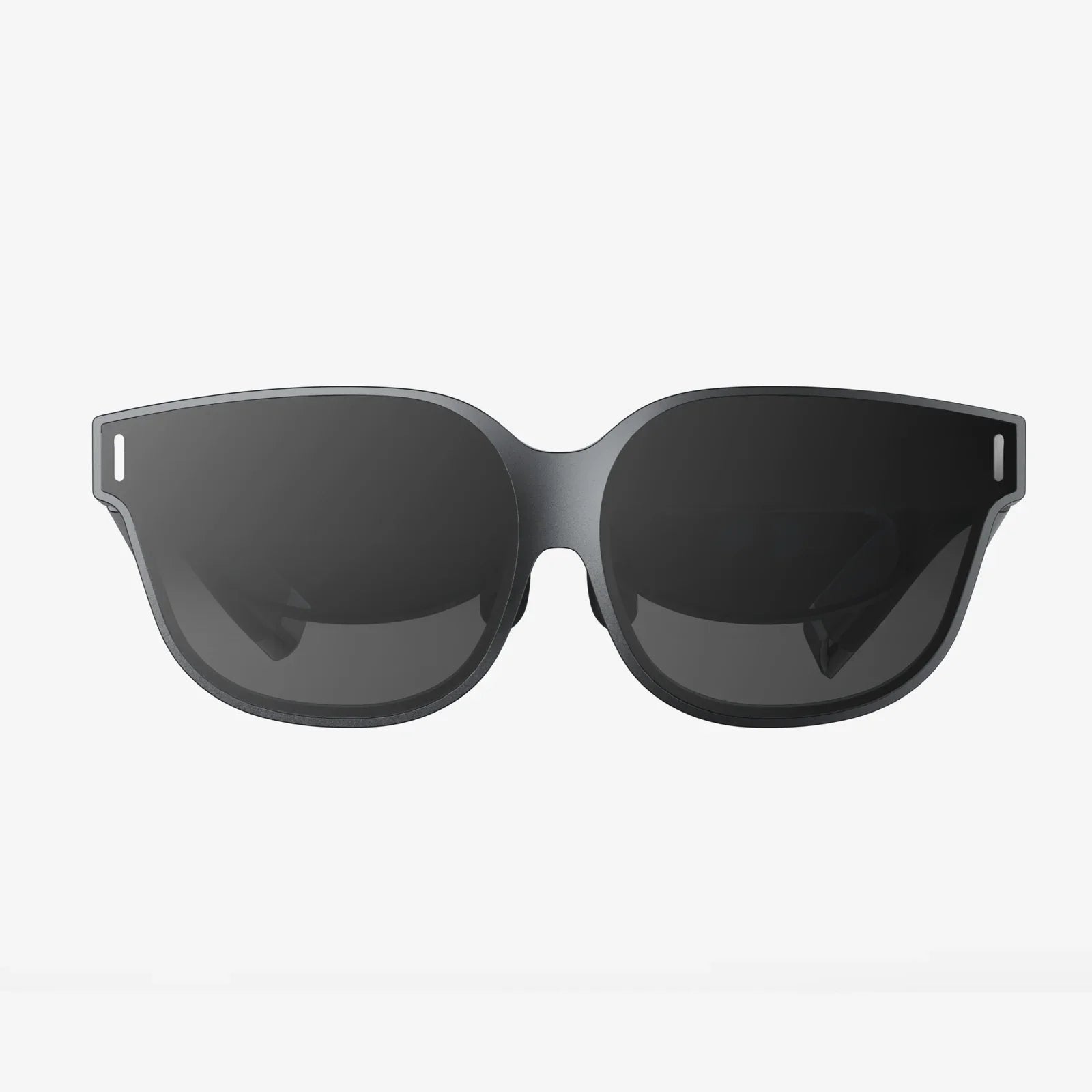
You slip on the headset, and the world you know vanishes. The hum of your computer, the texture of your couch, the boundaries of your room—all dissolve into a silent, electric anticipation. For a moment, there is only darkness, a blank canvas. Then, light. Sound. Presence. Your eyes, now the conduit, are about to report back from a frontier that exists only in data and light. This is the moment of transformation, the threshold between reality and a reality constructed just for you. What awaits on the other side is limited only by imagination itself. This is the promise, the magic, and the profound question: virtual reality glasses, what do you see?
The Portal Opens: From Pixels to Presence
The initial experience of putting on a quality VR headset is one of the most disorienting and exhilarating technological moments available today. It is not like watching a movie or even playing a traditional video game on a screen. It is an act of transportation.
What you see first is an environment. This could be a meticulously rendered fantasy castle perched on a cloud, a stark and minimalist scientific laboratory floating in deep space, or a photorealistic recreation of a historic monument. The key differentiator is that you are not looking at this place; you are in it. Your brain, tricked by the stereoscopic 3D view delivered to each eye and the responsive head-tracking, accepts the illusion. You instinctively lean forward to peer over a virtual ledge, gasp as a digital whale glides past you, or duck to avoid a low-hanging beam. This phenomenon is known as “presence,” the undeniable feeling of being somewhere else.
A Spectrum of Realities: Gaming, Social Spaces, and Beyond
The visual landscape of VR is incredibly diverse, catering to every conceivable interest and purpose. What you see is entirely dependent on the software you choose to run.
The Digital Playground: Gaming and Interactive Experiences
For many, gaming is the primary draw. Here, you see worlds that defy physics and narrative convention. You might see yourself as a knight, looking down at your own gauntleted hands as you raise a sword to block an incoming blow. You might be a starship pilot, surrounded by holographic control panels blinking with alien readouts. The view is active and participatory. Puzzles are not solved by clicking a mouse but by physically manipulating objects—turning a giant gear, assembling a complex device, or scaling a sheer cliff face. The adrenaline is real because the threat, though digital, feels immediate. A zombie lurching around a corner triggers a genuine fight-or-flight response; the sheer scale of a dinosaur towering over you evokes primal awe.
The Human Connection: Social VR and Collaboration
Perhaps the most surprising and powerful application is social connection. In social VR platforms, you see not just avatars, but embodiments of other people. Using motion-tracked controllers, these digital representations can gesture, wave, dance, and high-five. You see their movements translated in real-time, creating a powerful sense of shared space. You might find yourself sitting around a virtual campfire with friends from across the globe, attending a live concert surrounded by thousands of cheering fans, or working in a collaborative design studio, manipulating 3D models with colleagues as if they were physical objects on a table. The visual experience is one of community and shared presence, erasing physical distance and creating new forms of interaction that flat screens cannot replicate.
The Tool for the Mind: Education and Training
Beyond entertainment, VR is a powerful visualizer for knowledge. What do you see? You see the human heart, enlarged to the size of a room, and you can walk through its chambers, watching blood cells flow. Medical students practice complex surgeries on detailed virtual patients, seeing anatomy in a way textbooks cannot provide. Historians can walk through a perfectly reconstructed ancient Rome, seeing the city teem with life at the height of its power. Astronauts train for spacewalks, mechanics learn to repair complex engines, and employees practice public speaking in front of a virtual audience. The visuals are didactic, immersive, and incredibly effective for memory retention and skill development.
The Technology Behind the Vision
The magic of what you see is underpinned by sophisticated technology. Two small high-resolution displays, one for each eye, create the stereoscopic effect. A high refresh rate ensures the image is smooth and responsive to your head movements, preventing the nausea that plagued earlier systems. A wide field of view (FOV) expands the digital periphery, making the experience more encompassing and less like looking through a pair of binoculars.
Furthermore, inside-out tracking uses cameras on the headset itself to map your physical room, allowing the virtual world to respect your real-world boundaries. This is often represented as a translucent grid wall, called a “Guardian” or “Chaperone” system, that appears when you get too close to the edge of your play space—a crucial visual cue that keeps you from bumping into your furniture.
Challenges in the Visual Field
The view is not yet perfect. The phenomenon known as the “screen door effect,” where the faint lines between pixels are visible, has been largely mitigated by modern high-resolution displays but can still be noticed by those with keen eyesight. Another challenge is vergence-accommodation conflict. In the real world, your eyes converge (cross) and focus (accommodate) on an object simultaneously. In VR, the 3D image is at a fixed focal distance (usually a few meters away), but your eyes must still converge for objects that appear closer or farther. This disconnect can cause eye strain and fatigue during prolonged use, though new technologies like varifocal displays are aiming to solve this.
The Future of the View: What's Next?
The visual fidelity of VR is on an exponential curve. We are moving towards displays with resolutions that match the acuity of the human eye, making virtual objects indistinguishable from real ones. The integration of eye-tracking will allow for foveated rendering, where the full processing power is focused only on the exact spot you are looking at, dramatically increasing efficiency and visual quality.
Beyond pure resolution, the future is about blending realities. Mixed Reality (MR) or Augmented Reality (AR) features, enabled by color passthrough cameras, allow you to see your physical environment with digital objects overlaid. Imagine seeing your real hands manipulating a virtual control panel, or having a virtual television screen anchored to your real wall. The line between what is real and what is virtual will become increasingly blurred, creating a seamless spectrum of visual experience.
A New Way of Seeing
Ultimately, the question “virtual reality glasses, what do you see?” has a simple and a complex answer. The simple answer is: you see whatever developers and creators have built for you to experience—games, social spaces, educational tools, and artistic expressions. The complex answer is that you see a reflection of human potential. You see the culmination of decades of research in computer graphics, optics, and human-computer interaction. You see a new medium for storytelling, connection, and understanding our world and others. You see a tool that can evoke genuine emotion, forge real memories, and change perspectives. It is a window not into a single world, but into a multiverse of possibilities, each headset a unique portal waiting to be opened. The view is constantly evolving, and it challenges us to redefine our very perception of reality itself.
One thing is certain: the journey is just beginning. The next time that headset powers on, the darkness won’t be empty—it will be pregnant with worlds unseen, conversations unhad, and adventures untaken. The only way to know what you’ll see is to take the plunge and look.
Share:
AI Problem Solving Tools Transforming Modern Decision Making
Laptop Without Display: The Future of Computing, Workspaces, and Digital Minimalism