


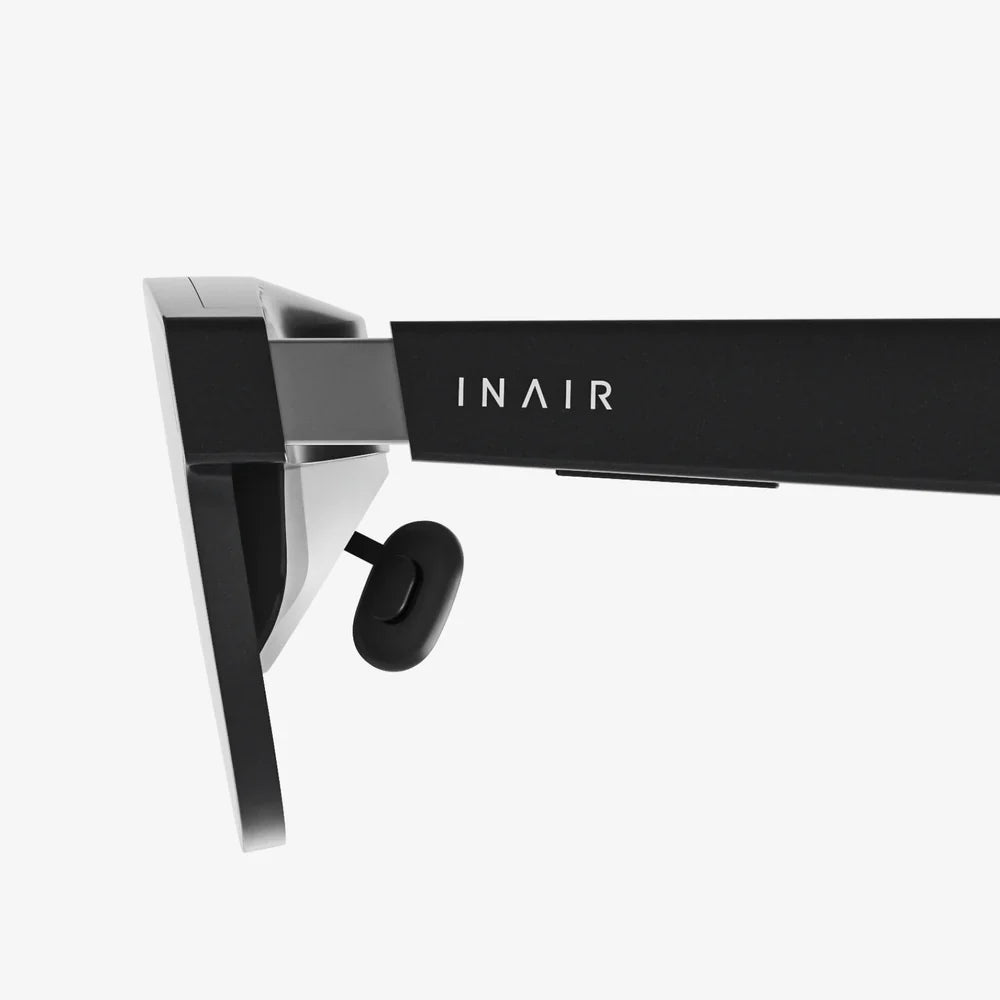
- by wangfred
Virtual Reality Goggles Definition: Unlocking the Portal to Immersive Digital Worlds
- by wangfred
Imagine slipping on a sleek, futuristic headset and instantly being transported. The familiar walls of your room dissolve, replaced by the vertiginous peak of a mountain, the intricate detail of a human cell, or the bustling bridge of a starship light-years away. This is the promise and the power encapsulated in the very definition of virtual reality goggles. They are not merely a screen you watch; they are a portal you step through, the ultimate key to unlocking experiences that defy the constraints of physical space and reality itself. This journey into the digital unknown begins with a simple, yet profound, piece of technology.
At its most fundamental level, the definition of virtual reality goggles centers on a head-mounted device (HMD) designed to create a convincing, immersive, and interactive simulated environment. This is achieved through a sophisticated synergy of several key hardware components, each playing a critical role in fooling the user's senses into accepting the digital world as real.
The primary sensory input is sight, and VR goggles deliver this through twin high-resolution displays, one for each eye. This stereoscopic setup is crucial for creating the illusion of depth and three-dimensionality. These miniature screens are positioned very close to the eyes, but the user does not simply stare at pixels. A complex system of specialized lenses sits between the displays and the eyes. These lenses perform several vital functions: they focus the image to make it clear and comfortable to view, they widen the field of view to encompass the user's peripheral vision, and they correct for visual distortions inherent in the display technology. The quality of these lenses and the pixel density of the displays are primary factors in determining the visual fidelity and clarity of the virtual experience, directly impacting the sense of "presence"—the feeling of truly being in the simulated environment.
For the virtual world to feel responsive and real, it must react to the user's movements with imperceptible latency. This is the domain of positional tracking, the technology that answers the question, "Where is the user's head in space?" Modern systems use a combination of technologies to achieve this. Inside-out tracking employs multiple wide-angle cameras embedded on the goggles themselves to constantly scan the surrounding room, using visual features to triangulate its position and orientation relative to the physical environment. Outside-in tracking, conversely, uses external sensors or base stations placed around the room to emit signals that are picked up by sensors on the headset, precisely calculating its location. This tracking data is processed in real-time, allowing the virtual camera perspective to shift perfectly in sync with every turn, tilt, and step the user takes. Without accurate and high-speed tracking, the illusion shatters, often leading to disorientation and simulator sickness.
Immersion is a multi-sensory experience. Spatial audio, delivered through integrated headphones or dedicated audio straps, is essential. Unlike standard stereo sound, spatial audio mimics how sound waves interact with the human ears in a 3D space, allowing users to hear a sound from above, behind, or to the left with startling accuracy, further cementing the reality of the virtual world.
Furthermore, VR goggles are part of a larger ecosystem that includes motion-tracked controllers. These handheld devices translate the user's hand and arm movements into the virtual world, enabling them to reach out, grab, manipulate, and interact with digital objects. Haptic feedback within these controllers provides a tactile sense of touch, such as the vibration of a virtual engine or the recoil of a digital weapon.
Finally, ergonomic design cannot be overlooked. A comfortable head strap, balanced weight distribution, and proper ventilation are critical for enabling users to enjoy extended sessions within these digital realms without discomfort or fatigue.
The modern definition of virtual reality goggles is the result of decades of iteration, speculation, and technological advancement. The concept is far from new. One of the earliest functional examples was the Sensorama, a large mechanical arcade cabinet developed in the 1950s, which attempted to engage multiple senses with stereo sound, stereoscopic 3D film, and even aromas and wind. The first true head-mounted display is widely credited to Ivan Sutherland and his student Bob Sproull, who in 1968 created "The Sword of Damocles." This intimidating device was so heavy it had to be suspended from the ceiling and offered primitive wireframe graphics, but it established the core principles of head-tracked stereoscopic display.
The 1980s and 1990s saw the term "virtual reality" enter the popular lexicon, driven by companies and research labs developing bulky, expensive systems primarily for military, medical, and industrial simulation. These early commercial efforts were groundbreaking but ultimately limited by the crude graphics, high cost, and significant technological constraints of the era, leading to a period of reduced public interest.
The modern renaissance began in the early 2010s. The catalyst was the proliferation of high-quality, low-cost components driven by the smartphone industry—specifically, small high-resolution displays and accurate motion sensors like gyroscopes and accelerometers. A pivotal moment was the development of the Oculus Rift prototype, which demonstrated that convincing, low-latency VR was finally achievable with consumer-grade hardware. This kickstarted a new arms race, leading to the development of the current generation of powerful, standalone, and PC-connected headsets that have brought high-fidelity virtual reality into homes and businesses around the world.
While immersive gaming is the most famous application, the utility of VR goggles extends far beyond entertainment. The core definition of these devices as portals to simulated environments makes them powerful tools across numerous sectors.
VR provides an unparalleled medium for experiential learning. Medical students can practice complex surgical procedures on virtual patients without risk, allowing for repetition and mistake-making in a consequence-free environment. History students can don a headset and take a guided tour of ancient Rome, walking through digitally reconstructed forums and temples. Mechanics and engineers can train on the intricate systems of a jet engine or a complex piece of machinery, disassembling and reassembling it virtually before ever touching the multi-million dollar physical asset. This "learning by doing" in a safe, controlled, yet highly realistic simulation drastically improves knowledge retention and skill acquisition.
For architects and designers, VR goggles are a revolutionary prototyping tool. Instead of viewing a building design on a flat screen, they can step inside a full-scale 3D model of it before a single brick is laid. This allows them to experience the space, assess sightlines, check for design flaws, and make changes with an intuitive understanding of scale and flow that blueprints and renders cannot provide. Automotive designers use VR to evaluate the ergonomics and aesthetics of a car's interior, sitting in the virtual driver's seat to ensure every control is perfectly placed.
The therapeutic potential of VR is vast and growing. It is used for exposure therapy, helping patients with phobias (like fear of heights or flying) confront their triggers in gradual, controlled doses within a safe virtual space. It aids in physical rehabilitation, turning repetitive exercises into engaging games that motivate patients to complete their therapy regimens. VR is also being explored for pain management, using immersive distraction to help burn victims during wound care or patients undergoing painful procedures.
Perhaps one of the most profound shifts is the use of VR for social interaction and collaboration. Social VR platforms allow people from across the globe to meet in shared virtual spaces as personalized avatars. They can watch movies together, play games, attend concerts, or simply converse, with a sense of shared presence that video calls cannot replicate. For remote work, teams can collaborate in virtual boardrooms, manipulate 3D data models together in real-time, or conduct training sessions, making geographical distance irrelevant.
Despite the incredible promise, the widespread adoption of VR goggles is not without its hurdles and important considerations.
The definition of virtual reality goggles is not static; it is a concept perpetually evolving on the technological frontier. The next generation of devices promises even greater immersion through advancements like varifocal displays that dynamically adjust focus to mimic how eyes work in the real world, eye-tracking for more intuitive interaction and foveated rendering (which sharply renders only where the user is looking to save processing power), and haptic suits that provide full-body tactile feedback. Further out, research into brain-computer interfaces suggests a future where we might navigate virtual worlds through thought alone.
The ultimate goal is achieving a level of fidelity and immersion so complete that the line between the real and the virtual becomes indistinguishable—a concept often referred to as the "ultimate display" or presence. As the hardware becomes lighter, more powerful, and more integrated into our daily lives, the applications will continue to expand in ways we are only beginning to imagine.
From a clunky apparatus suspended from a laboratory ceiling to a self-contained portal you can hold in your hands, the journey of virtual reality goggles is a testament to human ingenuity. They represent more than just a new way to play games or view content; they represent a fundamental shift in our relationship with technology itself. They are the key to exploring the inaccessible, mastering the complex, and connecting with others across vast distances, all from within the limitless theater of the human imagination. The next time you see a pair of these devices, understand that you are not just looking at a piece of consumer electronics—you are looking at a gateway, and the other side is waiting for you to take the first step.
Share:
One Touch Controls: The Invisible Revolution Simplifying Our Daily Lives
Customizable Virtual Workspace The Future of Productivity and Personalization