


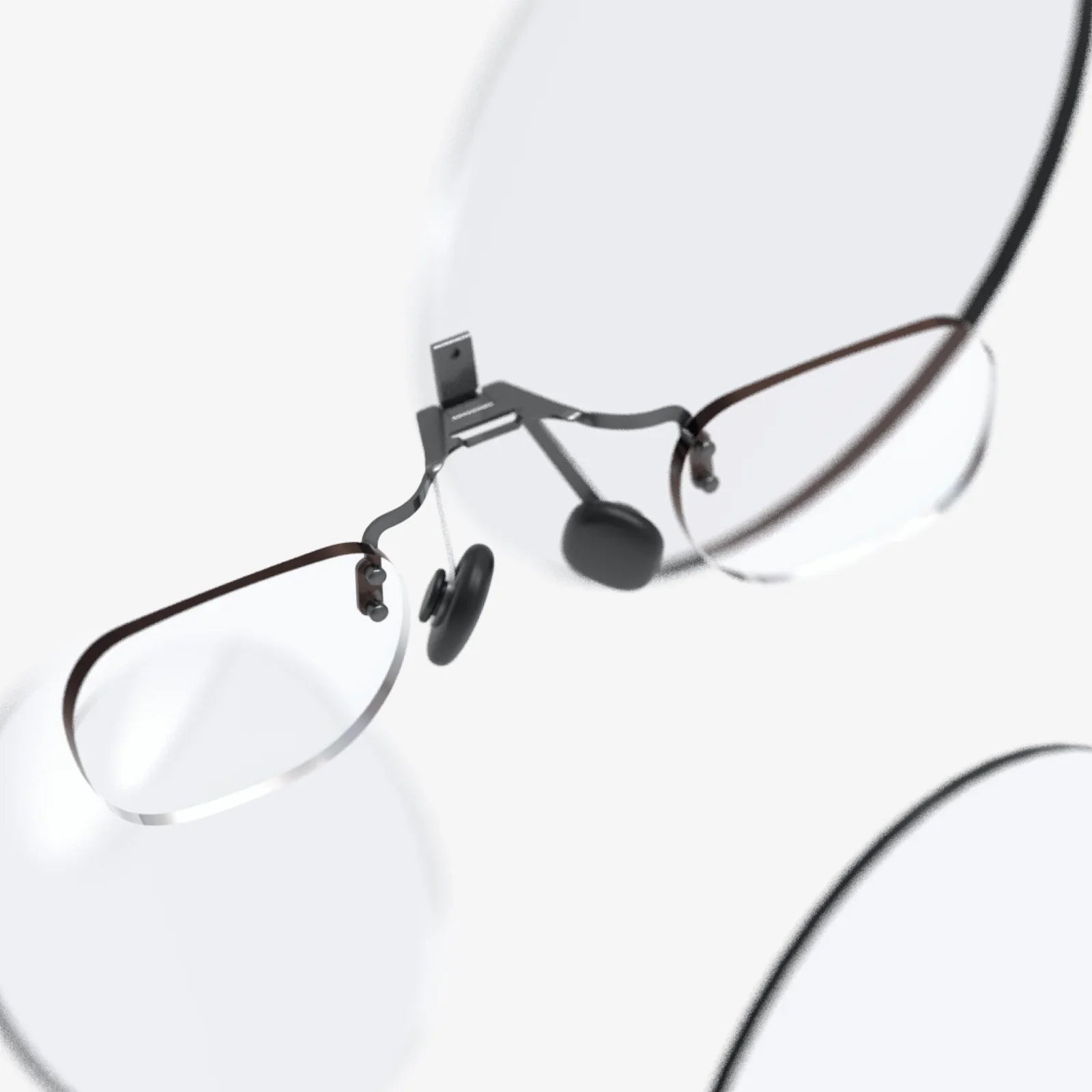
You've seen the breathtaking demos, heard the incredible stories of immersion, and felt that pull to step into another world. But one question stops you dead in your tracks, a barrier between you and the digital frontier: what will a pair of virtual reality goggles price me? The answer is more complex, and more fascinating, than a simple number on a tag. The landscape of VR cost is a story of rapid technological evolution, fierce market competition, and a spectrum of experiences tailored for every budget and desire. Unpacking this story is the key to making an informed decision that won't leave your wallet or your sense of wonder feeling empty.
The Three Tiers of Virtual Reality: Finding Your Entry Point
The first step to understanding virtual reality goggles price is to recognize that the market is not monolithic. It is distinctly segmented into three primary tiers, each offering a vastly different experience and, consequently, a different price bracket.
1. The Entry-Level: Smartphone-Based VR
This tier represents the most accessible point of entry into virtual reality. These headsets, often constructed from lightweight plastics or even cardboard, lack their own internal screens or processing power. Instead, they function as a sophisticated housing unit for your smartphone, which acts as both the display and the brain.
Experience: The quality is entirely dependent on the smartphone's capabilities. While it can provide fun 360-degree videos and simple games, the experience is often limited to 3 degrees of freedom (3DoF), meaning you can look around but not physically move within the virtual space. This significantly limits immersion.
Virtual Reality Goggles Price Range: This is the most budget-friendly option, with prices typically ranging from $20 to $150. The lower end gets you a basic holder, while the higher end offers more comfortable designs with improved lenses and basic controllers.
2. The Mainstream: Standalone VR Headsets
This is currently the most popular and rapidly evolving segment of the market. Standalone headsets are all-in-one units that contain their own high-resolution displays, advanced tracking sensors, a powerful mobile processor, and a built-in battery. They are completely wireless and untethered from any external device.
Experience: This is where true, immersive VR begins. These devices almost universally offer 6 degrees of freedom (6DoF), tracking both your head movements and the position of your hands via dedicated motion controllers. This allows you to walk around, crouch, lean, and interact naturally with the virtual environment. The library of games, productivity apps, and social experiences is vast and growing.
Virtual Reality Goggles Price Range: Standalone headsets represent the sweet spot for performance and cost. Prices generally fall between $250 and $700. The variation within this range is based on processing power, display quality (resolution, refresh rate), storage capacity, and the inclusion of advanced features like eye-tracking or color passthrough cameras for mixed reality.
3. The Enthusiast: PC-Connected and Console VR
For those seeking the absolute pinnacle of visual fidelity and performance, tethered headsets are the answer. These devices connect via a high-speed cable to a powerful gaming PC or a games console. The headset itself contains high-end displays and sensors, but it offloads all the intensive processing and rendering to the external hardware.
Experience: This tier delivers the most graphically rich, detailed, and smooth VR experiences available. It's capable of handling the most demanding simulation games, incredibly detailed creative applications, and provides the lowest latency for a seamless feel. The trade-off is the loss of wireless freedom and the significant additional cost of the required PC or console.
Virtual Reality Goggles Price Range: The headsets themselves are premium products, with prices starting around $600 and easily exceeding $1,500 for professional-grade models. However, this is only part of the total cost of ownership, which must include a capable gaming PC, a cost that can add another $1,000 to $2,500 to the overall investment.
Deconstructing the Cost: What You're Actually Paying For
Beyond the broad tiers, the specific virtual reality goggles price is determined by a cocktail of internal components and engineering feats. Understanding these factors reveals why prices can vary so dramatically within a single category.
- Display Panels: The resolution (e.g., 4K per eye), refresh rate (90Hz, 120Hz, etc.), and panel technology (LCD vs. OLED) are huge cost drivers. Higher specs mean sharper images with less "screen-door effect" and smoother motion, preventing nausea.
- Optics: The lens design is critical for comfort and clarity. Advanced lenses, like Fresnel or the newer pancake lenses, are complex to manufacture but provide a wider "sweet spot" and a more compact headset design, adding to the cost.
- Tracking Technology: Inside-out tracking (using cameras on the headset to see the world) is now standard, but the number and quality of these cameras affect price. Systems that use external base stations for tracking are even more precise but add to the overall system cost.
- Computational Power: For standalone headsets, the built-in System-on-a-Chip (SoC) is a major expense. A more powerful processor (akin to a high-end mobile chip) enables more complex worlds and better performance.
- Build Quality and Comfort: Cheap plastic vs. premium materials, standard straps vs. elite-style rigid headbands with built-in audio, better facial interfaces—these all contribute to long-term comfort and durability, influencing the final price.
- Battery Life: A larger, longer-lasting battery adds weight and cost but is crucial for untethered immersion.
- Research & Development: A significant portion of the price for new, cutting-edge headsets goes toward recouping the massive investment in R&D required to push the technology forward.
The Hidden Costs of Virtual Reality Ownership
The sticker price on the headset box is rarely the final word. The true total cost of VR ownership often includes several additional elements that must be factored into your budget.
- Software and Games: VR titles can range from free experiences and $10 indie games to full-price AAA releases costing $50-$70. A robust library is an ongoing investment.
- Essential Accessories: A longer, more durable link cable for PC VR, a secondary strap for comfort, rechargeable batteries for controllers, and lens protectors are common and often necessary purchases.
- PC Hardware Upgrade: For tethered VR, this is the elephant in the room. Meeting the recommended specifications for a high-end headset may require a new graphics card, more RAM, or additional USB ports, representing a four-figure investment for some.
- Replacement Parts:
Controllers, with their complex internals and propensity for meeting walls, can be expensive to replace. So can facial interfaces that wear out over time.
The Future of Virtual Reality Goggles Price: A Trajectory of Accessibility
The history of technology is a story of premium innovation eventually giving way to mass-market affordability. VR is firmly on this path. We are already seeing the cost of core components like displays and processors decrease while their performance increases. Economies of scale, as more units are produced and sold, will continue to drive down prices for mainstream headsets.
Furthermore, the market is stratifying. Companies are recognizing the need for both a premium flagship product to showcase the future and a more affordable model to capture a broader audience. This strategy, common in the smartphone industry, will likely result in a wider range of options at different virtual reality goggles price points, making the technology accessible to an ever-growing number of users.
Concurrently, the value proposition is shifting. As VR evolves from a purely gaming-centric device into a platform for remote work, social connection, fitness, and education, the perceived value of the hardware increases. A $500 headset is a significant purchase for a game console, but it becomes a much more justifiable expense when viewed as a home gym, a virtual office, and a teleportation device to see friends and family across the globe.
This journey from curiosity to necessity will be the most powerful force in shaping the virtual reality goggles price of tomorrow, transforming it from a luxury into a fundamental tool for modern life.
So, the next time you find yourself wondering about the cost of a ticket to these new realities, remember that the question is no longer if you can afford it, but which reality you choose to step into. The initial investment might seem daunting, but when weighed against the infinite experiences waiting on the other side—from scaling Everest to designing a skyscraper to sharing a laugh on a virtual beach—the virtual reality goggles price becomes not a barrier, but a passport. The real question is, what are you waiting for?
Share:
Interactive Multi Touch Display: The Future of Collaboration and Engagement
Interactive Multi Touch Display: The Future of Collaboration and Engagement