


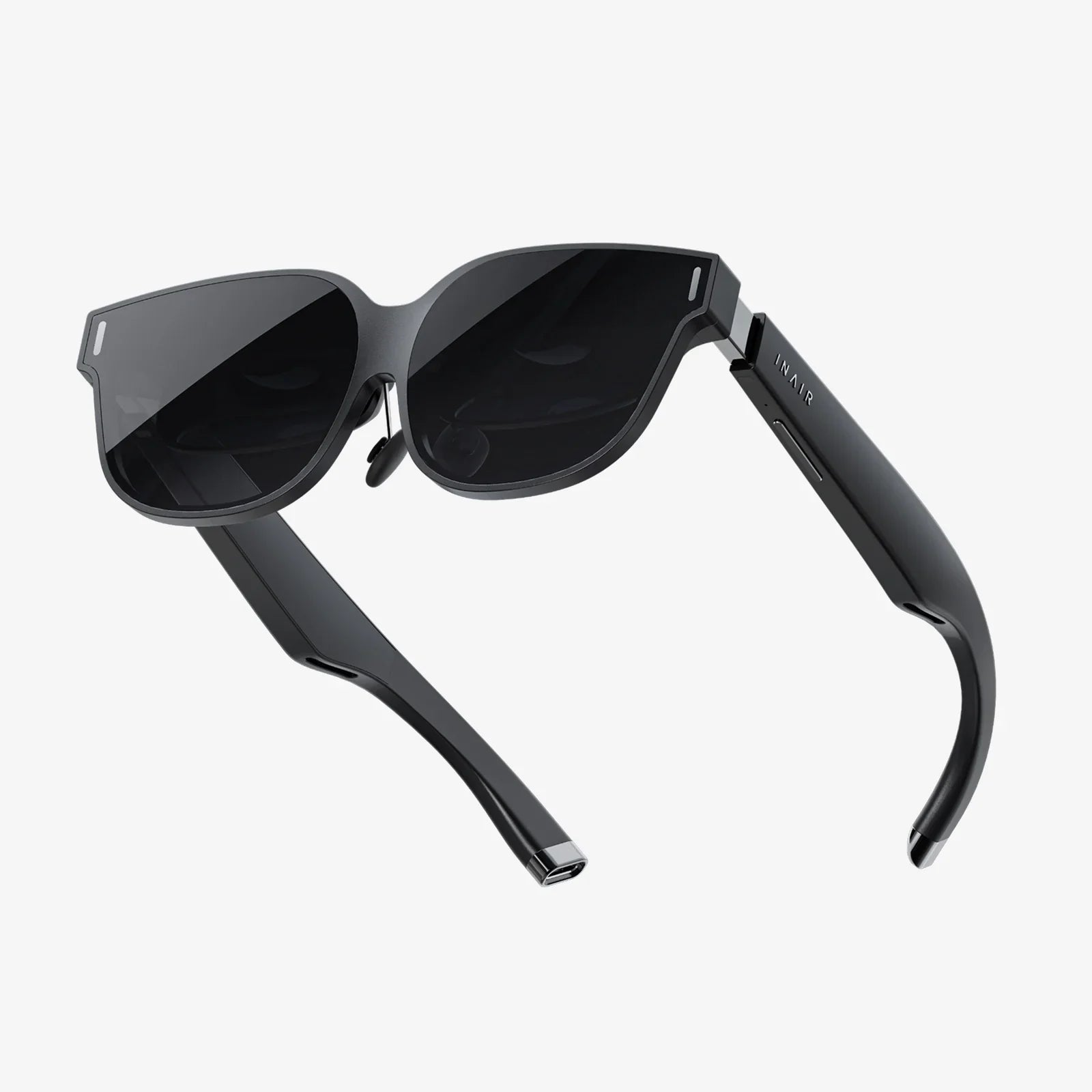
Imagine slipping a sleek visor over your eyes and, in an instant, your living room dissolves. The chatter of the world fades, replaced by the deep, resonant hum of a spaceship's engine or the serene whisper of a wind-swept forest. You are no longer a spectator; you are there. This is the profound promise of virtual reality, a technological marvel once confined to high-end gaming rigs and research labs. But what if the most powerful component of this immersive system was already in your pocket? This is the revolutionary premise behind virtual reality headgear for iPhone, a device category that has democratized access to other worlds by leveraging the sophisticated computer we all carry with us every day.
The Democratization of Dreamscapes: How It Works
At its core, virtual reality headgear for iPhone is an elegantly simple concept. It is a head-mounted display, essentially a high-tech housing with lenses, designed to hold your smartphone securely in place, positioned just inches from your eyes. The magic lies in the synergy between the hardware and the software. The headgear itself provides the necessary optics to transform the iPhone's high-resolution screen into a stereoscopic 3D view. The lenses split the screen's image into two slightly different perspectives, one for each eye, fooling your brain into perceiving depth and scale, creating the illusion of a three-dimensional world.
But the experience goes beyond mere visuals. The iPhone's internal technological suite becomes the engine room for the entire VR operation. Its high-density Retina display provides the crisp, clear imagery necessary to maintain immersion. The internal gyroscope and accelerometer are the unsung heroes, tracking the minutest movements of your head—looking up, down, left, and right—and translating them instantly into the virtual environment. This is known as rotational tracking, and it's fundamental to selling the illusion that you are physically present within the digital space. More advanced headsets may incorporate additional sensors or even external controllers to add positional tracking, allowing you to lean forward or step slightly to the side, further deepening the sense of embodied presence.
A Universe in Your App Library: The Content Ecosystem
A headset without content is merely a plastic shell. The true power of the iPhone-driven VR experience is unlocked through a vast and diverse ecosystem of applications available on the App Store. This content can be broadly categorized into several immersive genres:
Gaming and Interactive Experiences
This is where VR truly shines. You are no longer pressing buttons on a controller to make a character on a screen move; you are the character. You can find yourself on the deck of a starfighter, physically turning your head to track enemy squadrons diving past your cockpit. Puzzle games require you to manipulate objects in a 3D space with a naturalism that feels intuitive. Horror experiences become genuinely terrifying as you slowly peer around a dark corner, the fear triggered by your own voluntary movement. The library ranges from simple, casual experiences to deeply engaging adventures that can consume hours.
Cinematic and 360-Degree Video
Imagine not just watching a documentary about the Serengeti, but standing in the middle of the savanna as a herd of elephants ambles past you. Virtual reality headgear transforms your iPhone into the most personal cinema imaginable. You can watch traditional movies on a virtual silver screen that feels 100 feet wide, from the comfort of your own couch. More impressively, you can dive into 360-degree videos that place you at the center of the action—from the front row of a concert to the edge of a volcanic crater to the surface of Mars, reconstructed from rover data. It's a powerful tool for storytelling and education, offering empathetic and perspective-shifting experiences.
Travel and Exploration
Wander the canals of Venice, explore the ruins of Machu Picchu, or visit the International Space Station—all before lunch. VR travel apps use photorealistic 3D renders and 360-degree photography to create compelling digital tourism experiences. For those with physical limitations or budgetary constraints, it offers a taste of adventure that was previously inaccessible. It can also be a fantastic tool for planning a real trip, allowing you to preview hotels and landmarks before you book.
Social and Connected Experiences
Virtual reality is often perceived as an isolating technology, but it holds immense potential for connection. Social VR platforms allow you to meet friends, family, or strangers in a virtual space. You are represented by an avatar, and you can talk, gesture, watch videos together, or play games in a shared environment. It’s a step beyond a video call, fostering a sense of shared presence that feels more like being in the same room, making it a powerful antidote to physical distance.
Weighing the Reality: Advantages and Limitations
Like any technology, the iPhone-based VR approach comes with a unique set of strengths and compromises when compared to dedicated, all-in-one VR systems.
The Compelling Advantages
Accessibility and Cost: This is the single biggest advantage. For anyone who already owns a relatively recent iPhone, the barrier to entry is dramatically lower. Instead of investing in a complete system with its own internal computer, screens, and sensors, you only need to purchase the headgear itself, which is a fraction of the cost.
Simplicity and Convenience: The setup is incredibly straightforward. Insert your phone, strap on the headset, and you're ready to go. There are no external cameras to set up, no PCs to tether to, and no complex calibration processes.
Always Updated: The heart of the system is your iPhone. As you upgrade your phone every few years, your VR experience gets a free upgrade along with it—better resolution, faster processing, and improved motion tracking, all without needing to buy a new headset.
Portability: Most of these headsets are relatively lightweight and collapsible. Combined with the fact that your content library and computer are on your phone, it makes the entire system highly portable. VR experiences can easily be shared with friends or taken on the go.
The Inherent Limitations
Performance Ceiling: The experience is ultimately capped by the capabilities of your iPhone. While these are powerful devices, they cannot match the raw graphical processing power (GPU) of a high-end gaming PC or a purpose-built all-in-one headset. This can result in less complex visuals, simpler environments, and potential for lower frame rates, which can impact comfort.
Limited Tracking: Most basic headsets rely solely on the iPhone's internal sensors for rotational tracking. Without external sensors or cameras, they typically lack full "six degrees of freedom" (6DoF) positional tracking. This means you can look around but you cannot physically walk around within the virtual space. Your movement is anchored to a single spot.
Battery Drain: Running high-fidelity graphics and constant sensor tracking is incredibly taxing on your phone's battery. Extended VR sessions will require a break to recharge, or the use of an external battery pack.
Potential for Discomfort: Being essentially a holder for a phone, the weight distribution can sometimes feel front-heavy. Furthermore, the graphical processing can generate significant heat, which you can feel through the headset. These factors can lead to discomfort during longer sessions.
Choosing Your Portal: A Buyer's Considerations
If you're ready to dive in, selecting the right headgear is crucial. Look beyond the price tag and consider these key features:
- Compatibility: This is the first and most important check. Ensure the headset is explicitly designed to fit your specific iPhone model. A poorly fitting housing can block cameras or not align properly with the lenses.
- Field of View (FoV): Measured in degrees, this is how much of the virtual world you can see peripherally. A wider FoV (100 degrees or more) is more immersive, making you feel like you're "inside" the world, while a narrow one can feel like looking through binoculars.
- Lens Quality: The lenses are critical for a clear, comfortable image. Look for adjustable focus dials (to accommodate different eyesight) and, if possible, adjustable interpupillary distance (IPD) to align the lenses with the space between your eyes. This reduces eye strain and blurriness.
- Comfort and Materials: Consider the weight, padding, and strap design. A wide, padded forehead rest and adjustable straps that distribute weight evenly are essential for comfort. Breathable materials will help mitigate fogging.
- Input Methods: How will you interact? Some experiences use a Bluetooth game controller, while others may rely on a simple magnetic trigger on the headset itself or even just your gaze. More advanced models may include their own dedicated controllers for a more intuitive experience.
Beyond the Hype: The Future of Mobile VR
The landscape of technology is one of constant convergence and divergence. While dedicated VR systems push the boundaries of fidelity and interaction, the role of smartphone-based VR remains vital. It serves as the perfect introduction to immersive technology, a low-risk entry point that allows millions to experience the potential of VR firsthand. It fosters a massive content ecosystem driven by a large installed user base, encouraging developers to create innovative experiences.
Future iterations will likely focus on bridging the gap between mobile and dedicated systems. We may see headsets with additional integrated sensors to enable positional tracking without external beacons, or designs that better manage thermals and weight distribution. As augmented reality (AR) technology matures, the line between VR and AR may blur, with headsets capable of both fully immersive experiences and overlaying digital information onto the real world, all powered by the device in your pocket.
The journey of virtual reality is just beginning. It is a path toward new forms of storytelling, unprecedented ways to connect across vast distances, and revolutionary tools for visualizing complex data. It is a canvas for human creativity that is still being stretched.
Your ticket to these uncharted worlds might not require a powerful desktop or a hefty investment in new hardware. It might simply require a moment of curiosity, a downloadable app, and the courage to strap the computer already in your pocket to your face and see what happens next. The next dimension is waiting, and it’s closer than you think.
Share:
Cheap Virtual Offices: The Ultimate Guide to a Prestigious Business Address on a Budget
3D Spinning Hologram: The Future of Visual Display Technology is Here