


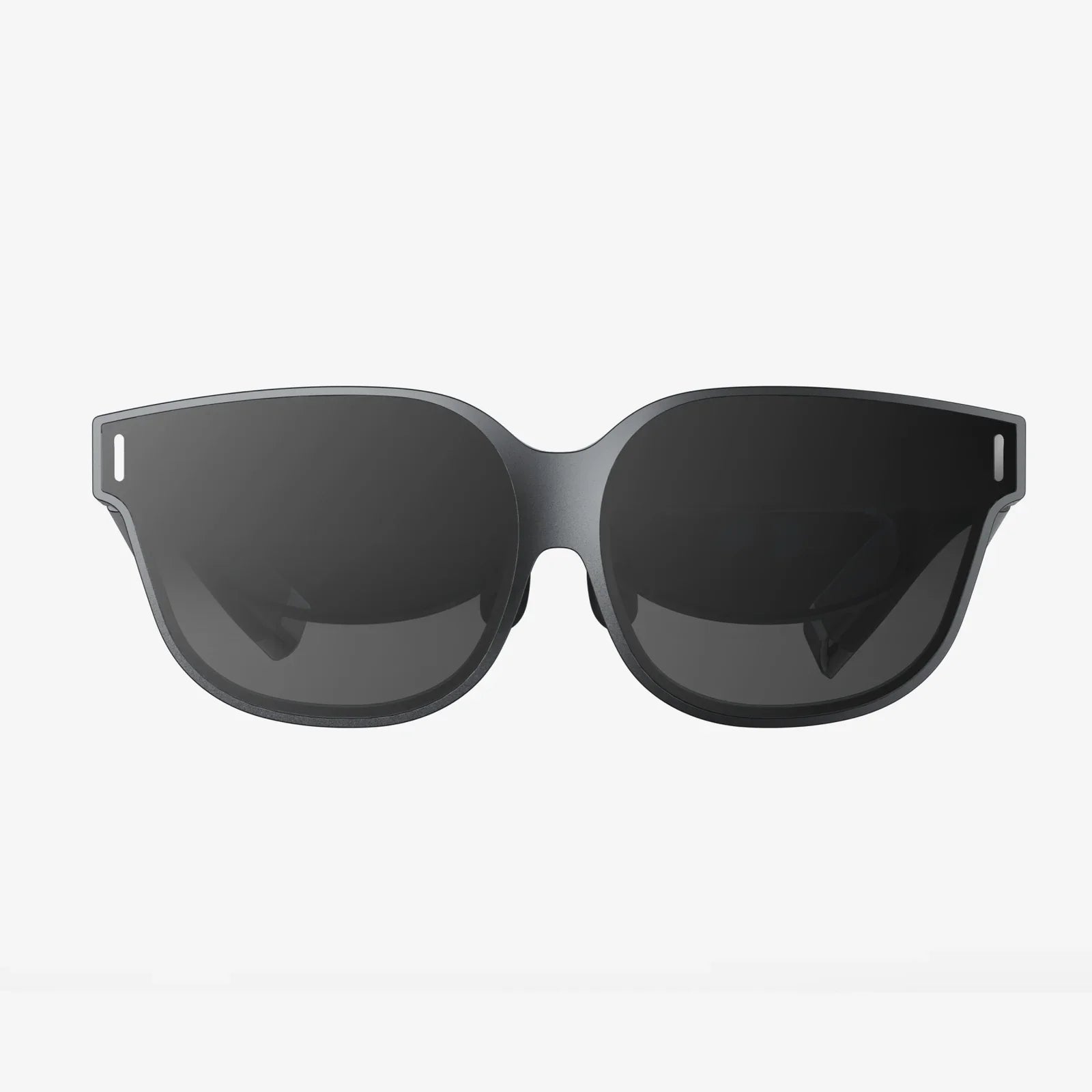
Imagine slipping on a headset and being instantly transported to a front-row concert seat, a strategic war room, or the surface of Mars, all powered by the familiar, sleek device in your pocket. This isn't a glimpse into a distant future; it's the exciting reality emerging from the convergence of two powerhouse technologies: the virtual reality headset and the 7-inch tablet. This fusion represents more than just a novel way to watch videos; it is a fundamental reimagining of how we interact with digital information, blending the boundless immersion of VR with the accessible, portable computing of a compact tablet. The journey of this technological synergy is reshaping boundaries and creating a new category of hybrid experience that is both profoundly personal and incredibly powerful.
The Evolution of Two Technological Titans
To appreciate the significance of their convergence, one must first understand the distinct paths these devices have traveled. The virtual reality headset, once a fantastical concept in science fiction, has undergone a dramatic evolution. Early iterations were bulky, expensive, and tethered to immense computing power, limiting them to research labs and high-end enthusiasts. The modern era, however, has seen a democratization of VR. Advancements in display technology, motion tracking, and miniaturized sensors have given rise to a spectrum of headsets, from powerful, untethered standalone devices to more accessible mobile-based models. These mobile VR headsets, in particular, laid the groundwork for the current fusion, utilizing a smartphone's screen and processing power as their engine.
Parallel to this, the 7-inch tablet carved out its own essential niche. Positioned perfectly between the smartphone's portability and the laptop's screen real estate, it became the go-to device for media consumption, casual gaming, e-reading, and light productivity. Its form factor offered a generous viewable area without sacrificing the ability to be held comfortably in one hand or slipped into a small bag. The power within these devices grew exponentially, with processors, graphics capabilities, and high-resolution displays that rivaled laptops of the past. This potent combination of portable power and a vibrant screen made it an ideal candidate to become the brain and display for a more immersive experience.
The Mechanics of a Symbiotic Relationship
So, how does this fusion actually work? The principle is elegantly simple yet technologically sophisticated. A virtual reality headset designed for a 7-inch tablet acts as an advanced viewing apparatus. The user slots their tablet into a compartment on the headset, which then positions the device's high-resolution screen just a few centimeters from their eyes. Sophisticated lenses placed between the eyes and the screen warp and focus the image, transforming the standard 2D interface into a vast, stereoscopic 3D environment.
The headset itself is far from a passive holder. It incorporates crucial hardware that the tablet alone lacks:
- Precision Lenses: These are the heart of the immersion, responsible for correcting the image, providing a wide field of view, and ensuring a comfortable focus for the user's eyes.
- Inertial Measurement Units (IMUs): Built-in gyroscopes, accelerometers, and magnetometers track the rotation and orientation of the user's head with incredible speed and accuracy. This data is often combined with the tablet's own sensors for a seamless tracking experience.
- Input Controllers: Many systems include wireless controllers equipped with their own tracking sensors, allowing users to interact naturally with the virtual world, pointing, grabbing, and manipulating objects.
- Ergonomic Design: Padded head straps, adjustable lenses for interpupillary distance (IPD), and ventilation systems are all critical for comfort during extended use.
The tablet, in turn, serves as the computational core. Its powerful processor runs the immersive applications, its high-pixel-density display provides the visual fidelity, its built-in speakers or audio jack deliver spatial sound, and its battery fuels the entire experience. This symbiosis creates a high-functioning VR system that leverages the best attributes of both devices.
Unlocking a Universe of Applications
The true power of this combination is revealed in its vast range of applications, which extend far beyond gaming into nearly every aspect of modern life.
Revolutionizing Entertainment and Media
This is the most immediate and visceral application. Users are no longer just watching a movie; they are inside it. Imagine a 360-degree cinema where you can look around at the other audience members (real or virtual) or a nature documentary where you are standing amidst a herd of elephants on the savanna. Gaming is transformed into a truly first-person experience, where looking down reveals your own virtual body and turning your head is the only way to spot an enemy approaching from behind. The level of engagement and emotional connection achieved is unparalleled by any traditional screen.
Transforming Education and Training
This technology has the potential to revolutionize pedagogy. Instead of reading about ancient Rome, history students can take a guided walk through a digitally reconstructed Forum. Medical students can practice complex surgical procedures on virtual anatomy without risk. Mechanics can train on virtual engines, dismantling and reassembling components in a safe, cost-effective environment. This hands-on, experiential learning dramatically improves knowledge retention and understanding.
Enhancing Remote Work and Collaboration
The future of work is increasingly remote and distributed. A virtual reality headset paired with a tablet can create a profound sense of presence among colleagues who are physically miles apart. Teams can meet in a virtual boardroom, brainstorm on 3D models, and interact with data visualizations that surround them. This is a significant leap over video conferencing, fostering a stronger sense of teamwork and enabling more intuitive collaboration on complex projects.
Expanding Creative and Artistic Expression
Artists and designers are embracing this medium as a new canvas. Sculpting in 3D space, painting with virtual light, and designing architecture at a 1:1 scale are now possible. The intuitive nature of using motion controllers to create within a virtual space offers a directness and freedom that traditional mouse-and-keyboard or tablet-and-stylus interfaces cannot match.
Navigating the Current Challenges
Despite its promise, this technological fusion is not without its hurdles. Overcoming these challenges is key to its widespread adoption.
- Technical Limitations (The Screen Door Effect): While tablet displays are sharp, placing them so close to the eyes can make the gaps between pixels visible, creating a faint "screen door" pattern that can break immersion. Higher resolution displays are steadily mitigating this issue.
- Computational Power and Thermal Throttling: Running high-fidelity VR experiences is computationally intensive and can push a tablet's processor to its limits, potentially causing overheating and performance throttling, which leads to a less smooth experience.
- Content Availability and Quality: The ecosystem of apps specifically optimized for this hybrid experience is still growing. The market needs a consistent influx of high-quality, engaging content to sustain user interest beyond the initial novelty.
- User Comfort and Accessibility: Factors like motion sickness (cybersickness), the weight of the device on the user's face, and finding the correct optical settings remain barriers for some users. Ongoing ergonomic and software improvements are crucial.
The Future is a Blended Reality
The trajectory of this technology points toward an even deeper integration. We are moving towards Mixed Reality (MR) and Augmented Reality (AR), where digital objects are seamlessly overlayed onto the real world. Future iterations of headsets might use the tablet's camera feed to pass through a view of your surroundings, allowing you to place a virtual television on your real wall or have a virtual pet run around your living room. The line between the physical and digital realms will continue to blur, creating a unified experience where our devices are not just tools we look at, but windows into an enhanced layer of reality.
The fusion of the virtual reality headset and the 7-inch tablet is a testament to the power of combinatorial innovation. It takes two established, successful technologies and creates something entirely new and more powerful than the sum of its parts. It democratizes high-quality immersive experiences, making them more affordable and accessible than dedicated high-end systems. This isn't about replacing one device with another; it's about unlocking a new dimension of interaction that enhances the capabilities of the hardware we already own and love. It represents a significant step towards a future where our computing devices are not just informational, but transformational.
This powerful combination sitting on your desk or in your bag is no longer just a screen for consumption—it's a passport to explore, learn, create, and connect in ways we are only beginning to understand. The door to these new worlds is now open, waiting for you to take the step through and experience the impossible made tangible.
Share:
AI for Office Work: The Complete Guide to Automating Your Daily Grind
AI Hardware Companies in India: The Unsung Heroes Powering a Digital Revolution