


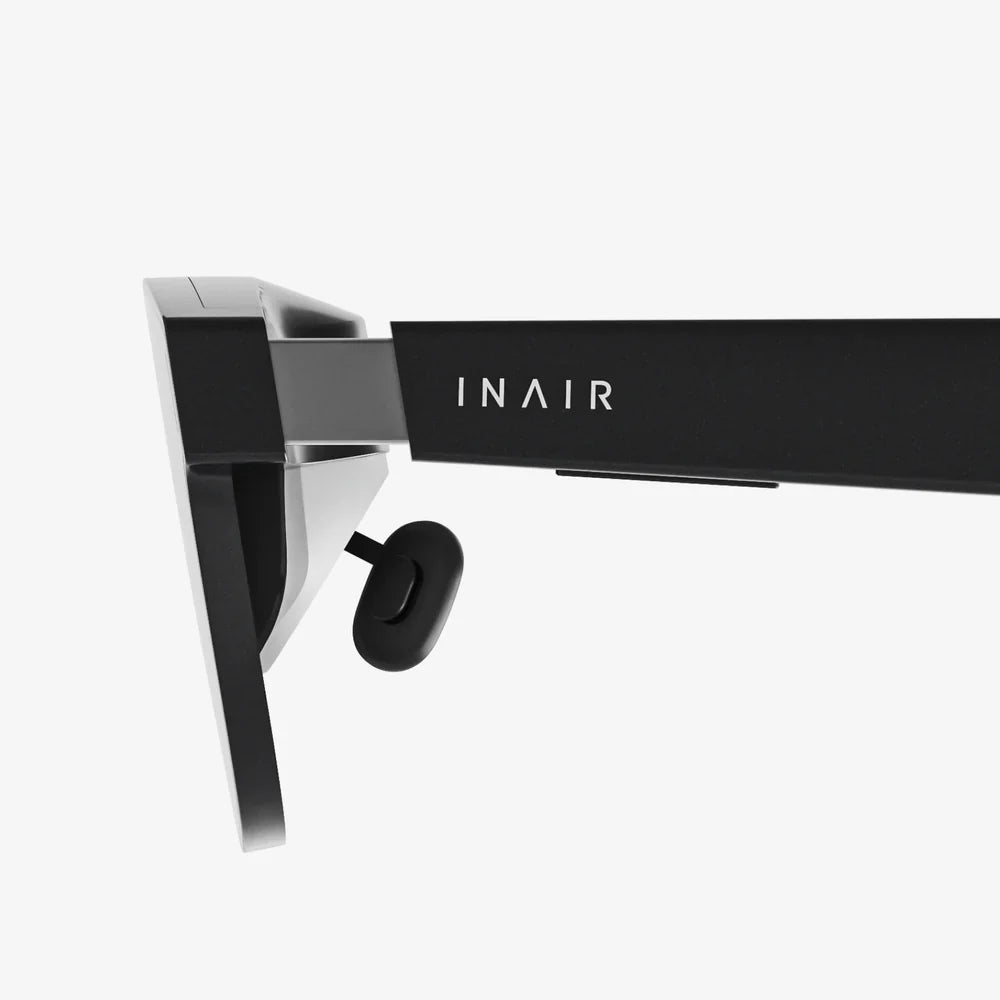
- by wangfred
Virtual Reality Headset Development: A Journey From Sci-Fi to Mainstream Reality
- by wangfred
The sleek, futuristic visor slides over your eyes, and in an instant, the mundane physical world around you dissolves. You are no longer in your living room; you are standing on the surface of Mars, the red dust crunching beneath your virtual boots, or you are deep within a human cell, watching the intricate dance of proteins. This is the promise, the magic, and the incredible engineering marvel of the modern virtual reality headset. The development of these portals to other worlds is one of the most compelling stories in modern technology, a relentless pursuit of immersion that blends cutting-edge optics, neuroscience, and silicon engineering to trick the human brain into believing the impossible. The journey from clunky, low-fidelity prototypes to the sophisticated systems of today is a testament to human ingenuity and a preview of a future where the line between the digital and the physical becomes increasingly blurred.
The dream of virtual reality is far older than the technology capable of delivering it. For decades, science fiction authors and futurists imagined devices that could transport users to fully realized digital realms. However, the tangible development of headsets began not in the glossy R&D labs of the 21st century, but in the academic and military research facilities of the mid-1900s. Early systems were monstrously large, incredibly expensive, and offered only a primitive glimpse of what was to come. They were proof-of-concept machines, demonstrating that the core idea—presenting a separate image to each eye to create stereoscopic 3D—was viable. These pioneering devices, though impractical for widespread use, established the fundamental principles that all subsequent development would build upon, proving that a head-mounted display could be the key to unlocking a new form of human-computer interaction.
The evolution of virtual reality headset development is not a single story but a convergence of several critical technological disciplines. Each component has had to advance in lockstep to create a cohesive and convincing experience.
At the heart of the experience is the visual display. Early consumer headsets were plagued by the "screen-door effect," where users could see the fine lines between pixels, shattering immersion. Development has focused on dramatically increasing resolution and pixel density to eliminate this artifact. Furthermore, the field of view (FOV) is crucial; a narrow FOV feels like looking through binoculars, while a wider FOV enhances the feeling of presence. High refresh rates are equally important, reducing latency and motion blur to prevent simulator sickness. The latest developments involve varifocal displays that mimic the eye's natural ability to focus on objects at different distances, a critical step toward long-term comfort and visual realism.
A virtual world is only convincing if your movements within it are reflected perfectly and instantaneously. This requires sophisticated tracking systems. Early development relied on external sensors placed around a room (outside-in tracking) to triangulate the headset's position. The current trend is toward inside-out tracking, where cameras and sensors embedded in the headset itself map the environment and track movement without external hardware. This simplifies setup and expands the potential play area. The development of these systems involves complex computer vision algorithms and inertial measurement units (IMUs) that work together to create a precise, six-degrees-of-freedom (6DoF) map of the user's position and orientation in space.
Immersion is a multi-sensory experience. Spatial audio is a critical yet often overlooked aspect of headset development. Unlike standard stereo sound, spatial audio uses head-related transfer functions (HRTF) to simulate how sound waves interact with the human head and ears, allowing users to pinpoint the location of a sound in 3D space. This means you can hear a bird chirping behind you and to your left. Similarly, haptic feedback development is moving beyond simple controller rumble to include vests, gloves, and even full-body suits that can simulate touch, pressure, and impact, adding a profound layer of physicality to virtual interactions.
Rendering two high-resolution, high-frame-rate displays in perfect sync is an immense computational task. Initially, this required a physical tether to a powerful desktop computer, limiting mobility and posing a tripping hazard. A major frontier in headset development is the move toward standalone, untethered devices. This integrates the processor, battery, and all components into the headset itself. This shift demands incredible efficiency in chip design, balancing raw graphical power with minimal heat output and power consumption. The development of specialized chipsets designed explicitly for VR workloads is a key innovation, enabling rich experiences free from external wires.
The first generation of modern consumer headsets were often described as face computers—heavy, front-heavy, and uncomfortable for extended sessions. A significant portion of development effort has been dedicated to human factors and industrial design. Engineers have worked to perfect weight distribution, often by moving the battery pack to the back of the headstrap to act as a counterweight. Materials have become lighter and more breathable. Interpupillary distance (IPD) adjustment, both software and mechanical, has become standard to ensure a clear image for a wider range of users. The goal is to make the hardware disappear, allowing the user to forget they are wearing a device and focus entirely on the experience within.
While gaming provided the initial commercial impetus for headset development, the potential applications extend far beyond entertainment. Enterprise and professional use cases are driving innovation in different directions. In medicine, students practice complex surgeries in risk-free virtual operating theaters. Architects and engineers walk clients through immersive 3D models of unbuilt structures. Corporations use VR for remote collaboration, allowing employees from across the globe to meet and interact with 3D data in a shared virtual space as if they were in the same room. This diversification of use cases pushes development to prioritize different features, such as higher resolution for detail-oriented professional work and enhanced collaboration tools.
The path to perfect immersion is fraught with technical and biological hurdles. Simulator sickness, caused by a mismatch between visual motion and the body's vestibular sense, remains a significant challenge that developers combat with higher refresh rates, lower latency, and better tracking. The issue of accessibility is also paramount; creating experiences that are comfortable for users with a wide range of physical abilities and visual impairments requires thoughtful design. Furthermore, the social acceptance of wearing a device that completely occludes the real world raises questions about long-term usage patterns and how we will interact with both the virtual and physical worlds simultaneously in the future.
The future of headset development is moving toward even greater integration with human physiology and the real world. The next great leap is the development of advanced passthrough augmented reality (AR), using high-resolution cameras to blend the real world with digital overlays seamlessly. This technology aims to create headsets that can function as both VR and AR devices, a concept often referred to as Mixed Reality (MR). Further out on the horizon are technologies like direct neural interfaces, which could one day bypass screens and controllers altogether, transmitting signals directly to the brain to create experiences indistinguishable from reality. Research into light-field displays and holographics promises visuals with natural depth perception that doesn't conflict with the eye's focus.
Imagine a device so lightweight and intuitive it feels like a pair of everyday glasses, yet it can overlay a universe of information, communication, and entertainment onto your world or replace it entirely at a moment's notice. The development of virtual reality headsets is a relentless march toward this ultimate goal: the perfect portal. It’s a journey of shrinking transistors, bending light, and writing code that understands human perception, all converging to create the most personal and powerful medium ever devised. This isn't just about building better gadgets; it's about forging new realities, and the next chapter is being written in labs and workshops right now, waiting to transform your world all over again.