


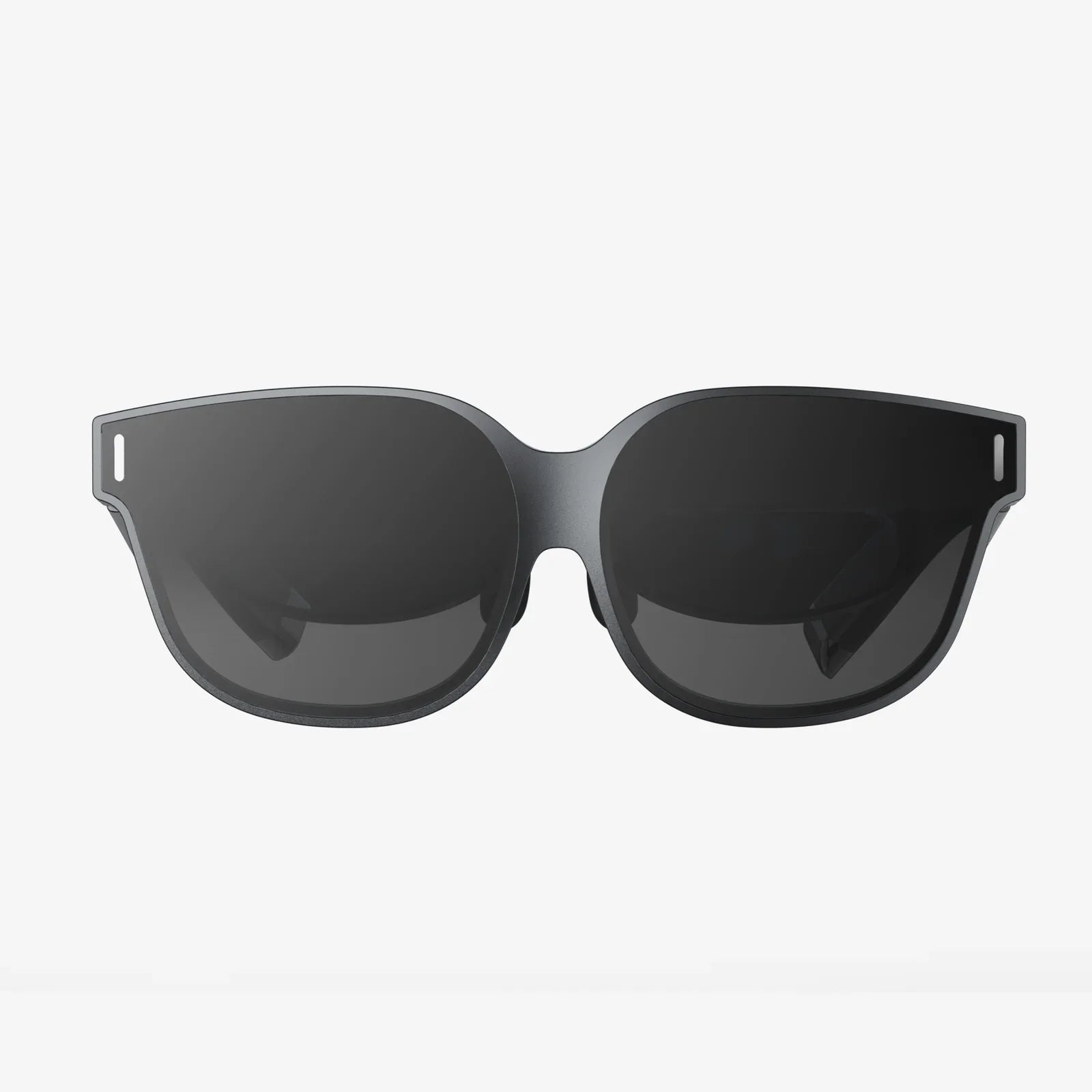
You slip on the headset, the world around you fades to black, and for a moment, you are transported. You're standing on the surface of Mars, the rusty red terrain stretching out to a thin, cold horizon. You reach out a hand, expecting to feel the gritty Martian soil. But instead of awe, a creeping disappointment sets in. The majestic vista is… fuzzy. The rocks in the distance are a shimmering, pixelated mess. You’ve just encountered the single greatest barrier to true virtual immersion: the stark, unforgiving limitations of virtual reality headset resolution.
The Pixelated Gateway: Why Resolution is King in VR
Unlike traditional screens viewed from a distance, a VR headset's displays are magnified and placed mere centimeters from your eyes. This optical design exposes every flaw, every gap between pixels, in a way a 4K television never could. Resolution in this context isn't about bragging rights; it's the fundamental metric that determines whether a virtual world feels solid, tangible, and believable or like a low-resolution dream from which you can't wait to wake. It is the primary determinant of visual fidelity, impacting everything from text clarity and object recognition to the profound, psychological sense of "presence"—the feeling of actually being in the virtual space.
Beyond Megapixels: Understanding PPD, PPI, and the Screen Door Effect
To truly grasp VR resolution, we must move beyond simple marketing terms like "4K." Two more critical concepts take precedence: Pixels Per Inch (PPI) and Pixels Per Degree (PPD).
- Pixels Per Inch (PPI): This is a measure of display density. A higher PPI means pixels are packed more tightly together on the physical screen, reducing the gaps between them.
- Pixels Per Degree (PPD): This is arguably the most important metric for VR. It measures how many pixels fit within one degree of your field of view. The human eye can resolve approximately 60 PPD. Early headsets struggled to reach 10 PPD, resulting in highly visible pixels and a distinct "screen door effect" (SDE), where the black space between pixels becomes visible, like looking through a fine mesh screen door.
The screen door effect was the original immersion-breaker. It constantly reminded users they were looking at a screen. Modern headsets have made tremendous strides in combating SDE through a combination of higher resolution displays, advanced optics, and techniques like "subpixel rendering" and custom RGB stripe layouts that fill the gaps between pixels.
The Optical Illusion: How Lenses Shape What You See
The raw display panel is only half the story. The lenses placed between your eyes and the display play a monumental role in defining the final perceived resolution. These lenses are responsible for warping the image correctly for each eye and making the virtual world appear at a comfortable focal distance. However, they also introduce challenges:
- Chromatic Aberration: A phenomenon where lenses fail to focus all colors to the same convergence point, causing color fringing around high-contrast edges.
- Geometric Distortion: The "barrel" or "pincushion" effect that must be corrected for computationally.
- Fixed Foveated Rendering: To save processing power, many headsets subtly reduce the rendering resolution at the periphery of your vision, where your eye is less likely to notice, a technique that must be carefully managed to avoid being detected.
The quest for the perfect lens—one that is sharp from edge-to-edge, lightweight, and free of distortion—is as crucial as the quest for higher-resolution displays.
The Rendering Bottleneck: The Astronomical Cost of Pixels
Doubling the resolution of a display does not simply double the required graphics processing power; it quadruples it. Rendering a stereo VR experience at a high resolution and a mandatory 90 frames per second (to avoid motion sickness) is one of the most demanding tasks for any graphics processor. This creates a vicious cycle: to drive higher-resolution displays, you need immensely powerful and expensive computing hardware, which in turn generates more heat and requires more power.
This is where software innovation has become a hero. Technologies like:
- Foveated Rendering: This is the holy grail of VR optimization. By using eye-tracking technology, the system knows exactly where you are looking (your fovea, the center of your vision with the highest acuity). It then renders that small area in full resolution while drastically reducing the rendering quality in your peripheral vision. This can save up to 70% of rendering workload with no perceptible loss in quality.
- Upscaling and Reconstruction: Techniques like Temporal Anti-Aliasing (TAA) and more advanced methods like those inspired by DLSS render the scene at a lower internal resolution and then use intelligent algorithms and data from previous frames to reconstruct a sharp, high-resolution image. This allows headsets to achieve a perceived resolution far higher than what is being natively rendered.
The Human Factor: Resolution and the Perception of Reality
The impact of resolution is not merely technical; it is deeply human. Low resolution has tangible, negative effects on the user experience:
- Eye Strain and Fatigue: Your eyes and brain must constantly work to interpret and resolve a blurry or pixelated image, leading to quicker onset of fatigue and discomfort.
- Inability to Read Text: Productivity in VR—using virtual screens for work—is entirely dependent on crystal-clear text rendering, which is one of the first things to suffer at low resolutions.
- Break in Presence: The moment you notice pixels, aliasing (jagged edges), or blur, the illusion shatters. You are abruptly reminded you are in a simulation.
High resolution, conversely, does the opposite. It allows for subtlety: the individual pores on a character's skin, the intricate weave of a fabric, the fine text on a virtual document, and the realistic appearance of light and shadow. It builds a world that feels solid and worthy of exploration.
The Horizon: What Does the Future of VR Resolution Hold?
The industry is marching relentlessly toward a single goal: retinal resolution. This is the point where the display's PPD meets or exceeds the resolving power of the human eye (around 60 PPD). At this threshold, the virtual image would be indistinguishable from reality, with no visible pixels, aliasing, or screen door effect, regardless of how closely you look.
Achieving this will require several technological leaps:
- Micro-OLED and Future Display Tech: Micro-OLED displays offer incredibly high PPI, perfect pixel-level control, and perfect blacks. The next generation of these panels will push PPI values into the thousands.
- Pancake Lenses: These compact, multi-element lenses allow for a sharper image across a wider field of view and enable much slimmer and lighter headset designs, making high-resolution devices more comfortable for prolonged use.
- Varifocal and Light Field Displays: Future headsets may solve the vergence-accommodation conflict (where your eyes focus on a virtual object but your lens must focus at a fixed distance) by using varifocal lenses or light field technology, which would also dramatically increase the perceived clarity and comfort of the image.
The path forward is not just about cramming more pixels into a display. It is a holistic engineering challenge that intertwines optics, display technology, and rendering software. It's a symphony where every instrument must be perfectly tuned. The day is coming when the headset you wear will not be a window into a pixelated approximation of another world, but a flawless, invisible portal. And on that day, the question won't be about resolution at all—it will be about which reality you choose to call home.
Imagine a world where the digital and physical seamlessly merge, where every detail is rendered with such breathtaking clarity that your brain accepts it without question. The race to conquer virtual reality headset resolution is the silent, technical battle making that fantasy inevitable. The next time you put on a headset, you might not just be visiting another world—you might just be moving in.
Share:
New Tec for AI Glasses: The Invisible Revolution Reshaping Reality
AI Tools to Generate Content: The Ultimate Guide to the New Creative Revolution