


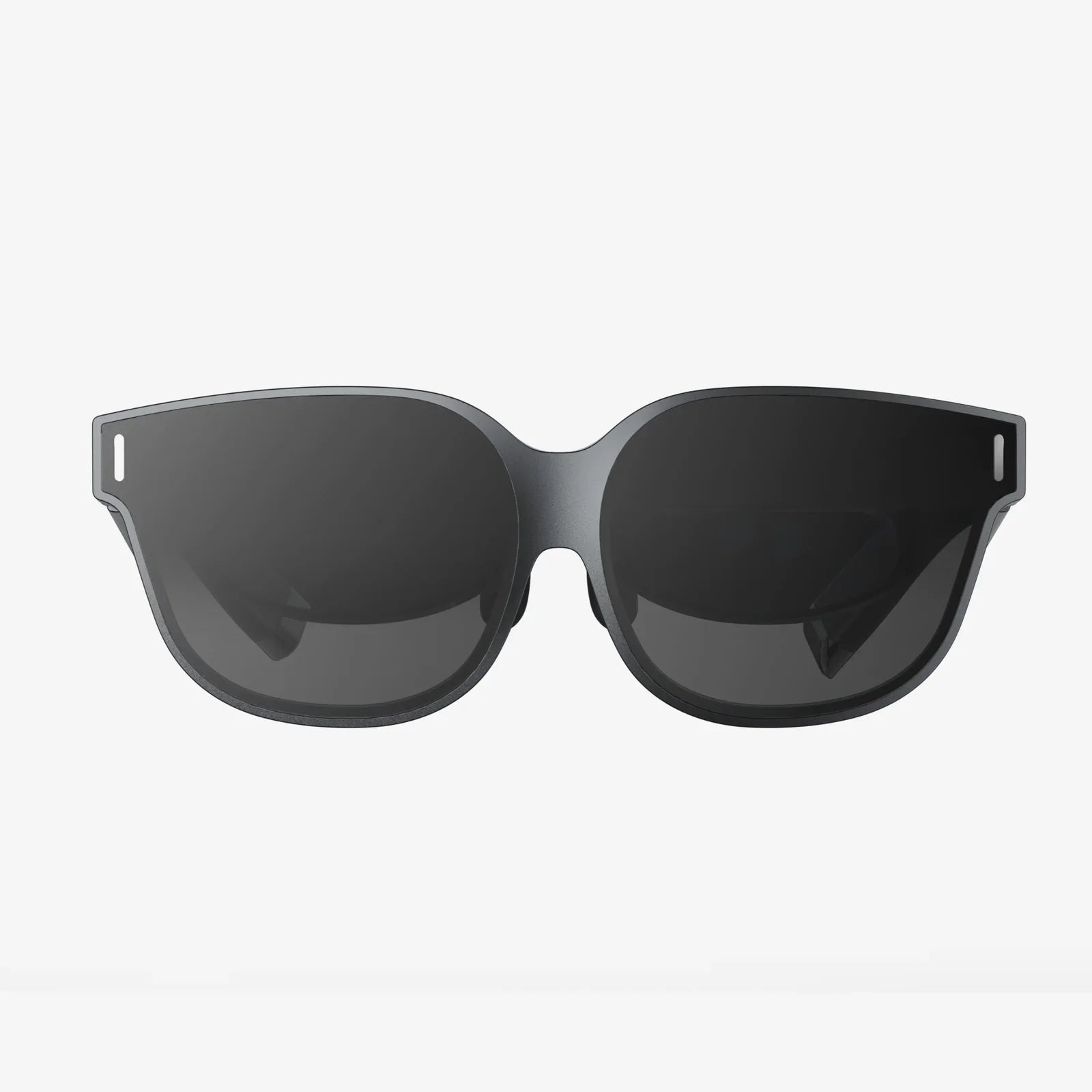
- by wangfred
Virtual Reality Means a New Dimension of Human Experience and Connection
- by wangfred
Imagine a technology so powerful it can collapse continents, erase disabilities, and rebuild worlds from pure imagination. This is the promise and the profound meaning of virtual reality, a force that is rapidly moving beyond the realm of novelty to become a fundamental shift in how we connect, learn, and perceive our existence. It’s not just a headset; it’s a portal to a new dimension of human experience.
To understand what virtual reality means, we must first look past the hardware. At its core, VR is a simulated digital environment that completely immerses the user, replacing the physical world with a computer-generated one. Unlike traditional screens that we observe from a distance, VR operates on the principle of presence—the undeniable, visceral sensation of being somewhere else. This is achieved through a combination of stereoscopic 3D visuals, 360-degree head tracking, and immersive spatial audio that tricks the brain into accepting the virtual as, temporarily, real.
The true meaning of VR, however, lies not in the technical definition but in its experiential impact. It is the first medium that fundamentally changes the relationship between the user and the content. We are no longer viewers; we are participants. We are not watching a character climb a mountain; we are feeling the vertigo as we look down from the summit ourselves. This shift from observation to embodiment is the seismic change that gives VR its unique power and potential.
One of the most transformative meanings of virtual reality is its potential to redefine human connection. For decades, digital communication has been largely two-dimensional: text, voice, and flat video calls. These tools, while revolutionary in their time, lack the rich, non-verbal cues—a shared glance, a subtle shift in posture, a sense of shared space—that form the bedrock of human interaction.
VR shatters these limitations. In a social VR application, users are represented by avatars, digital bodies that can gesticulate, nod, and make eye contact. The sense of sharing a space with another person, even if that space is a digital rendering of a Parisian café or the surface of Mars, is palpable. This has profound implications. Families separated by oceans can feel as if they are sitting in the same living room, sharing stories around a virtual fireplace. Colleagues from across the globe can collaborate on 3D models as if they were standing around the same physical table.
This goes beyond convenience; it touches on a deep human need for communal presence. In a world increasingly marked by physical isolation and digital fragmentation, VR offers a powerful antidote: the ability to feel truly together, regardless of geography. It means that physical distance no longer has to equate to social or emotional distance.
Perhaps the most celebrated and profound meaning of virtual reality is its capacity as an empathy machine. Empathy—the ability to understand and share the feelings of another—is traditionally cultivated through storytelling and personal experience. VR supercharges this process by allowing us to not just hear about another's experience, but to inhabit it.
Documentarians and journalists are using VR to transport viewers into the heart of stories in unprecedented ways. One can experience a day in the life of a child in a refugee camp, not as a distant observer watching through a camera lens, but as a presence within the camp, hearing the sounds, seeing the scale of the environment, and feeling the palpable tension or hope. Medical professionals use VR simulations to help family members understand the cognitive decline of a loved one with Alzheimer's, fostering greater patience and compassion.
This embodied experience can challenge prejudices, break down barriers, and foster a deeper, more nuanced understanding of complex issues. It means the potential for a more connected and compassionate global society, where abstract statistics are replaced by visceral, human-scale understanding.
The meaning of virtual reality in education is nothing short of revolutionary. For centuries, learning has been largely abstract. Students read about ancient Rome, watch videos about the human circulatory system, or look at diagrams of geological formations. VR transforms learning from a passive to an active, exploratory process.
Imagine a history class where students don't just read about the pyramids; they can walk through the bustling construction sites of Giza, hearing the sounds and seeing the scale of the operation. A biology student can shrink down to the size of a cell and navigate the intricate pathways of the bloodstream. An apprentice mechanic can practice disassembling and reassembling a complex engine countless times without the cost of physical parts or the risk of error.
This experiential learning leverages the brain's innate ability to remember places and experiences—a phenomenon known as spatial memory. Knowledge gained through doing and exploring in a realistic simulation is often retained more effectively and for longer periods than knowledge gained through rote memorization. VR means making the impossible possible, the distant immediate, and the abstract concrete, unlocking new potentials for understanding and skill acquisition.
The application of VR in healthcare reveals a meaning centered on healing and rehabilitation. It is becoming a powerful tool in physical therapy, where engaging VR games can motivate patients to repetitively move injured limbs, turning painful and tedious exercises into rewarding challenges. For burn victims, VR experiences of snowy landscapes have been used to effectively distract the brain from overwhelming pain during wound care, reducing the need for powerful pharmaceuticals.
In mental health, VR exposure therapy is revolutionizing treatment for phobias, anxiety, and PTSD. Therapists can gradually and safely expose patients to their triggers—such as fear of heights, flying, or public speaking—within a completely controlled virtual environment. This allows patients to build resilience and coping mechanisms in a safe space before applying them in the real world. VR means providing a safe haven for confronting fears and a powerful tool for restoring both physical and mental well-being.
To fully grasp what virtual reality means, we must also confront its shadows and challenges. A technology powerful enough to create profound empathy and connection is also powerful enough to be used for manipulation and propaganda. The same sense of presence that can make a therapeutic experience potent can also make a traumatic or manipulative one deeply damaging.
Ethical questions abound. Who owns the data collected in these intimate spaces—our biometric responses, our gaze patterns, our reactions? How do we prevent the creation of hyper-realistic "deepfake" virtual environments designed to deceive? There is also the risk of the "experience economy," where those who can afford high-end VR access gain unprecedented educational and social advantages, potentially widening societal gaps.
Psychologically, the allure of a perfect, customizable virtual world could lead to increased escapism and a devaluation of physical reality—a concept often called "the reality gap." If we can always be a more beautiful, stronger, and successful version of ourselves in a virtual world, what incentive is there to grapple with the complexities and imperfections of our real lives and relationships? Navigating these issues is crucial to ensuring that the meaning of VR remains positive and human-centric.
As we look to the horizon, the concept of the "metaverse"—a persistent, networked universe of interconnected virtual spaces—hints at the ultimate meaning of VR. It proposes a future where our digital and physical lives are not separate compartments but a blended, continuous reality. Our work, social interactions, entertainment, and commerce could all have a seamless virtual component.
This doesn't necessarily mean a future where we abandon the physical world. Rather, it could mean a world augmented by virtuality, where digital information and interactions are overlaid onto our physical surroundings, enhancing them rather than replacing them. The line between the "real" and the "virtual" will become increasingly blurred, challenging our very definitions of these terms.
In this future, VR could mean the next evolutionary step in how we interface with information and with each other. It could become as fundamental to society as the internet is today—the infrastructure for a new layer of human reality.
The journey into the virtual is just beginning, and its ultimate meaning is still being written by developers, artists, ethicists, and users. It holds a mirror to our own reality, reflecting both our highest aspirations for connection and our deepest fears of alienation. It is a canvas for human creativity, a tool for unprecedented understanding, and a responsibility we must wield with care. The headset is merely the key; the worlds we choose to build and the connections we choose to foster within them will define its true legacy for humanity.