


- by wangfred
Virtual Reality Mixed Reality: The Blurring Line Between Digital and Physical Worlds
- by wangfred
Imagine a world where the digital and the physical are no longer separate realms, where information doesn’t just live on a screen but is woven into the very fabric of your environment, and where the only limit to experience is your own imagination. This is no longer the stuff of science fiction; it is the burgeoning reality being crafted at the intersection of two of the most transformative technologies of our time. The journey from pure digital escapism to a seamless blend with our physical world represents one of the most significant technological evolutions of the 21st century, promising to reshape everything from how we work and learn to how we connect and create.
To understand where we are headed, we must first delineate the terms that define this new frontier. Often used interchangeably, Virtual Reality and Mixed Reality represent distinct points on a spectrum of immersive technologies, often referred to collectively as Extended Reality (XR).
Virtual Reality (VR) is the art of complete immersion. It is a fully digital, computer-generated environment that entirely replaces the user’s real-world surroundings. By wearing a head-mounted display that occludes vision and often incorporating motion-tracking controllers, the user is transported into a simulated universe. The goal of VR is presence—the convincing sensation of being somewhere else. This can be a fantastical game world, a meticulous surgical simulation, or a virtual tour of a historical site. The key differentiator is its exclusivity; in a high-fidelity VR experience, the physical world ceases to exist for the user.
Mixed Reality (MR), however, does not seek to replace our world but to augment it. It sits as a hybrid between the entirely real and the entirely virtual, as defined by Paul Milgram's Reality–Virtuality Continuum. MR seamlessly blends interactive digital elements with the user's physical environment in real-time. These digital objects—holograms, data panels, 3D models—can be placed on real surfaces, occluded by physical objects, and can even interact with the real world based on its spatial understanding. Unlike VR, MR allows the user to remain present in their room while layering a digital skin over it. This requires advanced sensors and cameras to continuously map the environment, understanding depth, surfaces, and lighting to achieve a believable blend.
The fundamental difference between these two experiences is rooted in their hardware and the underlying technology that powers them.
Traditional VR systems prioritize high-resolution displays, wide fields of view, and precise internal tracking (often using inside-out or outside-in sensors) to create a convincing illusion. The computational demand is focused on rendering rich, complex worlds from scratch. Haptic feedback controllers enhance this by providing tactile sensations that correspond to virtual interactions.
Mixed Reality devices incorporate all the hallmarks of a VR system but add a critical layer: advanced environmental understanding. This is achieved through a combination of technologies:
This technological leap makes MR inherently more complex, requiring more processing power and sophisticated sensor suites to bridge the digital and physical divide convincingly.
The line between VR and MR is becoming increasingly blurred. The latest generation of headsets are often not purely one or the other; they are versatile XR devices capable of functioning across the spectrum. A user might start their session in a fully immersive VR game, then with a double tap or a voice command, switch to a high-fidelity color passthrough mode, transforming the experience into MR. They could then place a virtual monitor beside their physical laptop or pin a video call window to their real wall, all within the same headset.
This convergence is the most exciting development in the space. It suggests a future where we won't choose between a fully digital or an augmented reality, but will fluidly move between states based on the task at hand. The device becomes a portal to any reality, adaptable to the user's immediate needs.
Beyond gaming and entertainment, the implications of VR and MR are revolutionizing professional fields.
Engineers and designers are using VR to prototype and walk through life-size 3D models of cars, buildings, and products long before a single physical prototype is built, saving millions in development costs. MR takes this further by allowing designers to see their digital prototypes superimposed onto the real world—evaluating the ergonomics of a new kitchen appliance on their actual countertop or examining a full-scale engine model placed in the middle of a workshop.
VR is already a proven tool for exposure therapy, surgical training, and pain management. MR is pushing into the operating room itself. Surgeons can now wear headsets to see critical patient data, like MRI scans or vital signs, overlaid directly onto their field of view without looking away from the operating table. This "x-ray vision" provides unparalleled context and precision during complex procedures.
VR meeting spaces can foster a stronger sense of co-presence among remote teams than traditional video calls, using avatars to convey body language and shared virtual whiteboards. MR supercharges this by bringing remote participants into your physical space as holograms. A colleague from across the globe can appear in your living room to collaboratively tinker with a 3D model of a project you're both working on, as if they were truly there.
Students can take a VR field trip to ancient Rome or the depths of the ocean. With MR, the learning becomes interactive and contextual. A biology student can dissect a holographic frog on their desk, and a mechanics student can follow interactive holographic instructions overlaid directly onto the real engine they are learning to repair, drastically reducing the learning curve.
For all its promise, the path to widespread adoption of immersive technology is fraught with challenges.
Social Acceptance and Isolation: Strapping on a headset is inherently isolating. While MR allows for more awareness, the long-term social effects of spending significant time in augmented or virtual spaces are not yet fully understood. Will it enhance our real-world connections or further detach us from them?
Privacy and Security: MR devices, by their very nature, are data collection machines. They are equipped with cameras and microphones that continuously scan your home, office, and life. The spatial maps they create are incredibly detailed digital replicas of your private spaces. The question of who owns this data, how it is stored, and how it is protected from misuse is perhaps the single biggest hurdle to mainstream acceptance.
The Veracity of Reality: As digital content becomes indistinguishable from physical objects, the potential for misinformation, manipulation, and new forms of cybercrime grows. Differentiating between what is real and what is a convincing hologram could become a genuine challenge.
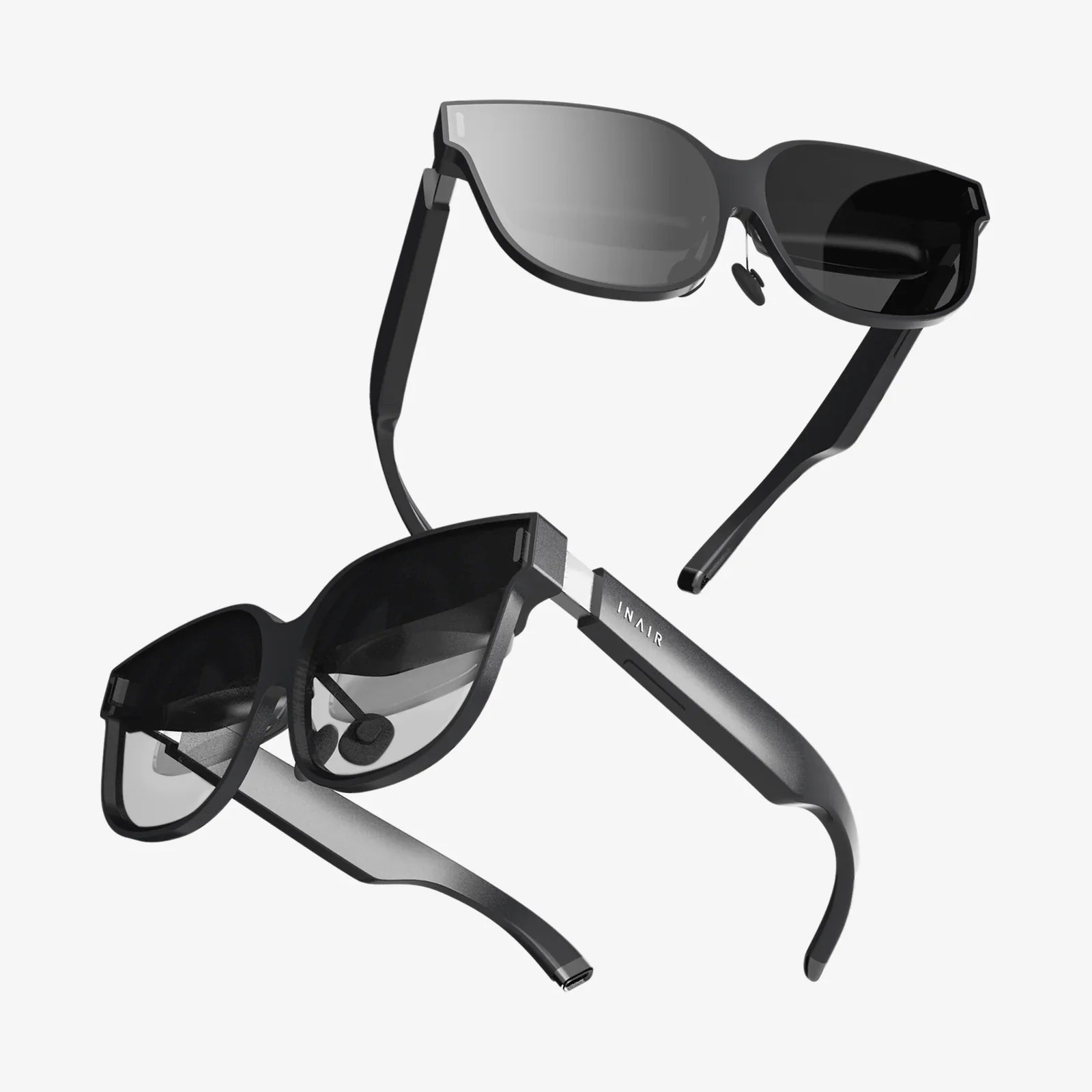
The ultimate endpoint of this technological trajectory is not a clunky headset but something far more integrated. The future likely lies in sleek, socially acceptable eyewear—akin to modern glasses—that can dynamically control the amount of light entering the eye, capable of displaying immersive VR by dimming the real world or transparent AR/MR by allowing light through. Advances in neural interfaces and haptics could one day allow us to feel virtual objects as if they were real, further eroding the barrier between the simulated and the tangible.
We are moving towards a world where context-aware computing is ambient. Your digital assistant won't be a speaker on a shelf but an intelligent layer integrated into your perception, providing information exactly when and where you need it. The concepts of a "screen" and an "app" will dissolve, replaced by persistent digital entities that coexist with us in our physical space. This isn't just about putting a screen on your face; it's about rearchitecting the fundamental way humans interact with information and with each other. The revolution won't be televised; it will be mapped, rendered, and seamlessly integrated into the world you see around you every day.