


Imagine a world where the digital and the physical are no longer separate realms, but a single, seamless tapestry of experience. This is not a distant sci-fi fantasy; it is the emerging reality being woven by the convergence of three powerful forces: the immersive escapism of Virtual Reality, the tangible world of our perceived reality, and the transformative overlay of Augmented Reality. This triad is quietly building an invisible layer atop our existence, poised to revolutionize everything from how we perform surgery to how we remember a walk in the park. The line between what is real and what is virtually real is not just blurring—it's disappearing altogether, and the implications are nothing short of profound.
The Spectrum of Experience: Defining the Trinity
To understand the convergence, we must first delineate the core concepts. They exist not as isolated islands, but as points on a continuum of digital immersion.
Virtual Reality (VR): The Total Escape
Virtual Reality is the art of substitution. It uses a head-mounted display to completely occlude a user's view of the physical world, replacing it with a computer-generated, interactive environment. The goal of VR is presence—the convincing illusion that you are somewhere else. This is achieved through a combination of stereoscopic 3D visuals, spatial audio, and precise head-tracking. By hijacking the primary senses of sight and sound, VR constructs a reality that is entirely separate from the user's immediate physical surroundings. It is a reality of pure simulation, whether that simulation is a fictional game world, a digital mock-up of a building, or a recreation of a historical event.
Reality (The Perceived World): The Baseline
Our baseline reality is the un-augmented, physical world as perceived through our human senses. It is the complex, rich, and often messy environment we navigate daily. This reality is not a passive backdrop; it is interactive, governed by immutable physical laws, and experienced subjectively by each individual. It is the foundational canvas upon which all digital enhancements are painted. In the context of this discussion, "reality" represents the anchor point of genuine human experience, the benchmark against which all virtual and augmented experiences are measured for authenticity and utility.
Augmented Reality (AR): The Enhanced Layer
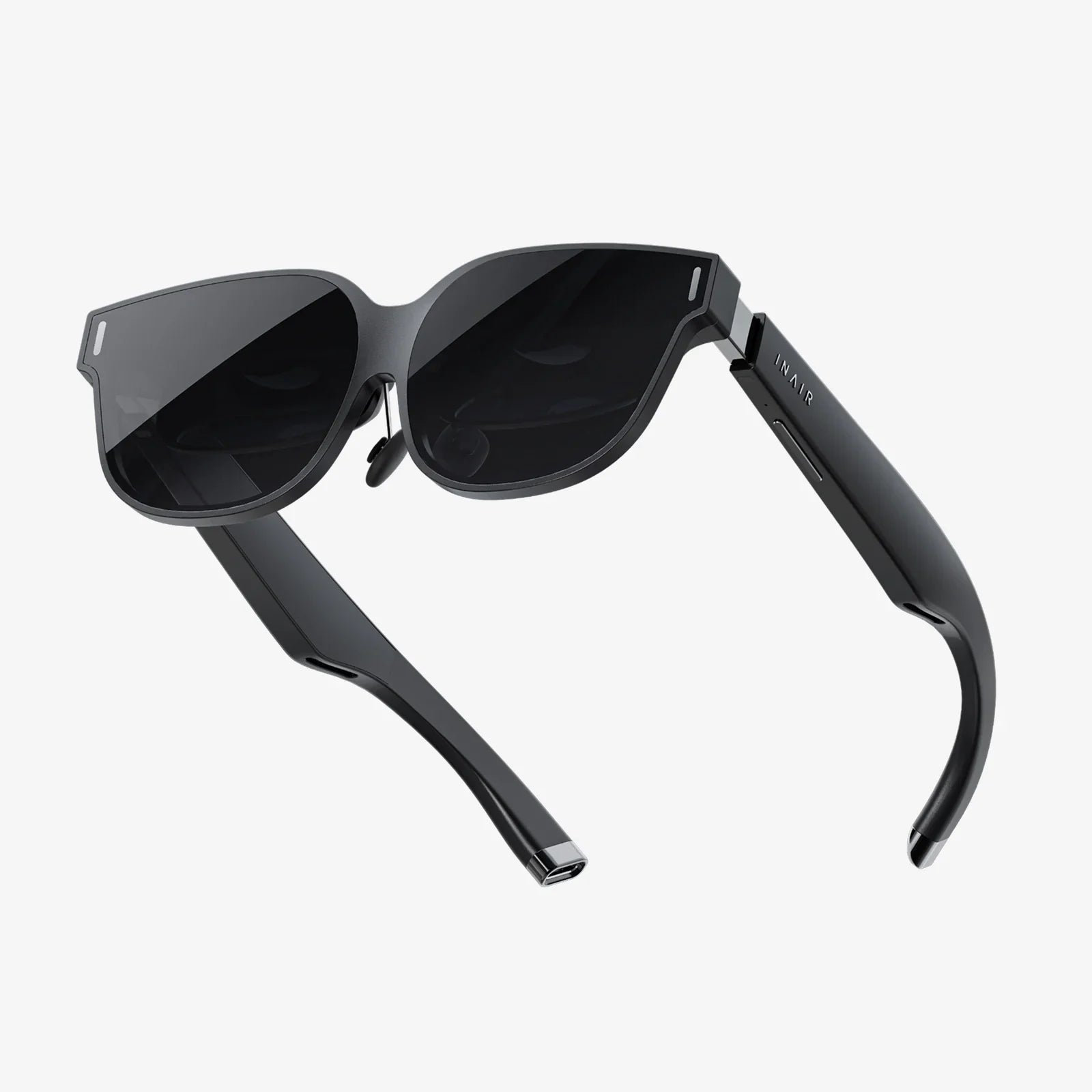
If VR is about substitution, Augmented Reality is about augmentation. AR superimposes digital information—images, text, data, 3D models—onto the user's view of the real world. Unlike VR, it does not seek to replace reality but to enhance it. This is often achieved through transparent glasses or, more commonly today, through the screen of a smartphone or tablet. The magic of AR lies in its context-awareness; digital content is anchored to and interacts with the physical environment. A navigation arrow appears to sit on the road itself, a virtual sofa is shown in your actual living room, or a historical figure seems to stand on the street corner you're facing. AR builds a bridge between the digital and the physical, making information immediately accessible and intuitively contextual.
The Blurring Lines: From VR and AR to the Metaverse and Beyond
The most exciting developments are happening not within these isolated domains, but in the spaces between them. The boundaries are becoming increasingly porous.
Mixed Reality (MR): The Best of Both Worlds
Mixed Reality is the hybrid child of VR and AR. It represents a spectrum where physical and digital objects co-exist and interact in real-time. Advanced MR headsets use outward-facing sensors to map the environment and then allow virtual objects to be occluded by real-world objects (e.g., a virtual character walking behind your very real desk). This creates a level of immersion and believability that pure AR, viewed on a phone screen, cannot match. MR is the technology that makes it possible to don a headset and have a life-sized virtual colleague appear in your home office, able to point to a shared 3D model that you can both manipulate. It is a significant step toward a future where the digital and physical are truly fused.
The Metaverse: The Persistent Platform
Often mischaracterized as simply a VR world, the metaverse is more accurately envisioned as the eventual destination of this convergence. It is a hypothesized iteration of the internet, a persistent, shared, virtual space that is comprised of a multitude of interconnected digital worlds, both fully virtual and AR-enhanced. It is the platform upon which these technologies will unite. You might attend a VR concert with friends from across the globe, then lower your AR glasses to see your avatar friends sitting on your actual couch, their digital notes and drawings still visible on your physical walls. The metaverse is not a single technology but a collective, immersive social platform built on the backbone of VR, AR, and the constant, reliable anchor of our shared reality.
Transforming Industries: The Practical Revolution
The theoretical potential of these technologies is vast, but their real power is already being felt in concrete, practical applications across the global economy.
Healthcare: From Training to Treatment
The healthcare sector is being revolutionized. Medical students are now using VR to practice complex surgical procedures on virtual patients, making mistakes and learning from them in a consequence-free environment. This dramatically accelerates the learning curve and improves competency. Surgeons use AR overlays during actual operations, projecting critical information like ultrasound data or 3D anatomical guides directly onto their field of view, allowing them to keep their focus on the patient. Furthermore, VR is proving to be a powerful therapeutic tool for pain management, phobia treatment through controlled exposure therapy, and rehabilitation for stroke victims, who can perform motivating virtual tasks to regain motor skills.
Manufacturing and Design: Prototyping in the Digital Ether
In engineering and manufacturing, these technologies are saving immense amounts of time and money. Designers and engineers can collaborate in shared VR spaces to interact with full-scale 3D models of a new product or a factory floor layout long before any physical prototype is built. They can identify ergonomic issues, spot potential assembly problems, and iterate designs instantly. On the factory floor, AR smart glasses can guide technicians through complex wiring or repair procedures, overlaying step-by-step instructions and highlighting specific components. This reduces errors, slashes training time, and empowers workers with instant, hands-free expertise.
Education and Training: Immersive Learning
Education is shifting from passive absorption to active experience. Instead of reading about ancient Rome, students can take a VR field trip to walk its streets. Instead of watching a video about cellular biology, they can don a headset and step inside a human cell. This experiential learning fosters deeper understanding and retention. Similarly, corporate training for high-risk jobs—from electrical grid maintenance to offshore oil rig operations—can be conducted safely in hyper-realistic VR simulations, ensuring workers are thoroughly prepared before they ever set foot in a dangerous environment.
Retail and Real Estate: Try Before You Buy
The retail experience is being redefined by AR. Customers can use their smartphones to see how a new piece of furniture would look and fit in their living room, or how a pair of glasses would look on their face. Car buyers can explore the interior features of a vehicle through an AR overlay. In real estate, potential buyers can take immersive VR tours of properties anywhere in the world, saving time and resources. They can then use AR to visualize potential renovations or furniture arrangements within an empty space, personalizing the experience before making a commitment.
Remote Collaboration and the Future of Work
The concept of the office is being fundamentally reshaped. VR and MR meeting spaces are evolving beyond simple video calls, allowing distributed teams to feel as if they are sharing the same room. They can collaborate on virtual whiteboards, manipulate 3D models together, and benefit from the subtle non-verbal cues that are lost in traditional teleconferencing. This promises a future where geographical location is no longer a barrier to effective, personal, and productive collaboration, unlocking global talent pools and redefining the very nature of teamwork.
The Human Factor: Challenges on the Horizon
This technological leap is not without its significant challenges and ethical dilemmas. As we build this new layer of reality, we must be mindful of the foundations we are laying.
The Privacy Paradox
Always-on AR glasses and immersive VR systems are data collection engines of unprecedented intimacy. They can track not just what you look at, but for how long, how your pupils dilate, the tone of your voice, and your precise physical location and movements within a space. This data is incredibly valuable and incredibly sensitive. The potential for surveillance, targeted manipulation, and data breaches is staggering. Establishing robust, transparent frameworks for data ownership, consent, and usage will be one of the most critical societal challenges of the next decade.
The Reality Divide
There is a tangible risk of a new socio-economic divide: a "Reality Divide." Will these immersive technologies become tools for empowerment and advancement for all, or will they become luxury commodities that further separate those who can afford the latest hardware and software from those who cannot? Furthermore, over-reliance on enhanced or virtual realities could lead to a diminished engagement with the un-augmented world, potentially impacting mental health, social skills, and our collective appreciation for the simple, analog beauty of nature and human connection.
Identity and Authenticity in a Blended World
As we spend more time in virtual spaces with digital avatars representing us, questions of identity and authenticity become paramount. How do we establish trust when anyone can adopt any appearance? What constitutes a genuine experience or interaction? The potential for deepfakes and misinformation is magnified exponentially in immersive media. A fake news report witnessed in VR feels inherently more real than one read on a screen. Society will need to develop new literacy skills to critically navigate and assess these new, potent forms of media.
The Next Decade: What Lies Ahead?
The current state of VR and AR is akin to the mobile phone of the 1990s—promising but clunky. The future points toward miniaturization, improved battery life, and more intuitive interfaces, moving from hand-held controllers to gesture and voice control, and eventually to direct neural interfaces. The goal is technology that fades into the background, becoming an effortless extension of our own cognition. We are moving toward a world where contextual, ambient information is simply part of our perceptual field, and jumping into a fully immersive digital world is as easy as putting on a pair of ordinary glasses.
The convergence of Virtual Reality, our perceived reality, and Augmented Reality is not merely a technological trend; it is a cultural and philosophical shift. It forces us to re-examine the very nature of experience, connection, and truth. We are the architects of this new layer of human existence. The tools are being built, the canvas is being stretched, and the first strokes are already being painted. The ultimate masterpiece—or cautionary tale—will be written by the choices we make today, ensuring that this powerful technology serves to enhance our humanity, not replace it. The next era of human experience is being coded right now, and it will be more immersive, more connected, and more astonishing than most of us have yet dared to dream.
Share:
Looking Glass Holographic Display: A New Dimension in Visual Interaction
Contact Lens VR: The Invisible Bridge to a Seamless Metaverse