


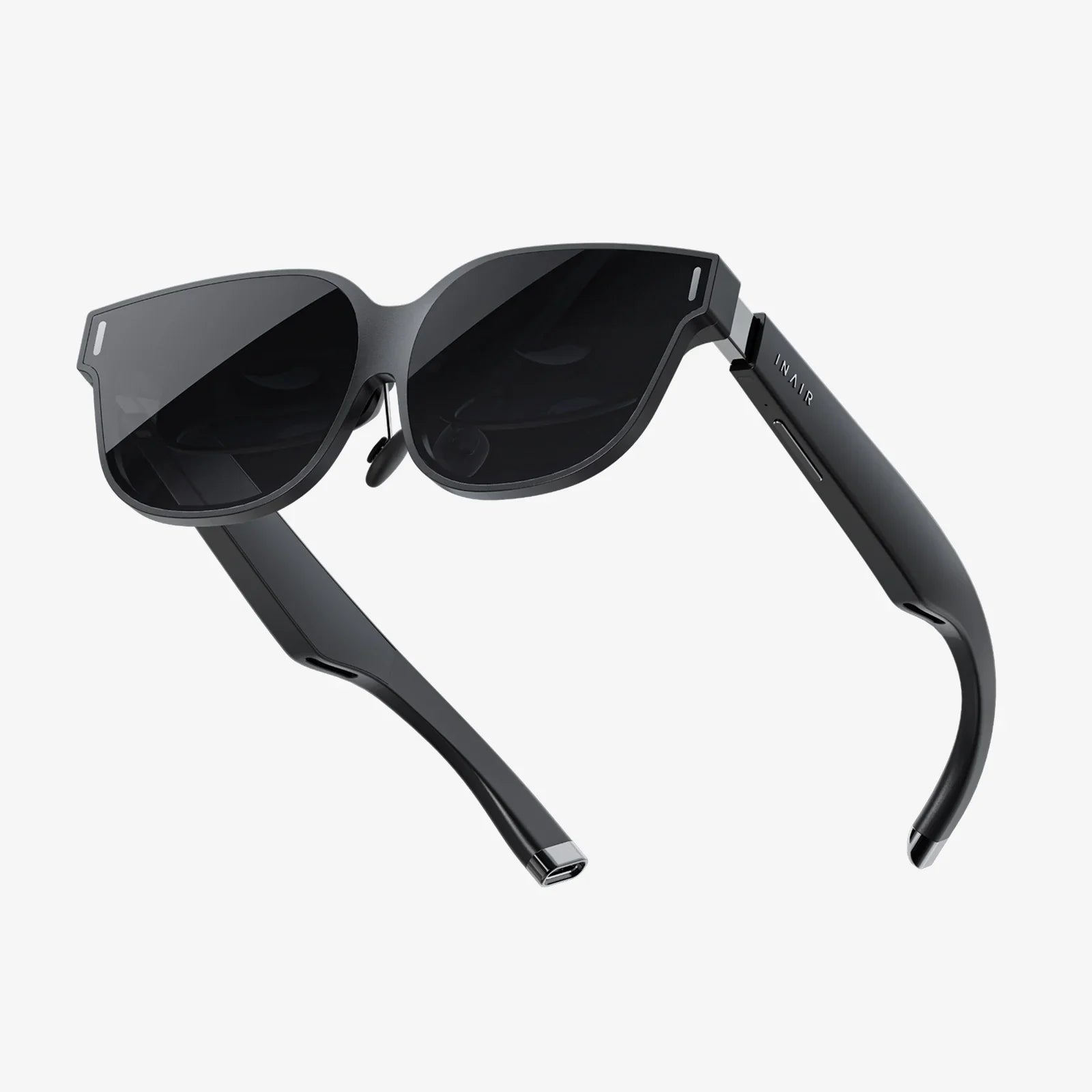
Imagine slipping a lightweight visor over your eyes and instantly being transported. One moment you're on your couch, and the next you're front row at a concert, walking on the surface of Mars, or learning a complex surgical procedure by doing it yourself. This isn't a distant future powered by thousand-dollar gadgets; this is the reality available today, powered by the device already in your pocket. The convergence of the modern smartphone, an affordable headset, and a sophisticated app has flung open the doors to virtual worlds, making immersive experiences more accessible than ever before. This is the untold story of the virtual reality smartphone headset app ecosystem—a revolution hiding in plain sight.
The Trifecta of Accessibility: Hardware, Portal, and Experience
The magic of this particular VR approach lies in its elegant division of labor. Each component plays a critical, distinct role, and together, they create a sum far greater than its parts.
The Smartphone: The Beating Heart
At the core of this experience is the smartphone. This pocket-sized supercomputer is the engine of the operation. It's not just a screen; it's the entire computational powerhouse. Modern smartphones pack high-resolution displays, powerful multi-core processors, advanced gyroscopes, accelerometers, and magnetometers. These sensors are crucial—they track the slightest tilt, turn, and movement of your head, translating your real-world motions into the virtual one with astonishing accuracy. The phone's GPU renders the complex, immersive environments in real-time, while its speakers or audio jack deliver spatial, 3D sound that completes the illusion. By leveraging a device that billions already own and upgrade regularly, VR technology effectively rides the wave of relentless consumer electronics innovation, constantly becoming more powerful without a dedicated, expensive hardware cycle.
The Headset: The Window to Another World
If the smartphone is the brain, the headset is the skull and the eyes. This seemingly simple piece of equipment, often made of plastic, cardboard, or lightweight polymers, serves several vital functions. First, it houses the smartphone securely, positioning it at the correct focal distance from your eyes. Second, it uses a pair of high-quality lenses placed between your eyes and the phone's screen. These lenses warp and focus the image, correcting the split-screen view displayed on the phone into a single, coherent, and stereoscopic 3D environment that feels vast and deep, not like a small screen right in front of your face. Third, it blocks out all ambient light, eliminating distractions and fully immersing your visual field. Finally, it often includes basic comfort features like an adjustable head strap and foam padding, making the journey comfortable enough to last more than a few minutes. The design philosophy here is brilliance through simplicity—transforming a generic rectangle of glass and metal into a dedicated viewport for digital realms.
The App: The Soul and the Storyteller
The app is the software, the content, and the experience itself. It is the soul of the operation. Without a well-designed application, the smartphone and headset are just an awkward contraption. The VR app must master two domains simultaneously: technical performance and user experience. On the technical side, it must render two high-frame-rate views (one for each eye), maintain a flawless sync with the phone's sensors to prevent latency (which is a primary cause of motion sickness), and manage battery and thermal load efficiently. On the user experience side, it must design intuitive interfaces that exist in three-dimensional space. Menus might hover in the air in front of you, selections might be made by gazing at an option, and navigation might be handled by a simple Bluetooth remote controller or even a companion app on a second phone. The app dictates whether you're exploring the depths of the ocean, watching a 360-degree movie, playing an interactive game, or touring a virtual museum. It is the storyteller, the game master, and the tour guide all rolled into one.
A Universe of Experiences: What Can You Actually Do?
The true value of any technology platform is defined by its content. The ecosystem built around smartphone-powered VR has exploded with diverse and compelling experiences that cater to a wide array of interests.
Gaming and Interactive Entertainment
This is often the first and most popular use case. VR gaming on a smartphone is a gateway to incredibly immersive experiences. Unlike traditional games played on a television, VR games place you inside the environment. You look up to see towering enemies, peer around corners to avoid threats, and physically dodge incoming projectiles. The genres are vast, ranging from pulse-pounding horror games and sci-fi shooters to serene puzzle games and fascinating interactive narratives. The sense of presence—the feeling of actually being *there*—is the medium's greatest gift to gaming, and smartphone VR delivers it with surprising effectiveness.
360-Degree Videos and Cinematic Experiences
Imagine watching a travel documentary and not just seeing the Himalayan mountains, but standing in the middle of them, able to look in every direction. This is the power of 360-degree video. News organizations put you at the scene of major events, music studios offer front-row experiences at concerts, and filmmakers experiment with new forms of storytelling where the viewer controls the camera's perspective. It’s a profoundly empathetic tool, allowing people to experience places and situations from a first-person point of view, fostering a deeper understanding than traditional media ever could.
Education and Virtual Travel
The educational potential is staggering. Instead of reading about ancient Rome, students can take a guided virtual tour through a meticulously reconstructed Forum. Medical students can practice procedures on virtual patients. Aspiring astronauts can explore a model of the International Space Station. The ability to visualize complex concepts, explore historical sites destroyed long ago, or witness biological processes from a cellular perspective makes learning active, engaging, and unforgettable. It brings the field trip to the classroom and the universe to the student's desk.
Social Connection and Shared Spaces
Perhaps the most futuristic application is in social connection. Dedicated social VR apps allow users to create avatars and meet friends, family, or strangers in virtual spaces. You can watch a movie together in a virtual cinema, play board games in a virtual lounge, or simply hang out and chat as if you were in the same room, despite being continents apart. It transforms digital communication from a flat, text-based or video-call experience into a shared, embodied presence, adding a layer of human connection that other mediums lack.
Challenges and Considerations: The Limits of Mobile Power
While the accessibility is revolutionary, it's important to understand that this approach represents an entry point into VR. It has inherent limitations compared to high-end, PC-powered systems.
The primary constraint is processing power. While smartphones are powerful, they cannot match the raw graphical output of a desktop computer with a dedicated graphics card. This means environments might be less detailed, and complex visual effects are sometimes pared back. Furthermore, most smartphone VR setups offer three degrees of freedom (3DoF)—meaning they track rotational movements of your head (pitch, yaw, roll) but not translational movements (leaning forward, crouching, walking around). This limits interaction, as you can't physically walk through a virtual space; navigation is typically handled with a controller. High-end systems offer six degrees of freedom (6DoF), tracking your full position in a room, which is a significantly more immersive experience.
User comfort is also a key consideration. Experiences must be carefully optimized to maintain a high, stable frame rate to prevent motion sickness. Battery drain is also a significant factor, as powering the screen and processors at full capacity is demanding. Despite these limitations, the trade-off is clear: unparalleled accessibility and a low barrier to entry, providing a genuine and compelling taste of VR that has introduced millions to the technology.
The Future is Already in Your Hand
The landscape of this technology is not static. We are seeing the lines blur between mobile and high-end VR. Standalone headsets, which are essentially all-in-one devices that don't require a PC or a phone, are becoming the new standard for accessible VR. Interestingly, these devices are, in essence, hyper-specialized smartphones built exclusively for VR, complete with their own processors, displays, and sensors, all housed in a single visor. The lessons learned from the smartphone VR era—the importance of intuitive apps, comfortable design, and a rich content library—have directly informed the development of these next-generation devices.
Furthermore, as smartphone technology continues to advance, with faster chips, better displays, and more sophisticated sensors, the potential quality of phone-powered VR rises with it. The ecosystem of apps continues to grow in both depth and breadth, with developers creating ever more sophisticated and engaging experiences.
This technology has done more than just provide a novel way to play games or watch videos. It has democratized virtual reality. It has proven that profound, perspective-shifting experiences don't require a massive financial investment or a dedicated room in your house. They can be spontaneous, personal, and incredibly simple to access. It has served as the foundational on-ramp for an entire industry, creating a generation of users familiar and comfortable with existing in digital spaces.
So, the next time you pick up your smartphone, remember you're not just holding a communication device or a camera. You're holding a key. A key that, when paired with a simple headset and the right app, can unlock doors to anywhere in the universe, and beyond. The portal to other worlds isn't in a lab; it's resting right there in your pocket, waiting for you to take a look.
Share:
Do You Need to Buy Games for Virtual Reality Headset? The Ultimate Content Guide
How Would You Describe Your Experience Using AR? A Journey Through the Digital Looking Glass