


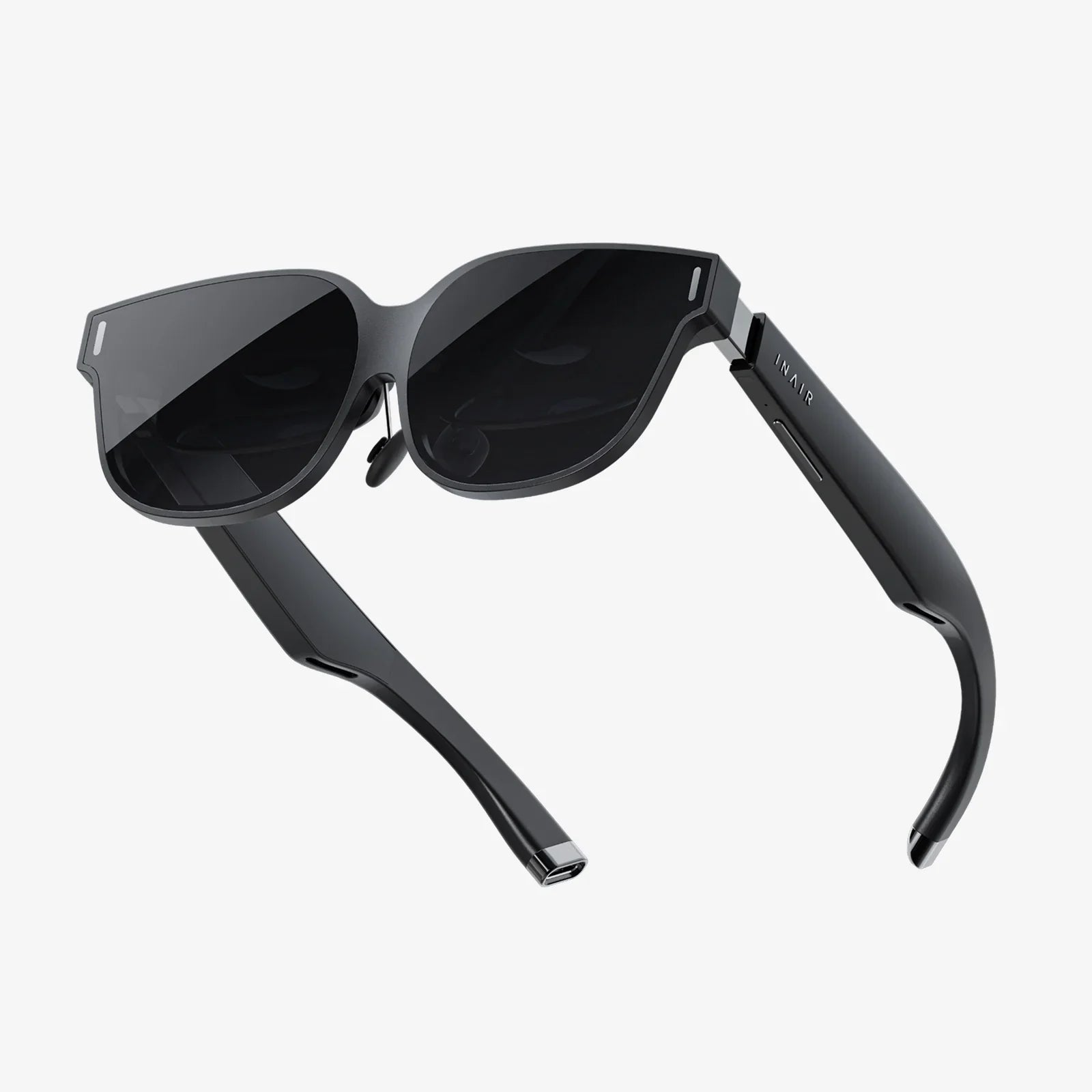
- by wangfred
Virtual Reality Space Exploration: The Final Frontier is Now in Your Headset
- by wangfred
Imagine floating in the profound silence of the cosmos, the brilliant, un-twinkling tapestry of a million stars stretching into infinite black. Below you, the majestic blue marble of Earth rotates, its atmosphere a thin, fragile veil. You reach out a gloved hand, the craters of the Moon coming into sharp, breathtaking focus. This is no dream, nor is it a multi-billion-dollar ticket aboard a spacecraft. This is the power of virtual reality space exploration, an immersive technology that is fundamentally altering our relationship with the final frontier, making the inaccessible accessible and turning every curious mind into a potential astronaut.
For centuries, humanity's connection to space has been mediated. We've gazed through telescopes, watched grainy footage on television, and marveled at computer-generated imagery in films. These are passive, second-hand experiences. Virtual reality shatters that paradigm. VR is not about watching; it's about being. By combining head-mounted displays, motion tracking, and immersive audio, VR constructs a persuasive illusion of presence. Your brain is tricked into believing you are somewhere you are physically not. This shift from observation to embodiment is the core of its revolutionary potential for space exploration.
This technology allows us to traverse the surfaces of alien worlds recreated from satellite and rover data. We can spacewalk outside the International Space Station, experiencing the visceral terror and awe that astronauts describe. We can witness the birth of a star in a nebula or stand on a Martian plain as a dust devil whips by. This experiential learning fosters a deeper, more intuitive understanding of cosmic scale, orbital mechanics, and the sheer alien nature of other planets—a understanding that a textbook or a 2D video simply cannot provide.
One of the most significant impacts of virtual reality space exploration is its democratizing power. Space agencies have long struggled with a phenomenon often called the "summary effect"—the profound sense of awe and connection astronauts feel when viewing Earth from space. This perspective shift is credited with fostering a greater sense of global citizenship and environmental responsibility. VR is now able to induce a version of this experience, a "virtual overview effect," for millions.
Educational institutions are leveraging this to incredible effect. Instead of simply learning about the solar system, students can now take a guided tour through it. They can manipulate planetary orbits to understand gravity, deconstruct a rocket engine to see how it works, or stand next to a life-sized replica of the Curiosity rover. This hands-on, interactive model of education boosts engagement and retention, inspiring the next generation of scientists, engineers, and explorers by fueling their natural curiosity with unforgettable experiences.
Furthermore, for those who dream of space travel but lack the physical means or astronomical funds, VR serves as the ultimate proxy. It offers a taste of the adventure, the view, and the sensation, making the dream feel more tangible and real than ever before.
While public engagement is thrilling, the application of VR within professional astronaut training is perhaps even more critical. Training for space is notoriously complex, dangerous, and expensive. Simulations are vital, but traditional flat-screen simulators have limitations. Virtual reality creates a dynamic, high-fidelity training environment that is both safe and highly realistic.
Astronauts can use VR to rehearse complex procedures, from repairing critical equipment on the exterior of a space station to conducting precise scientific experiments in microgravity. They can familiarize themselves with the exact layout of a spacecraft's cockpit or a habitat module before they ever set foot inside the physical vehicle. This muscle memory and spatial familiarity built in a risk-free virtual environment are invaluable when every second and every movement counts in the high-stakes realm of space.
VR is also an indispensable tool for mission planning. Engineers and scientists can walk through a digital twin of a proposed Martian base, identifying potential design flaws, workflow inefficiencies, or safety issues long before a single component is manufactured. This saves immense amounts of time, resources, and mitigates risk for future manned missions to the Moon, Mars, and beyond.
The role of VR extends beyond the astronaut. Here on Earth, scientists and engineers are using immersive environments to interact with space-based data in radically new ways. Robotic missions, like the Mars rovers, are our primary means of exploring other planets. Operating these assets involves a significant time delay, making real-time control impossible. VR interfaces can provide operators with a richer, more intuitive sense of the rover's environment, allowing them to plan traverses and maneuvers with a better understanding of the terrain's topology and obstacles.
Furthermore, vast datasets from missions like satellite topography, spectroscopic analysis, and LIDAR scanning can be transformed from abstract numbers on a screen into immersive, navigable 3D landscapes. A geologist can literally step inside a canyon on Mars, examining stratigraphic layers up close. An astrophysicist can navigate through a 3D map of galaxy clusters, spotting patterns and anomalies that might be missed on a traditional computer monitor. This embodied data analysis promises to accelerate scientific discovery by leveraging human spatial reasoning and pattern recognition within the data itself.
Despite its incredible promise, virtual reality space exploration is not without its challenges. Achieving perfect presence—the complete suspension of disbelief—requires overcoming significant technical barriers. Latency, the delay between a user's movement and the visual update in the headset, is the primary enemy of immersion. Even milliseconds of lag can break the illusion and induce sim sickness, a type of motion sickness. For an experience as motion-intensive as a spacewalk, this is a critical issue.
Visual fidelity is another hurdle. While graphics are improving rapidly, creating photorealistic, vast-scale environments like a planetary surface in real-time demands immense computing power. Haptic feedback, the sense of touch, is still in its infancy. Feeling the texture of Martian regolith or the resistance of a control panel is a key part of true immersion that current consumer technology cannot yet deliver.
Finally, there is the challenge of accurately simulating the unique physics of space, particularly microgravity. While VR can visually simulate weightlessness, our bodies are still firmly anchored by Earth's gravity. Innovative solutions like suspended harness systems are being explored to provide physical cues that match the visual experience, but this remains an area of active development.
The trajectory of this synergy between VR and space points toward an even more integrated and astonishing future. The concept of the "digital twin" will become standard, where a perfect virtual replica of every spacecraft, space station, and planetary base exists for continuous training, monitoring, and remote guidance.
As network speeds increase with technologies like 5G and beyond, we could see the rise of true telepresence in space. Imagine a surgeon on Earth, wearing a haptic feedback suit and VR headset, performing a delicate procedure on a patient in a Mars colony through a robotic avatar, feeling as if they are truly there. Scientists could "visit" distant worlds through the lenses of advanced robots, exploring in real-time with a sense of presence that makes them feel like they are walking on another planet.
The lines between physical and virtual exploration will continue to blur. VR will likely become a primary tool for astronauts on long-duration missions to combat isolation and maintain mental well-being, offering them virtual escapes to familiar Earth environments. Ultimately, as we prepare to become a multi-planetary species, virtual reality will be the bridge—the tool that allows us to preview, practice, and perfect our future among the stars before we take those first physical steps.
The void of space is no longer a distant realm for a select few with the right stuff. With a headset and a sense of wonder, you can now strap in, hear the engines roar, and pierce the heavens, discovering for yourself that the greatest journey is not just outward, but inward into the limitless potential of human imagination made real.