


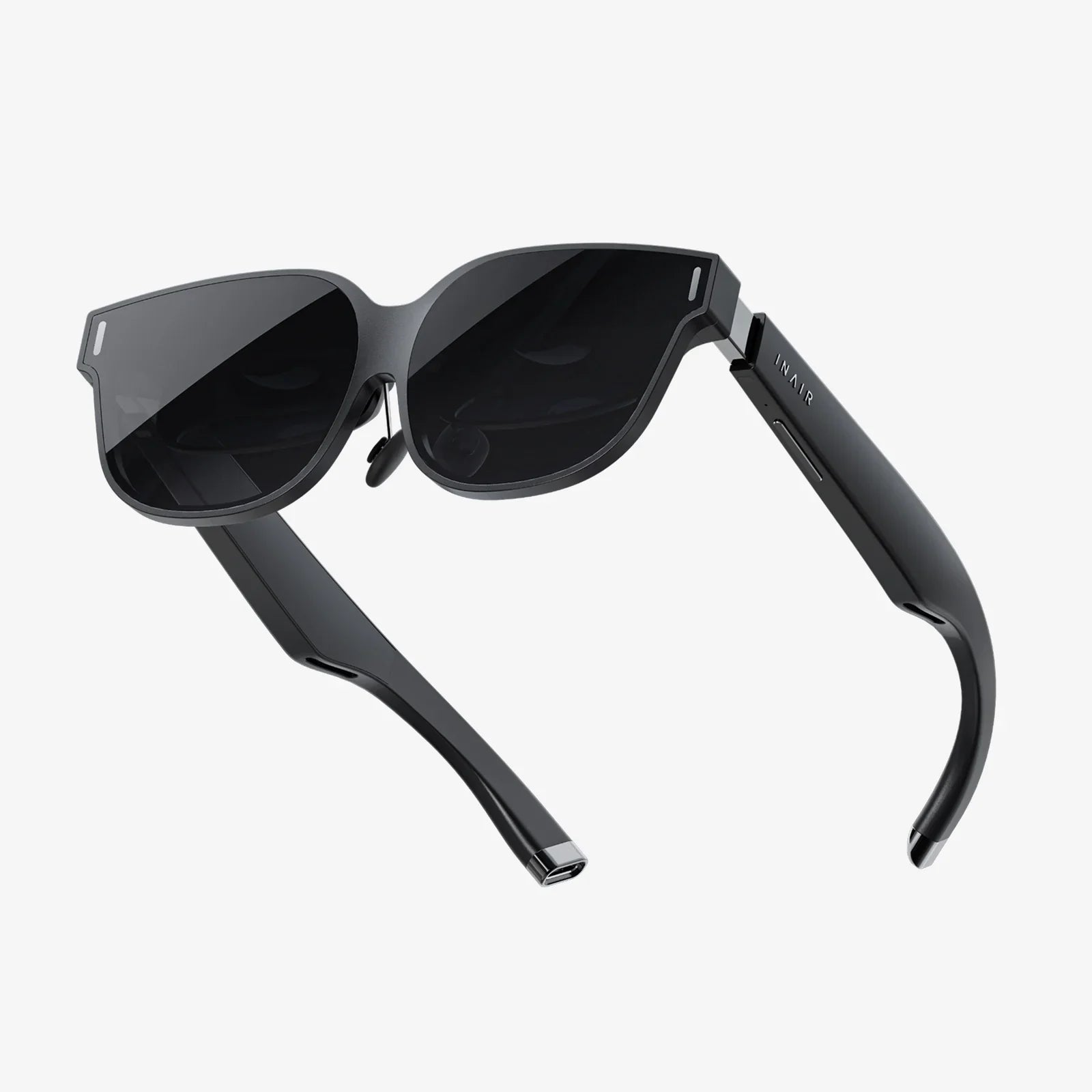
Imagine a world where your morning meeting is held on a virtual beach in Bali, your afternoon surgery is performed by a surgeon operating from another continent, and your evening concert features a holographic performance by a legendary artist who passed away decades ago. This is not a distant science fiction fantasy; it is the imminent future being built today, and the trajectory of virtual reality is the blueprint. The next decade will see this technology evolve from a niche entertainment gadget into the most transformative interface between humans, information, and each other, reshaping reality as we know it.
The Foundation: From Novelty to Necessity
The journey of virtual reality has been one of fits and starts, but we are now firmly past the tipping point of initial adoption. The current landscape is characterized by increasingly sophisticated hardware that is becoming lighter, more powerful, and less obtrusive. The critical trend here is the move away from tethered, high-cost systems towards standalone, accessible devices. This shift is democratizing access and enabling true mobility within virtual spaces. Furthermore, display technology is achieving resolutions that meet the human eye's acuity, while advancements in foveated rendering and eye-tracking are drastically reducing the computational load, making high-fidelity experiences more efficient and comfortable for prolonged use.
The Hardware Horizon: Beyond the Headset
The next wave of hardware innovation will move beyond perfecting the visual headset. A significant trend forecast points to the development of sophisticated haptic feedback systems. We are moving towards full-body haptic suits and gloves that can simulate the sensation of touch, pressure, and temperature. This will be paramount for applications requiring delicate motor skills, such as virtual design, remote machinery operation, and medical training. Imagine a medical student feeling the subtle resistance of virtual tissue during a simulated procedure—this level of immersion drastically reduces the gap between virtual training and real-world application.
Concurrently, the evolution of Brain-Computer Interfaces (BCIs) represents the ultimate frontier. While still in nascent stages for consumer applications, BCIs promise a future where interaction with virtual environments is achieved through thought alone. This would eliminate the need for controllers entirely, creating a seamless and intuitive flow between user intention and virtual action. The trend here is not about replacing traditional input methods immediately but about creating a new, parallel pathway for interaction that will initially benefit accessibility and high-precision professional applications before trickling down to the mainstream.
The Software Symphony: The Rise of the Metaverse and Interoperability
Hardware is nothing without the software and content that bring it to life. The most dominant software trend is the conceptual evolution towards a persistent and interconnected metaverse. This is not a single platform but a network of virtual worlds, experiences, and assets that are interoperable. The key forecast is the development and adoption of universal standards for assets and identity. This will allow a user to create a digital avatar or purchase a virtual item in one environment and use it in another, much like how we use a web browser to jump between different websites today.
This interoperability will fuel a new creator economy. User-generated content (UGC) will become the primary driver of virtual experiences. Tools are becoming more intuitive, enabling users with no formal coding background to build intricate virtual spaces, games, and social hubs. This democratization of creation mirrors the rise of YouTube and TikTok, but in three dimensions. The economic model will shift towards a virtual marketplace where creators can monetize their designs, experiences, and virtual goods, leading to the emergence of new professions and multi-billion-dollar virtual economies.
AI: The Invisible Engine of Immersion
Artificial intelligence is the silent partner supercharging every aspect of the virtual reality trend forecast. AI is crucial in several key areas:
- World Building: Generative AI algorithms can create vast, detailed, and unique virtual environments on the fly, moving beyond pre-scripted worlds to dynamic, ever-changing landscapes.
- Avatar Creation: AI-powered photogrammetry can create hyper-realistic digital twins of users in seconds. Furthermore, AI will animate these avatars by reading our real-world facial expressions and body language, conveying nuanced emotion and intent that is currently lost in digital communication.
- Intelligent Environments: Non-Player Characters (NPCs) will evolve from simple scripted entities to AI-driven beings with advanced conversational abilities and seemingly autonomous behaviors, making virtual worlds feel truly alive and responsive.
Sector-Specific Transformations
The impact of these converging trends will be felt across every industry:
Enterprise and Remote Work
The future of work is hybrid and remote, and VR is poised to become its default platform. Virtual offices will move beyond simple video call replicas to become purpose-built environments for collaboration. Teams will brainstorm in 3D around virtual prototypes, analyze data visualizations that they can walk through, and conduct training in hyper-realistic simulations that are impossible to replicate in the physical world. The forecast here is a significant reduction in business travel and physical office space as immersive collaboration proves to be more effective and engaging than flat, 2D video conferencing.
Healthcare and Therapy
Virtual reality is set to revolutionize medicine. Surgeons will use VR to plan complex surgeries by practicing on a patient's exact anatomical scan, reducing risk and improving outcomes. Medical students will learn anatomy by dissecting virtual cadavers and gain experience in high-pressure scenarios without endangering patients. Furthermore, VR-based exposure therapy is already showing remarkable success in treating PTSD, phobias, and anxiety disorders by allowing patients to confront their triggers in a safe, controlled environment. The trend is towards personalized, data-driven therapeutic experiences.
Education and Training
The classic model of education is ripe for disruption. Imagine history students witnessing the construction of the pyramids firsthand, biology students taking a journey through the human bloodstream, or mechanics trainees practicing repairs on a virtual engine that responds exactly like a real one. This experiential learning leads to drastically improved knowledge retention and engagement. VR training will become the standard for high-stakes industries like aviation, emergency response, and military operations, where mistake-free performance is critical.
Retail and Commerce
The way we shop is changing. Virtual stores will allow customers to try on clothes, test out furniture in their own living room through augmented reality overlays, and explore products in 3D from every angle before purchasing. This "try-before-you-buy" digital experience will reduce return rates and increase consumer confidence, merging the convenience of e-commerce with the assurance of physical retail.
Social and Ethical Implications
This technological shift is not without its challenges. The trend forecast must include a serious discussion of the societal ramifications.
- The Privacy Paradox: VR headsets with eye-tracking and BCIs have the potential to collect unprecedented biometric and neurological data. The question of who owns this data and how it is used is paramount. This is arguably the most sensitive data imaginable—a window into our subconscious reactions, attentiveness, and even our unspoken desires.
- The Reality Gap: As virtual experiences become more compelling and rewarding than physical ones, we risk a society where individuals retreat into personalized digital utopias, potentially leading to increased isolation and a devaluation of physical-world interaction.
- Digital Identity and Security: In a world where our digital avatars hold economic and social value, protecting them from theft, manipulation, or harassment (a concept often called "VR crime") will require entirely new legal and security frameworks.
The Connectivity Backbone: 5G/6G and Edge Computing
None of these immersive futures are possible without a radical upgrade to our digital infrastructure. The high data throughput and ultra-low latency promised by 5G and, eventually, 6G networks are non-negotiable for streaming complex VR experiences wirelessly and for enabling multi-user synchrony in vast virtual spaces. Furthermore, edge computing will process data closer to the user, minimizing lag and allowing for the real-time rendering of incredibly complex environments. This seamless, high-fidelity connectivity is the invisible highway upon which the entire metaverse will be built.
The lines between the digital and the physical are not just blurring; they are being intentionally rewritten. The next ten years will see virtual reality cease to be a distinct activity and instead become a layer integrated into our daily workflows, social routines, and creative pursuits. It will change how we heal, how we learn, how we connect, and how we perceive reality itself. The revolution won't be televised; it will be simulated, and it's arriving faster than anyone anticipates. The only question that remains is not if you will step into this new world, but how profoundly you will let it change your own.
Share:
Difference Between AI and Virtual Reality: Unraveling the Future of Technology
What Does Virtual Reality Do to Your Brain: The Neuroscience of Immersion