


- by wangfred
Virtual Reality Wearable Technology: Redefining Human Experience and Connection
- by wangfred
Imagine slipping on a headset not to escape reality, but to enhance it, to learn a complex surgical procedure by doing it, to walk alongside a dinosaur, or to sit comfortably in your living room while collaborating with colleagues from across the globe as if you were all in the same room. This is the promise, and increasingly the reality, of virtual reality wearable technology. Once the stuff of science fiction, these sophisticated devices are breaking free from the confines of niche gaming and entertainment to fundamentally alter how we work, heal, learn, and connect. We stand at the precipice of a new digital epoch, where the very fabric of our perception is being rewoven by wearable technology capable of transporting our senses to entirely new realms.
At its core, virtual reality wearable technology is a symphony of advanced components working in perfect harmony to create a convincing illusion. While the head-mounted display (HMD) is the most recognizable piece, it is merely the conductor of an orchestra of sensors and processors.
The visual experience is governed by high-resolution displays, often one for each eye, which are viewed through precisely engineered lenses that widen the field of view and create a sense of depth and scale. The pursuit of visual fidelity is relentless, with advancements focusing on achieving 4K+ resolutions per eye, high dynamic range (HDR) for more realistic contrast and color, and variable focus displays that mimic the way our eyes naturally adjust to objects at different distances, eliminating the vergence-accommodation conflict that can cause eye strain.
But vision is only one sense. True immersion is achieved through precise tracking. This is accomplished through a combination of inside-out and outside-in tracking systems. Inside-out tracking uses cameras and sensors mounted on the headset itself to map the surrounding environment and track its position within it, offering greater freedom of movement. Outside-in tracking uses external base stations or sensors placed in the room to precisely track the position of the headset and controllers, traditionally offering higher accuracy for competitive applications. Inertial Measurement Units (IMUs), containing accelerometers and gyroscopes, provide ultra-low latency data on head orientation, ensuring the virtual world moves exactly as your head does, which is critical for preventing simulation sickness.
The evolution of controllers has been just as significant. They have evolved from simple wands to sophisticated devices that enable hand presence—the feeling that your virtual hands are your own. This is achieved through capacitive touch sensing, finger tracking, and precise haptic feedback that can simulate the touch of different surfaces. The next frontier is moving beyond controllers entirely. Advanced computer vision techniques now allow headsets to track the user's bare hands with remarkable accuracy, enabling natural gestures, from a simple thumbs-up to complex sign language, to become input mechanisms within the virtual space.
While gaming remains a powerful driver of consumer adoption, the most transformative applications of VR wearable technology are emerging in fields that touch human well-being and productivity.
The medical sector has embraced VR wearables as powerful tools for both treatment and training. Surgeons are now using VR simulations to practice complex procedures risk-free, walking through a 3D model of a patient's specific anatomy derived from CT or MRI scans before ever making an incision. This rehearsal leads to shorter operation times and improved patient outcomes.
In therapy, VR is proving to be a breakthrough treatment for phobias, PTSD, and anxiety disorders. Through controlled exposure therapy, a patient afraid of heights can gradually experience standing on the edge of a virtual skyscraper, or a veteran with PTSD can process trauma in a safe, calibrated environment. The therapist can control every aspect of the simulation, pausing or adjusting the intensity in real-time based on the patient's response. Furthermore, VR is being used for physical rehabilitation, turning repetitive exercises into engaging games that motivate patients to complete their regimens.
Education is shifting from passive learning to active experiencing. Instead of reading about ancient Rome, students can take a virtual field trip to walk its streets and witness history firsthand. Medical students can dissect a virtual cadaver millions of times, and engineering students can interact with and manipulate complex 3D models of machinery.
In the corporate world, VR wearables are revolutionizing training programs. From onboarding new employees in a virtual office to conducting high-stakes emergency simulations for oil rig workers or airline pilots, VR provides a safe, scalable, and highly effective training environment. It allows for the practice of soft skills like public speaking and leadership in front of a virtual audience, providing valuable analytics on eye contact and body language.
The global shift to remote work has accelerated the need for better collaboration tools. Video conferencing is functional, but it lacks the nuance and presence of being in the same room. VR wearables offer a solution through persistent virtual workspaces. Colleagues from around the world, represented by realistic avatars, can meet in a virtual boardroom, brainstorm on a virtual whiteboard that everyone can interact with, and examine 3D prototypes together. This sense of "co-presence"—the feeling that you are truly with another person—fosters a stronger connection and facilitates more creative and effective collaboration than traditional remote tools can provide.
Despite its immense potential, the widespread adoption of virtual reality wearable technology faces significant hurdles that must be overcome.
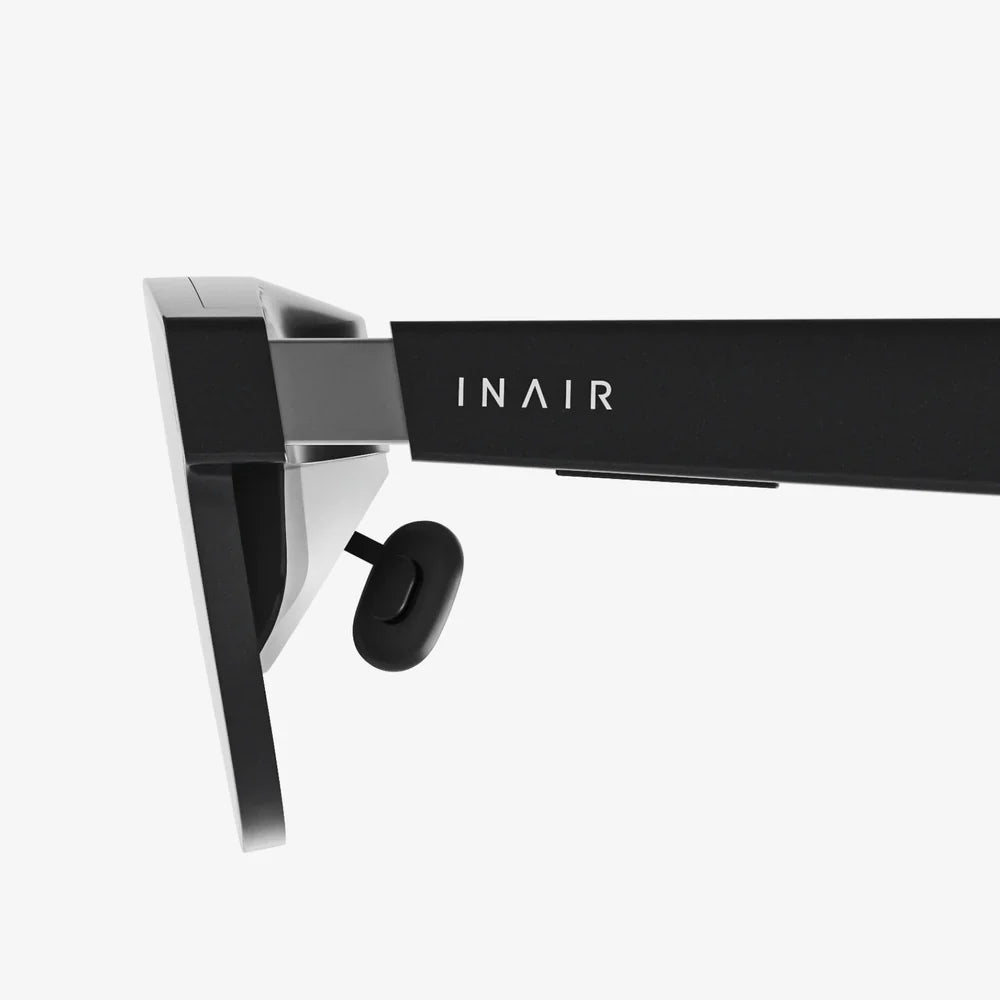
Technical Limitations: While improving rapidly, issues like display resolution, field of view, and latency have not yet been completely eliminated. Achieving photorealistic graphics in real-time without being tethered to an extremely powerful and expensive computer remains a key challenge. Furthermore, the form factor of current headsets, while shrinking, is still too bulky and conspicuous for all-day wear. The goal is a pair of sleek, lightweight glasses that offer full VR/AR capabilities, a milestone that hinges on advancements in micro-optics and battery technology.
The Social and Psychological Dimension: As we spend more time in virtual spaces, questions about social isolation, desensitization, and the blurring of lines between reality and simulation arise. The concept of the "metaverse"—a collective virtual shared space—presents profound sociological questions about identity, community, and economics that society is only beginning to grapple with.
Privacy and Security: VR wearables are data collection powerhouses. They don't just track what you look at; they track how you look at it—your gaze, your pupil dilation, your hand movements, your posture, and even your biometric responses. This intimate data is incredibly valuable and incredibly sensitive. Robust frameworks for data ownership, consent, and protection are urgently needed to prevent misuse and build user trust.
Accessibility and the Digital Divide: High cost remains a barrier to entry for many consumers and institutions. Ensuring that this transformative technology does not exacerbate existing social and economic inequalities is a critical challenge. This includes making experiences accessible to users with different physical and cognitive abilities.
The future of virtual reality wearable technology is not just about deeper immersion in wholly synthetic worlds; it is about seamlessly blending the digital and the physical. This is the domain of augmented reality (AR) and mixed reality (MR), where virtual objects are anchored and interact with the real world. The ultimate wearable device will likely be a single pair of glasses that can toggle between a fully immersive VR experience and an AR overlay that provides contextual information about the world around you—from navigation prompts to translated text to the name of someone you just met.
Research is already pushing into even more extraordinary territory. Haptic feedback suits and gloves will evolve to provide full-body tactile sensations, allowing you to feel the virtual rain on your skin or the texture of a virtual object. Neurotechnology interfaces, though in early stages, explore the possibility of direct brain-computer interaction, potentially allowing us to control virtual environments with our thoughts and receive feedback directly into our sensory cortex, bypassing traditional hardware entirely.
This evolution points toward a future where wearable technology becomes less of a "device" we put on and more of an integrated extension of our own cognitive and perceptual capabilities. It will augment our memory, enhance our creativity, and allow us to communicate and share experiences in ways that are currently unimaginable.
The journey into the virtual is, paradoxically, one of the most human endeavors of our time. It is a journey driven by our innate desire to explore, to create, and to connect with others on a deeper level. Virtual reality wearable technology is the vessel for this journey, offering a canvas limited only by our collective imagination. The headset is becoming a portal, not for escape, but for a more profound engagement with reality itself, redefining the very essence of experience, training, and human connection in the 21st century and beyond.