


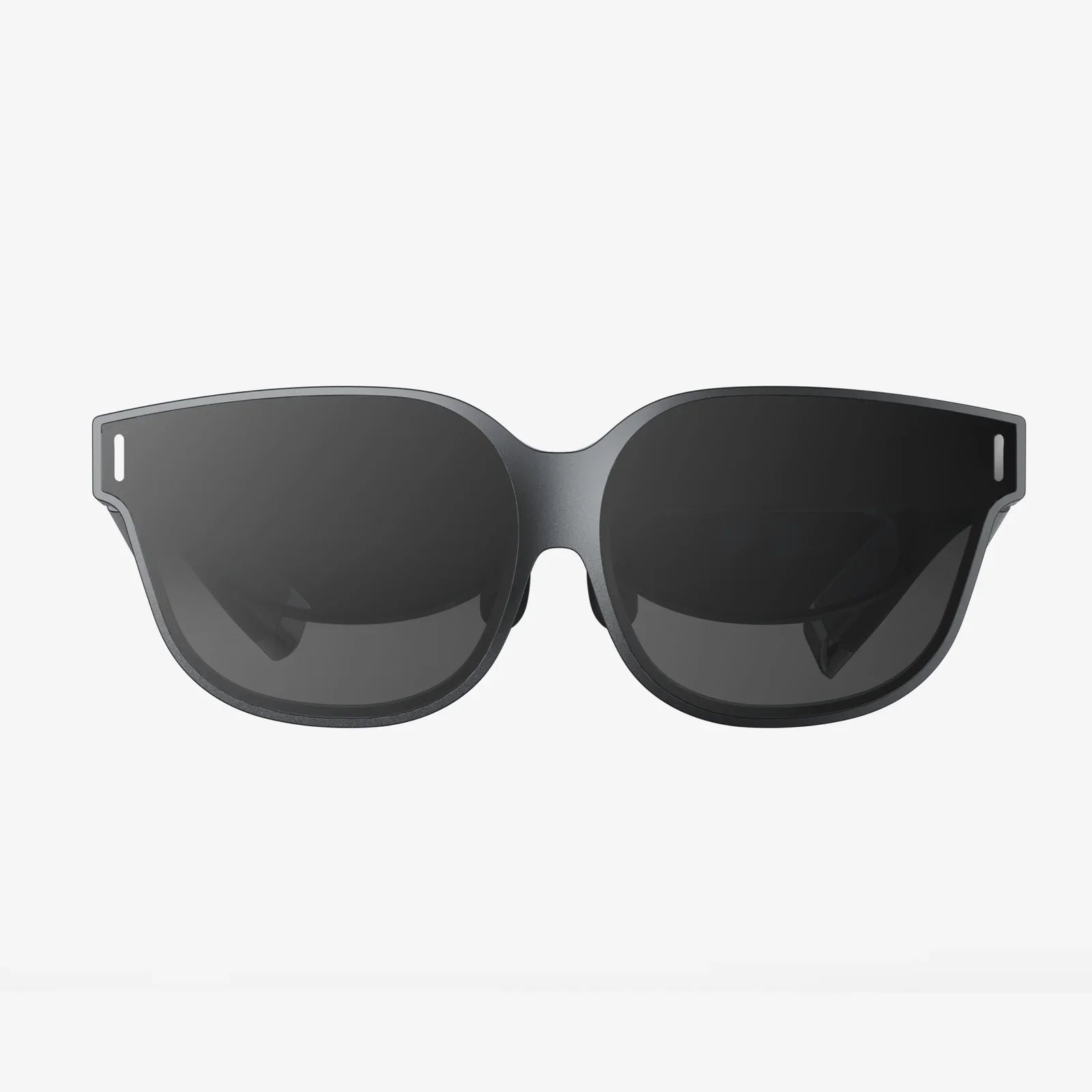
Imagine slipping on a headset and instantly stepping into another world—a world of your own choosing, where the only limit is imagination. This is the promise held within every virtual virtual reality app, a digital key unlocking doors to experiences previously confined to the realm of science fiction. The allure is undeniable, a siren call to explore, learn, and connect in ways that fundamentally reshape our perception of reality itself. The journey from a cold piece of hardware to a living, breathing digital universe is powered by one thing: the application. It is the soul of the machine, the architect of dreams, and the focus of a technological revolution that is only just beginning.
The Architectural Pillars of a Virtual Reality Experience
At its core, a virtual virtual reality app is a sophisticated orchestration of software and hardware designed to deceive the human senses into accepting a digital simulation as reality. This illusion, known as presence, is the holy grail of development. Achieving it relies on several foundational pillars working in perfect harmony.
The first pillar is Visual Immersion. This is achieved through high-resolution displays positioned mere centimeters from the user's eyes, often with a high refresh rate (90Hz or higher) to ensure smooth motion and prevent the disorientation of latency. Stereoscopic 3D rendering creates depth by presenting slightly different images to each eye, mimicking natural binocular vision. Advanced techniques like foveated rendering, which leverages eye-tracking to render only the center of the user's gaze in full detail, optimize performance without sacrificing visual fidelity.
The second pillar is Audio Realism. Spatial, or 3D, audio is critical for selling the illusion. Unlike standard stereo sound, spatial audio dynamically adjusts based on the user's head movements and position relative to the sound source. The rustle of leaves will seem to come from a specific tree behind and to the left, and the sound will change organically as the user turns their head. This auditory cue is incredibly powerful for grounding a user in the virtual environment.
The third pillar is Precise Tracking. For the virtual world to feel responsive and real, the application must track the user's movements with extreme accuracy and minimal delay. This encompasses both head tracking (orientation and position) and controller tracking for the user's hands. Inside-out tracking, where cameras on the headset itself map the environment and track movement, has become the standard, freeing users from external sensors and expanding the potential for untethered, room-scale experiences.
The final pillar is Intuitive Interaction. A world is not truly immersive if you cannot touch and manipulate it. Virtual reality applications employ a variety of interaction models, from simple laser pointers and teleportation for navigation to complex physics-based hand tracking that allows users to grab, throw, push, and pull objects with a natural motion. Haptic feedback, through controllers or more advanced gloves, provides tactile sensations, completing the feedback loop between user and environment.
Beyond Entertainment: The Expansive Ecosystem of VR Applications
While gaming remains a massive driver of consumer adoption, the utility of a virtual virtual reality app extends far beyond. We are witnessing the emergence of a vibrant and diverse ecosystem that is transforming professional fields and enriching daily life.
Revolutionizing Education and Training
Imagine medical students performing intricate virtual dissections without ever touching a cadaver, or aspiring mechanics practicing repairs on a hyper-realistic engine model. Virtual reality applications create safe, repeatable, and cost-effective training environments. They can simulate high-risk scenarios for pilots, surgeons, firefighters, and soldiers, allowing them to build muscle memory and critical decision-making skills without any real-world consequences. In education, students can take field trips to ancient Rome, the depths of the ocean, or the surface of Mars, transforming abstract concepts into tangible, unforgettable experiences.
Transforming Enterprise and Design
Architects and engineers are using VR apps to step inside their blueprints and 3D models long before ground is broken. This allows for unparalleled collaboration and design validation, identifying spatial or structural issues that might be missed on a 2D screen. Remote teams can meet in a shared virtual boardroom, examining 3D data visualizations or prototype designs as if they were physical objects in the room. This application of VR is streamlining workflows, reducing prototyping costs, and enhancing remote collaboration to a degree previously unimaginable.
Enhancing Healthcare and Therapy
The therapeutic potential of virtual reality is profound. It is being used for exposure therapy, helping patients with phobias (like fear of heights or flying) confront their triggers in a controlled, gradual manner. It aids in pain management by distracting burn victims during wound care with immersive, calming experiences. VR applications are also being developed for cognitive rehabilitation for stroke patients and to provide social skills training for individuals on the autism spectrum. By creating controlled and customizable environments, VR becomes a powerful tool for healing and rehabilitation.
Redefining Social Connection and Travel
Social VR platforms allow users to inhabit shared virtual spaces as personalized avatars. They can attend concerts, watch movies, play games, or simply hang out with friends and family who are physically thousands of miles away. The sense of shared presence—of being in the same room with someone—is a qualitative leap beyond a video call. Furthermore, travel applications offer virtual tourism, allowing individuals with physical or financial constraints to explore world landmarks, museums, and natural wonders with a stunning degree of realism.
Navigating the Development Landscape: Challenges and Considerations
Creating a compelling virtual virtual reality app is a complex endeavor fraught with unique challenges that developers must navigate.
User Comfort is Paramount: The single quickest way to break presence and ensure a negative user experience is to induce simulator sickness, a form of motion sickness caused by a disconnect between visual motion and the body's vestibular sense. Developers must meticulously manage factors like latency, frame rate, and movement mechanics. Comfort modes, such as snap-turning and reducing the field of view during movement, are often essential inclusions.
The Hardware Conundrum: The spectrum of VR hardware ranges from powerful, high-end headsets connected to robust computers to standalone, all-in-one devices and even simpler smartphone-based viewers. An application must be designed and optimized for its target platform, which can mean making difficult trade-offs between visual quality, complexity, and accessibility.
Designing for a New Medium: VR is not simply 360-degree video or a 3D game viewed from a fixed perspective. It is a nascent medium with its own language and design principles. UI elements cannot be plastered onto a 2D screen at the bottom of the view; they must exist diegetically within the 3D space. Navigation, interaction, and storytelling all require rethinking from first principles to create intuitive and comfortable experiences.
Ethical and Societal Implications:
As with any powerful technology, the rise of virtual virtual reality apps brings a host of ethical questions. Issues of data privacy are intensified; these applications can collect incredibly detailed biometric data, including eye movement, gait, voice recordings, and even emotional responses. The potential for realistic simulations to be used for misinformation or manipulation is a serious concern. Furthermore, as experiences become more compelling, we must consider the psychological effects of prolonged immersion and the potential for addiction or a blurring of the lines between the virtual and the real. The technology underpinning virtual reality is advancing at a breathtaking pace, promising to make future applications even more seamless and immersive. Several key trends are poised to define the next chapter. The concept of the Metaverse—a persistent, interconnected network of shared virtual spaces—is gaining traction. This would see individual VR applications evolve from isolated experiences into portals within a larger, continuous digital universe where identity, assets, and social connections are maintained across platforms. Advancements in haptics will move beyond rumble controllers to full-body suits and gloves that can simulate touch, pressure, temperature, and even the resistance of virtual objects. Brain-computer interfaces, though in early stages, hint at a future where we might navigate virtual worlds through thought alone. Finally, the integration of Artificial Intelligence will make virtual environments more dynamic and responsive. AI-powered non-player characters (NPCs) will behave with unprecedented realism, and environments could dynamically generate and adapt to the user's actions, creating truly personalized and infinitely replayable experiences. The true power of a virtual virtual reality app lies not in its ability to help us escape our world, but in its potential to enhance it. It is a mirror reflecting our own reality back at us, a canvas for our creativity, and a bridge to connect us across vast distances. It is a tool for empathy, allowing us to see the world through another's eyes, and a instrument for discovery, granting us access to the previously inaccessible. As the hardware continues to shrink, the graphics become more photorealistic, and the interactions more natural, the line between the digital and the physical will continue to blur. We are not just downloading apps; we are downloading possibilities, and we are only beginning to understand the profound and extraordinary impact they will have on every facet of human existence.The Horizon: What the Future Holds for Virtual Reality Applications
Share:
Ultra Wide Monitor Split Screen: The Ultimate Guide to Unlocking Unprecedented Productivity
What Are the Major AI Tools: A Comprehensive Guide to Modern Intelligence