


- by wangfred
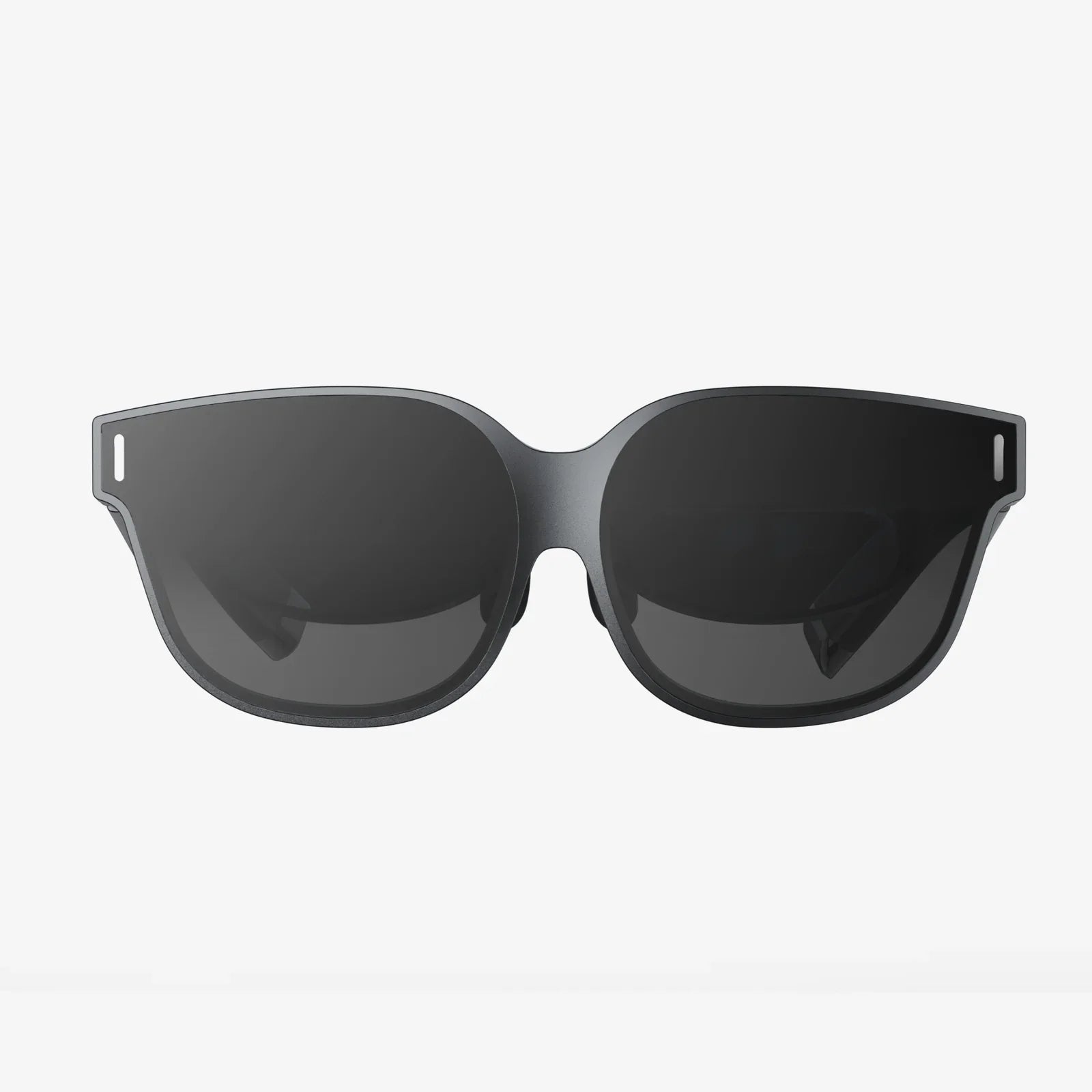
Virtual Vision: The Next Frontier in Human-Computer Interaction and Digital Experience
- by wangfred
Imagine a world where information is not confined to the glowing rectangles of screens but is seamlessly woven into the very fabric of your reality. A world where you can summon a high-definition display to work on in a sunlit park, consult a virtual mechanic who appears to stand beside your car engine, or walk through a meticulously reconstructed ancient city that vanished millennia ago. This is the breathtaking promise of Virtual Vision, a technological paradigm shift that is poised to fundamentally redefine the boundaries of human perception, interaction, and experience. It’s not merely an upgrade to a device; it’s a gateway to new dimensions of reality itself.
This revolutionary capability is built upon a convergence of several groundbreaking technologies, each advancing at a breakneck pace. At its core, Virtual Vision is an interdisciplinary marvel.
The most immediate challenge for any Virtual Vision system is projecting high-resolution, bright, and convincing imagery directly into the user's eyes. This goes far beyond simple projection. Sophisticated waveguide technology, using nano-structured glass or plastic, bends light to create expansive virtual images that appear to float in space. Micro-LED displays, with their incredible pixel density and brightness, provide the raw visual power. Furthermore, techniques like focal plane tuning and light field displays are being developed to solve the vergence-accommodation conflict—a major source of eye strain where your eyes struggle to focus on virtual objects at different depths. These innovations work in concert to create a comfortable and visually immersive experience that feels natural to the human eye.
For digital objects to feel like they truly exist in your world, the device must understand that world intimately. This is the domain of spatial computing. A suite of sensors, including high-resolution cameras, LiDAR scanners, depth sensors, and inertial measurement units (IMUs), continuously maps the physical environment. These sensors create a real-time 3D mesh of your surroundings, identifying surfaces like floors, walls, tables, and even understanding their material properties. This allows virtual objects to occlude and be occluded by real objects, cast accurate shadows, and sit stably on a physical surface without drifting. This environmental awareness is the bedrock upon which a convincing mixed reality is built.
The vast amount of data captured by the sensors is meaningless without intelligent processing. This is where artificial intelligence becomes the brain of the operation. Neural processing units (NPUs) run complex machine learning models in real-time for tasks like hand-tracking, enabling intuitive gesture-based controls without a physical remote. Eye-tracking, powered by AI, allows for foveated rendering—a technique that drastically reduces processing power by rendering only the area you are directly looking at in full detail. AI also drives object recognition, allowing the system to identify a coffee mug, a laptop, or a specific book, and enabling context-aware interactions. This intelligence transforms the device from a passive display into an active perceptual assistant.
While on-device processing is crucial for responsiveness, the true potential of Virtual Vision is unlocked through connectivity. 5G and future 6G networks, with their ultra-low latency and high bandwidth, allow for computationally intensive tasks to be offloaded to powerful cloud servers. This enables photorealistic graphics and complex simulations that would be impossible on a standalone wearable device. Furthermore, it facilitates shared experiences, where multiple users in different locations can see and interact with the same persistent virtual objects, creating a shared, collaborative space that transcends physical geography.
The applications of Virtual Vision extend far beyond entertainment and gaming, promising to revolutionize nearly every professional field.
In architecture and industrial design, Virtual Vision is a game-changer. Designers and engineers can interact with full-scale 3D models of their creations, walking around a building's virtual foundation or inspecting the internal components of a complex engine prototype from every angle. This allows for rapid prototyping, identifying design flaws and spatial issues long before physical resources are committed. On the factory floor, technicians can receive real-time, hands-free instructions and diagrams overlaid directly onto the machinery they are repairing, drastically reducing errors and training time.
The impact on medicine is profound. Surgeons can use Virtual Vision to visualize a patient's unique anatomy from CT or MRI scans, overlaying a holographic roadmap of critical blood vessels and tumors directly onto the patient during surgery, enhancing precision and safety. Medical students can practice complex procedures on virtual cadavers, and therapists can use immersive environments to treat phobias or aid in physical rehabilitation by turning exercises into engaging games. It democratizes access to expert knowledge, allowing a specialist to virtually "be in the room" with a colleague anywhere on the planet.
Virtual Vision promises to make video conferencing obsolete. Instead of looking at a grid of faces on a screen, remote collaboration becomes a experience where participants appear as life-like avatars or even holograms in your physical space. You can collaboratively manipulate 3D data models, brainstorm on a virtual whiteboard that everyone can see, and share body language and spatial cues, fostering a level of presence and teamwork that current technology cannot match. In education, students can take a field trip to the Roman Colosseum, dissect a virtual frog, or explore the solar system in a truly immersive way, transforming abstract concepts into tangible experiences.
The retail experience will be utterly transformed. Instead of guessing how a new sofa might look in your living room, you can place a perfect 1:1 scale hologram of it in the space, walk around it, and even see how the fabric looks in the afternoon light. Trying on clothes virtually will become commonplace, allowing you to see how an outfit fits and moves on your own body before purchasing. This not only enhances consumer confidence but also reduces return rates and opens up new possibilities for personalized shopping experiences.
With such transformative power comes a host of serious questions and potential pitfalls that society must proactively address.
Virtual Vision devices, by their very nature, are equipped with always-on cameras and microphones that perceive the world as you do. This raises unprecedented privacy concerns. These devices could continuously capture data about people in your vicinity—their conversations, their actions, their identities—without their knowledge or consent. The potential for mass surveillance, either by corporations or governments, is significant. Robust ethical frameworks, clear regulations, and transparent data handling policies are not optional; they are prerequisites for public trust and adoption. The concept of personal space and privacy in public will need to be completely renegotiated.
As these virtual overlays become more convincing, a new challenge emerges: the ability to distinguish between what is real and what is digitally generated. The potential for misinformation, manipulation, and deepfakes becomes exponentially more dangerous when they can be seamlessly injected into your perceived reality. Imagine seeing a fabricated news report seemingly broadcast on a public screen or encountering a hyper-realistic avatar of a public figure saying things they never said. The societal implications for trust, security, and shared reality are profound and require the development of new digital authentication and literacy skills.
There is a very real risk that Virtual Vision could become the next major vector for inequality. If these devices become essential tools for work, education, and social connection, those who cannot afford them risk being left behind, creating a chasm between those who can augment their reality and those who cannot. Furthermore, accessibility for individuals with different physical and cognitive abilities must be a primary design consideration from the outset, ensuring this new medium is inclusive and empowering for all, not just a privileged few.
The long-term trajectory of Virtual Vision points toward a future of even deeper integration between humans and machines. We are moving beyond augmentation toward a form of cognitive symbiosis. Research into direct neural interfaces, while still in its infancy, suggests a future where Virtual Vision is not mediated through glasses or screens but is projected directly into our visual cortex, offering perfect fidelity and new senses altogether—the ability to "see" infrared light or data streams. This technology could ultimately restore sight to the blind or provide superhuman perceptual capabilities. The ultimate goal is a seamless fusion of human intuition and machine intelligence, creating a new layer of reality that is as rich and complex as the physical one, forever expanding the canvas of human experience.
The journey into this augmented era is already underway, and its destination is limited only by our imagination and our wisdom. The power to reshape our perception of reality is now literally in sight, waiting to be unlocked and explored. The question is no longer if Virtual Vision will become integral to our lives, but how quickly we can guide its development to be ethical, equitable, and truly, magnificently human.
Share:
Heads Up Display Projector: The Future of Information at Eye Level
Visible Wearable: The Dawn of a New Era in Personal Technology and Expression