


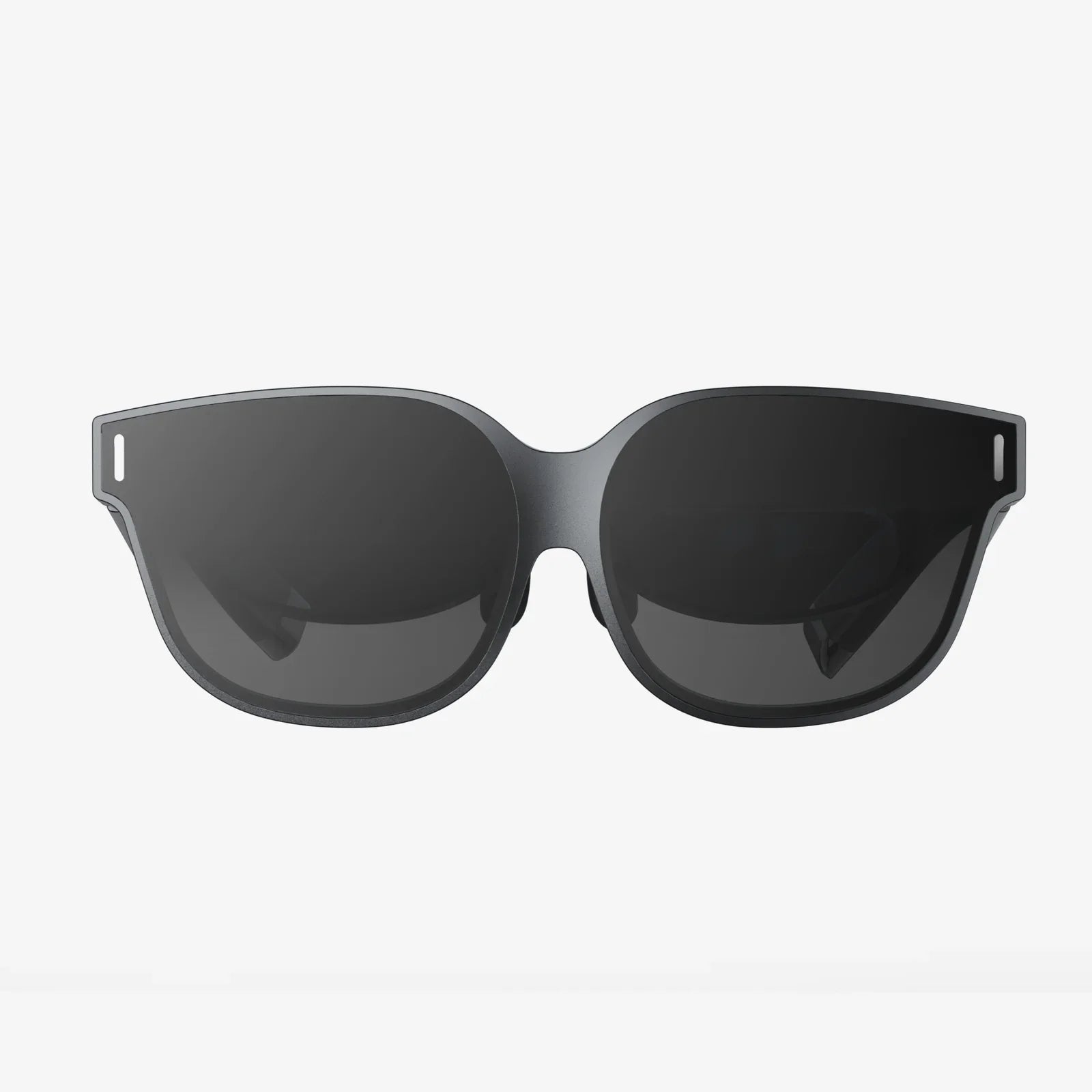
Imagine slipping on a pair of sleek, futuristic glasses and, in an instant, being transported from your living room to the edge of a Martian canyon, the rings of Saturn, or a surgical operating theater where you can practice a complex procedure. This is no longer the stuff of science fiction; it is the tangible, awe-inspiring reality offered by virtual VR glasses. These devices are not merely a new screen for entertainment; they represent a fundamental shift in how we interact with digital information, with each other, and with reality itself. They are portals, and we stand at the threshold of a new dimension.
The Engine Behind the Illusion: Deconstructing the Technology
To truly appreciate the magic of virtual VR glasses, one must understand the sophisticated technology working in perfect harmony to fool the brain into accepting a digital world as real. The experience is built on several core pillars.
Visual Immersion: More Than Just Pixels
The primary gateway to virtual reality is sight. Modern virtual VR glasses employ two high-resolution displays (one for each eye) or a single display split into two distinct images. This stereoscopic 3D creates the crucial depth perception that flat screens cannot provide. However, resolution is just the beginning. The field of view (FOV) is critical—a wider FOV, typically between 90 and 120 degrees, reduces the "binocular" effect and makes the virtual world feel vast and all-encompassing. To combat the motion blur that can cause discomfort, high refresh rates—90Hz, 120Hz, or even higher—ensure smooth, fluid motion that keeps pace with your head movements, maintaining the illusion of a stable world.
Precision Tracking: Knowing Where You Are
For the virtual world to feel responsive and solid, the headset must track your head's position and orientation with extreme precision and minimal latency. This is achieved through a combination of technologies. Inside-out tracking uses integrated cameras and sensors on the headset itself to map the surrounding environment and understand its position within it. Outside-in tracking, historically using external sensors placed around the room, provides incredibly accurate data by triangulating the headset's position. Inertial Measurement Units (IMUs), containing gyroscopes and accelerometers, provide the high-frequency data on rotational and linear movement, filling in the gaps between camera updates to ensure there is no lag.
Auditory and Haptic Feedback: Engaging the Senses
Immersion is a multi-sensory experience. Spatial audio, or 3D audio, is a game-changer. It uses advanced algorithms to simulate how sound waves interact with the shape of your head and ears, allowing you to pinpoint the location of a sound source—behind you, above you, or far in the distance. This auditory cue is incredibly powerful for selling the reality of a space. Furthermore, haptic feedback is evolving beyond simple controller rumbles. Advanced controllers can simulate the weight and recoil of an object, and full-body haptic suits are emerging to let users feel rain, wind, or even the impact of a virtual punch, deepening the physical connection to the digital realm.
A World of Applications: Far Beyond the Game
While the gaming industry has been the most visible driver of consumer adoption, the potential applications for virtual VR glasses stretch into nearly every facet of professional and personal life, promising to revolutionize entire sectors.
Transforming Education and Training
Virtual VR glasses offer an unparalleled tool for experiential learning. Instead of reading about ancient Rome, students can walk through a meticulously reconstructed Forum. Medical students can practice intricate surgeries on virtual patients without risk, allowing for repetition and mistake-making that is impossible on a living person. Astronauts, pilots, and heavy machinery operators can train in high-fidelity, dangerous simulations safely on the ground. This "learning by doing" in a risk-free environment dramatically improves knowledge retention and skill acquisition.
Revolutionizing Remote Work and Collaboration
The concept of the "virtual office" is being redefined. With virtual VR glasses, remote colleagues are no longer just faces on a grid in a video call; they are avatars sharing a virtual space. Teams can gather around a 3D model of a new building design, manipulating it at scale, or brainstorm on an infinite whiteboard, feeling a sense of shared presence that flat screens cannot replicate. This has profound implications for reducing business travel, fostering more creative collaboration, and creating a more embodied sense of connection for distributed teams.
Pushing the Boundaries of Design and Engineering
Architects, engineers, and product designers are using virtual VR glasses as a central part of their creative process. They can step inside their CAD models before a single brick is laid or a prototype is built. This allows them to experience the scale, sightlines, and ergonomics of a design in a way a 2D monitor never could, identifying potential flaws and making iterative changes with incredible efficiency. This saves vast amounts of time and resources in the development cycle.
Expanding the Frontiers of Healthcare and Therapy
The therapeutic potential of this technology is immense. It is already being used successfully for exposure therapy, helping patients with phobias like fear of heights or flying to confront their anxieties in a controlled, gradual way. It is used for physical rehabilitation, turning repetitive exercises into engaging games. For patients dealing with chronic pain or undergoing painful procedures, immersive VR experiences can act as a powerful distractor, reducing the perceived intensity of pain. It even offers new avenues for treating PTSD and providing cognitive stimulation for the elderly.
The Human Factor: Navigating Challenges and Ethical Considerations
As with any transformative technology, the rise of virtual VR glasses brings a host of challenges that society must thoughtfully address.
The Physical Experience: Comfort and Safety
A significant barrier to mass adoption is a collection of physical discomforts often grouped under the term "cybersickness," which shares symptoms with motion sickness—dizziness, nausea, and eye strain. This is caused by a mismatch between the visual motion perceived and the body's vestibular sense. Improvements in technology are mitigating this, but it remains a concern. Furthermore, the long-term effects of prolonged immersion on eye development, particularly in children, are not yet fully understood, warranting caution and further study. Ensuring physical safety in the real world while immersed is also paramount, requiring clear boundaries and safety systems.
The Social and Psychological Impact
As these virtual worlds become more compelling, questions arise about their impact on our psychology and social structures. Will excessive use lead to greater social isolation, or will it foster new, meaningful forms of community? The concept of the "metaverse"—a persistent network of shared virtual spaces—presents complex questions about identity, ownership, and economics. How do we prevent the digital divide from widening when access to these new realities requires expensive hardware? The potential for addiction, escapism, and the blurring of lines between reality and simulation are profound ethical territories we are only beginning to map.
Privacy in a Data-Hungry World
Virtual VR glasses are arguably the most intimate data-collection devices ever created. They can track not only where you look but also your pupil dilation, blink rate, hand gestures, body language, and even your emotional responses within a virtual environment. This biometric data is incredibly valuable and incredibly sensitive. Robust frameworks for data ownership, consent, and security must be established to prevent misuse and protect users from manipulation and surveillance in these new digital frontiers.
The Horizon Ahead: The Future Worn on Our Faces
The current generation of virtual VR glasses is impressive, but they are merely the precursors to what is coming. The future trajectory points towards devices that are smaller, lighter, more powerful, and ultimately, indistinguishable from ordinary eyeglasses. Advancements in varifocal and light field displays will solve the vergence-accommodation conflict, a key source of eye strain, by allowing our eyes to focus naturally at different depths. The integration of Augmented Reality (AR) and Mixed Reality (MR) will become seamless, allowing digital objects to interact convincingly with our physical world. We are moving towards a future of always-on, contextual computing, where information is overlaid onto our reality, and digital assistants can see what we see and help us in real-time.
The journey of virtual VR glasses is just beginning. They are evolving from clunky peripherals into elegant, ubiquitous interfaces that will redefine communication, creativity, and human experience. The line between the digital and the physical will continue to blur, creating new forms of art, new economies, and new ways of being. The question is no longer if this future will arrive, but how we will choose to shape it. The potential to enhance human connection, solve complex problems, and understand our world in deeper ways is limitless. The next great adventure won't require a rocket ship; it will simply require you to put on a pair of glasses.
Share:
Elements of Augmented Reality: The Core Components Powering a Digital Revolution
Elements of Augmented Reality: The Core Components Powering a Digital Revolution