Imagine slipping on a headset and instantly being transported. One moment you’re in your living room; the next, you’re walking on the surface of Mars, your boots crunching on red soil as you gaze at a vast, rust-colored horizon. Or perhaps you’re standing in a reconstructed ancient Roman forum, hearing the echoes of history, or practicing a complex surgical procedure on a hyper-realistic digital patient. This is the promise and power of Virtual VR—a technology that doesn’t just show you another world but convinces your entire being that you are truly within it. We are standing at the precipice of a revolution that will fundamentally alter how we work, learn, connect, and experience reality itself.
The Core Principle: What Makes Virtual Reality, Reality?
At its essence, virtual reality is the ultimate sleight of hand, a carefully engineered illusion designed to trick the human brain into accepting a digital environment as real. This is achieved through a combination of sophisticated hardware and software working in concert to create what experts call presence—the undeniable sensation of being somewhere else.
The magic of VR hinges on three core pillars:
-
Immersion: This is the technical aspect. It involves surrounding the user with convincing sights, sounds, and eventually, sensations. High-resolution displays fill the user's field of view, stereoscopic 3D creates depth, and spatial audio makes sounds come from specific directions in the virtual space, just as they would in the physical world. The goal is to block out the physical world and replace it with a digital one.
-
Interactivity: A truly virtual world isn't a movie; it's a place you can affect. Using motion controllers, hand-tracking, or even full-body suits, users can reach out, grab objects, push buttons, and manipulate their environment. The digital world responds in real-time, creating a feedback loop that reinforces the illusion. This agency is crucial for maintaining presence.
-
Presence: This is the holy grail—the user's psychological and physiological response to the immersion and interactivity. It's the moment the conscious mind stops acknowledging the technology and simply accepts the experience as real. Your heart might race during a virtual horror experience; you might lean cautiously against a virtual railing, even though you know it isn't there. Presence is the feeling of being there.
A Brief Journey Through Time: The Evolution of VR
While VR feels like a modern invention, its conceptual roots run deep. The idea of an artificial reality can be traced back to panoramic paintings in the 19th century, which aimed to envelop the viewer. The 20th century saw more direct precursors, like Morton Heilig's Sensorama in the 1960s, a bulky mechanical arcade cabinet that offered multi-sensory experiences like a motorcycle ride through Brooklyn.
The term "virtual reality" itself was popularized in the 1980s by Jaron Lanier, whose company developed some of the first commercial goggles and datagloves. However, the technology was prohibitively expensive, low-fidelity, and largely confined to university and military research labs. A consumer push in the early 1990s fizzled out due to clunky hardware, a lack of compelling software, and the technical limitations of the era. VR became a staple of science fiction but a disappointment in reality.
The modern renaissance began in the early 2010s. A pivotal moment was the creation of a prototype that would eventually become a widely used headset, demonstrating that high-quality, low-latency VR was finally achievable with off-the-shelf components like smartphone screens. This kickstarted a new arms race in technology development. Major technology companies invested billions, leading to a new generation of headsets that were more powerful, comfortable, and affordable, finally bringing true presence into the home.
The Hardware: Gateways to New Worlds
Entering a virtual reality requires a portal. Today's hardware ecosystem is diverse, catering to different needs and budgets, but all systems share common components that make the illusion work.
-
Headsets (HMDs - Head-Mounted Displays): These are the helmets that contain the screens and lenses. They are broadly categorized into three types:
-
PC-Connected Headsets: Tethered to a powerful computer, these devices offer the highest fidelity experiences with the best graphics, widest field of view, and most precise tracking. They are the choice for enthusiasts and professionals who demand the utmost quality.
-
Standalone Headsets: All the necessary computing power is built into the headset itself. They are wireless, self-contained, and incredibly accessible, representing the most popular segment of the market. They trade some graphical prowess for convenience and freedom of movement.
-
Console-Based Headsets: Designed to work with specific video game consoles, these headsets offer a streamlined, high-quality experience optimized for a single hardware platform, sitting between standalone and PC-connected headsets in terms of performance and ease of use.
-
Tracking Systems: To know where you are and how you're moving, VR systems use either:
Inside-Out Tracking: Cameras on the headset itself look outward to map the room and track the position of the controllers. This is the standard for modern standalone headsets.
Outside-In Tracking: External sensors or base stations placed around the room track the position of the headset and controllers. This method is often considered more precise and is used in high-end PC setups.
-
Controllers: These are the user's hands in the virtual world. They are ergonomic wands tracked in 3D space, featuring buttons, triggers, thumbsticks, and haptic feedback to simulate touch. Advanced systems are moving towards hand-tracking, which uses cameras to directly render your real hands in VR, eliminating the need for controllers for many tasks.
-
Haptics and Accessories: The frontier of immersion lies in haptic feedback. This goes beyond a simple controller rumble to include vests that simulate the impact of a bullet, gloves that provide resistance when gripping a virtual object, and treadmills that allow for natural walking motion in infinite virtual spaces.
Beyond Gaming: The Transformative Applications of VR
While gaming is the most visible and commercially successful application, the potential of virtual reality extends far beyond entertainment. It is becoming a powerful tool for productivity, empathy, and human advancement.
-
Education and Training: VR offers unparalleled opportunities for experiential learning. Medical students can perform virtual dissections and surgeries without risk. History students can explore ancient civilizations firsthand. Astronauts, pilots, and soldiers train for high-risk scenarios in perfectly simulated environments. This "learning by doing" in a safe, repeatable space dramatically improves retention and skill acquisition.
-
Healthcare and Therapy: Therapeutically, VR is a revolution. It is used for exposure therapy to treat phobias and PTSD, allowing patients to confront their fears in a controlled setting. It helps with physical rehabilitation by turning exercises into engaging games. Surgeons use VR to plan complex operations, and the technology is even being used to manage chronic pain by distracting the brain's pain pathways.
-
Remote Work and Collaboration: The concept of the "metaverse" for business is gaining traction. Instead of a flat video call, teams from around the world can meet as lifelike avatars in a virtual boardroom, workshop, or classroom. They can interact with 3D models of products, brainstorm on virtual whiteboards, and share a sense of shared space that Zoom cannot replicate, combating the isolation of remote work.
-
Social Connection and Live Events: VR is evolving into a potent social platform. Friends can meet up to watch a movie in a virtual theater, attend a live concert with front-row seats from their own homes, or simply hang out in a virtual world. This provides a sense of togetherness and shared experience that transcends geographical boundaries, offering new forms of meaningful connection.
-
Architecture and Design: Architects and interior designers use VR to create immersive walkthroughs of unbuilt structures. Clients can literally step inside their future home or office, experiencing the scale, lighting, and flow of a space long before ground is broken, allowing for better design decisions and client satisfaction.
Navigating the Challenges: The Ethical and Practical Considerations
For all its promise, the path forward for virtual reality is not without significant obstacles and ethical dilemmas that society must grapple with.
-
Accessibility and Cost: While prices are falling, a high-quality VR setup still represents a significant investment, potentially creating a digital divide between those who can access these new virtual frontiers and those who cannot.
-
Health and Safety: Cybersickness, a form of motion sickness caused by a disconnect between visual motion and physical stillness, remains a barrier for some users. Prolonged use can also lead to eye strain, disorientation, and physical fatigue. Establishing healthy usage patterns, especially for children, is critical.
-
Privacy and Data Security: VR headsets are data collection powerhouses. They have cameras that map your home, microphones that can hear you, and sensors that track your precise movements, including eye gaze and hand gestures. This biometric data is incredibly personal. The question of who owns this data, how it is used, and how it is protected is paramount.
-
The Social and Psychological Impact: As worlds become more compelling, what is the risk of reality blurring or of users withdrawing from physical society? Furthermore, the potential for harassment in social VR spaces is a serious issue that platforms are still learning to address. Establishing norms, laws, and ethical guidelines for behavior in virtual spaces is a complex but necessary challenge.
The Future is Virtual: What Lies on the Horizon?
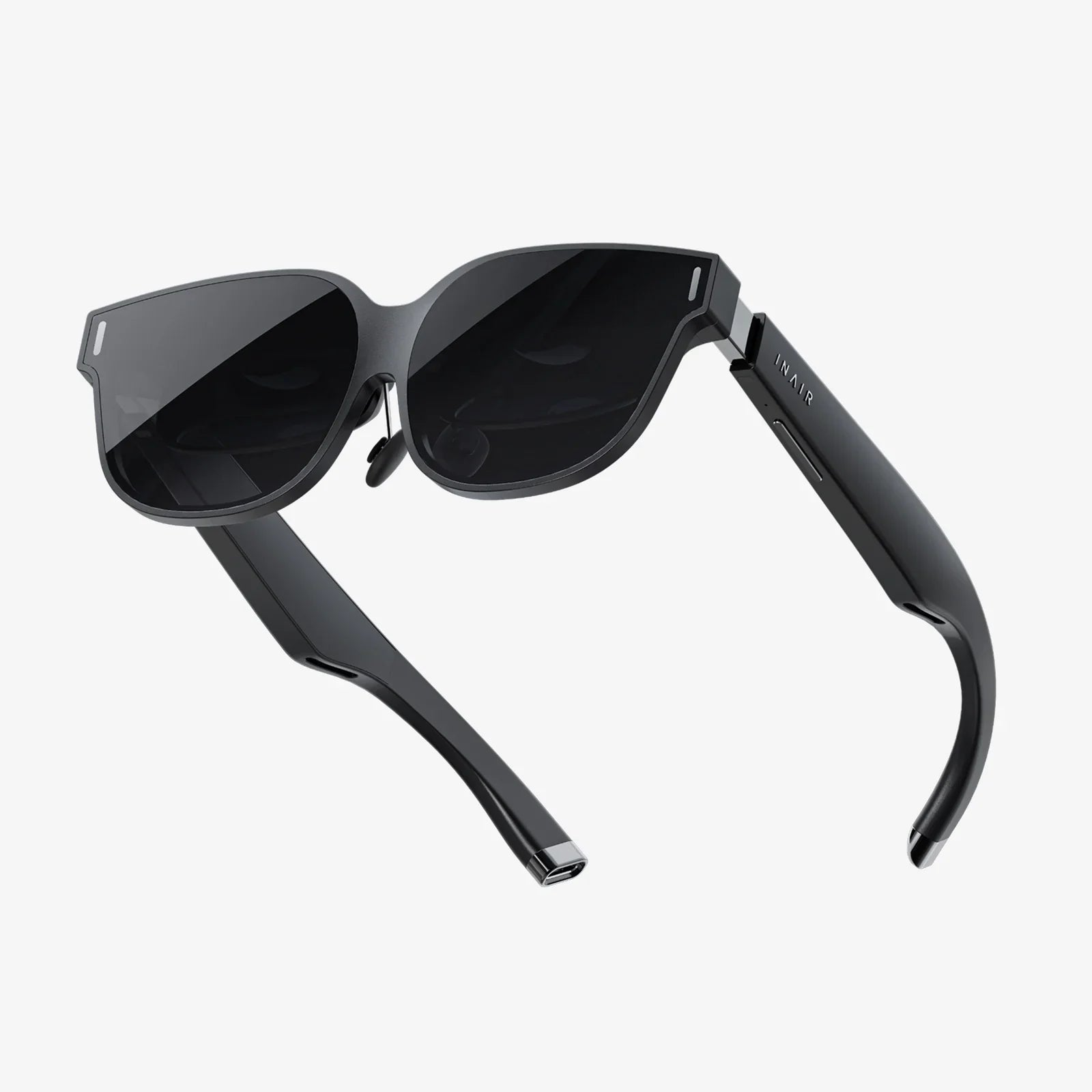
The technology is advancing at a breathtaking pace. We are moving towards lighter, smaller headsets with higher-resolution displays that will be as comfortable as a pair of sunglasses. The development of photorealistic graphics and volumetric capture will make virtual people and places indistinguishable from reality. The integration of Artificial Intelligence will create dynamic, responsive worlds that adapt to the user, and brain-computer interfaces may one day allow us to control virtual environments with our thoughts.
This convergence of technologies is paving the way for the metaverse—a persistent, interconnected network of virtual spaces that will become a new layer of the internet, one that we don't just browse but inside of which we exist. It promises a future where our digital and physical lives are seamlessly intertwined, offering unprecedented opportunities for creativity, collaboration, and human experience.
The line between the digital and the physical is not just blurring; it is being redefined. Virtual reality is no longer a niche curiosity but a foundational technology that is reshaping our world from the inside out. The journey into the virtual is just beginning, and it promises to be the most transformative adventure of our time. The only question that remains is not if you will step through, but when, and what you will choose to create once you're there.


Share:
Best VR Set: The Ultimate Guide to Immersive Experiences in 2024
3D Holographic Projector: Peering Into the Future of Visual Technology